Why there are Amazon links here: Brave Review is paid a commission for qualifying Amazon purchases made through the links below. Your price does not change, and using our links is entirely optional. How this works
First Alert SMI100 vs Kidde 10SDR: Which Battery Smoke Alarm Fits
The First Alert SMI100 and the Kidde 10SDR are both AA-battery smoke alarms sold as single units, so the choice comes down to where the alarm is going and how much room it has. The First Alert SMI100 is the straightforward budget pick for a standard hallway or bedroom ceiling mount. The Kidde 10SDR is the compact option, built around a 4-inch profile with LED status lights and a stated 85 dB alarm, which suits tight spots and small rooms. The table below settles the differences in under a minute; the rest of the article explains them.
First Alert SMI100 vs Kidde 10SDR at a Glance
| Product | Key Spec | Best Use | Price Tier |
|---|---|---|---|
| First Alert SMI100 | 1-pack battery smoke alarm, AA-powered | Standard ceiling mount in halls and bedrooms | Budget |
| Kidde 10SDR | 4-inch compact body, LED status lights, 85 dB alarm, AA battery | Small rooms and tight mounting spots | Budget-plus |
Both sit in the low-cost bracket, so price is not the deciding factor. Size, status visibility and how loud the unit is rated are.
First Alert SMI100
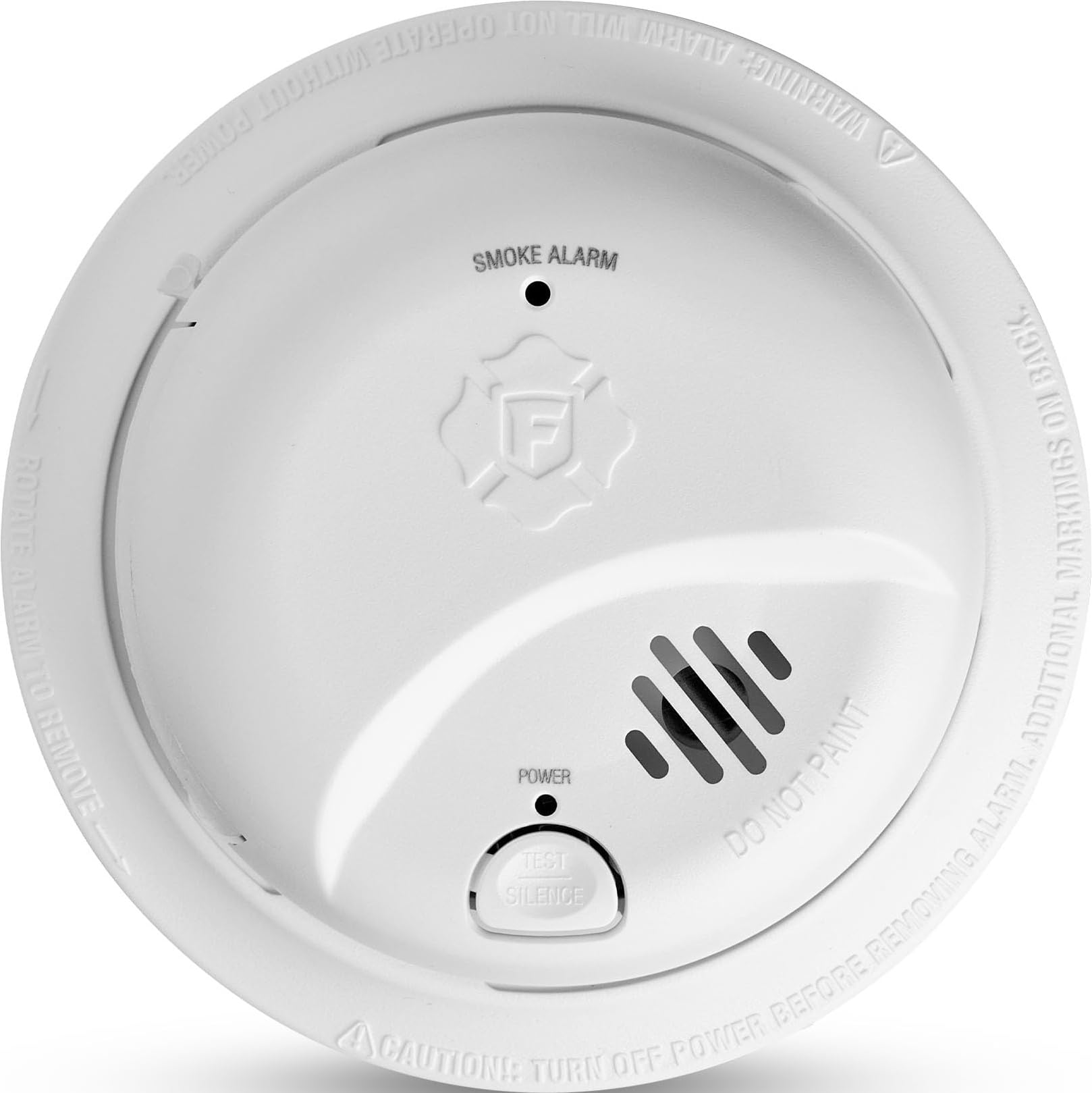
Product: First Alert SMI100, 1-Pack Battery Smoke Alarm
Pack Size: 1 unit
Power Source: AA battery
Type: Standalone smoke alarm
Mounting: Ceiling or wall, standard footprint
Best For: Hallways, bedrooms, rental units
The SMI100 is the plain, single-purpose smoke alarm: one unit, battery powered, no wiring to run and no hub to pair. That makes it the natural choice for a replacement alarm in an existing bracket position, a rental unit where the landlord wants a cheap like-for-like swap, or a first alarm for a small apartment. First Alert sells this as a one-pack, so a buyer covering a whole floor needs to order several units rather than getting a multi-pack in one box.
Battery power is the practical advantage here. There is no interconnect wire, no electrician and no dependence on the household circuit, so the unit keeps working through a breaker trip or an outage. The trade-off is maintenance: an AA-powered alarm needs its battery replaced on a schedule and will chirp when the cell runs down, which is the failure mode buyers most often forget about in a hallway they never look up at.
Trade-off: A single-unit, budget alarm gives no interconnect and no smart features, so it protects the room it sits in and nothing more.
Check the current price on Amazon
Kidde 10SDR
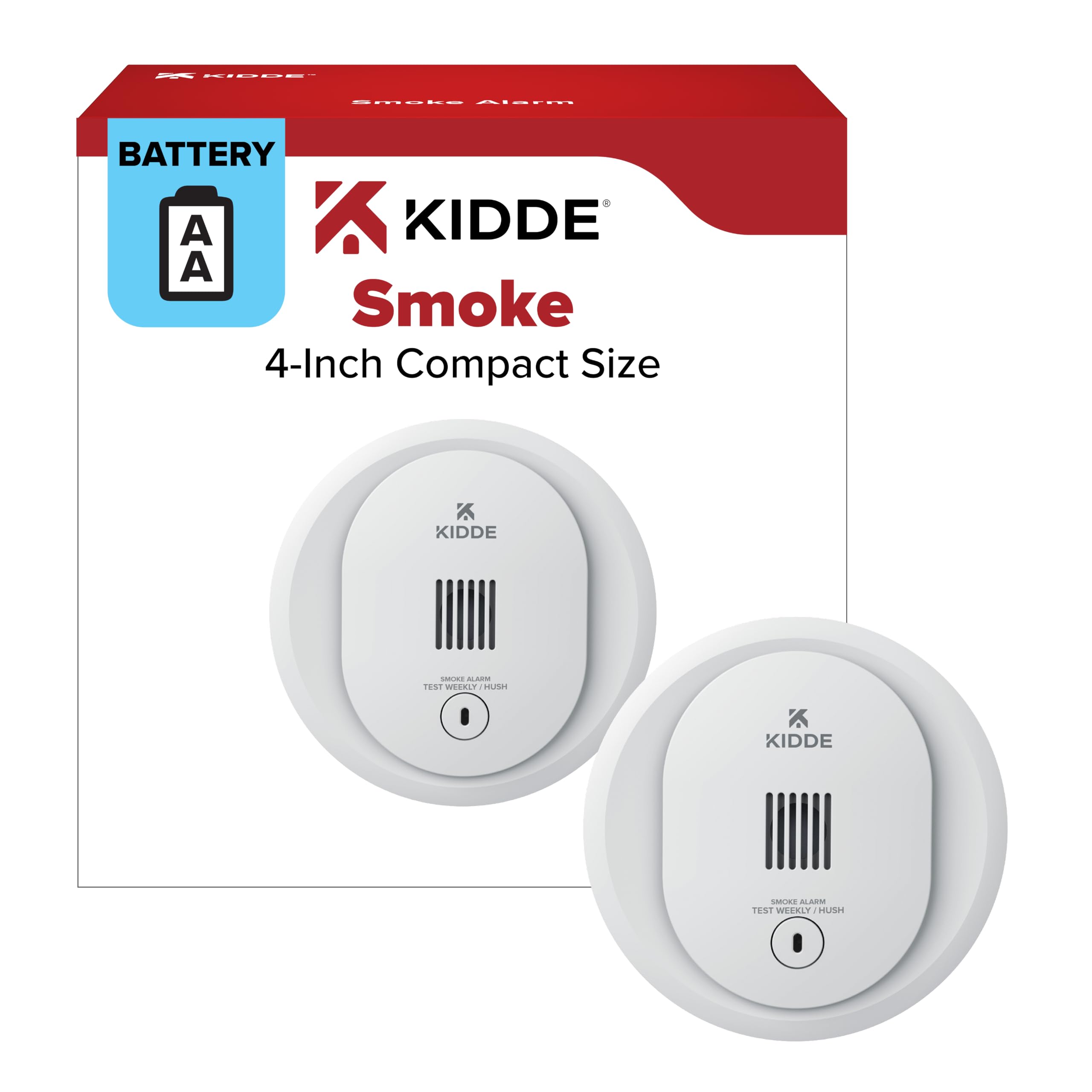
Product: Kidde 4-Inch Smoke Alarm with LED Status Lights, Loud 85 dB Alarm, Ideal for Homes and Small Spaces Compact Smoke Detector, AA Battery-Powered, 10SDR
Body Size: 4-inch compact housing
Alarm Rating: 85 dB
Status Indicator: LED status lights
Power Source: AA battery
Best For: Small rooms, tight ceilings, closets and utility spaces
The 10SDR is defined by its 4-inch body. That smaller housing matters in places where a full-size alarm crowds a light fixture, sits awkwardly on a narrow soffit, or looks oversized in a small bedroom or utility closet. Kidde markets it for homes and small spaces, and the dimensions back that up: it is the unit to reach for when the mounting location is the constraint rather than the coverage.
Two features separate it from the First Alert. The LED status lights give a visible at-a-glance indication of the unit’s state, which is genuinely useful on a ceiling alarm that nobody wants to climb up and inspect. The 85 dB alarm rating is stated outright on the product, so a buyer knows what loudness to expect before mounting it. The compact shell is the cost: a smaller housing generally means less room for the sensing chamber and the battery bay, so buyers should expect to service it more carefully and confirm the battery type and change interval in the manual.
Trade-off: The compact 4-inch body suits tight mounting spots but leaves less interior room for the battery and sensing hardware than a full-size alarm.
Check the current price on Amazon
How the Two Alarms Differ
Size and placement. This is the clearest split. The Kidde 10SDR’s 4-inch housing fits where a standard alarm will not, making it the pick for small rooms, closets, narrow ceiling runs and any spot where an oversized unit would foul a fixture. The First Alert SMI100 uses the standard footprint that most existing ceiling brackets and hallway positions already accommodate, so it drops into a replacement job with less fuss.
Alarm loudness. Kidde states an 85 dB rating on the box, which gives the buyer a concrete figure to plan around. First Alert does not publish a loudness figure in the product name, so the SMI100 has to be judged on its category rather than a quoted number. For a bedroom door that stays closed at night, the stated rating is the more reassuring of the two on paper.
Status visibility. The Kidde’s LED status lights are a real usability difference. A ceiling alarm is out of sight most of the day, and a visible indicator means the unit’s condition can be checked from the floor instead of by pressing a test button on a step stool. The First Alert relies on the standard test-and-chirp routine, which works but demands more attention from the household.
Power and maintenance. Both run on AA batteries and both are standalone units with no interconnect. Neither will trigger the other when one sounds, so a buyer covering a hallway and two bedrooms is buying three independent alarms either way. Battery changes fall on the same schedule for both, and neither offers a sealed long-life cell.
Cost and pack size. Both sit in the budget tier. The First Alert is sold as a single unit at the lower headline price; the Kidde carries a small premium for the compact body, the LED indicator and the stated alarm rating. Across a whole home the difference is minor, and it should not override the fit question.
Which Should You Buy?
Choose the First Alert SMI100 if the job is a straight replacement in a standard ceiling position, the budget is the tightest constraint, or several alarms are needed across a hallway and bedrooms and the per-unit cost adds up. It is the simpler, cheaper unit and it fits the mounting points most homes already have.
Choose the Kidde 10SDR if the mounting location is small or awkward, a visible status light matters for a ceiling the household rarely inspects, or the stated 85 dB alarm rating is the deciding comfort factor. The 4-inch body is the reason to pay the small premium.
Buyers who need interconnected alarms, sealed batteries or smart-home alerts should look outside both of these units; neither offers those capabilities at this price.
FAQ
-
Is the Kidde 10SDR smaller than the First Alert SMI100?
Yes. The Kidde 10SDR is built around a 4-inch housing, which is the compact option of the two. The First Alert SMI100 uses a standard-size body suited to conventional ceiling mounts. -
Do both alarms run on AA batteries?
Yes. Both the First Alert SMI100 and the Kidde 10SDR are AA battery-powered standalone units, so neither needs wiring and both keep working during a power outage. -
How loud is the Kidde 10SDR?
Kidde rates the 10SDR at 85 dB, and that figure appears in the product name. First Alert does not quote a loudness number for the SMI100 in its listing. -
Will these two alarms trigger each other?
No. Both are standalone units with no interconnect feature, so each alarm sounds only for the room it is mounted in. A home needing whole-house alerting requires a different class of alarm. -
Which one is better for a small bedroom?
The Kidde 10SDR. Its 4-inch body takes up less ceiling space and looks less obtrusive in a small room, and the LED status lights are easier to check in a compact space. -
Which is the cheaper option?
The First Alert SMI100 carries the lower headline price of the two. Both are budget-tier alarms, so the gap is small on a single unit but grows when several are bought together. -
Do either of these need professional installation?
No. Both are battery-powered units that mount with screws to a ceiling or wall, so installation is a household job rather than an electrical one. -
Can these be used in a rental property?
Yes. Battery-powered standalone alarms are the usual choice for rentals because they need no wiring changes and can be removed or replaced without touching the electrical system.
Bottom Line
The Kidde 10SDR wins on features that matter day to day: a compact 4-inch body for tight mounting spots, LED status lights that can be read from the floor, and a stated 85 dB alarm rating. The First Alert SMI100 remains the better value for straightforward replacements in standard ceiling positions and for buyers fitting out several rooms on the tightest budget. Match the alarm to the mounting spot first, then to the price.