Why there are Amazon links here: Brave Review is paid a commission for qualifying Amazon purchases made through the links below. Your price does not change, and using our links is entirely optional. How this works
BLUETTI Elite 30 V2: Compact Backup Power for Outages and Road Trips
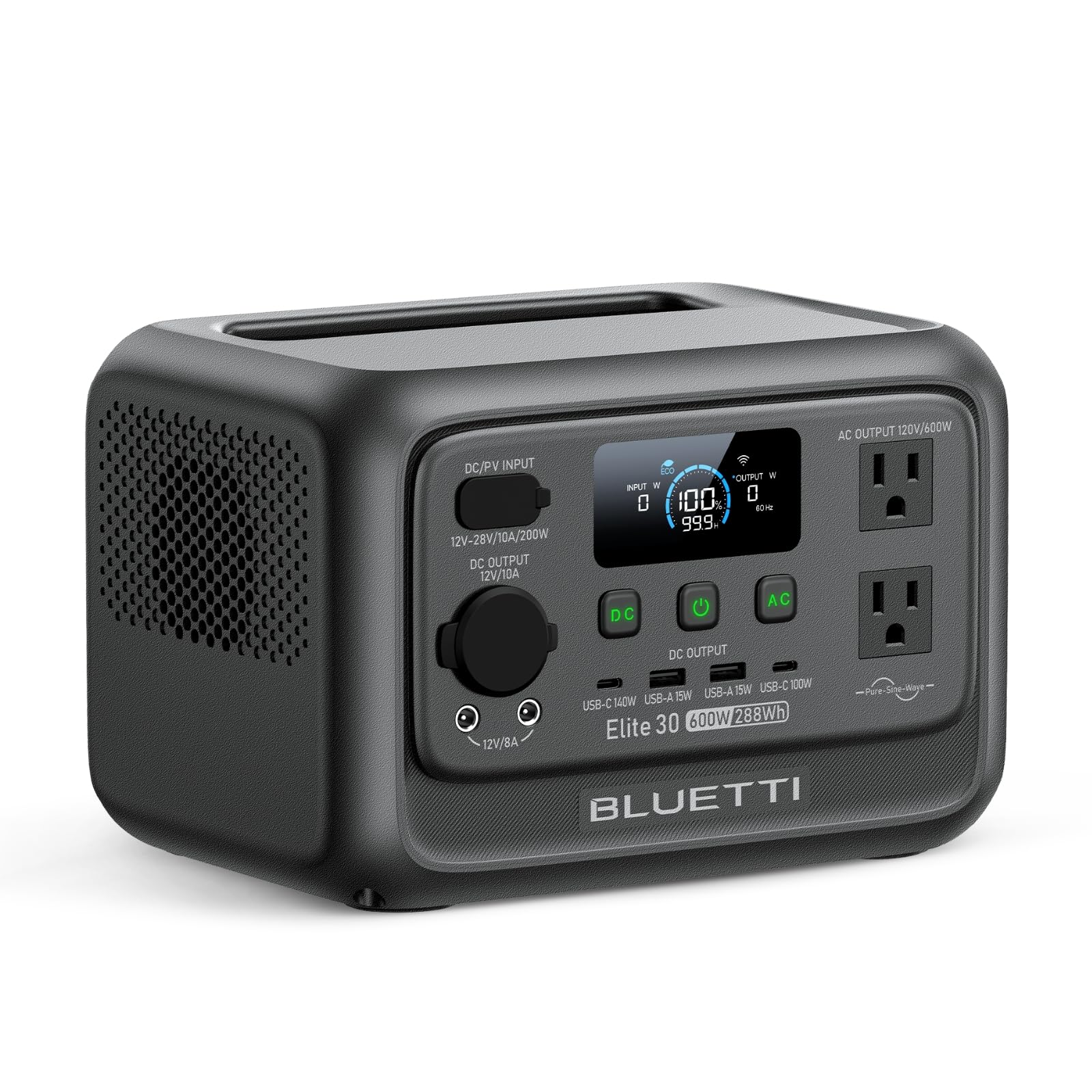
The BLUETTI Elite 30 V2 is a small portable power station built around a 288Wh lithium iron phosphate battery, and it is aimed at buyers who want a light backup unit rather than a whole-home solution. It suits apartment dwellers, campers and road-trippers who need to keep a few essentials running through a short outage or a night off-grid. This review covers its features, its real-world limits and the buyers it does not fit.
Features and Specifications
Product Type: Portable power station / solar generator
Battery Capacity: 288Wh
Battery Chemistry: LFP (lithium iron phosphate)
AC Output: 600W continuous
Surge Rating: 1500W (power lifting)
UPS Switchover: 10ms
Recharge Time: 45 minutes to 80%
Intended Use: Blackout backup, camping, outages, road trips
The headline number here is the 600W AC output, which sets the ceiling on what the unit can run. That is enough for a laptop, a router, a fan, a small TV or a mini fridge, but it will not carry a space heater, a microwave or a kettle. The 1500W "power lifting" figure describes a short surge window, not a sustained load, so buyers should plan around the 600W continuous rating.
Capacity is the other constraint. At 288Wh, the Elite 30 V2 is a short-bridge device: it keeps the lights on and the phone charged, then needs recharging. The 45-minute run to 80% is genuinely quick for this class and matters most during a multi-day outage, when the unit has to cycle back to full between uses.
Build and Battery Chemistry
The LFP battery is the most important long-term detail in the specification sheet. Lithium iron phosphate cells tolerate deep discharges and high heat better than the older lithium-ion mixes found in budget power stations, and they generally hold up over more charge cycles. For a device that may sit unused for months and then get worked hard during a storm, that is the right chemistry to have.
BLUETTI builds this as a compact, carry-friendly unit rather than a ruggedized expedition box. Buyers should treat it as a household appliance that travels, not as gear to throw in a truck bed. It is best stored indoors at a moderate temperature and recharged every few months to keep the cells healthy.
Power and Output
The 600W continuous output defines the practical use case. A typical outage load — router, phone chargers, a lamp, a laptop — draws a small fraction of that, so the limiting factor becomes battery capacity rather than wattage. Buyers who want to run a full-size refrigerator or a portable air conditioner need to look at a larger station.
The 10ms UPS switchover is the feature that separates this unit from a plain camping battery. Plugged into a wall outlet with a device connected, it can take over almost instantly when mains power drops, which is fast enough for most home networking gear and desktop computers to ride through without rebooting. Buyers should confirm the connected load stays under the continuous rating before relying on that behavior.
Charging and Maintenance
The 45-minute 0-80% recharge is the standout convenience feature. During a prolonged outage, a unit that refills in under an hour is far more useful than one that needs a full afternoon, because it can be cycled between the wall outlet and the loads it supports. Buyers who pair it with a solar panel should expect slower refills from solar than from AC.
Maintenance is minimal but not zero. LFP packs prefer partial charges over deep drains, and the unit should be topped up periodically during long storage stretches. It should also be kept out of direct sun and away from freezing conditions, which is standard advice for any lithium-based power station.
Trade-off: The 288Wh capacity is deliberately small, so the Elite 30 V2 will not carry a household through a multi-day outage without regular recharging, and buyers who want to run heavy appliances need a much larger and more expensive station.
Check the current price on Amazon
Who Should Buy the BLUETTI Elite 30 V2
This unit fits buyers who want a grab-and-go backup for a handful of devices rather than a whole-home generator. Apartment residents, renters and people in regions with short, frequent outages get the most value from the fast recharge and the UPS behavior. Campers and road-trippers who need to charge cameras, phones and a laptop overnight are also a good match, since the unit is light enough to move between a car and a tent.
It is not for buyers planning to run a refrigerator, a space heater or power tools. It is also a poor fit for anyone who wants to go off-grid for several days without a solar setup, because the battery will empty quickly under any real load. Buyers who need to keep a medical device running through a long outage should size up rather than rely on a 288Wh pack.
FAQ
-
How long does the BLUETTI Elite 30 V2 last on a full charge?
Run time depends entirely on the load. Small electronics like phones and a router draw very little and can run for many hours, while anything approaching the 600W continuous limit will drain the 288Wh battery in well under an hour. -
Can the Elite 30 V2 run a refrigerator?
Most full-size refrigerators draw more than the unit’s 600W continuous output, especially at compressor startup. A small, efficient mini fridge may work, but a standard kitchen refrigerator is beyond this unit’s class. -
What does the 10ms UPS feature actually do?
When the station is plugged into a wall outlet and a device is connected to it, the unit switches to battery power within about 10ms of a blackout. That is fast enough for most computers and networking equipment to stay on without restarting. -
How fast does it recharge from empty?
The unit reaches 80% in roughly 45 minutes on AC power. The final 20% takes longer, which is normal behavior for lithium batteries and helps protect cell life. -
Is LFP better than a regular lithium-ion battery?
LFP cells generally tolerate heat and deep discharge better and last through more charge cycles, which suits a backup device that sits idle for long stretches. The trade-off is that LFP packs are typically a little heavier for the same capacity. -
Can it be charged with solar panels?
Yes, this class of power station accepts solar input, though solar charging is slower than AC and depends on panel wattage and sunlight. Buyers should match panel output to the unit’s solar input rating. -
How much can it power at once?
The continuous AC output is 600W, so the combined load of everything plugged in should stay at or below that figure. The 1500W power lifting rating covers brief surges only. -
Is it safe to leave plugged in all the time?
Using it as a UPS means it stays connected to the wall, which is the intended setup for that feature. Buyers should still keep it in a ventilated, moderate-temperature spot and follow the manufacturer’s storage guidance. -
Who is this unit not for?
Buyers who need to run large appliances, power tools or a whole home through an extended outage should look at a larger station. This is a compact essentials unit, not a household generator replacement. -
How should it be stored between uses?
Keep it indoors, away from freezing temperatures and direct sun, and top it up every few months. Leaving an LFP battery at a very low charge for a long period is the main thing to avoid.
Bottom Line
The BLUETTI Elite 30 V2 is the right pick for buyers who want a light, fast-recharging backup unit for phones, routers, laptops and a few small appliances during short outages or trips. Its LFP battery and 10ms UPS behavior make it more than a camping battery, but the 288Wh capacity keeps it firmly in essentials-only territory. Buyers who need to run a fridge or a heater should size up; everyone else gets a compact, well-rounded backup station at a mid-range price.