Why there are Amazon links here: Brave Review is paid a commission for qualifying Amazon purchases made through the links below. Your price does not change, and using our links is entirely optional. How this works
Best Permission and Lease Considerations for Locks for Landlords, Tenants, and Property Managers
Changing a lock is a five-minute job with a legal tail that can run for months. Whether a tenant may swap the deadbolt, whether a landlord must hand over a key, and who pays when a rekey goes wrong are all governed by the lease — and the lease is only as good as the paperwork behind it. This guide covers five books and form packs that help landlords, tenants, and property managers get the permission and lease side of lock changes right. The picks below range from a locksmithing reference to ready-to-sign residential lease forms, and the overview table shows which one fits which job.
The Picks at a Glance
| Product | Key Spec | Best Use | Price Tier |
|---|---|---|---|
| The Complete Book of Locks and Locksmithing, Seventh Edition | Locksmithing reference, seventh edition | Understanding lock hardware before negotiating lease terms | Mid |
| Practical Guide to Commercial Leases | Commercial lease negotiation guide | Commercial tenants and landlords setting lock and access rules | Mid |
| Essential Landlord Forms & Notices | Residential lease, application, and notice templates | Landlords who need a full document set | Budget |
| Comprehensive Residential Lease Agreement Forms | Three blank rental forms plus reference guide | Small landlords who want paper forms in hand | Budget |
| Rental Lease Agreement Forms Book | 8.5" x 11" residential forms for landlords and managers | Property managers documenting leases and payments | Budget |
1. The Complete Book of Locks and Locksmithing, Seventh Edition

Format: Book
Edition: Seventh
Subject: Locks and locksmithing
Intended use: Reference for lock hardware and practice
Best for: Landlords and tenants who want to understand the hardware side
The Complete Book of Locks and Locksmithing, Seventh Edition is the reference pick for anyone who wants to argue about a lock from a position of knowledge. It covers lock types, how cylinders and deadbolts work, and the trade practice behind installation and servicing — the background a landlord needs before agreeing to a tenant’s request to change hardware. A tenant who reads it can tell a reasonable upgrade from a security downgrade. It suits property owners, handypeople, and serious DIYers rather than someone who only wants a form to sign.
Trade-off: A full locksmithing reference is deep and technical, so a reader who only needs lease language will find most of it beside the point.
Check the current price on Amazon
2. Practical Guide to Commercial Leases
Format: Book
Subject: Commercial lease negotiation
Intended audience: Landlords and tenants
Focus: Securing terms and protecting interests
Best for: Commercial tenants and landlords negotiating access and lock clauses
Practical Guide to Commercial Leases narrows the problem to commercial space, where lock and access questions usually run through build-out, after-hours access, and landlord entry rights rather than a residential deadbolt. The book walks through how to negotiate terms and protect the interests of either side of the table, which makes it useful for a small business tenant signing a first lease or a landlord drafting one. It is the pick for anyone whose lock question sits inside a commercial agreement rather than a residential one.
Trade-off: The commercial focus means residential landlords and apartment tenants will find little that applies to a standard home lease.
Check the current price on Amazon
3. Essential Landlord Forms & Notices
Format: Forms and notices collection
Coverage: Residential lease agreements, rental applications, legal notices, move-out forms
Market: U.S. property owners
Intended use: Landlord documentation
Best for: Landlords who want a broad document set in one place
Essential Landlord Forms & Notices is the broadest paper pick here: residential leases, rental applications, legal notices, and move-out forms collected for U.S. property owners. That range matters for lock questions because permission to change a lock usually lives in the lease itself, and the notice templates cover the follow-up when a tenant asks. A landlord building a document folder from scratch gets the most coverage per dollar from this one. It suits small landlords and first-time owners more than large management firms with their own legal templates.
Trade-off: A broad template collection is general by design, so state-specific rules and unusual lock clauses may still need a local attorney’s review.
Check the current price on Amazon
4. Comprehensive Residential Lease Agreement Forms

Format: Blank rental forms with reference guide
Included: Three blank rental forms
Subject: Residential rental lease agreements
Intended audience: Rental property owners
Best for: Small landlords who want physical forms plus guidance
Comprehensive Residential Lease Agreement Forms pairs three blank rental forms with a reference guide, which is the practical combination for a landlord who wants to fill in a lease by hand and still understand what each clause is doing. The reference guide is where a lock or key clause gets explained, and the blank forms are what actually get signed. It has moved steadily in the past month, which fits a category where landlords buy in small batches. It suits owners of one to a few units who prefer paper over software.
Trade-off: Three forms go quickly for a landlord with several units, and blank paper forms mean every lease is handwritten or typed separately.
Check the current price on Amazon
5. Rental Lease Agreement Forms Book
Format: Bound forms book
Size: 8.5" x 11"
Coverage: Lease agreements, tenant details, payment records, property documentation
Intended audience: Landlords and property managers
Best for: Property managers who document leases and payments together
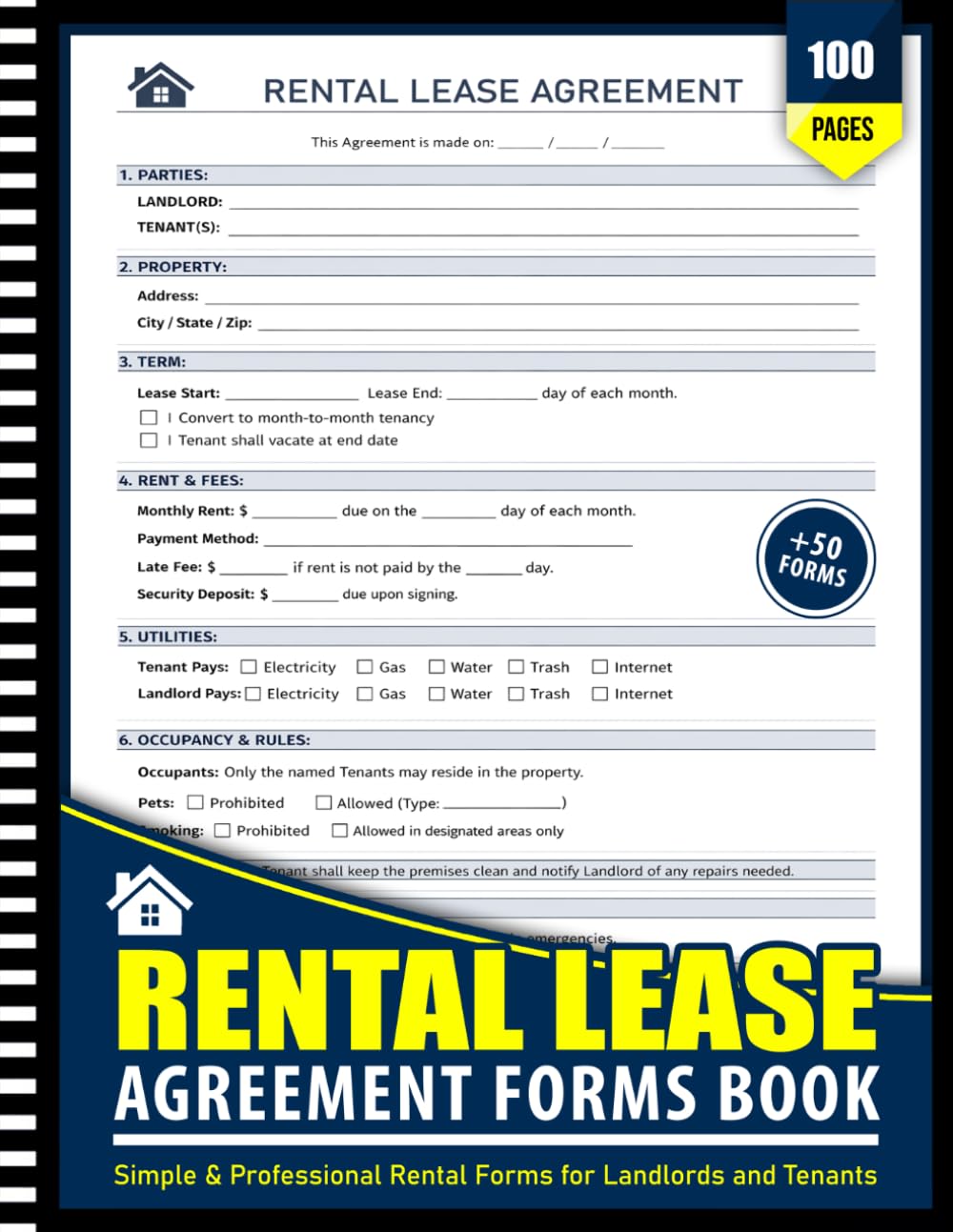
Rental Lease Agreement Forms Book is built for the manager who keeps a paper file per unit. Alongside the lease agreement it covers tenant details, payment records, and property documentation, so a lock change, a key handover, and the rent record all live in the same 8.5" x 11" book. The letter size suits a standard binder or filing cabinet. It fits property managers and hands-on landlords who want one consistent document trail rather than loose sheets.
Trade-off: A bound book is a fixed format, so a manager who needs custom clauses or digital copies will find it less flexible than a printable template.
Check the current price on Amazon
Before You Buy
- Scope: Confirm whether the pick covers residential or commercial leases — the two have different rules on lock changes and landlord entry.
- Format: Decide between a reference book, blank paper forms, and a bound record book before buying; each suits a different workflow.
- Coverage: Check that lease templates include a key and lock clause, or plan to add one.
- Local law: Treat every general template as a starting point and have state-specific terms reviewed locally.
- Volume: Match the number of forms to the number of units; small packs run out fast for multi-unit owners.
- Record keeping: A forms book keeps lease, payment, and property records together; loose forms need their own filing system.
Frequently Asked Questions
-
Does a tenant need permission to change a lock?
In most residential leases, yes — the lease usually names the landlord as the party who controls hardware, and a tenant who swaps a lock without approval risks breaching the agreement and losing the deposit. -
Can a landlord keep a key to a rental?
That depends on the lease and local law; the safest approach is to state key and access rules clearly in the lease so both sides know where they stand. -
Which pick is best for a commercial tenant?
Practical Guide to Commercial Leases, because it addresses negotiation and access terms in commercial agreements rather than residential deadbolts. -
Do these forms work in every state?
No — they are general U.S. templates, and state or city rules on locks, keys, and entry should be checked with a local attorney. -
What if a landlord only needs a lease and a lock clause?
Comprehensive Residential Lease Agreement Forms is the leanest fit, pairing blank forms with a reference guide that explains the clauses. -
Is a locksmithing book useful for lease questions?
It is useful for understanding the hardware being negotiated — lock types, cylinders, and installation — but it does not replace lease language.
Bottom Line
The right pick depends on which side of the lock question the reader sits on. Landlords and property managers who need paperwork should start with Essential Landlord Forms & Notices for the widest document coverage, while commercial tenants should go straight to Practical Guide to Commercial Leases. Anyone who wants to understand the hardware before signing anything should keep The Complete Book of Locks and Locksmithing, Seventh Edition on the shelf.
