Why there are Amazon links here: Brave Review is paid a commission for qualifying Amazon purchases made through the links below. Your price does not change, and using our links is entirely optional. How this works
Best Air Quality Sensor for a Home: 5 Picks Worth Buying
Indoor air quality is easy to ignore until headaches, stale rooms, or a stuffy bedroom start to add up. This guide narrows the field to five air quality sensors that cover the main jobs: an Alexa-friendly all-rounder, budget multi-gas meters, a large-screen desk unit, and a long-battery specialist. Each pick is aimed at a different buyer, whether that is a smart-home tinkerer, a family watching a nursery, or a renter who wants a simple battery-powered reader. The overview below puts the key specs side by side so a decision can be made in under a minute.
Overview of the Picks
| Product | Key Spec | Best Use | Price Tier |
|---|---|---|---|
| Amazon Smart Air Quality Monitor | Temperature, humidity, CO, PM2.5, VOCs; Alexa | Smart-home all-rounder | Mid |
| CO2 16 in 1 Portable Air Meter | 16 metrics, HD color screen, NDIR CO2 | Portable room-to-room checks | Budget |
| 16 in 1 Monitor with 7" Display | 7-inch display, NDIR CO2, PM2.5/PM10, HCHO, TVOC | Desk and office monitoring | Mid |
| Aranet4 Indoor Air Quality Monitor | 4-year battery, NDIR CO2, e-ink screen | Long-term, low-maintenance tracking | Premium |
| 10-in-1 Portable CO2 Detector | CO2, TVOC, HCHO, PM2.5, AQI, real-time | First-time buyers on a budget | Budget |
Amazon Smart Air Quality Monitor
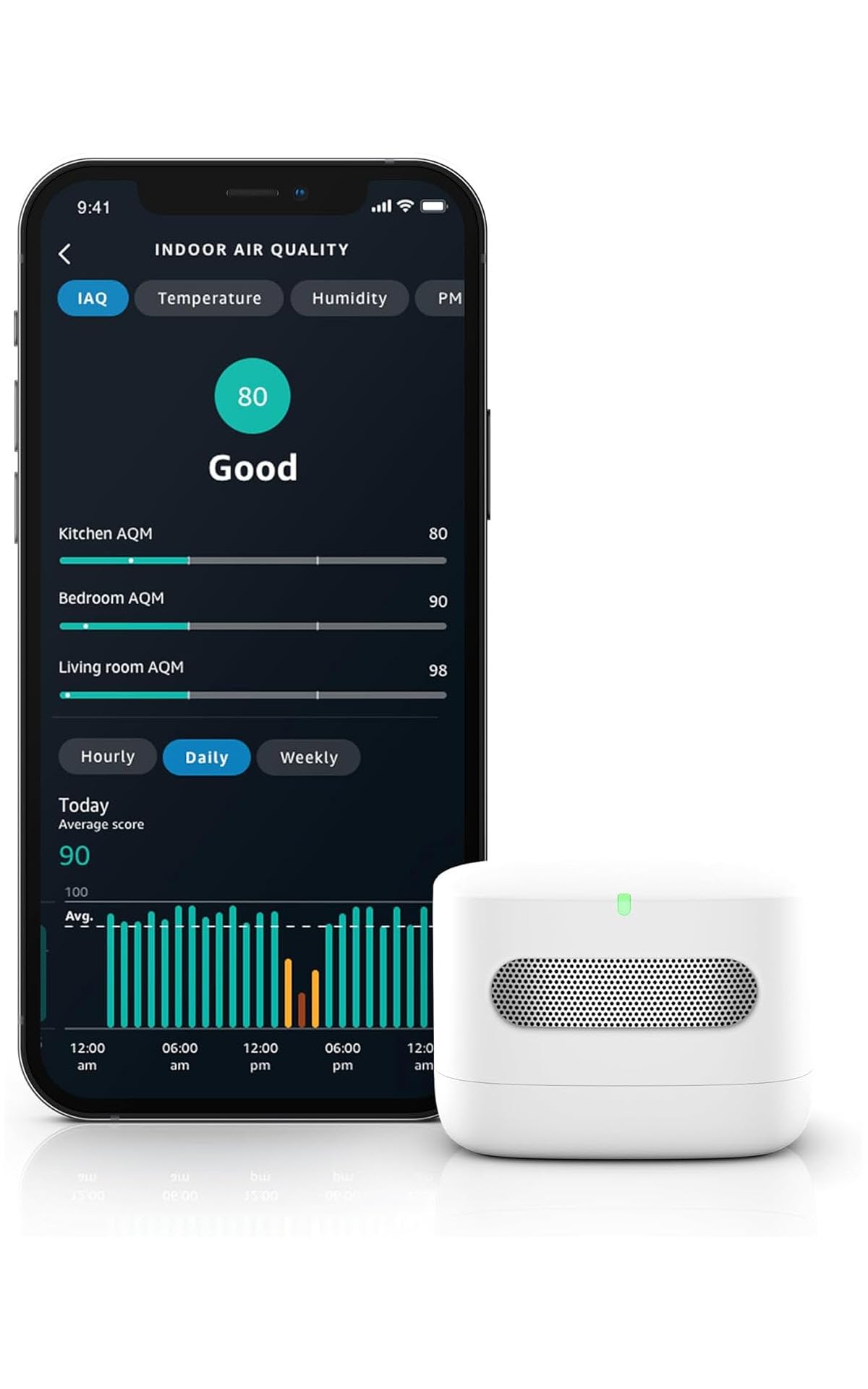
Type: Smart air quality monitor
Metrics: Temperature, humidity, carbon monoxide, PM2.5, VOCs
Smart features: Alexa notifications, app tracking
Power source: Corded adapter
Intended use: Whole-home or single-room smart monitoring
This is the pick for households already living inside the Alexa ecosystem. The monitor tracks the five metrics that matter most in a normal home — temperature, humidity, carbon monoxide, PM2.5, and VOCs — and pushes notifications when air quality drops. Setup is app-driven, and the compact puck shape sits unobtrusively on a shelf or counter. It is a sensible first sensor for anyone who wants data without learning a new interface.
It earns its place because the integration does the heavy lifting: Alexa routines can trigger a fan, an air purifier, or a simple spoken warning when readings go bad. The trade-off is that it is corded and tied to Amazon’s ecosystem, so it is not the pick for a buyer who wants a standalone, battery-powered reader with no account or hub involved.
CO2 16 in 1 Portable Air Meter
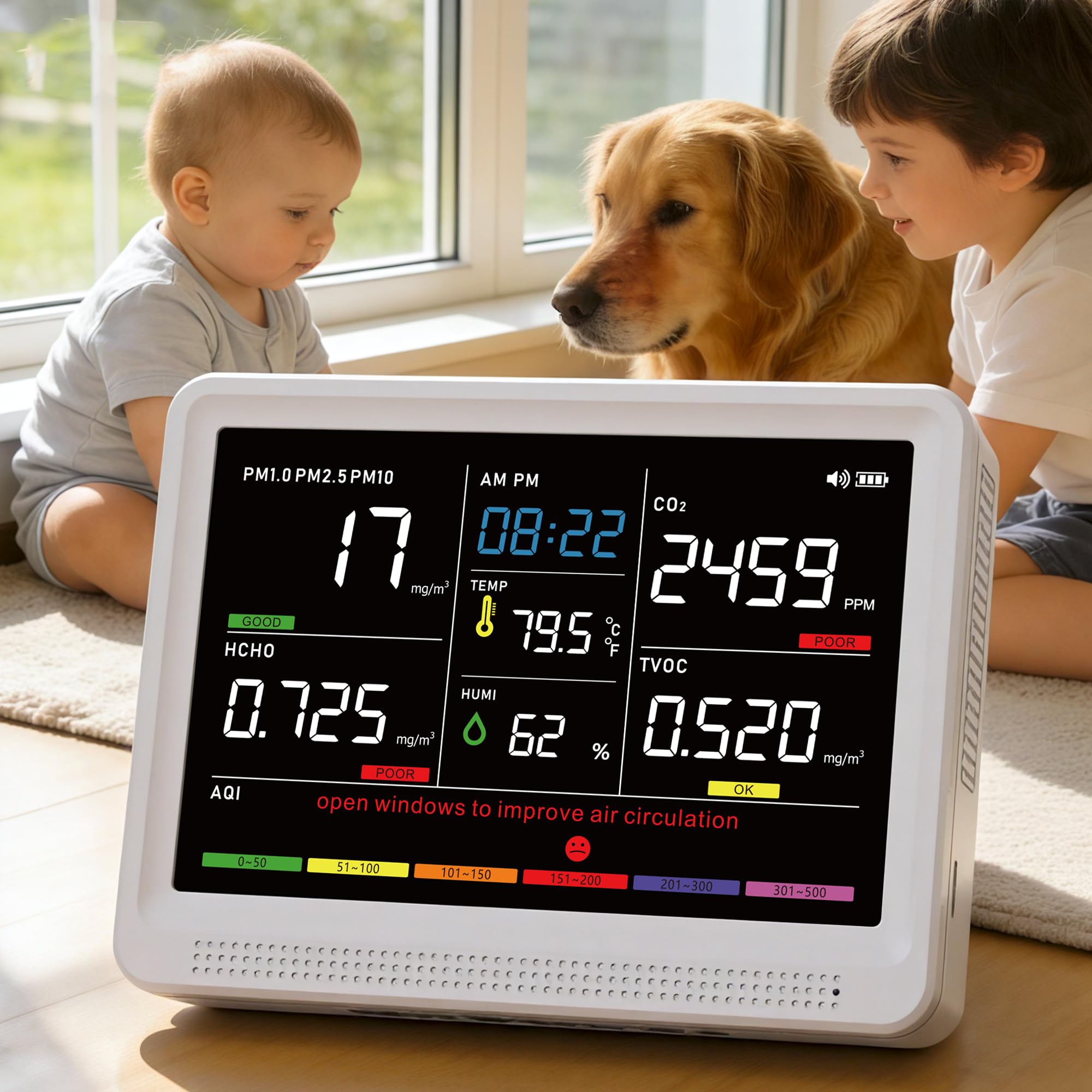
Type: Portable handheld air meter
Metrics: CO2, TVOC, PM2.5, PM1.0, PM10, HCHO, temperature, humidity, AQI
Display: HD color screen
Sensor: NDIR CO2
Intended use: Home, office, bedroom, car
This meter packs a broad set of readings into a handheld body that moves between rooms and vehicles. The HD color screen makes the numbers easy to read at a glance, and the NDIR sensor is the right choice for CO2 accuracy in a portable unit. It is aimed at buyers who want a lot of data for not much money and who do not mind carrying a device from room to room.
The appeal here is breadth: a single tool covers particulates, formaldehyde, VOCs, and CO2 without buying three separate gadgets. The trade-off is typical of budget multi-meters — a compact handheld cannot match a fixed, calibration-focused instrument for long-term precision, so it works best as a spot-check tool rather than a permanent reference.
16 in 1 Air Quality Monitor with 7" Display
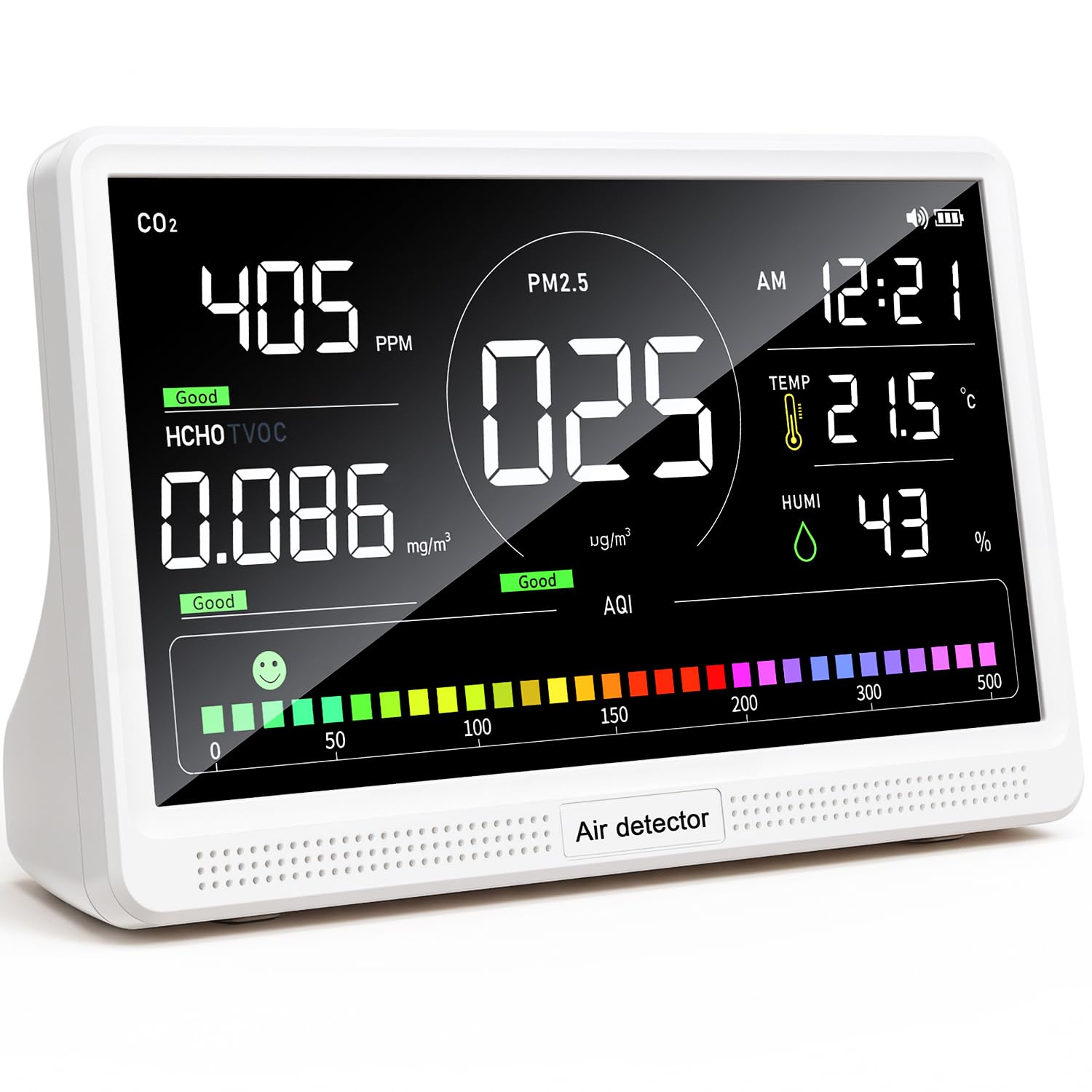
Type: Desktop air quality monitor
Metrics: CO2, PM2.5, PM10, HCHO, TVOC
Display: 7-inch large display
Sensor: Precision NDIR CO2 sensor
Intended use: Home, office, bedroom
The 7-inch display is the headline feature, and it is a genuinely useful one for an office or living room where readings need to be visible from across the room. The precision NDIR sensor handles CO2, while PM2.5, PM10, HCHO, and TVOC cover the common indoor pollutants. It is a stationary desk unit, which suits buyers who want a permanent readout rather than a device that gets moved.
This pick fits home offices, classrooms, and busy living spaces where a large, glanceable panel beats a phone app. The trade-off is size and placement: a 7-inch screen needs real estate and a nearby outlet, so it is poorly suited to a renter who wants something tucked on a narrow shelf or carried between locations.
Aranet4 Indoor Air Quality Monitor
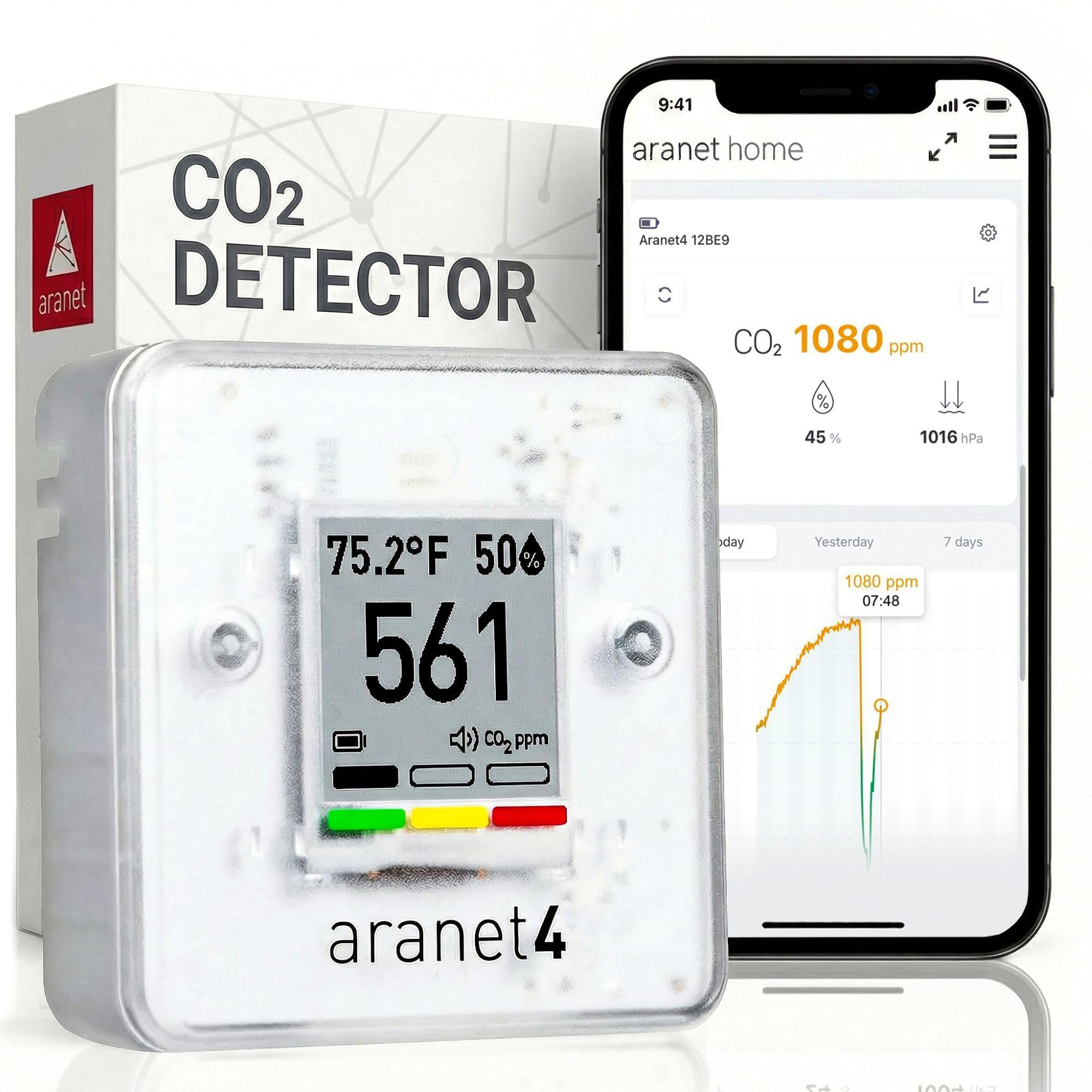
Type: Wireless indoor air quality monitor
Metrics: Carbon dioxide, temperature, humidity, pressure
Power source: 4-year battery life
Sensor: NDIR CO2 sensor
Display: E-ink screen
Intended use: Home, office
This is the low-maintenance specialist: a four-year battery, an e-ink screen that is always readable, and an NDIR sensor tracking CO2, temperature, humidity, and pressure in real time. The e-ink display is a smart match for a device that runs for years, because it draws almost nothing when the reading is static. It is the pick for a buyer who wants to hang a sensor on a wall and forget about it.
It earns its premium tier by being the least fussy option here — no app account required for basic use, no charging routine, no clutter. The trade-off is focus: it tracks CO2 and climate but not the particulate or VOC load that the multi-meters cover, so a buyer worried about smoke, dust, or chemical fumes will need a second device.
10-in-1 Portable CO2 Detector
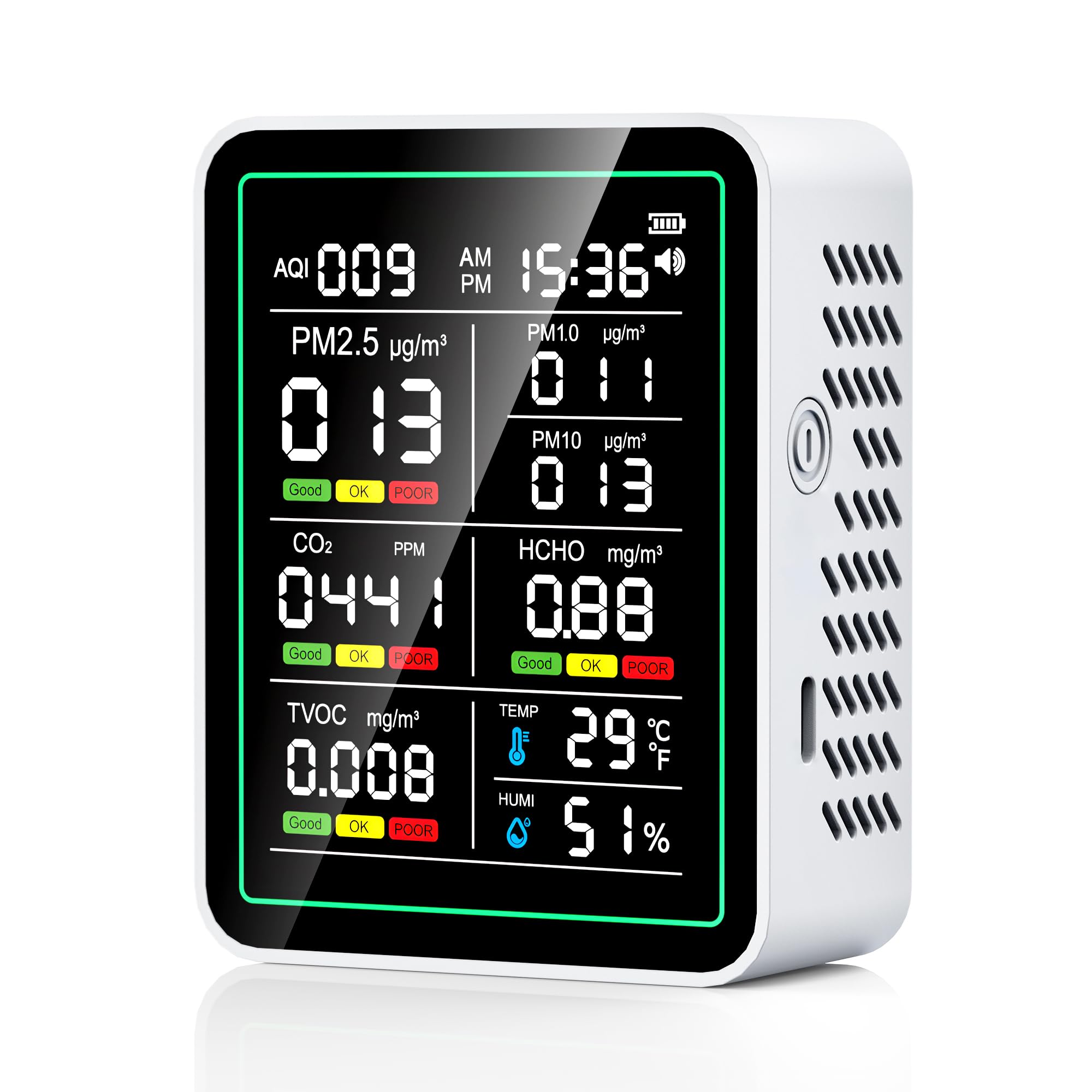
Type: Portable real-time air detector
Metrics: CO2, TVOC, HCHO, temperature, AQI, PM2.5, PM1.0, PM10, time
Display: Real-time readout
Intended use: Home, cars, schools, hotels
This is the entry point for a first-time sensor buyer who wants a wide spread of readings without spending much. The 10-in-1 label covers CO2, TVOC, HCHO, particulates, temperature, AQI, and even a clock, all in a portable body meant for home, car, school, or hotel use. It is a practical travel companion for anyone who wants to check a rental or a hotel room quickly.
It suits buyers who want a cheap, portable second opinion on a room and who value coverage over precision. The trade-off is that a new, budget-tier multi-meter is the least proven option on this list, and its broad metric list comes at the cost of the narrow accuracy a dedicated CO2 or particulate instrument would offer.
Before You Buy
- Metrics: Decide which pollutants matter most — CO2 for stuffy rooms, PM2.5 for smoke and dust, VOCs and HCHO for paints and furniture — and pick a sensor that covers them.
- Power: Corded units stay put and need an outlet; battery units like the Aranet4 suit walls and shelves without wiring.
- Display: E-ink is always readable and sips power, while color screens are brighter but draw more and often need charging.
- Smart-home fit: Alexa households gain the most from the Amazon monitor; standalone buyers may prefer a device with no account requirement.
- Portability: A handheld meter checks multiple rooms and cars, but a fixed unit gives a continuous reading in one place.
- Placement: Sensors need breathing-height placement away from direct sunlight, stoves, and vents to read a room honestly.
- Calibration: NDIR CO2 sensors are the more stable choice; any sensor benefits from occasional fresh-air baseline checks.
Frequently Asked Questions
-
What does an air quality sensor actually measure?
Most home sensors track a mix of CO2, particulate matter like PM2.5, volatile organic compounds, temperature, and humidity. The exact list depends on the model, so the metric list matters more than the marketing name. -
Is CO2 or PM2.5 more important for a home?
Both matter for different reasons: CO2 flags poor ventilation and stuffy rooms, while PM2.5 flags smoke, dust, and combustion particles. A sensor covering both gives the fullest picture. -
Does a home air quality sensor need Wi-Fi?
No. Battery-powered standalone units like the Aranet4 work without any network, while smart monitors use Wi-Fi or a hub for app alerts and automation. -
Where should a sensor be placed?
Put it at breathing height in the room that gets the most use, away from direct sun, open windows, and cooking appliances. A second unit in the bedroom is often worthwhile. -
How often do sensors need charging or battery changes?
It varies widely: e-ink battery units can run for years, while color-screen portables need regular charging. Corded models need no battery attention at all. -
Can a sensor replace a carbon monoxide alarm?
No. A monitor reports levels for awareness, but a dedicated CO alarm is the safety device a home should have regardless of what else is installed.
Bottom Line
For most homes, the Amazon Smart Air Quality Monitor is the best air quality sensor for a home because it covers the five metrics that matter, sends alerts, and slots into an existing Alexa setup with almost no effort. Buyers who want long-term, no-fuss tracking should look at the Aranet4, and budget-first shoppers can start with one of the portable multi-meters. Check the current price on Amazon before deciding.
