Why there are Amazon links here: Brave Review is paid a commission for qualifying Amazon purchases made through the links below. Your price does not change, and using our links is entirely optional. How this works
Best Thermal Leak Detector for a Home: 5 Picks That Find Drafts Fast
A thermal leak detector turns invisible problems — cold drafts, thin insulation, overheated wiring, leaking ducts — into a color image anyone can read. This roundup covers five thermal cameras that suit three kinds of buyers: the homeowner chasing a single drafty room, the DIY remodeler mapping a whole house, and the tradesperson who needs temperature alarms on the job. The overview table below lines up every pick by key spec, best use and price tier, so a shortlist is possible in under a minute.
The Picks at a Glance
| Product | Key Spec | Best Use | Price Tier |
|---|---|---|---|
| BLACK+DECKER Thermal Leak Detector (TLD100) | Purpose-built leak detector | Quick single-spot draft checks | Budget |
| GT14S Thermal Imaging Camera | -4°F to 1202°F range, 25Hz | All-round home inspection | Mid-range |
| Thermal Imaging Camera, 240 x 240 TISR | -4°F to 1022°F, high/low alarm | First thermal camera on a budget | Budget |
| TOPDON TC004 Mini Thermal Imaging Camera | 15H battery, 128 x 128 IR | Long walkthroughs, portability | Mid-range |
| HF96 Thermal Camera | 240×240 super resolution, laser pointer | HVAC and electrical work | Premium |
1. BLACK+DECKER Thermal Leak Detector (TLD100)
Type: Purpose-built thermal leak detector
Intended use: Draft and insulation checks around the home
Form factor: Handheld, point-and-read
Best for: Fast spot checks on doors, windows and outlets
Price tier: Budget

BLACK+DECKER Thermal Leak Detector (TLD100)
This is the simplest tool in the group and the one closest to the phrase "thermal leak detector" in the literal sense. It is a point-and-read device built for finding temperature differences at a specific spot rather than producing a full thermal picture of a wall. A homeowner who suspects a drafty door or a poorly sealed outlet can sweep it along a surface and watch for the reading to shift. It is light, pocketable and needs no interpretation of a color palette, which makes it the least intimidating option for a first-time user. The catch is that it shows a number, not a scene, so tracing where a leak starts and how far it spreads takes patience.
Trade-off: A single-spot detector cannot reveal a whole wall’s pattern of heat loss the way an imaging camera can, so it is a confirmation tool rather than a survey tool.
Check the current price on Amazon
2. GT14S Thermal Imaging Camera
Specifications:
Temperature range: -4°F to 1202°F
Image frequency: 25Hz
Weight: 240g
Runtime: 14 hours
Modes: Edge enhancement, thermometer mode
Intended use: HVAC and home inspection
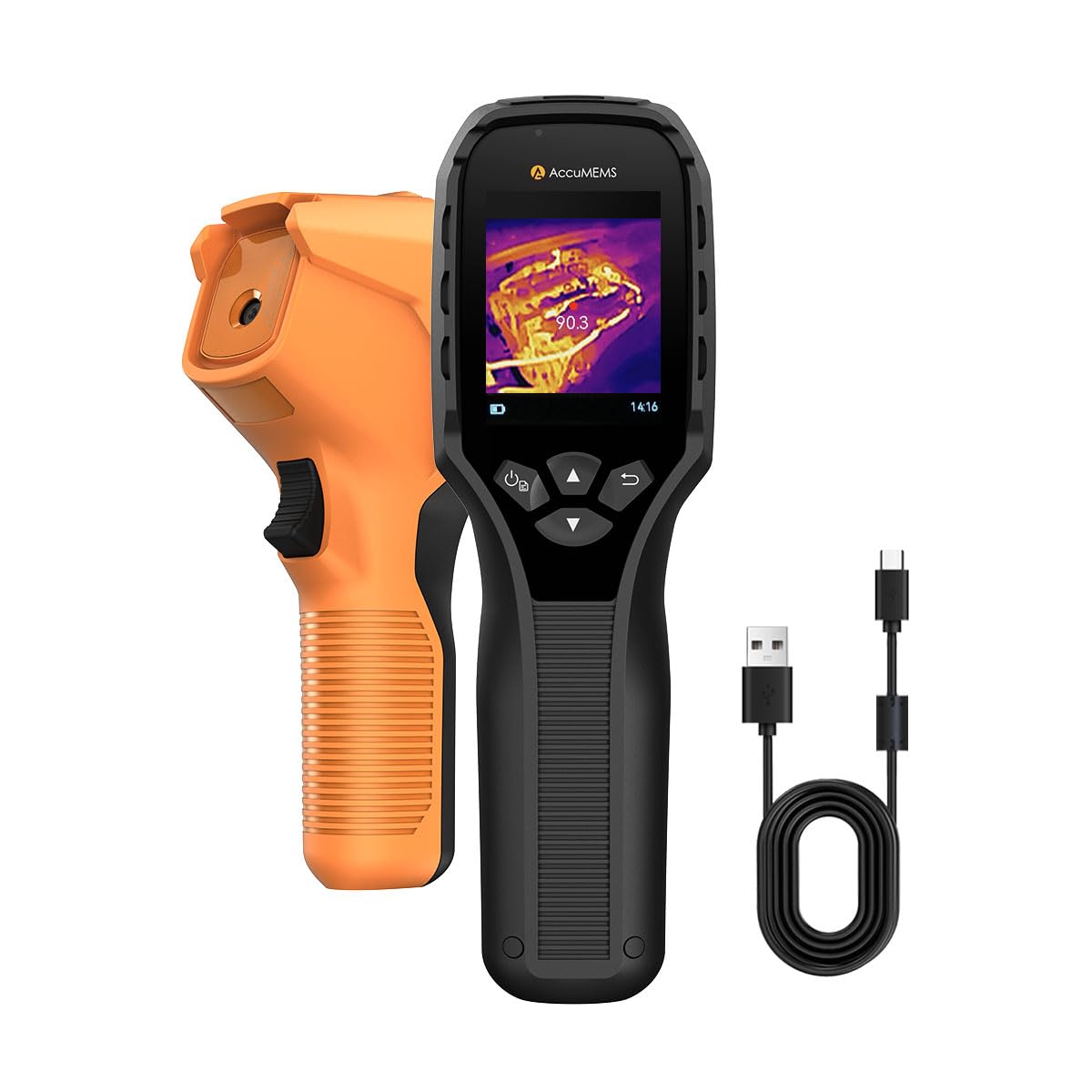
GT14S Thermal Imaging Camera with Edge Enhancement, Thermometer Mode
The GT14S is the value sweet spot for a homeowner who wants a real thermal image rather than a spot reading. Its 240g body is light enough to hold overhead for a full attic or crawlspace walkthrough, and the 14-hour runtime covers several inspection sessions before a recharge. Edge enhancement sharpens the outline of studs, joists and window frames, which helps when the goal is spotting where insulation stops short. Thermometer mode adds a numeric readout on top of the color image, so a cold patch can be confirmed as a number rather than a shade. The wide temperature range reaches well past household conditions, leaving headroom for garage, appliance and HVAC checks.
Trade-off: A light 240g housing usually means a smaller display and simpler controls than premium job-site cameras, so fine detail work in bright light can feel cramped.
Check the current price on Amazon
3. Thermal Imaging Camera, 240 x 240 TISR Resolution
Specifications:
Resolution: 240 x 240 TISR
Refresh rate: 25Hz
Temperature range: -4°F to 1022°F
Field of view: 50°FOV
Alerts: High/low temperature alarm
Intended use: Home inspection
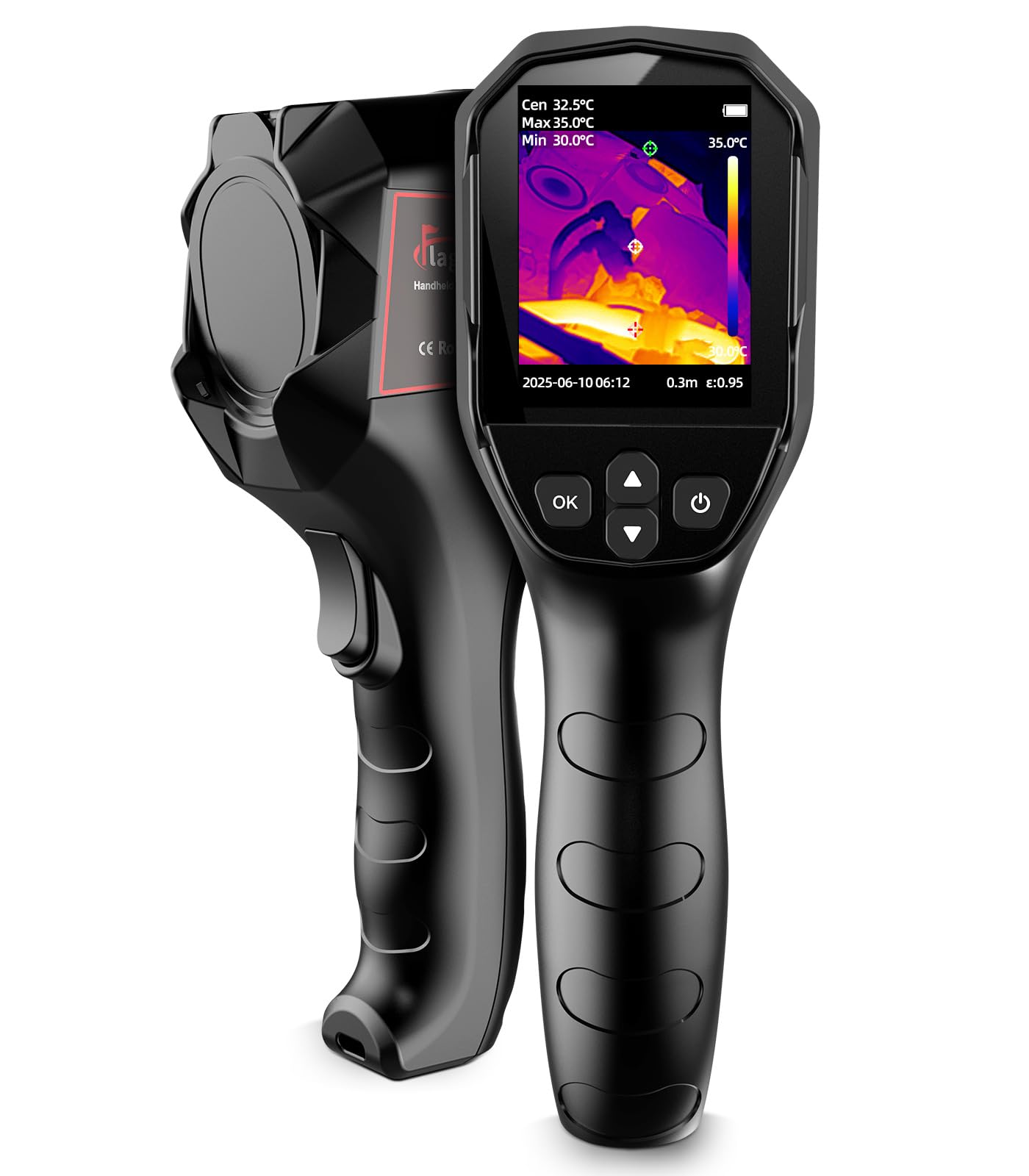
Thermal Imaging Camera, 240 x 240 TISR Resolution for Home Inspection
This camera targets the buyer who wants imaging resolution without paying premium money. The 240 x 240 TISR resolution and 25Hz refresh rate put it in the same league as the pricier picks on paper, and the 50° field of view is wide enough to frame a doorway or a full wall section in one shot. High and low temperature alarms are the practical feature here: set a threshold and the camera flags anything outside it, which turns a slow manual sweep into a faster pass along a ceiling line or duct run. The 1022°F ceiling covers radiators, registers and most household appliances comfortably.
Trade-off: Budget imaging cameras typically ship with a basic screen and minimal on-device software, so image clarity in a sunlit room may disappoint compared with premium units.
Check the current price on Amazon
4. TOPDON TC004 Mini Thermal Imaging Camera
Specifications:
Battery life: 15 hours
Refresh rate: 25Hz
IR resolution: 128 x 128
Display resolution: 240 x 240 TISR
Alerts: High/low temperature alerts
Features: Auto shutdown
Intended use: Handheld thermal imaging
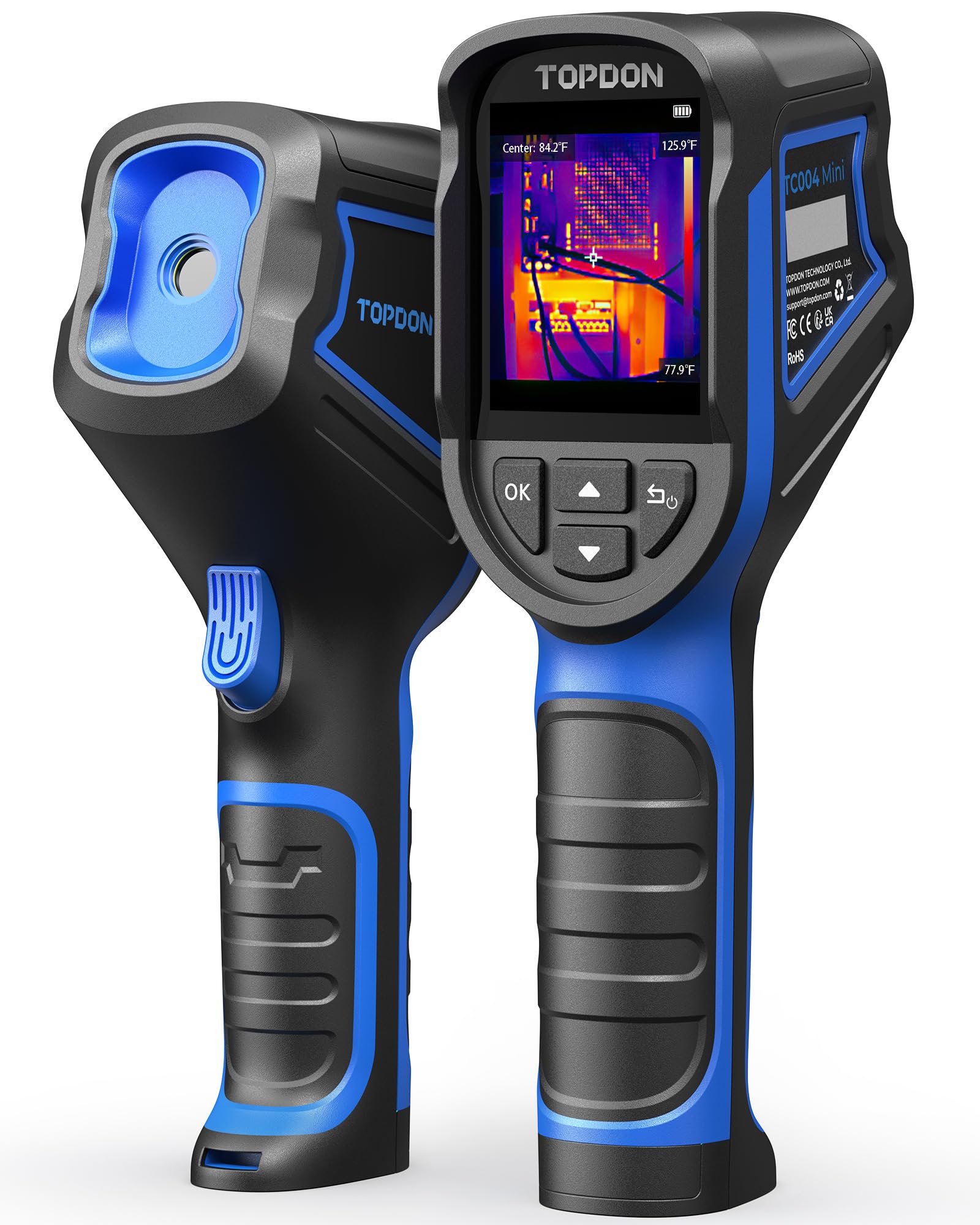
TOPDON TC004 Mini Thermal Imaging Camera
The TC004 Mini is built around endurance and portability. A 15-hour battery life is the longest in this roundup, and auto shutdown protects that reserve when the camera is set down mid-inspection. The 128 x 128 IR sensor is the lowest native resolution here, but the 240 x 240 TISR display upscales the output into a usable image for locating drafts and insulation gaps. High and low temperature alerts make it a practical scanner for a homeowner working through a checklist room by room. The mini format slips into a jacket pocket, which matters for anyone inspecting a rental or a second property.
Trade-off: The lower native IR resolution means small temperature differences across short distances are harder to resolve, so close-up work rewards a steadier hand.
Check the current price on Amazon
5. HF96 Thermal Camera
Specifications:
Resolution: 240×240 super resolution
Refresh rate: 25Hz
Runtime: 11 hours
Temperature range: -4°F to 1022°F
Features: AI scene detection, laser pointer
Intended use: HVAC, electrical and building inspection
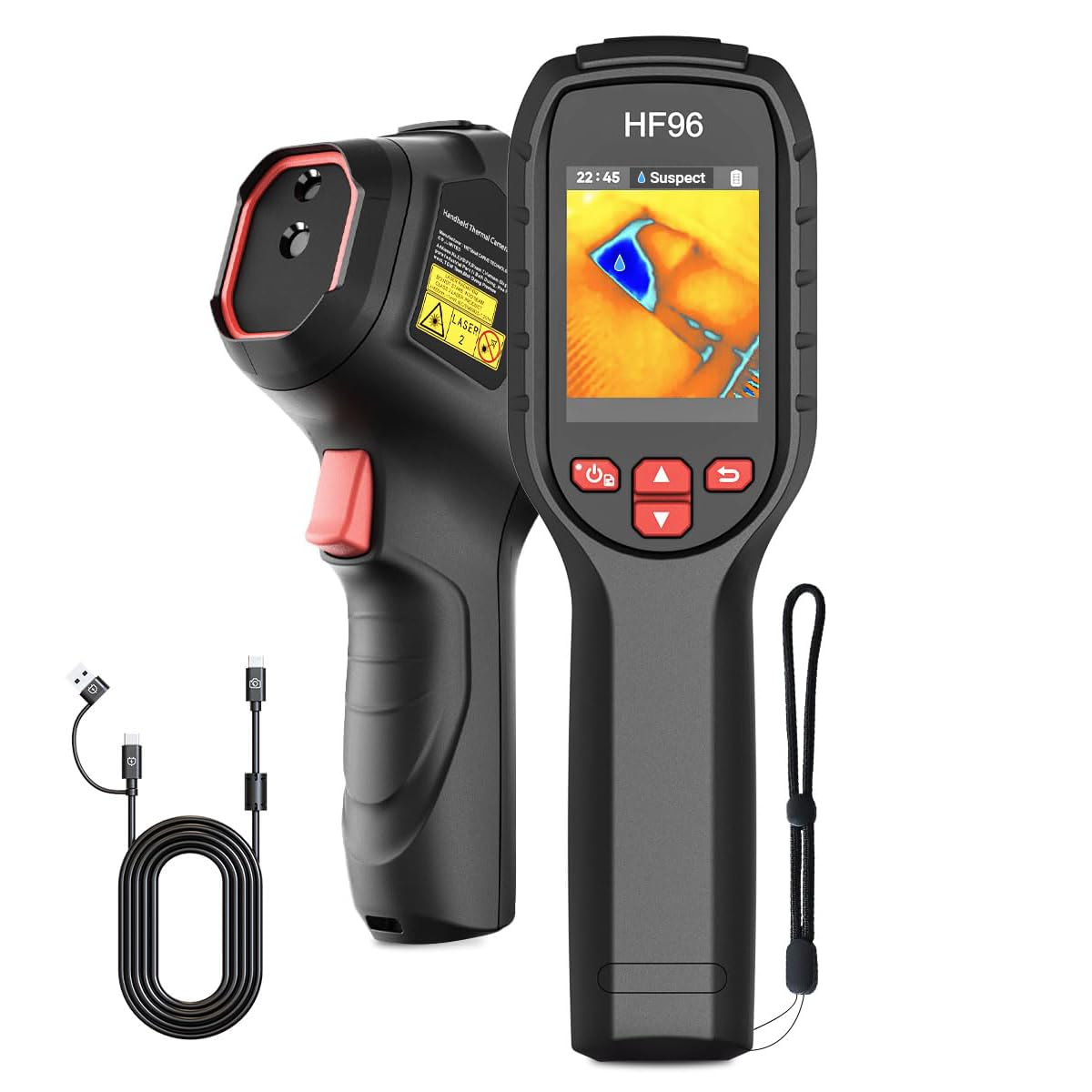
HF96 Thermal Camera with AI Scene Detection and Laser Pointer
The HF96 is the pick for someone who inspects buildings as part of the job rather than once a season. AI scene detection adjusts the image for the setting at hand, which shortens setup time when moving between a panel, a duct run and an exterior wall. The laser pointer marks the exact spot being measured, useful for documenting a fault for a client or a contractor. A 240×240 super resolution sensor and 25Hz refresh rate keep the image smooth while panning across a ceiling. The 11-hour runtime is the shortest of the imaging cameras here, but still enough for a full working day.
Trade-off: The extra features and higher price only pay off for frequent inspection work; a homeowner with one drafty room is buying capability that will sit unused.
Check the current price on Amazon
Before You Buy
- Resolution: Native IR resolution decides how small a temperature difference the camera can separate; 128 x 128 suits spot checks, 240 x 240 suits wall-scale surveys.
- Temperature range: A range topping out near 1022°F covers HVAC, appliances and most electrical panels; a wider ceiling adds headroom for equipment checks.
- Refresh rate: 25Hz keeps the image steady while panning; slower rates smear during a walkthrough.
- Battery and runtime: Long runtime matters for whole-house inspections; auto shutdown protects the reserve between rooms.
- Alerts: High/low temperature alarms turn a slow manual sweep into a fast pass along ducts and ceiling lines.
- Form factor: A mini body suits pocket carry and ladder work; a larger housing usually brings a bigger screen.
- Intended use: Purpose-built leak detectors confirm a single spot, while imaging cameras map a whole surface.
Frequently Asked Questions
- What does a thermal leak detector actually find? It reveals temperature differences on a surface, which point to drafts, missing insulation, air leaks around frames and outlets, and overheated electrical components.
- Is a spot detector or an imaging camera better for a home? A spot detector confirms a suspected leak quickly and cheaply; an imaging camera maps the full pattern and is the better choice for a whole-house survey.
- Does higher resolution matter for finding drafts? Yes. Higher native IR resolution separates smaller temperature differences, which helps around narrow frames and stud bays.
- Can a thermal camera find water leaks? It can show the cooler patch left by evaporating moisture, which points toward a leak, but it does not measure moisture directly.
- What temperature range is enough for home use? A range reaching roughly 1022°F covers HVAC equipment, appliances and electrical panels; a wider ceiling adds margin for specialty checks.
- Do these cameras need special training? No. The color image and temperature readout are readable at a glance, though interpreting patterns improves with practice.
Bottom Line
For most homeowners, the GT14S Thermal Imaging Camera is the best thermal leak detector for a home: its 240g body, 14-hour runtime and edge enhancement make a full walkthrough practical without a premium price. Buyers who only need to confirm one drafty door can save money with the BLACK+DECKER TLD100, while tradespeople should look at the HF96 for its laser pointer and scene detection.
