Why there are Amazon links here: Brave Review is paid a commission for qualifying Amazon purchases made through the links below. Your price does not change, and using our links is entirely optional. How this works
Kidde 30CUA10-V: Three Smoke and CO Alarms, One Wire Run
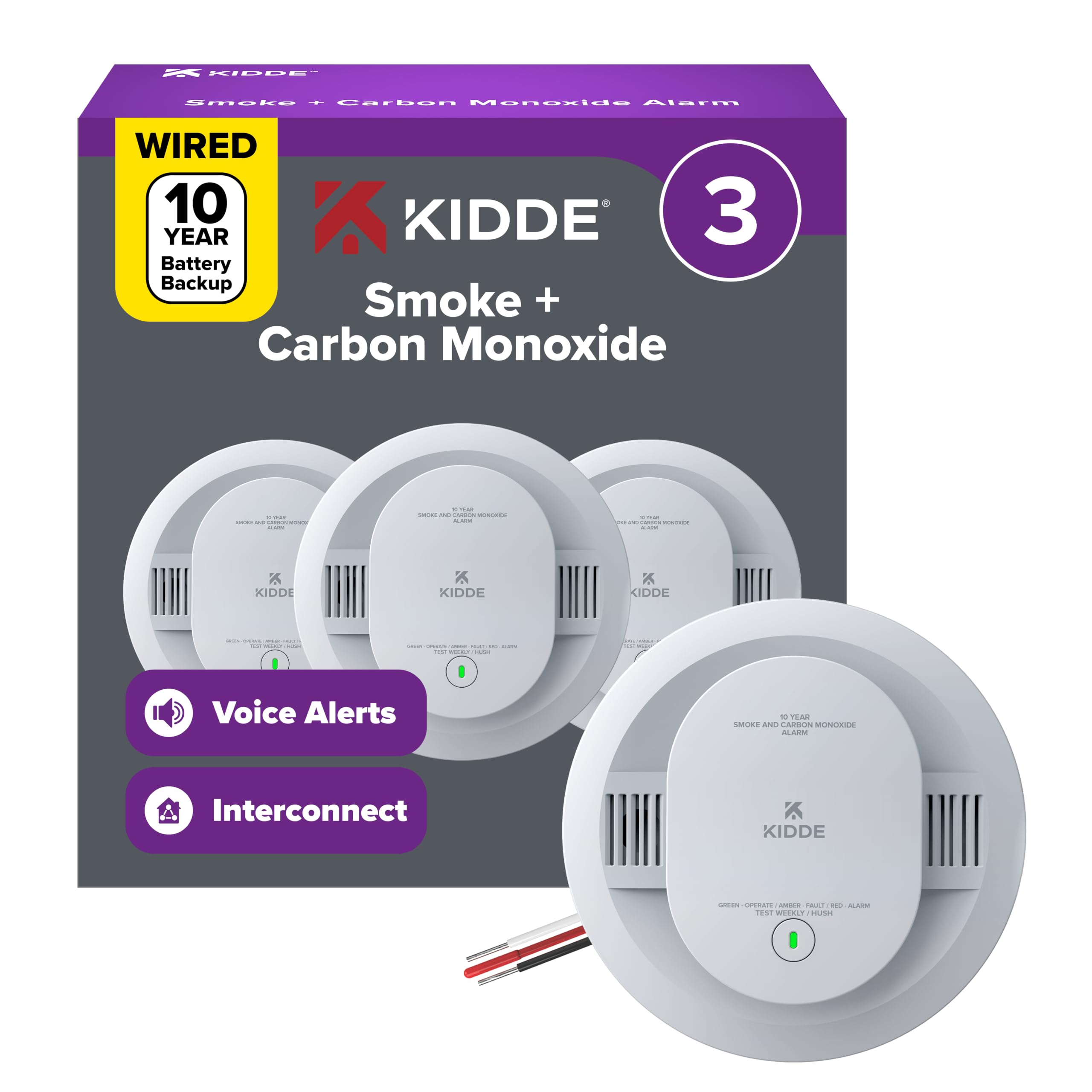
The Kidde 30CUA10-V is a three-pack of hardwired smoke and carbon monoxide detectors that talk to each other and never ask for a new battery. It suits a homeowner replacing aging alarms across a floor or a whole small house, and it suits anyone who wants one alarm to set off every alarm in the house.
This review covers what the unit actually does, how the three-way pack changes the math on a whole-home install, and where a hardwired alarm stops making sense. The short version: buy it for a property that already has alarm wiring, skip it for a rental with no ceiling wiring.
Features and Specifications
Type: Combination smoke and carbon monoxide detector
Power Source: Hardwired with sealed 10-year backup battery
Interconnect: Wired interconnect across units
Alerts: Voice alerts
Battery Service: No battery replacement for the life of the alarm
Pack Size: 3 units
Intended Use: Homes and apartments
The name tells most of the story here. These are dual-sensor alarms, meaning each unit watches for smoke and for carbon monoxide at the same time, so one device on the ceiling covers two hazards. That matters in a hallway or a bedroom corridor where two separate units would otherwise crowd the same spot.
The hardwired part is the key detail. These alarms draw their primary power from the home’s existing alarm circuit, and the sealed battery takes over if the circuit drops. The wired interconnect means all three units in the pack can be tied into one loop, so an alarm at the basement stairwell sounds at the bedroom door as well.
The voice alert feature is the other piece worth understanding. Instead of a chirp that a sleeping occupant has to decode, the unit announces the hazard out loud. In a house with children or with anyone who wears hearing aids to bed, that distinction is the difference between a warning and a puzzle.
Build and Installation
The three units share one wiring run, and that changes the install plan. A buyer with existing alarm cable in the ceiling can swap the old heads for these and reuse the circuit, which is the whole reason a hardwired pack exists. A buyer with no alarm wiring faces running new cable through the attic or ceiling, and that job is a different budget entirely.
The sealed battery is the maintenance story. It is designed to last the life of the alarm, so the twice-a-year battery swap that older alarms demanded goes away. What does not go away is the test button, which still needs a regular press, and the unit still needs a periodic dusting so the sensing chamber stays clear.
Three packs suit a hallway, a landing, and a bedroom corridor, or a small apartment with one unit per level. The honest limit is that a three-pack rarely covers a full multi-story house on its own. Most buyers with a large floor plan end up buying a second pack or adding single units to the same interconnect loop.
Trade-off: The alarms depend on an existing hardwired circuit, so a home without alarm wiring needs an electrician before the first unit goes up.
Check the current price on Amazon
Interconnect and Voice Alerts
The wired interconnect is the feature that justifies the pack over three standalone alarms. When one unit senses smoke or CO, the others join in, and the voice alert announces the hazard from every unit on the loop. A single alarm in a closed basement room warns the basement; a loop of three warns the whole floor.
Voice alerts also cut down on false-alarm confusion. A low-battery chirp and a CO warning sound similar on a cheap alarm, and a spoken message removes that guesswork. For a household with kids, the spoken alert is easier to act on in the dark.
The trade-off is that the interconnect is wired, not wireless. Buyers who want to add a unit in a detached garage or a shed with no alarm cable cannot simply pair it in. The loop only reaches where the wire reaches, and that constrains how the system grows.
Power and Maintenance
Hardwired power with a sealed ten-year battery is the lowest-maintenance combination in the category. There is no annual battery run to the store, no ladder work to swap cells, and no dead-alarm gap if the household forgets. The unit runs on house power and falls back to the sealed cell when the circuit is off.
The sealed battery is also the end-of-life clock. When the ten years are up, the alarm is replaced rather than re-battered, and the whole pack goes at once because the units were installed together. Buyers should plan on a replacement cycle roughly a decade out, which is normal for sealed-battery alarms but worth knowing before the purchase.
Routine care is minimal: press the test button on schedule, vacuum the face of each unit now and then, and keep paint and dust off the sensing vents. Nothing about the maintenance schedule is unusual for a hardwired alarm.
Trade-off: The sealed battery cannot be swapped, so the entire pack reaches end of life together and must be replaced as a set.
Where the 30CUA10-V Fits
This pack is for the homeowner with alarm wiring already in the ceiling who wants a straight swap and a decade of low fuss. It is also for the buyer who wants every alarm in the house to sound at once, because the wired interconnect does that job without a hub or an app.
It is not for a renter in an apartment with no alarm circuit, who is better served by a battery-only unit that clips to the wall. It is not for a buyer who wants to add alarms in outbuildings, because the wired loop stops at the end of the cable. And it is not for someone covering a large house on a three-pack alone, since most multi-story homes need more heads than that.
The value case rests on the pack and the ten-year battery together. Three sealed-battery hardwired alarms bought separately cost more per unit, and the shared interconnect is the reason to buy them as a set rather than one at a time.
FAQ
-
Does the Kidde 30CUA10-V need a battery change?
No. The unit uses a sealed ten-year battery that is designed to last the life of the alarm, so there is no annual replacement. -
Can these alarms work without hardwired power?
No. They are hardwired units with a battery backup, so they need an existing alarm circuit to run as intended. -
What does the wired interconnect actually do?
It links the units on one loop so that when one alarm sounds, the others sound too, and the voice alert carries across the connected units. -
How many rooms will a three-pack cover?
Three units typically cover a hallway, a landing, and a bedroom corridor, or one unit per level in a small home. Larger floor plans usually need additional units on the same loop. -
Do these detect both smoke and carbon monoxide?
Yes. Each unit is a combination smoke and CO detector, so one device covers both hazards. -
Will the alarm speak instead of beeping?
The unit uses voice alerts to announce the hazard, which is easier to act on than a chirp, especially at night. -
Can a homeowner install these without an electrician?
A buyer with existing alarm wiring can usually swap the heads directly. A home without alarm cable needs an electrician to run the circuit first. -
How long do the alarms last before replacement?
The sealed battery sets a ten-year service life, after which the pack is replaced as a set. -
Do the units need regular testing?
Yes. The test button should be pressed on a regular schedule, and the sensing vents should be kept clear of dust and paint. -
Is this pack a good fit for a rental property?
Only if the property already has hardwired alarm circuits. A rental without that wiring is better served by battery-only alarms.
Bottom Line
The Kidde 30CUA10-V is the right buy for a homeowner with existing alarm wiring who wants three linked smoke and CO alarms and no battery swaps for a decade. Buyers without that wiring, or with a house too large for three heads, should look at a different configuration before ordering.
