Why there are Amazon links here: Brave Review is paid a commission for qualifying Amazon purchases made through the links below. Your price does not change, and using our links is entirely optional. How this works
Siterwell GS509A Smoke Alarms: Four Detectors, One Replaceable Battery
The Siterwell GS509A is a four-pack of photoelectric smoke alarms aimed at homeowners who need to cover several rooms at once without paying per-unit prices. It uses a replaceable 9V battery rather than a sealed lithium cell, and a test-silence button handles both routine checks and nuisance alarms. This review covers the specifications, how the detector is built and powered, what maintenance it asks for, and who should skip it. Readers who want a straightforward battery-powered multi-pack can jump to the current price on Amazon.
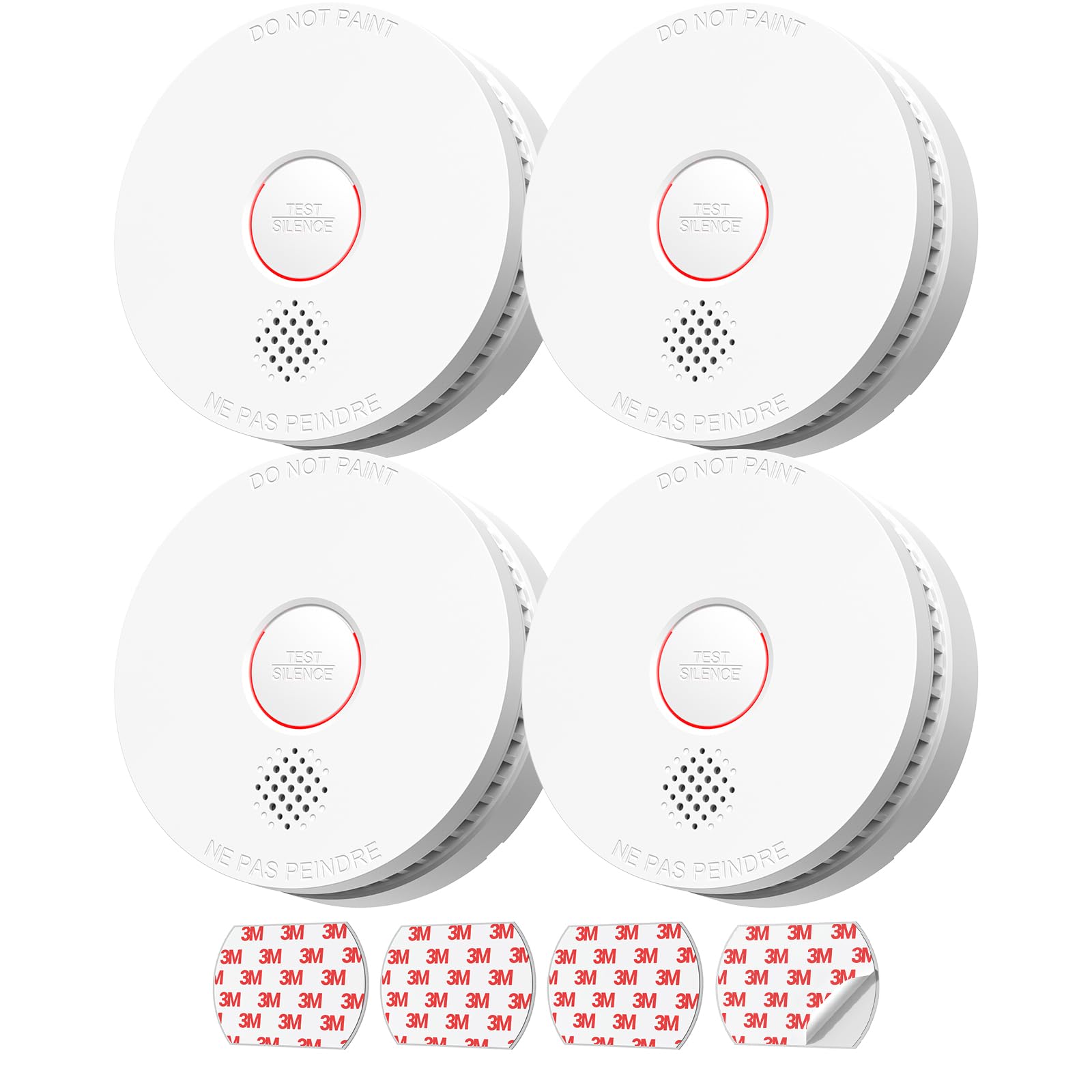
Features and Specifications
Type: Photoelectric smoke alarm
Quantity: 4-pack
Power Source: 9V replaceable battery
Controls: Test-silence button
Intended Use: Home, house, residential rooms
Model: GS509A
The headline number here is the four-pack. A single detector rarely covers a whole home, and most safety guidance pushes for one on every level plus one in or near each sleeping area. Buying four at once is the practical unit for a house, and it is what makes this listing relevant to anyone setting up coverage from scratch rather than replacing one failed alarm.
The photoelectric sensing method is the other defining spec. Photoelectric alarms respond to the light scattered by larger smoke particles, which is why manufacturers commonly pair this technology with smoldering, slow-burning fires — the upholstery and electrical type that can smolder for a long time before flames appear. It is a different sensing principle from ionization, and it is the one most often recommended for living areas and bedrooms.
Build and Design
The GS509A is a conventional ceiling- or wall-mounted detector in the round, low-profile style that dominates the residential market. The housing is designed to twist onto a mounting bracket, which is the standard approach because it lets the unit be installed with a couple of screws and then twisted off for battery changes. Buyers should expect a plastic body and a grille around the sensing chamber, not a metal or designer housing — this is a safety device sold in a value multi-pack, and the finish reflects that.
The four-pack format is worth thinking through before ordering. Four identical detectors are ideal for a house with several bedrooms plus a hallway, but they are less useful for a small apartment where two would do and the spares sit in a drawer. It also means four units to maintain on the same schedule, which is either convenient (one reminder covers everything) or a chore, depending on how disciplined the household is about annual checks.
Trade-off: The plastic housing and multi-pack packaging put the money into coverage rather than finish, so buyers who want a detector that blends into a decorated ceiling should look at a premium single unit instead.
Power and Battery
The 9V replaceable battery is the specification that shapes daily ownership most. A replaceable cell means the detector has a finite service life tied to the battery, and the buyer — not a sealed factory cell — decides when the unit finally retires. That is a genuine advantage for anyone who dislikes discarding a whole alarm because an internal lithium battery has expired.
The other side of that coin is maintenance. A replaceable 9V has to be swapped on a schedule, and the household has to keep spares on hand or make a trip when the low-battery chirp starts. A sealed ten-year unit asks nothing for a decade; this one asks for a fresh battery every so often, plus the discipline to actually do it rather than pulling the cell to silence the chirp.
There is also a safety argument in favor of the replaceable design. Because the battery is accessible and the unit is not sealed, a homeowner can verify the power source is present and correctly seated — the most common cause of a dead alarm is a missing or backwards battery, not a failed sensor. The 9V format is widely available at grocery and hardware stores, so sourcing a replacement is not a specialty purchase.
Test-Silence Button
The test-silence button does two jobs on one control. Pressed briefly, it runs a test cycle so the household can confirm the alarm still sounds. Held or pressed in response to a nuisance alarm, it silences the horn temporarily so cooking smoke or shower steam does not turn into a full evacuation.
That combination is more useful than it sounds. A detector without a silence function forces a choice between tolerating a screaming alarm and disabling the unit — and disabled units are the ones that fail when it matters. Having the button on the face of the device, reachable without tools, is what makes the silence feature actually get used.
The caution is that a silence button is a convenience, not a solution. If a detector near the kitchen goes off regularly, the fix is relocation or a different sensing type for that location, not repeated silencing. Buyers who cook with high heat and little ventilation should plan placement carefully rather than relying on the button as a daily workaround.
Maintenance and Placement
The maintenance routine for four battery-powered detectors is simple but not optional. Each unit needs a periodic test press, a battery swap when the low-battery signal appears, and a cleaning pass to keep dust and grease out of the sensing chamber. Photoelectric chambers are sensitive to accumulated dust, and a dusty alarm is a false-alarm generator.
Placement matters as much as upkeep. The standard pattern is one detector per level of the home, one in each sleeping area or just outside it, and one in the hallway that connects bedrooms. The four-pack maps neatly onto a two- or three-bedroom house with a hallway and a living level, which is likely the buyer this listing was built for.
Buyers in larger homes should count rooms before ordering, because four units will not cover a big multi-level house on their own and a second pack means eight detectors to maintain. Conversely, a studio or one-bedroom apartment will find the pack oversized and the spare units redundant.
Who It Suits and Who It Does Not
The GS509A suits homeowners who want to equip a whole house in one purchase, prefer a battery they can replace themselves, and are willing to keep a maintenance schedule. It also suits landlords and caregivers setting up coverage across several rooms where a sealed premium unit per door would be cost-prohibitive.
It does not suit buyers who want zero maintenance for a decade and would rather replace the entire alarm when the cell dies. It is also a poor fit for anyone who needs interconnected alarms that all sound together when one detects smoke — the listing describes standalone units, and interconnection is a different product category. Renters in small units should buy a smaller count rather than pay for spares.
Trade-off: Four standalone battery units deliver broad coverage at a low per-room cost, but they demand annual battery attention and do not link together, so a alarm in one room will not wake a sleeper in another.
Check the current price of the Siterwell GS509A 4-pack on Amazon
FAQ
-
What type of smoke alarm is the Siterwell GS509A?
It is a photoelectric smoke alarm, the type that responds to the larger smoke particles produced by smoldering fires. That makes it a common choice for bedrooms, hallways and living areas. -
How many detectors come in the box?
The listing is a 4-pack, so four complete detectors arrive together. That is enough for a typical small house when placed on each level and near the sleeping areas. -
Does it use a replaceable or sealed battery?
It uses a replaceable 9V battery. The buyer swaps the cell when it weakens rather than discarding the whole alarm when an internal battery expires. -
What does the test-silence button do?
It runs a test cycle to confirm the alarm sounds, and it temporarily silences the horn during a nuisance alarm such as cooking smoke. One button covers both functions. -
Do these alarms connect to each other?
The listing describes standalone detectors, not an interconnected system. Each unit sounds on its own, so a detector in one room will not trigger the others. -
Where should the detectors be installed?
The usual pattern is one per level of the home, one in or just outside each sleeping area, and one in the connecting hallway. Four units fit a two- or three-bedroom house well. -
How often does the battery need replacing?
Follow the manufacturer’s guidance and replace the cell when the low-battery signal sounds. Testing each unit periodically catches a weak battery before it becomes an issue. -
Is this a good choice for an apartment?
Only if the apartment has enough rooms to use all four units. A studio or one-bedroom will likely find a smaller pack or a single detector better value. -
Can the alarm be silenced during cooking?
Yes, the test-silence button handles nuisance alarms. If a unit near the kitchen triggers often, relocating it is a better long-term fix than repeated silencing. -
Who should avoid this product?
Buyers who want a sealed ten-year alarm with no maintenance, or who need interconnected units that all sound together, should choose a different type of detector.
Bottom Line
The Siterwell GS509A is a practical answer to a whole-house problem: four photoelectric detectors, a battery the owner can replace, and a test-silence button that makes nuisance alarms manageable. It rewards buyers who will actually maintain their alarms and who need coverage across several rooms, and it is the sensible pick for a small house or a landlord equipping multiple units. Anyone who wants sealed, interconnected, zero-maintenance hardware should look elsewhere — but for straightforward replaceable-battery coverage in bulk, this pack is the one to check.