Why there are Amazon links here: Brave Review is paid a commission for qualifying Amazon purchases made through the links below. Your price does not change, and using our links is entirely optional. How this works
Kidde Carbon Monoxide Detector: Plug-In Protection With a Battery Backstop
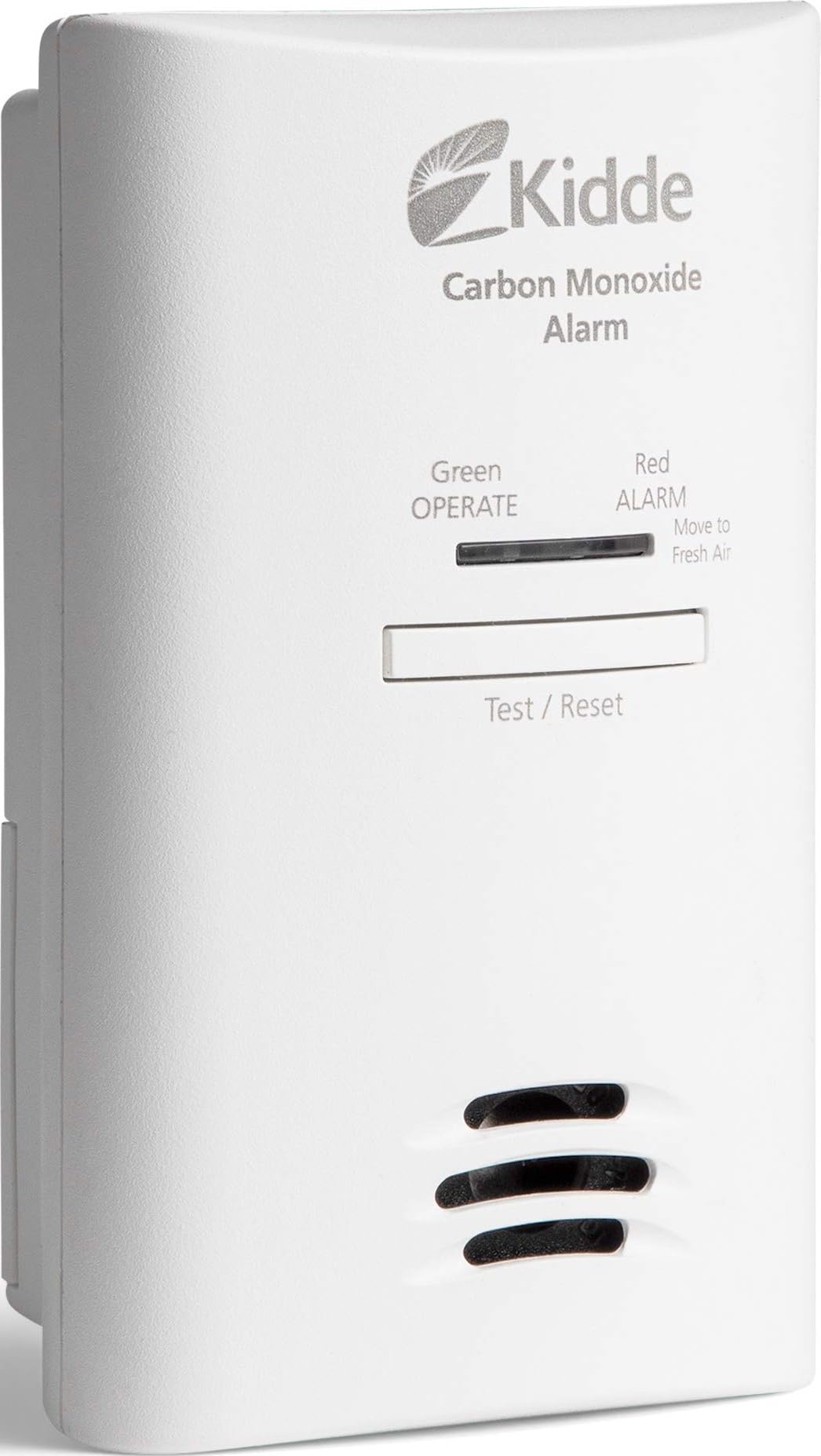
The Kidde Carbon Monoxide Detector is a plug-in CO alarm for households that want continuous protection without thinking about batteries every few months. It runs off a standard wall outlet and keeps watching during a power cut thanks to its AA battery backup. This review covers what the unit does, how it is built, where it fits in a home, and the trade-offs a buyer should weigh before ordering. The short version: it suits renters, apartment dwellers and anyone who wants a set-and-forget alarm in a hallway or bedroom, and the CTA below leads straight to the current price.
Features and Specifications
Product Type: Plug-in carbon monoxide detector
Power Source: Wall outlet with AA battery backup
Alarm: 85 dB audible alarm
Status Indicators: LED status light indicators
Edition: 3rd Edition
Brand: Kidde
The headline feature is the combination of mains power and battery backup. Plugging into an outlet means the unit draws constant power, so there is no annual battery swap to remember during normal operation. The AA backup cells take over when the outlet loses power, which matters because a CO source such as a blocked flue or a backdrafting water heater does not stop being dangerous just because the lights went out.
The 85 dB alarm is the other number worth understanding. That is roughly the volume of a smoke alarm at close range, loud enough to wake most sleepers and to be heard through a closed interior door. The LED status lights give a quick visual read of whether the unit is powered and operating, which is useful for a glance on the way past rather than a full diagnostic tool.
The 3rd Edition label signals this is a current-generation Kidde unit rather than old stock, so buyers are getting the company’s present design language and sensor package rather than a discontinued model sitting in a warehouse.
Build and Design
The housing is a compact plug-in format, meaning the whole unit sits against the wall at the outlet rather than being mounted separately with a cord. That keeps the footprint small and avoids the cable clutter that corded alarms create in a hallway or landing. The plastic body is typical of the category: light, matte, and designed to blend into a wall rather than draw attention.
Because the unit hangs directly off the socket, placement is limited to wherever an outlet exists. In a bedroom that usually means the lower wall near a nightstand, which is workable but not ideal for anyone who wants the alarm mounted high. Buyers with an outlet in a hallway, a utility room, or near a furnace closet will find the format fits naturally.
The plug-in design also means the unit is easy to move. A buyer who wants protection in a rental unit can unplug it and take it to the next address without leaving a mounting bracket behind. That portability is a real advantage for renters who cannot modify walls.
Power and Battery Backup
The AA battery backup is the feature that separates this unit from a bare plug-in alarm. During a power outage, the backup cells keep the sensor and alarm live, so protection does not lapse at exactly the moment a generator, a fireplace, or a space heater might be introducing CO into the home. Buyers still need to replace those AA cells on the schedule Kidde recommends, but the burden is lighter than a battery-only unit that needs fresh cells every year regardless of whether the power ever fails.
The trade-off of the backup design is that the unit is only as reliable as its batteries during an outage. A buyer who ignores the low-battery indication will eventually have a plug-in alarm with no backup, which is functionally the same as a plain plug-in model. The LED status lights help here, but they only help a buyer who actually looks at them.
Alarm and Status Indicators
An 85 dB alarm is the core safety function, and it is loud enough to serve as the primary warning in a typical home. The alarm sounds when the sensor detects carbon monoxide at a dangerous concentration, and the LED indicators give a visual confirmation that the unit is receiving power and operating normally. Together they cover the two things a buyer needs to know: is the device working, and is there a problem right now.
What the unit does not do is display a numeric CO reading. Buyers who want to watch ppm levels in real time, or who want a history of past events, will need a monitor rather than an alarm. For most households the alarm-only approach is the right one, because the point is to be warned, not to run a chemistry experiment in the hallway.
The LED indicators are also not a substitute for testing. Kidde recommends regular testing, and the test function is the only way to confirm the alarm circuit itself is functioning. Buyers should treat the status lights as a convenience, not a guarantee.
Placement and Everyday Use
The plug-in format shapes how the unit is used day to day. It goes into an outlet, it stays there, and it does its job quietly until something goes wrong. There is no setup ritual beyond plugging it in and confirming the indicator lights, which makes it one of the lowest-friction safety devices a household can add.
The main placement question is coverage. A single CO alarm protects the area around it, so a buyer with a furnace in the basement, a garage attached to the house, and bedrooms on the second floor should think about whether one unit is enough. Kidde and safety agencies generally recommend alarms on each level of a home and near sleeping areas, which means many buyers will want more than one unit. That is a coverage decision, not a flaw in this product, but it is the reason a single plug-in alarm is rarely the whole solution for a larger house.
For apartments, dorm-style rentals, and single-level homes with one likely CO source, one unit in a central hallway covers a lot of ground. Buyers in those situations get the most value from this format.
Trade-off: The plug-in design limits placement to wherever an outlet is available, so buyers who want a high wall-mounted alarm or who have no convenient socket in the right spot will need a different format.
Who It Suits and Who It Does Not
This Kidde unit fits renters who want protection without drilling into walls, apartment dwellers with a single likely CO source, and anyone replacing an aging plug-in alarm with a current-edition model. It also suits households that want the convenience of mains power but do not want to give up protection during an outage.
It is not the right pick for a buyer who wants a digital ppm display, an alarm that mounts high on a wall away from outlets, or a smart-home unit that pushes alerts to a phone. Those buyers should look at monitors, combination smoke-and-CO alarms, or connected models instead. It is also a poor fit for a large multi-level home as the only alarm, because coverage would be too thin.
FAQ
-
Does the Kidde carbon monoxide detector need to be plugged in to work?
Yes. The unit runs on wall outlet power during normal operation, and the AA battery backup keeps it working during a power outage. It is not a battery-only alarm. -
How loud is the 85 dB alarm?
An 85 dB alarm is comparable to a standard smoke alarm at close range. It is loud enough to wake most sleepers and to be heard through an interior door. -
Where should a plug-in CO detector be placed?
Near sleeping areas and on any level of the home with a fuel-burning appliance. Because the unit plugs into an outlet, placement is limited to spots with a free socket. -
Does it detect smoke as well as carbon monoxide?
No. This is a carbon monoxide detector only. Buyers who want both should look at a combination smoke and CO alarm. -
What do the LED status lights mean?
The LED indicators show the unit’s operating status, such as whether it is receiving power. They are a quick visual check, not a numeric CO reading. -
How often do the AA batteries need replacing?
Kidde sets the replacement schedule for the backup batteries. Buyers should follow the manufacturer’s guidance and replace the cells when the low-battery indication appears. -
Can this detector be used in a rental apartment?
Yes. The plug-in format requires no mounting hardware, which makes it a practical choice for renters who cannot modify walls. -
Is one detector enough for a whole house?
Usually not. Safety guidance recommends alarms on each level and near sleeping areas, so larger homes typically need more than one unit. -
Does it show a carbon monoxide reading in parts per million?
No. The unit is an alarm, not a monitor. It sounds an 85 dB alarm when CO reaches dangerous levels rather than displaying a numeric reading. -
What is the 3rd Edition label on this model?
It indicates this is a current-generation Kidde unit rather than a discontinued model, so buyers are getting the company’s present design.
Bottom Line
The Kidde Carbon Monoxide Detector is the straightforward choice for buyers who want mains-powered CO protection with a battery backup and no smart-home complexity. It suits renters and apartment dwellers especially well, and the 85 dB alarm and LED status lights cover the essentials without extra features a household will never use. Buyers in larger multi-level homes should plan on more than one unit, and anyone who wants a ppm display should look elsewhere. For everyone else, it is a sensible, low-friction safety purchase.
