Why there are Amazon links here: Brave Review is paid a commission for qualifying Amazon purchases made through the links below. Your price does not change, and using our links is entirely optional. How this works
Best VPN Router for a Household: 5 Picks That Protect Every Device
A VPN router moves the encryption from each individual device to the network itself, so every phone, laptop, TV and smart speaker in the house is covered without installing an app on any of them. This roundup covers five routers that handle VPN traffic well, from budget-friendly Wi-Fi 6 boxes to tri-band Wi-Fi 7 models built for heavy households. It suits families tired of per-device subscriptions, remote workers who need a stable encrypted tunnel, and gamers who refuse to trade speed for privacy. The overview table below puts the key differences side by side, and each review explains who the pick fits.
The Picks at a Glance
| Product | Key Spec | Best Use | Price Tier |
|---|---|---|---|
| TP-Link Archer AXE75 | Tri-band Wi-Fi 6E, 2.5Gbps WAN, 6GHz band | All-round family router with VPN | Mid-range |
| TP-Link Archer AX55 | Dual-band Wi-Fi 6, VPN client and server | Budget households new to VPN | Budget |
| GL.iNet Flint 3 | Tri-band Wi-Fi 7, 5 x 2.5G ports | Power users and 8K streaming | Premium |
| ASUS RT-BE82U | Dual-band Wi-Fi 7, 2.5G ports x5, mesh | Subscription-free security and parental controls | Upper mid-range |
| GL.iNet Flint 2 | Wi-Fi 6, dual 2.5G ports, pre-installed OpenWrt | Open-source fans and WireGuard users | Mid-range |
1. TP-Link Archer AXE5400 Tri-Band WiFi 6E Router
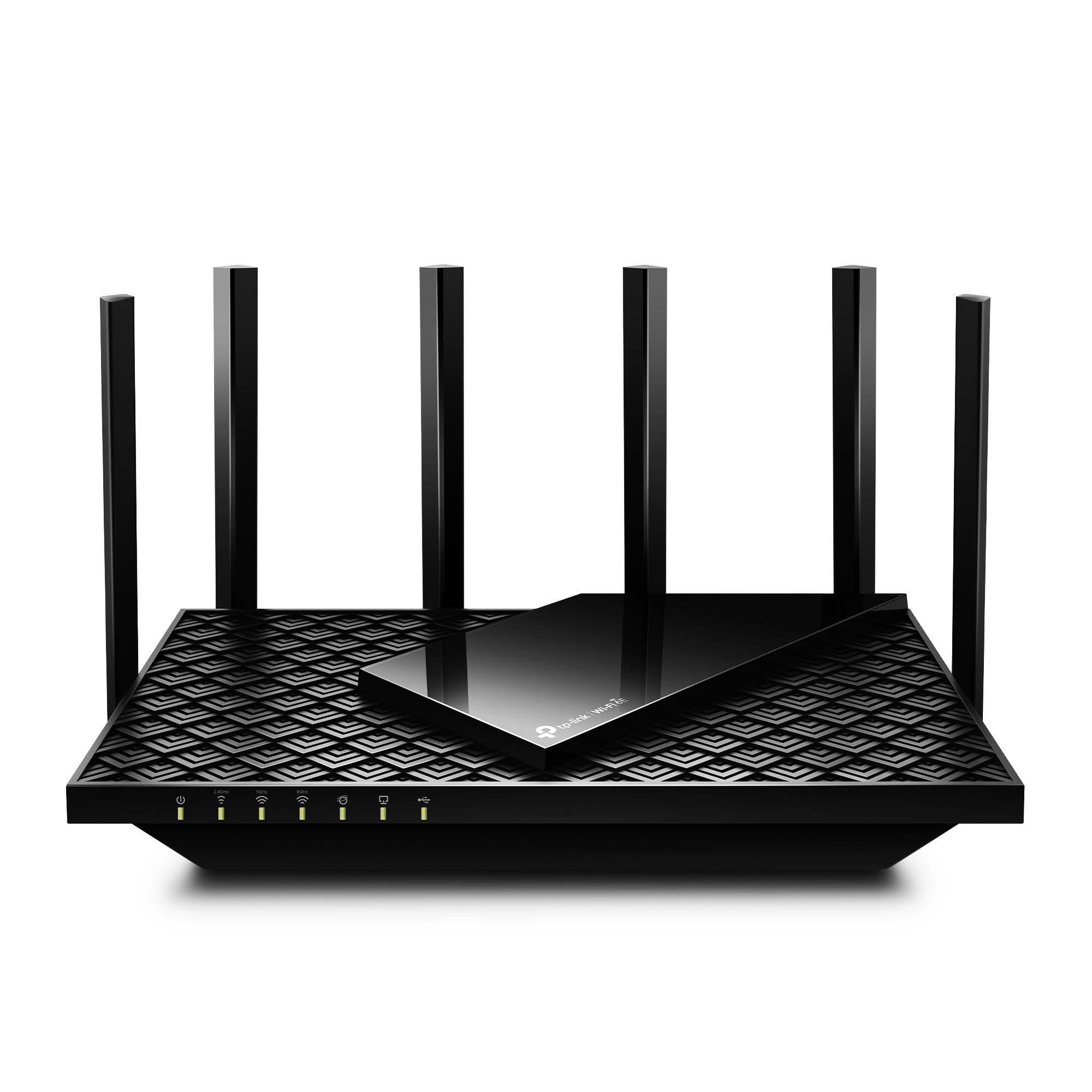
Type: Tri-band Wi-Fi 6E router
Bands: 6GHz, 160MHz channels
WAN Port: 2.5Gbps
Processor: Dual-core CPU
Mesh: OneMesh compatible
Security: VPN and WPA3
TP-Link AXE5400 Tri-Band WiFi 6E Router, 2025 PCMag Editors’ Choice
The Archer AXE75 is the safest all-rounder here. Its 6GHz band with 160MHz channels gives VPN traffic plenty of room, and the 2.5Gbps WAN port keeps a fast fiber line from becoming the bottleneck once the tunnel is up. The dual-core CPU handles encryption overhead better than entry-level hardware. OneMesh support lets the household extend coverage later with compatible TP-Link units rather than replacing the whole router. It is a sensible first VPN router for a family that wants speed and coverage without paying Wi-Fi 7 prices.
Who It Suits: Households with a mix of streaming, gaming and work-from-home devices that want one router to cover everything. It earned its place as the default recommendation because it balances price, speed and VPN features cleanly.
Trade-off: The 6GHz band is fast but short-range, so large homes with thick walls may find the far rooms fall back to the slower bands.
Check the current price on Amazon
2. TP-Link Archer AX3000 Dual-Band Wi-Fi 6 Router

Type: Dual-band Wi-Fi 6 router
Bands: 2.4GHz and 5GHz
VPN: Client and server support
Mesh: EasyMesh compatible
Security: HomeShield, Secure by Design
Ports: USB 3.0, Gigabit internet
TP-Link Archer AX3000 Dual-Band Wi-Fi 6 Router for Home
The Archer AX55 is the budget entry point, and it does not cut the VPN features that matter. It supports VPN clients and a VPN server, so the household can route traffic through a provider or dial back into the home network from outside. Wi-Fi 6 with OFDMA and MU-MIMO keeps multiple devices responsive, and HomeShield adds network-level protection without a subscription. The USB 3.0 port is useful for a shared drive. For a smaller home or an apartment, it covers the basics at the lowest outlay in this group.
Who It Suits: Budget-conscious households with modest square footage and fewer than a dozen connected devices. It is also a good fit for anyone testing whether a VPN router is worth it before spending more.
Trade-off: The Gigabit internet port caps wired speeds, so households on multi-gig fiber will not get the full benefit of their connection.
Check the current price on Amazon
3. GL.iNet GL-BE9300 Flint 3 Tri-Band Wi-Fi 7 Router

Type: Tri-band Wi-Fi 7 router
Bands: 2.4GHz, 5GHz and 6GHz
Wireless Speed: Up to 9 Gbps
Ports: 5 x 2.5G
VPN: Built-in VPN router
Best For: 8K streaming, low-latency gaming, video calls
GL.iNet GL-BE9300 Flint 3 Tri-Band Wi-Fi 7 Router
The Flint 3 is the premium pick and the most future-proof box in the roundup. Wi-Fi 7 with a dedicated 6GHz band and up to 9 Gbps of wireless throughput is aimed squarely at households running 8K streams, cloud gaming and video calls at the same time. Five 2.5G ports mean wired devices do not have to fight over a single multi-gig connection. GL.iNet builds its routers around VPN use as a first-class feature rather than an add-on, which is why this model appears on so many shortlists for encrypted home networks.
Who It Suits: Large households with heavy simultaneous traffic and a multi-gig internet plan. It also suits buyers who want Wi-Fi 7 headroom before the standard becomes common.
Trade-off: The price sits well above the rest of the group, and most households will not saturate Wi-Fi 7 speeds with ordinary broadband.
Check the current price on Amazon
4. ASUS RT-BE82U WiFi 7 Router
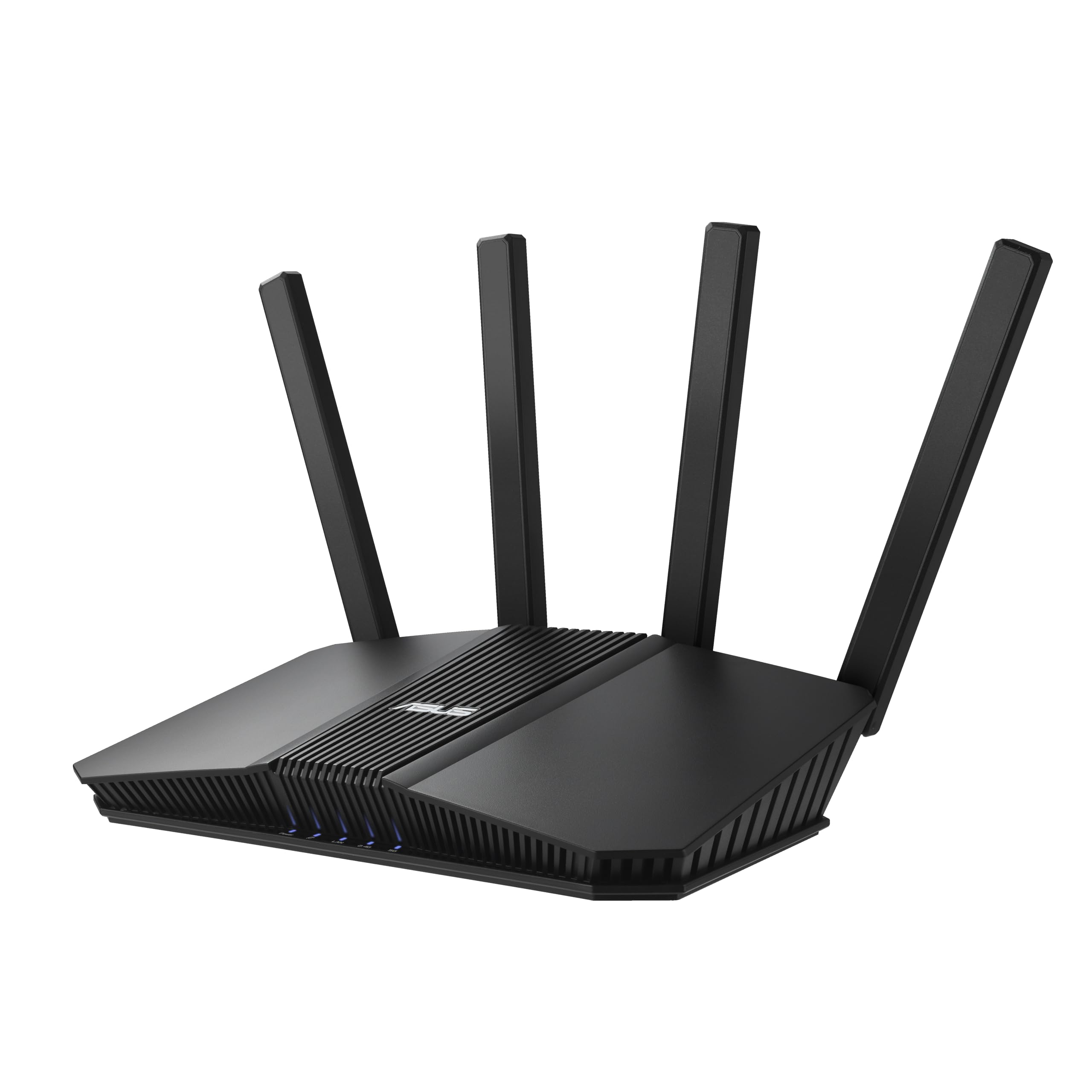
Type: Dual-band Wi-Fi 7 router
Wireless Speed: Up to 6.5 Gbps
Ports: 2.5G x5
Mesh: Mesh and VPN compatible
Security: Subscription-free network security
Extras: Parental controls included
The RT-BE82U brings Wi-Fi 7 at a lower price than the Flint 3 by staying dual-band. It pairs 6.5 Gbps of wireless throughput with five 2.5G ports, so wired backhaul and multi-gig devices are well served. The standout is subscription-free network security with parental controls included, which matters for families that do not want another monthly bill stacked on top of a VPN service. Mesh and VPN compatibility mean it slots into an existing ASUS setup or an encrypted tunnel without extra hardware.
Who It Suits: Families that want parental controls and security built in without recurring fees, plus a multi-gig wired backbone. It fits well in mid-size homes with a mix of kids’ devices and work machines.
Trade-off: Staying dual-band means no 6GHz channel, so very dense households with dozens of devices get less breathing room than tri-band options provide.
Check the current price on Amazon
5. GL.iNet GL-MT6000 Flint 2 Wi-Fi 6 Gaming Router

Type: Wi-Fi 6 gaming router
Streams: 8-stream
Wireless Speed: 6 Gbps total, up to 1148 Mbps and 4804 Mbps per band
Ports: Dual 2.5G multi-gig
Firmware: Pre-installed OpenWrt
VPN: OpenVPN and WireGuard
GL.iNet GL-MT6000 Flint 2 Wi-Fi 6 Gaming Router
The Flint 2 is the pick for tinkerers. It ships with OpenWrt pre-installed, which means full control over routing rules, VPN policies and per-device routing without flashing firmware first. OpenVPN and WireGuard support covers both the common and the fast tunnel protocols, and WireGuard in particular keeps latency low enough for gaming. Dual 2.5G ports and 8-stream Wi-Fi 6 with up to 4804 Mbps on the faster band give it real throughput. It is a strong middle ground between the budget Archer and the premium Flint 3.
Who It Suits: Buyers comfortable with router settings who want granular VPN control, and gamers who need WireGuard speed without dropping to a budget box. It also suits anyone who prefers open firmware over vendor lock-in.
Trade-off: OpenWrt rewards users who read the settings menus; households wanting a set-and-forget appliance may find the configuration options overwhelming.
Check the current price on Amazon
Before You Buy
- VPN protocol: WireGuard and OpenVPN are the two to look for; WireGuard is faster, OpenVPN is more widely supported by providers.
- WAN port speed: A 2.5Gbps port matters on multi-gig fiber; a Gigabit port caps the whole household at 1 Gbps.
- Wi-Fi generation: Wi-Fi 6 covers most homes today, while Wi-Fi 7 buys headroom for dense device counts and future devices.
- Bands: Tri-band adds a 6GHz channel for less congestion; dual-band is cheaper but busier in apartment buildings.
- Firmware: Stock firmware is simpler; OpenWrt gives full control but expects some technical comfort.
- Mesh support: EasyMesh or vendor mesh lets coverage expand later without replacing the router.
- Built-in security: Subscription-free protection and parental controls avoid stacking another monthly fee on the VPN bill.
Frequently Asked Questions
- Does a VPN router slow down the whole household? Any encryption adds overhead, but a router with a capable CPU and WireGuard support keeps the drop small. Budget routers with weak processors show the biggest slowdowns.
- Can one VPN router cover every device? Yes. The tunnel runs at the router, so phones, TVs, consoles and smart devices are covered without installing anything on them.
- Is Wi-Fi 7 worth it for a VPN household? It helps in dense homes with many devices and heavy streaming, but Wi-Fi 6 remains sufficient for most families. The VPN protocol and CPU matter more than the Wi-Fi generation.
- Do these routers work with any VPN provider? Models with built-in VPN client support work with providers that supply standard OpenVPN or WireGuard configuration files. Checking the provider’s supported protocol list before buying avoids surprises.
- Can a VPN router be combined with mesh? Yes. The Archer models support OneMesh or EasyMesh, and the ASUS unit is mesh compatible, so coverage can expand without replacing the main router.
- Does a VPN router replace a VPN subscription? No. The router handles the tunnel, but a provider account is still needed unless the household runs its own VPN server.
Bottom Line
The TP-Link Archer AXE5400 Tri-Band WiFi 6E Router is the best VPN router for a household that wants speed, coverage and VPN support without overspending. Households on a tight budget should look at the Archer AX55, while the Flint 3 and Flint 2 serve buyers who want Wi-Fi 7 headroom or open firmware control.
