Why there are Amazon links here: Brave Review is paid a commission for qualifying Amazon purchases made through the links below. Your price does not change, and using our links is entirely optional. How this works
Best Radiator Valve for an Old System for Reliable Heat Control
Old radiators are fussy about parts. The wrong valve leaks, whistles, or refuses to seat, and a system that ran quietly for decades starts knocking. This guide narrows the field to five brass valves and tools that suit the most common old-system jobs — steam radiators with a single pipe, hot-water radiators with a union connection, and tired air vents that no longer close. Budget-minded DIYers, homeowners refreshing a single radiator, and anyone maintaining a whole house of vintage cast iron will find a match below. The overview table comes first so a choice can be made in under a minute.
Overview of the Picks
| Product | Key Spec | Best Use | Price Tier |
|---|---|---|---|
| Midline Valve 6I342 Steam Radiator Valve | 1 in. FIP x Male Union, brass | Standard steam radiator replacement | Budget |
| 1.25” Heavy Duty Steam Heat Control Valve Kit | 1-1/4” NPT angle, 72 WSP / 145 WOG | Larger old radiators, full kit | Mid |
| Eastman 20378 Radiator Air Valve | 1/8 in. adjustable brass air valve | Replacing a failed air vent | Budget |
| Steam Angle Radiator Valve 3/4 in. FIP x Male Union | 3/4 in. FIP x Male Union, brass | Smaller steam radiators | Budget |
| BRBASAP 3 Packs Radiator Key with Ring | 3 bleeder keys with ring | Bleeding and maintenance | Lowest |
1. Midline Valve 6I342 Steam Radiator Valve

Type: Steam radiator valve with air vent and temperature control
Connection: 1 in. FIP x Male Union
Material: Brass
Function: Air vent and temperature control combined
The Midline 6I342 is a brass steam valve that handles two jobs in one body: it controls the heat and it vents air from the radiator. The one-inch female iron pipe thread on one side and male union on the other match the layout found on many older one-pipe steam radiators, so the swap is a direct replacement rather than an adaptation. Brass construction resists corrosion in the wet, hot environment a steam system creates. The built-in vent means no separate air valve is needed at the radiator.
This pick suits a homeowner replacing a worn valve on a standard one-pipe steam radiator who wants a straightforward, single-part fix. It earns its place because the combined vent and control design removes a component from the job. The trade-off is that a combined valve cannot be tuned or serviced as finely as a separate control valve and air vent, so a system with an unusual venting demand may need more adjustment.
2. 1.25” Heavy Duty Steam Heat Control Valve Kit
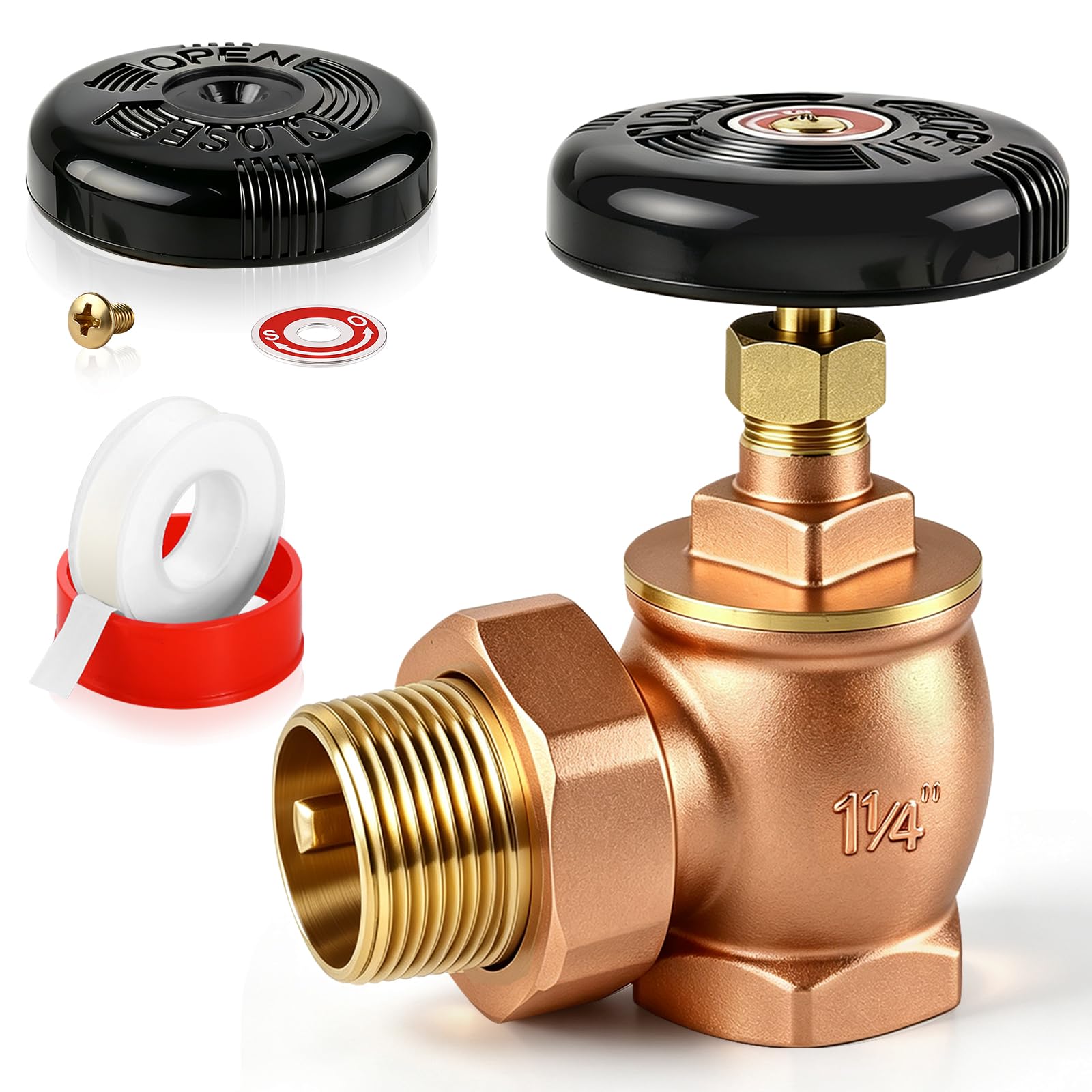
Type: Angle steam radiator control valve kit
Connection: 1-1/4” NPT
Pressure Rating: 72 WSP steam, 145 WOG water
Material: Brass
Included: Replacement handle and PTFE tape
This kit targets the larger end of old radiator plumbing. The one-and-a-quarter inch NPT angle body suits radiators with bigger supply pipes, and the stated 72 WSP steam and 145 WOG water ratings are printed right on the spec, which matters when matching a valve to an existing system’s pressure. Brass construction and an angle layout fit the tight corner where a radiator meets the floor. The bundle includes a replacement handle and PTFE tape, so the install does not stall on a missing part.
It suits a homeowner with a large vintage radiator and a supply pipe that will not accept a smaller valve. The kit format earns it a spot because the handle and tape are the two things most often discovered missing mid-job. The trade-off is that the bigger body needs more clearance behind the radiator, and a tight alcove may not have the room.
3. Eastman 20378 Radiator Air Valve

Type: Adjustable radiator air valve
Connection: 1/8 in. angle
Material: Brass
Function: Adjustable air venting
The Eastman 20378 is a standalone air valve, the small brass fitting that lets air out and keeps steam in. It threads into a radiator’s vent tapping at one-eighth inch and can be adjusted to change how fast the radiator vents, which is the classic way to balance heat across a one-pipe steam system. Brass construction suits the heat and moisture. Because it is a separate part, it can be replaced without touching the main control valve.
This pick suits a homeowner whose radiators heat unevenly and who wants to tune venting radiator by radiator. It earns its place on price and adjustability, and it is the cheapest way to fix a system that is merely noisy or slow rather than broken. The trade-off is that a vent alone will not repair a failed control valve, and an adjustable vent needs patience to dial in.
4. Steam Angle Radiator Valve 3/4 in. FIP x Male Union

Type: Angle steam radiator valve
Connection: 3/4 in. FIP x Male Union
Material: Heavy duty brass
Handle: Molded thermal plastic
This valve covers the smaller side of old steam plumbing. The three-quarter inch FIP x male union connection is the common size on moderate radiators, and the heavy duty brass body is built for the heat cycling a steam system delivers. The angle shape routes the pipe down and away from the radiator, which keeps the valve from crowding the floor. The molded thermal plastic handle stays cooler to the touch than bare metal, a small but real comfort on a radiator that runs hot.
It suits a homeowner replacing a leaky or seized valve on a smaller steam radiator who wants a direct-fit part. It earns its place as the mid-size option between the one-inch and one-and-a-quarter-inch picks. The trade-off is the plastic handle — it is comfortable, but it is the part most likely to age out before the brass body does.
5. BRBASAP 3 Packs Radiator Key with Ring
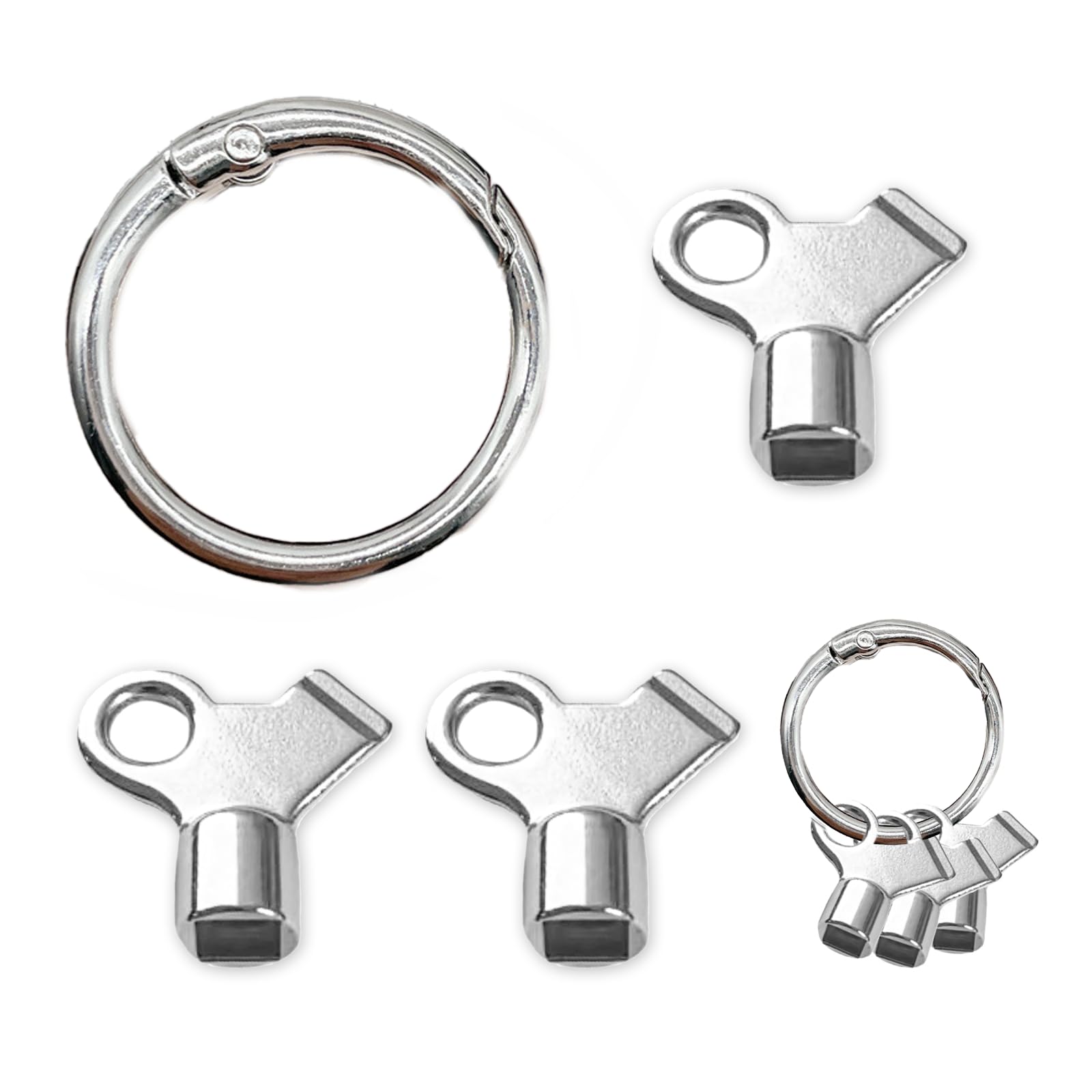
Type: Radiator bleeder key set
Quantity: 3 keys with 1 ring
Use: Bleeding old radiator air valves and turning water valves
Handle: Durable handle
The BRBASAP set is the maintenance tool rather than the valve itself. Three bleeder keys on a ring let a homeowner open the air valve on a hot-water radiator, let trapped air out, and close it again, and the same keys turn the small water valves found on old radiators. The ring keeps the set together so a key is on hand when a radiator starts clanking. The durable handle is sized to take real turning force without stripping.
This pick suits anyone maintaining a house of older radiators who wants the right tool before a problem starts, rather than after. It earns its place because no valve upgrade matters if the system is air-locked. The trade-off is that a key fixes air and adjustment only — it cannot repair a valve body that has failed, and the set offers no value to a homeowner with a single new radiator.
Before You Buy
- Material: Buy brass for steam and hot-water radiators. It handles heat cycling and moisture far better than plated or plastic-bodied parts, and old systems punish cheap metal.
- Size: Match the existing connection exactly. Measure the pipe thread or the union nut before ordering — one inch, three-quarter inch and one-and-a-quarter inch are all common, and a wrong size means a second trip.
- Connection type: Female iron pipe (FIP), male union and NPT threads are not interchangeable. Old systems often use a union at the radiator, so check which end the new valve must present.
- System type: Steam and hot-water parts are not the same. Steam valves carry a steam pressure rating; hot-water radiators need a vent key and a bleed routine instead.
- Included accessories: A kit with a handle and tape saves a mid-job delay. A bare valve means checking the toolbox first.
- Maintenance: A separate air valve can be adjusted and replaced on its own. A combined valve is simpler to install but harder to tune.
Frequently Asked Questions
-
How do I know which size valve an old radiator needs?
Measure the pipe thread or union nut at the radiator, not the pipe’s outside diameter. The three common sizes are three-quarter inch, one inch and one-and-a-quarter inch, and the valve must match the fitting already on the radiator. -
Can a steam valve be used on a hot-water radiator?
No. Steam and hot-water systems run differently, and a steam valve on a hot-water radiator will not vent or control correctly. Match the valve to the system type before buying. -
Why do some old radiators heat unevenly?
Uneven heat usually points to air trapped in the radiator or a vent that is not opening. An adjustable air valve or a bleeder key is the first thing to try before replacing the control valve. -
Is a combined valve and air vent better than two separate parts?
A combined unit installs faster and removes a component from the job. Separate parts cost more in total but can be tuned and replaced individually, which suits a system that needs fine balancing. -
What should be on hand before starting the swap?
The right-size valve, a replacement handle if the old one is seized, PTFE tape, and a bleeder key. Having all four prevents a stalled install and a second trip to the store.
Bottom Line
For most old one-pipe steam radiators, the Midline Valve 6I342 is the best radiator valve for an old system because it combines control and venting in one brass body at a budget price. Homeowners with a larger radiator should step up to the one-and-a-quarter inch kit, and anyone whose radiators are merely noisy or uneven should start with the Eastman air valve or the bleeder key set before replacing anything.