Why there are Amazon links here: Brave Review is paid a commission for qualifying Amazon purchases made through the links below. Your price does not change, and using our links is entirely optional. How this works
Best Combined Smoke and CO Alarms for Fast, All-in-One Protection
One device that watches for both fire and carbon monoxide saves ceiling space, wiring work and battery chores. This roundup covers five combined smoke and CO alarms — a hardwired First Alert, two battery First Alerts, and two sealed X-Sense models — and sorts them by how they are powered and how many units a home needs. Renters who want a no-wiring install, homeowners replacing an old hardwired unit, and anyone outfitting a whole floor should each find a fit. The overview table below shows the key difference at a glance.
Overview of the Picks
| Product | Key Spec | Best Use | Price Tier |
|---|---|---|---|
| SMICO100-AC First Alert Hardwire Combo | 9V battery backup, hardwired | Replacing an existing wired alarm | Mid |
| SMCO100 First Alert Battery Combo | Battery powered | Simple single-room swap | Budget |
| X-Sense SC07 Sealed Battery Combo | 10-year sealed battery, LCD display | Low-maintenance single install | Budget |
| X-Sense XP0H-WN 3-Pack | 10-year sealed battery, interconnected alerts | Whole-home coverage | Premium |
| SMCO100 First Alert Battery Combo (multi-pack) | Battery powered, multi-unit | Several rooms at once | Premium |
SMICO100-AC First Alert Hardwire Combination Smoke & Carbon Monoxide Alarm
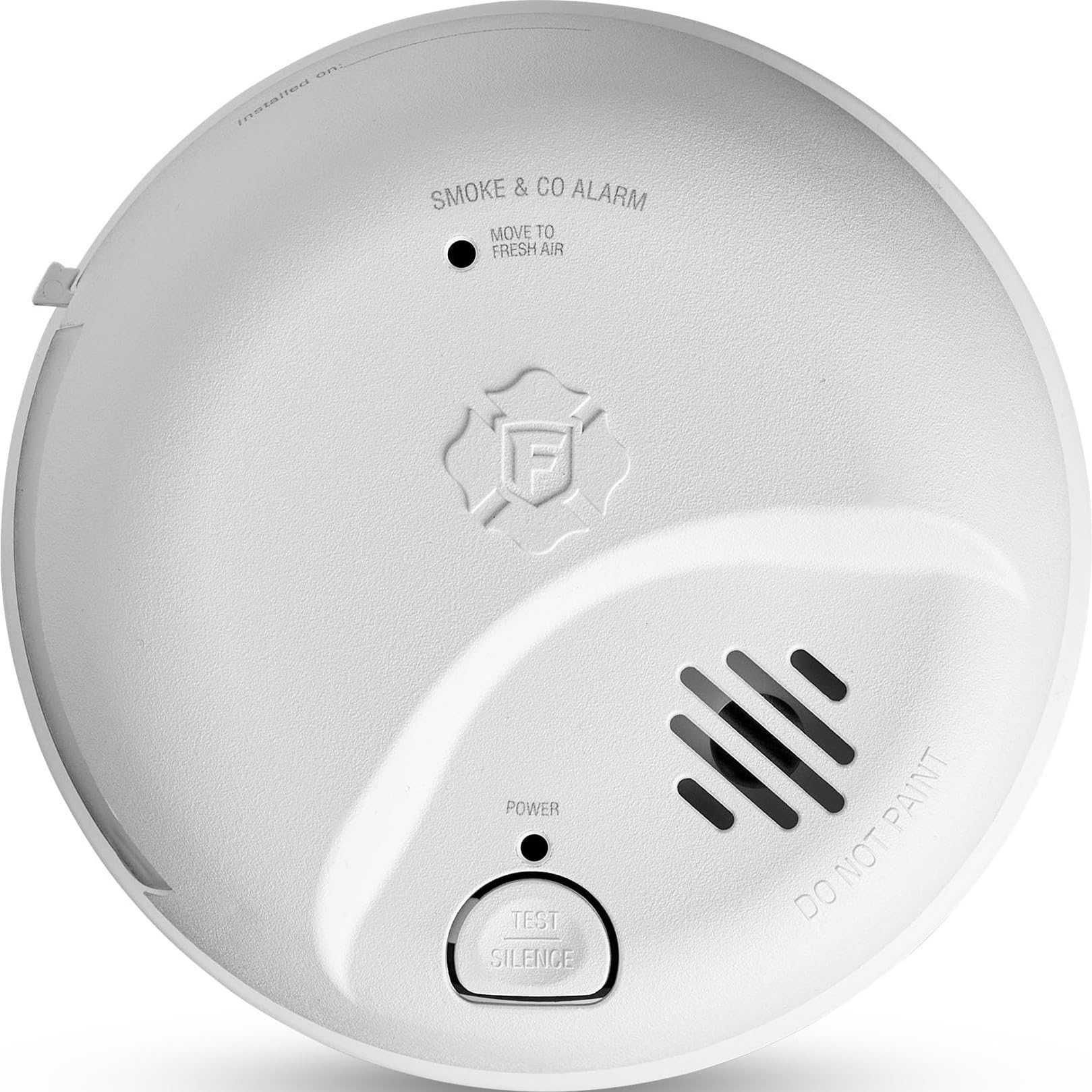
Power Source: Hardwired with 9V battery backup
Type: Combination smoke and carbon monoxide alarm
Brand: First Alert
Mounting: Ceiling or wall, wired base
Best For: Replacing an existing hardwired alarm
This is the pick for a home that already has alarm wiring in the ceiling. The unit draws its main power from the household circuit and keeps a 9V battery on standby, so it keeps watching for smoke and CO during an outage. First Alert is one of the most widely stocked alarm brands, which matters when a replacement has to match an existing base or fit a standard electrical box. The combination sensor means one device covers both hazards instead of two separate units competing for ceiling space.
It suits homeowners doing a like-for-like replacement and anyone who prefers not to think about batteries beyond the annual swap. The catch is installation: it needs a live wired connection, so a licensed electrician may be needed where no wiring exists.
Trade-off: The hardwired design is the wrong choice for renters or any room without existing alarm wiring, since installation is not a plug-and-play job.
SMCO100 First Alert Battery Combination Smoke & Carbon Monoxide Alarm

Power Source: Battery
Type: Combination smoke and carbon monoxide alarm
Brand: First Alert
Mounting: Ceiling or wall, screw-in bracket
Best For: A quick single-room install
This battery-powered First Alert is the straightforward choice when a single hallway, bedroom or rental unit needs combined protection without touching the wiring. It screws to the ceiling or wall and runs entirely on batteries, so there is no electrician and no circuit to isolate. First Alert’s familiar face and test button make it easy for guests and family members to check.
It fits renters, landlords refreshing an apartment between tenants, and anyone adding a second alarm in a basement or garage. The trade-off is routine: batteries need replacing on schedule, and a skipped swap leaves the unit silent.
Trade-off: Battery-only operation puts the whole safety net on the user remembering to replace cells, so it is a poor fit for hard-to-reach ceilings or forgetful households.
X-Sense SC07 10-Year Sealed Battery Combination Smoke & CO Detector
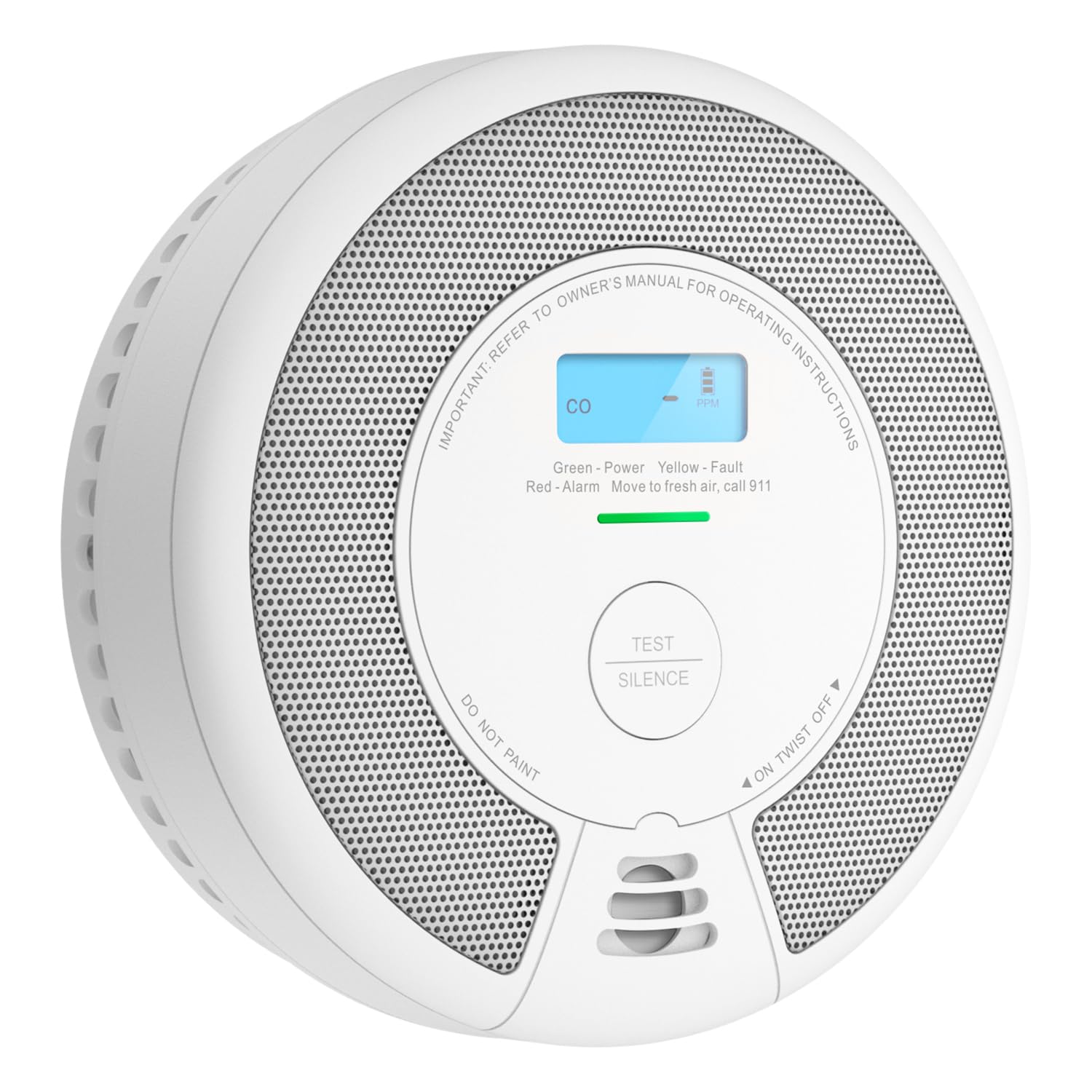
Power Source: 10-year sealed battery
Type: 2-in-1 smoke and CO detection
Certification: UL 217 and UL 2034
Display: LCD
Pack Size: 1
Best For: Set-and-forget single install
The SC07 removes the battery chore entirely: the cell is sealed inside and rated for the life of the alarm, so the unit is replaced rather than recharged. The LCD screen gives a plain readout instead of a chirp code, which helps when diagnosing a fault or a low-battery warning. Both UL 217 and UL 2034 certification are stated in the name, covering smoke and CO respectively, and the 2-in-1 sensor keeps the ceiling uncluttered.
It suits anyone who wants a decade of coverage with no annual battery run, especially in a bedroom or hallway where a ladder visit is awkward. The sealed design means the whole unit goes in the trash at end of life, and the LCD adds a little cost over a plain indicator light.
Trade-off: Because the battery cannot be swapped, a unit that reaches end of life mid-year forces a full replacement rather than a cheap battery change.
X-Sense XP0H-WN Wireless Combination Smoke and CO Detector, 3-Pack
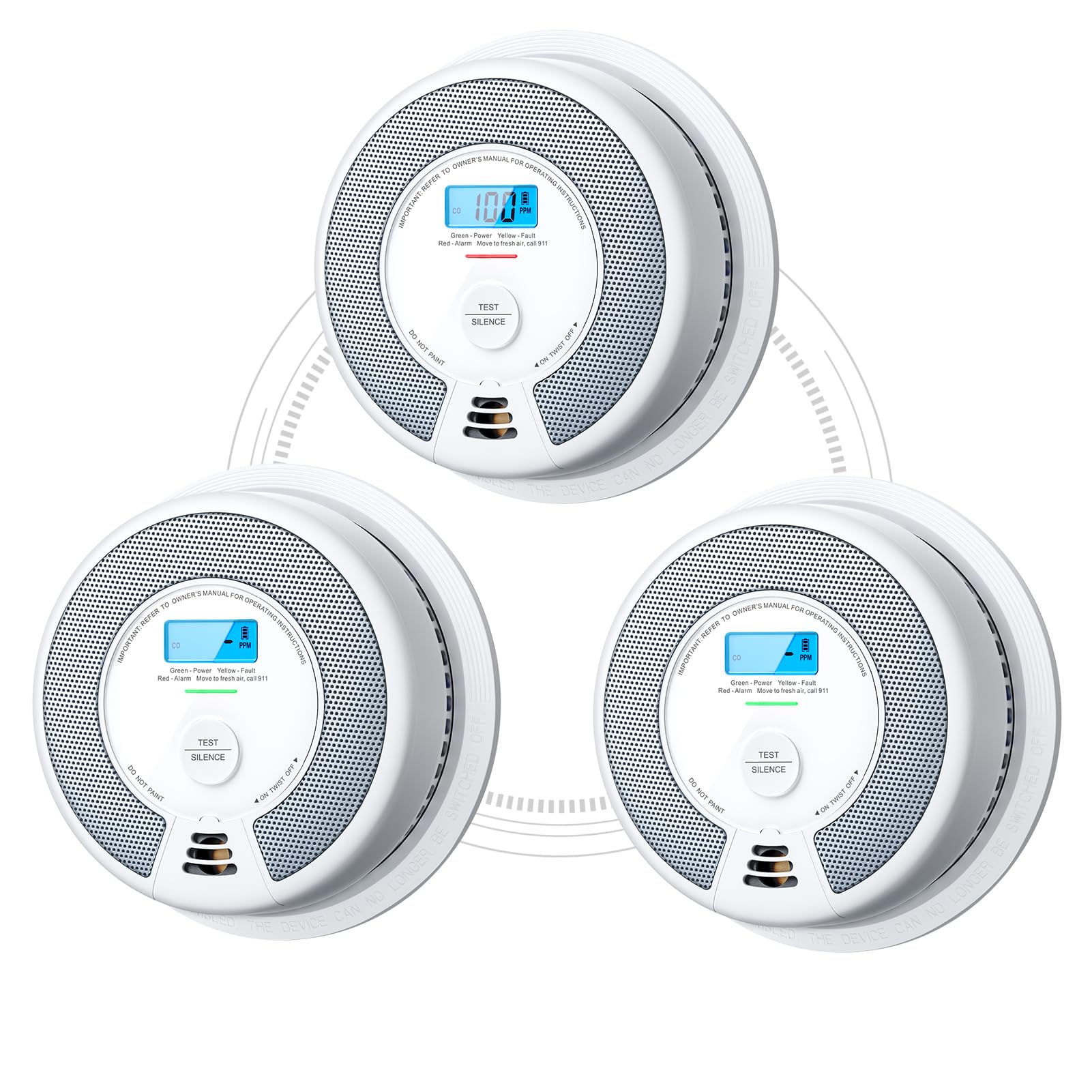
Power Source: 10-year sealed battery
Type: Wireless combination smoke and CO detector
Alerts: Interconnected across units
Bracket: Large 5.7-inch
Certification: UL 217 and UL 2034
Pack Size: 3
Best For: Whole-home coverage
This three-pack is built for a house that needs alarms on more than one floor. The interconnected alerts mean a trigger on one unit sounds the others, so a basement alarm is heard in an upstairs bedroom. The sealed 10-year battery carries the same no-maintenance benefit as the SC07, and the oversized 5.7-inch bracket covers the footprint left by many older alarms, which cuts drywall patching on a retrofit.
It suits owners of multi-level homes, large apartments or anyone replacing a set of aging alarms in one go. The premium is the obvious drawback — three interconnected units cost far more than three standalone ones, and the wireless link only pays off when more than one unit is installed.
Trade-off: The interconnected feature is wasted on a single-room install, and the three-pack price is steep for a small home that needs only one or two alarms.
SMCO100 First Alert Battery Combination Smoke & Carbon Monoxide Alarm (Multi-Pack)
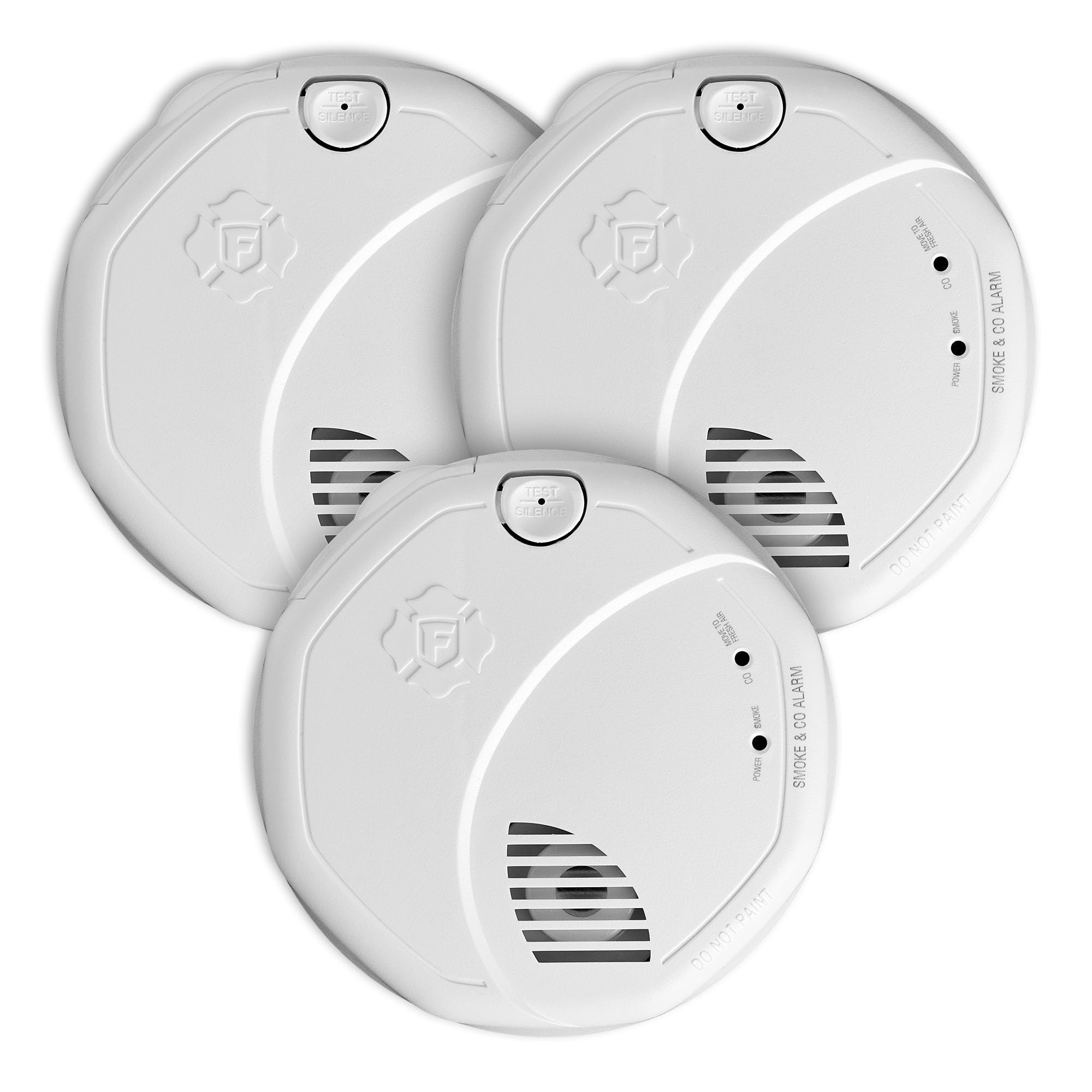
Power Source: Battery
Type: Combination smoke and carbon monoxide alarm
Brand: First Alert
Mounting: Ceiling or wall, screw-in bracket
Pack Size: Multi-unit
Best For: Outfitting several rooms at once
This listing bundles the same battery-powered First Alert combination alarm in a multi-unit pack, aimed at buyers who need several rooms covered without buying one at a time. Each unit is independent, so there is no wireless linking to set up and no hub to pair — screw each one up and test it. First Alert’s common form factor and test routine keep the whole set easy to manage.
It suits landlords, property managers and families replacing every alarm in the house on the same day. The independence is also the limitation: one alarm sounding does not set off the others, so the pack suits smaller homes where sound carries.
Trade-off: Without interconnection, a distant alarm may go unheard behind a closed door, so the pack is a weaker choice for large or multi-floor layouts.
Before You Buy
- Power source: Hardwired units need an existing circuit; battery and sealed-battery models install anywhere with screws.
- Battery life: Sealed 10-year cells end with the alarm; replaceable batteries need a scheduled swap.
- Interconnection: Linked alarms sound together, which matters in multi-floor homes; standalone units do not.
- Certification: Confirm both UL 217 (smoke) and UL 2034 (CO) are stated on the unit.
- Mounting footprint: Check the bracket size against the old alarm’s mark before patching drywall.
- Placement: One alarm per level plus outside each sleeping area is the usual starting layout.
- Pack size: Buying multi-packs costs less per unit but only pays off if every alarm is needed.
Frequently Asked Questions
-
What is the best combined smoke and CO alarm for a rental?
A battery-powered model such as the SMCO100 is the simplest rental pick, since it needs no wiring and can be removed at move-out. -
Do combined alarms need two different sensors?
Yes. A combined unit houses a smoke sensor and a CO sensor in one housing, and it should carry both UL 217 and UL 2034 certification. -
How long do sealed-battery alarms last?
The sealed 10-year models are designed to run for the life of the alarm, after which the whole unit is replaced rather than re-batteried. -
Are interconnected alarms worth the extra cost?
In a multi-floor home, yes — a linked set sounds every unit when one triggers, which is the main gap in standalone alarms. -
Can a hardwired alarm be replaced with a battery one?
It can, but the old wiring is left unused and the ceiling mark may need patching; matching the existing base is usually simpler. -
Where should a combined alarm be placed?
On each level of the home and outside each sleeping area, following the manufacturer’s placement guidance for the specific model.
Bottom Line
For most homes, the SMICO100-AC First Alert Hardwire Combination Smoke & Carbon Monoxide Alarm is the best combined smoke and CO alarm to start with — it covers both hazards from existing wiring and keeps a 9V backup for outages. Buyers without wiring should look to the sealed X-Sense SC07, and multi-floor homes get the most from the interconnected XP0H-WN three-pack.