Why there are Amazon links here: Brave Review is paid a commission for qualifying Amazon purchases made through the links below. Your price does not change, and using our links is entirely optional. How this works
Best Lux Sensor for Daylight Triggers: 3 Picks for Lighting Control
A lux sensor for daylight triggers turns ambient light level into a switching signal, so lights come on at dusk and go off at dawn without a timer to reset. This short roundup covers three very different devices: an industrial analog transmitter for data acquisition, a commercial on/off photosensor for single-zone switching, and a replacement photo sensor built for a zone-control system. Each pick suits a different buyer — the integrator wiring a controller, the facilities manager retrofitting a wall pack, and the technician servicing an existing panel. The overview table below sorts them by role, so a decision is possible before the reviews.
Overview of the Picks
| Product | Key Spec | Best Use | Price Tier |
|---|---|---|---|
| Light Sensor 0-5V Output 0-65535 Lux Industrial Intensity Illumination Acquisition Transmitter | 0-5V analog output, 0-65535 lux range | Data acquisition and controller input | Budget |
| Watt Stopper Lmls-105 On/Off Photosensor Single Zone Switching Device Occupancy Sensor, White | Single-zone on/off switching | Commercial single-zone lighting control | Mid-range |
| NSi Industries EPC1 Photo Sensor for LC200 Zone Control Supplied with Unit | Replacement sensor for LC200 zone control | Servicing an existing zone-control system | Mid-range |
Light Sensor 0-5V Output 0-65535 Lux Industrial Intensity Illumination Acquisition Transmitter

Output Signal: 0-5V analog
Measurement Range: 0-65535 lux
Function: Illumination intensity acquisition
Type: Industrial transmitter
Light Sensor 0-5V Output 0-65535 Lux Industrial Intensity Illumination Acquisition Transmitter
This is the pick for anyone who needs a light reading as a voltage, not a switch closure. The transmitter outputs an analog 0-5V signal proportional to measured illumination across a 0-65535 lux span, which means a PLC, data logger, or microcontroller can read daylight level directly and apply its own threshold logic. The wide range covers both dim indoor conditions and full outdoor daylight, so one unit can serve a greenhouse controller, an automated blind system, or a logging setup. It is an industrial-style component rather than a finished consumer gadget, and it expects to be wired into something that interprets the signal.
That makes it the most flexible of the three for custom builds, and also the least plug-and-play. Buyers who want a sensor that simply closes a contact at dusk will find this one needs a controller to be useful — the voltage has to be scaled and compared before anything switches. It earns its place as the budget data-acquisition option for hobbyists and integrators who already have the downstream electronics.
Trade-off: The analog output demands calibration and a compatible controller, so it is not a drop-in replacement for a standalone dusk-to-dawn switch.
Watt Stopper Lmls-105 On/Off Photosensor Single Zone Switching Device Occupancy Sensor, White
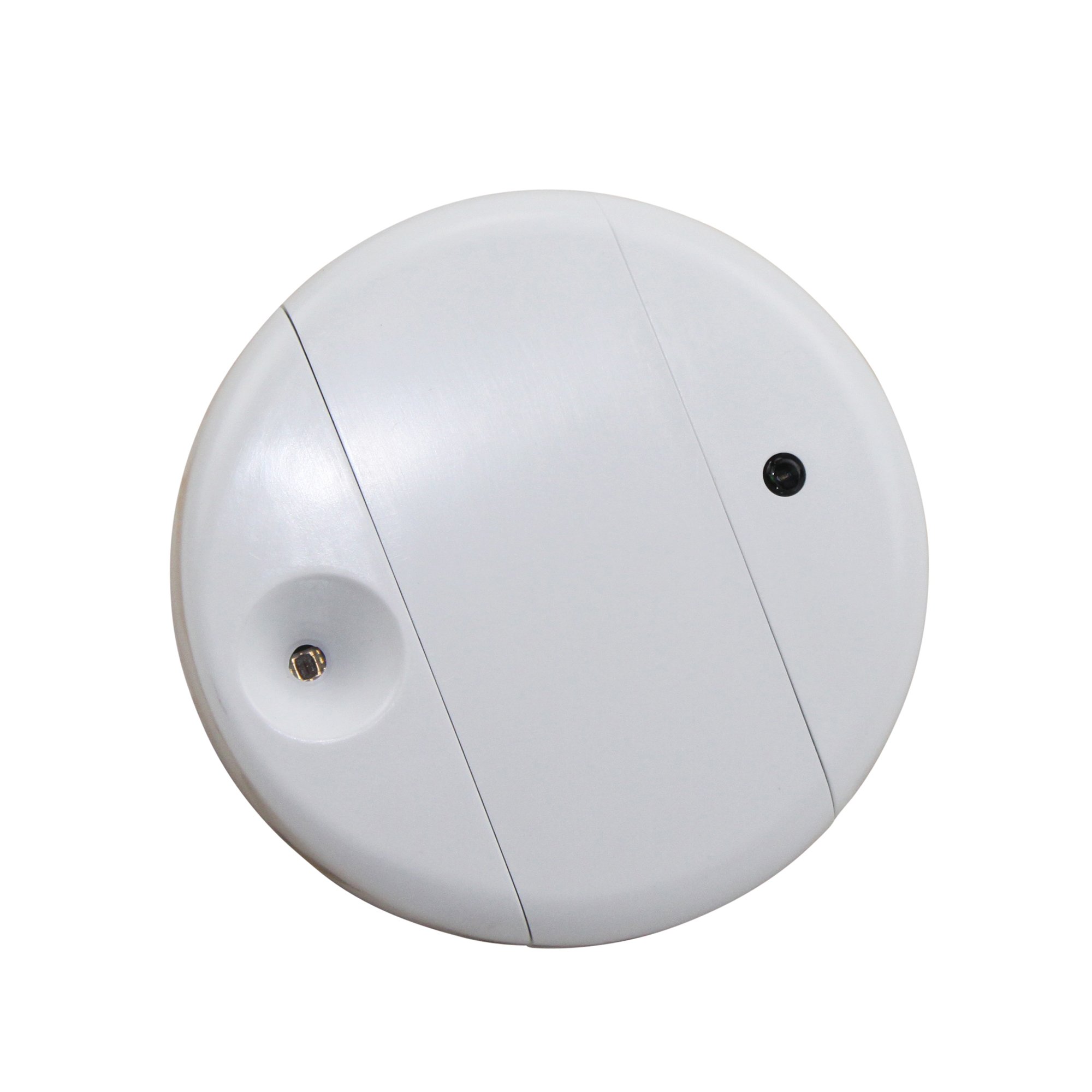
Function: On/off photosensor
Switching: Single zone
Device Type: Switching device / occupancy sensor
Color: White
Watt Stopper Lmls-105 On/Off Photosensor Single Zone Switching Device Occupancy Sensor, White
This unit is the straightforward commercial answer: a single-zone on/off photosensor that switches one lighting circuit based on ambient light. The white housing suits surface mounting in finished commercial spaces, and the single-zone design keeps installation and commissioning simple — one sensor, one circuit, one threshold. It is aimed at facilities work: exterior lighting, corridor lamps, or any single group of fixtures that should follow daylight rather than a clock. The occupancy function in the name points to combined presence and daylight logic, which is common in commercial lighting controls.
It fits buyers who want a finished, code-friendly switching device rather than a bare component, and who only need one zone per sensor. The limitation is scale: a large space with several independently controlled zones needs several units or a networked system, and the single-zone format will not cover a whole building on its own.
Trade-off: One zone per device means multi-zone buildings need multiple sensors, which adds cost and wiring compared with a networked controller.
NSi Industries EPC1 Photo Sensor for LC200 Zone Control Supplied with Unit

Function: Photo sensor
Compatibility: LC200 zone control
Supply: Supplied with unit
Type: Replacement sensor
NSi Industries EPC1 Photo Sensor for LC200 Zone Control Supplied with Unit
The EPC1 is a targeted replacement part, not a general-purpose sensor. It is built for the LC200 zone control system and supplied with the unit, which tells a technician that this is the correct sensor to restore daylight response in an existing installation. For anyone maintaining that specific control platform, matching the original part is worth more than saving a few dollars on a generic substitute — the wiring, mounting, and control logic are already designed around it. It is the pick for repairs and like-for-like swaps in buildings already running LC200 zone control.
The narrow compatibility is also the whole story: buyers without an LC200 panel have no use for this sensor, and buyers with one should confirm the EPC1 is the sensor their unit expects before ordering. It earns its place as the service-part option in this roundup, where the goal is getting an existing system back to correct daylight triggering rather than adding new capability.
Trade-off: It is tied to one control platform, so it offers no value outside an LC200 installation and cannot be repurposed as a standalone switch.
Before You Buy
- Output type: Decide first whether the system needs an analog voltage (0-5V) or a simple on/off switch — they are not interchangeable.
- Compatibility: Confirm the sensor matches the controller, panel, or zone-control platform already installed; replacement parts are model-specific.
- Zones: Count how many independently switched lighting groups exist, since single-zone devices cover one circuit each.
- Mounting and housing: Check that the housing suits the location — finished commercial spaces call for a clean white enclosure, while component-style sensors go inside an existing box.
- Range: Match the measurement span to the application; a wide 0-65535 lux range suits logging and control, while a switching sensor only needs a usable threshold.
- Installation skill: Analog transmitters require wiring and calibration into a controller, whereas switching devices are closer to a direct replacement.
Frequently Asked Questions
-
What does a lux sensor for daylight triggers actually do?
It measures ambient illumination and produces a signal — either a voltage or a switch action — that tells a lighting system when daylight is sufficient or insufficient. -
Can the 0-5V transmitter replace a dusk-to-dawn switch?
Not directly. It outputs a proportional voltage that a controller must interpret; a switching photosensor is the simpler choice for on/off control. -
How many lighting zones does the Watt Stopper unit control?
One. It is a single-zone switching device, so separate zones need separate sensors or a networked control system. -
Is the NSi EPC1 a universal sensor?
No. It is a photo sensor intended for the LC200 zone control system and is supplied with the unit, so it suits that platform specifically. -
Which pick is best for a custom automation project?
The 0-5V transmitter, because its analog output can feed a PLC, logger, or microcontroller that applies custom thresholds. -
Do these sensors need calibration?
Analog output devices do, since the voltage must be scaled to the controller; switching photosensors are typically set with a threshold adjustment instead.
Bottom Line
For most buyers wiring daylight response into a control system, the Light Sensor 0-5V Output 0-65535 Lux Industrial Intensity Illumination Acquisition Transmitter is the top pick — its wide range and analog output cover the most applications at the lowest cost. Commercial single-zone switching belongs with the Watt Stopper unit, and existing LC200 installations should stay with the NSi EPC1 replacement.