Why there are Amazon links here: Brave Review is paid a commission for qualifying Amazon purchases made through the links below. Your price does not change, and using our links is entirely optional. How this works
Best Threshold Ramps for a Robot Vacuum: 5 Picks That End Stuck Bots
A robot vacuum that stalls at every doorway, bathroom lip, and tile edge is a robot vacuum doing half a job. The fix is usually a low rubber ramp that bridges the height difference and lets the wheels climb cleanly. This roundup covers five threshold ramps suited to different setups: slim strips for small lips, grooved ramps for slippery tile, wide cuttable ramps for bigger rises, and heavy-duty options for mixed household traffic. The overview table below sorts all five at a glance, and each review explains who the ramp fits and who should look elsewhere.
The Picks at a Glance
| Product | Key Spec | Best Use | Price Tier |
|---|---|---|---|
| roborock Threshold Strip for All Series Robot Vacuums | Brand-matched threshold strip | Roborock owners wanting a factory-fit part | Budget |
| Robot Vacuum Ramp, 15° Rubber Threshold Ramp | 15° grooved rubber ramp | Bedrooms and kitchens with slick floors | Budget |
| VEVOR 1.2 inch Rise Cuttable Threshold Ramp | 1.2 in rise, 35.4 in wide, cuttable | Wide doorways and bathroom transitions | Mid-range |
| 2” Wide x 3.3′ Long Self-Adhesive Rubber Threshold Strip | Peel-and-stick rubber strip | Long, low thresholds on smooth tile | Budget |
| LIEKUMM 3/8" Odorless Threshold Ramp | 3/8 in rise, 2200 lbs capacity | Heavy traffic plus robot vacuum use | Mid-range |
1. roborock Threshold Strip for All Series Robot Vacuums
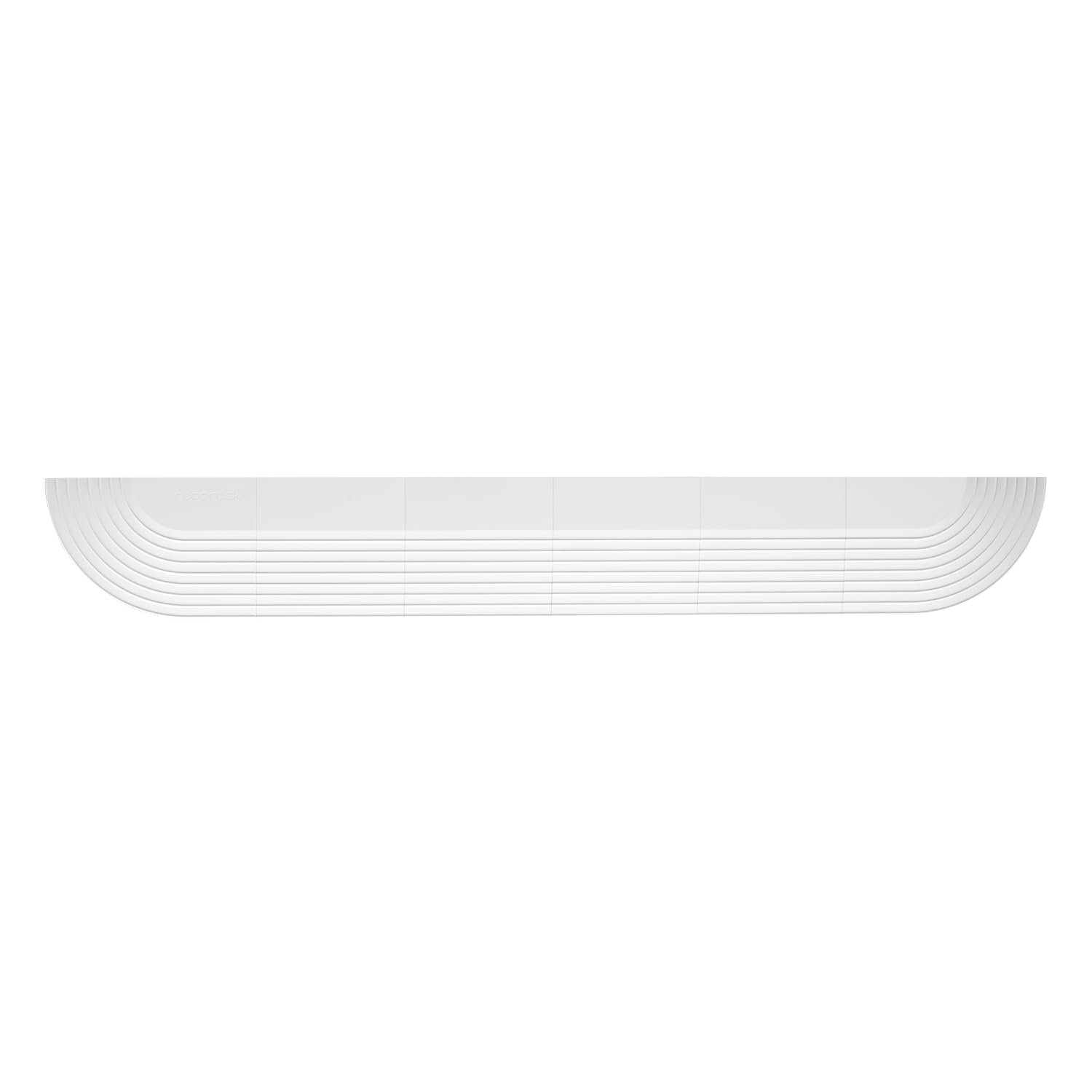
Type: Threshold strip
Intended use: Doorway and floor transitions for robot vacuums
Compatibility: All Roborock series robot vacuums
Material: Rubber threshold strip
Best Use: Roborock owners who want a matched accessory
roborock Threshold Strip for All Series Robot Vacuums is the obvious first stop for anyone already running a Roborock. It is built as a brand accessory, so the height and profile are designed around how Roborock wheels and bumpers approach a doorway lip. The strip is a low, simple bridge rather than a broad ramp, which suits homes where the height difference is small and the goal is just to stop the bot from climbing and scraping.
The appeal here is fit and predictability: a matched strip removes the guesswork of whether a generic ramp will sit too tall or too shallow. It suits Roborock owners with one or two problem doorways and a low lip to clear. Buyers with a tall rise, a wide threshold, or a different vacuum brand should skip it — the strip is narrow in purpose as well as profile, and a broader cuttable ramp covers more ground.
Trade-off: A brand-specific strip is a poor value for anyone without a Roborock, and its slim profile will not solve a tall step.
Check the current price on Amazon
2. Robot Vacuum Ramp, 15° Rubber Threshold Ramp

Type: Rubber threshold ramp
Intended use: Doorway transitions, bedrooms and kitchens
Incline: 15°
Surface: Non-slip grooved
Compatibility: Roborock, Ecovacs and most robot vacuums
Installation: Easy to install
Robot Vacuum Ramp, 15° Rubber Threshold Ramp for Doorway Transitions is the generalist pick. The 15° incline is a gentle climb for a robot’s drive wheels, and the grooved non-slip surface gives the tread something to bite on when the bot approaches at an angle. Because it is listed as compatible with Roborock, Ecovacs and most robot vacuums, it works for households that are not locked into one brand.
The grooved top is the detail that matters most for tile and laminate, where a smooth ramp can let wheels spin. It suits renters and mixed-brand homes that want one ramp per doorway without hunting for a brand match. The caution is width: a single ramp covers one doorway, so a home with several problem thresholds needs multiple units, and the price advantage fades fast.
Trade-off: One ramp handles one doorway, so multi-threshold homes will need to buy in quantity.
Check the current price on Amazon
3. VEVOR 1.2 inch Rise Cuttable Threshold Ramp
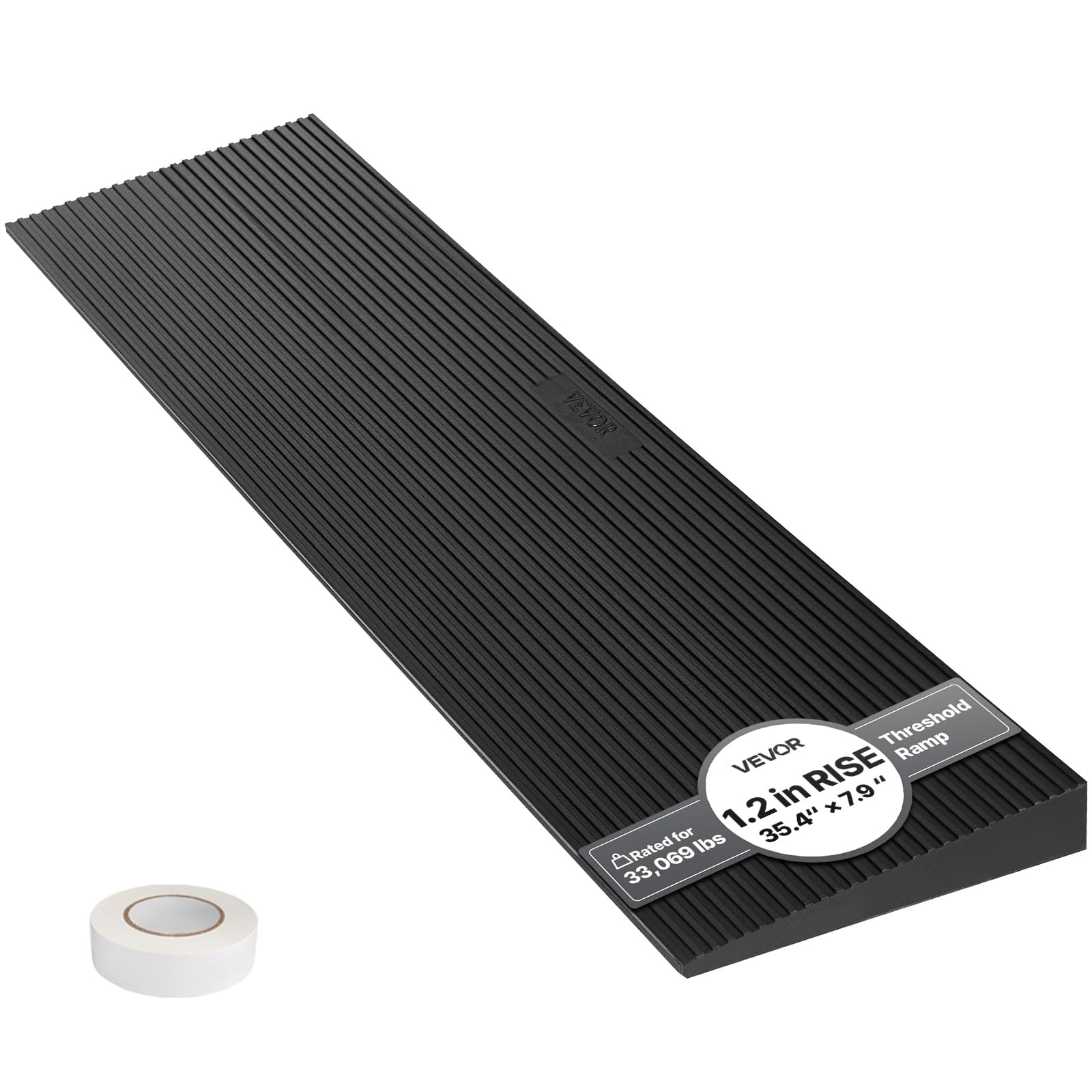
Type: Cuttable rubber threshold ramp
Rise: 1.2 inch
Width: 35.4 inch
Surface: Non-slip solid rubber
Intended use: Doorways, bathrooms and smooth tile floors
Installation: Double-sided tape included
VEVOR 1.2 inch Rise Cuttable Threshold Ramp, 35.4 inch Wide Rubber Ramp is the pick for a real height difference. A 1.2 inch rise is more than most slim strips can handle, and the 35.4 inch width spans a full doorway instead of sitting as a narrow strip in the middle. The solid rubber body is designed to hold its shape underfoot, and the non-slip surface keeps both robot wheels and human feet steady.
The cuttable design is the standout feature: the ramp can be trimmed to fit an odd opening rather than forcing the doorway to match the ramp. It suits homeowners with a raised bathroom floor, a patio lip, or a wide transition that a narrow strip cannot cover. Buyers who only need to clear a few millimeters should look at a cheaper strip instead — this ramp is more material and more money than a tiny lip requires.
Trade-off: A wide, thick ramp is overkill for hairline thresholds and takes more effort to trim and seat cleanly.
Check the current price on Amazon
4. 2” Wide x 3.3′ Long Self-Adhesive Rubber Threshold Strip

Type: Self-adhesive rubber threshold strip
Width: 2 inch
Length: 3.3 ft
Surface: Rubber, peel-and-stick
Intended use: Door thresholds, wheelchair, stroller and scooter transitions
Color: Black
2” Wide x 3.3′ Long Threshold Ramps for Doorways Self-Adhesive Rubber Threshold Strip is the long-run option. At 3.3 feet, one strip covers a standard doorway in a single piece, and the peel-and-stick backing means no drilling and no separate adhesive. The rubber profile is low and gradual, which is what a robot vacuum needs to roll over a threshold rather than ram it.
The self-adhesive format suits renters and anyone who does not want to commit to screws or tape guns. It also works for strollers and scooters, so a single strip serves the whole household. The catch is that adhesive strips depend on a clean, flat, dust-free surface — on rough concrete or a dirty sill, the bond is the weak point, and the strip can lift at the edges over time.
Trade-off: Peel-and-stick rubber only holds as well as the surface under it, so rough or dusty sills will need extra prep.
Check the current price on Amazon
5. LIEKUMM 3/8" Odorless Threshold Ramp
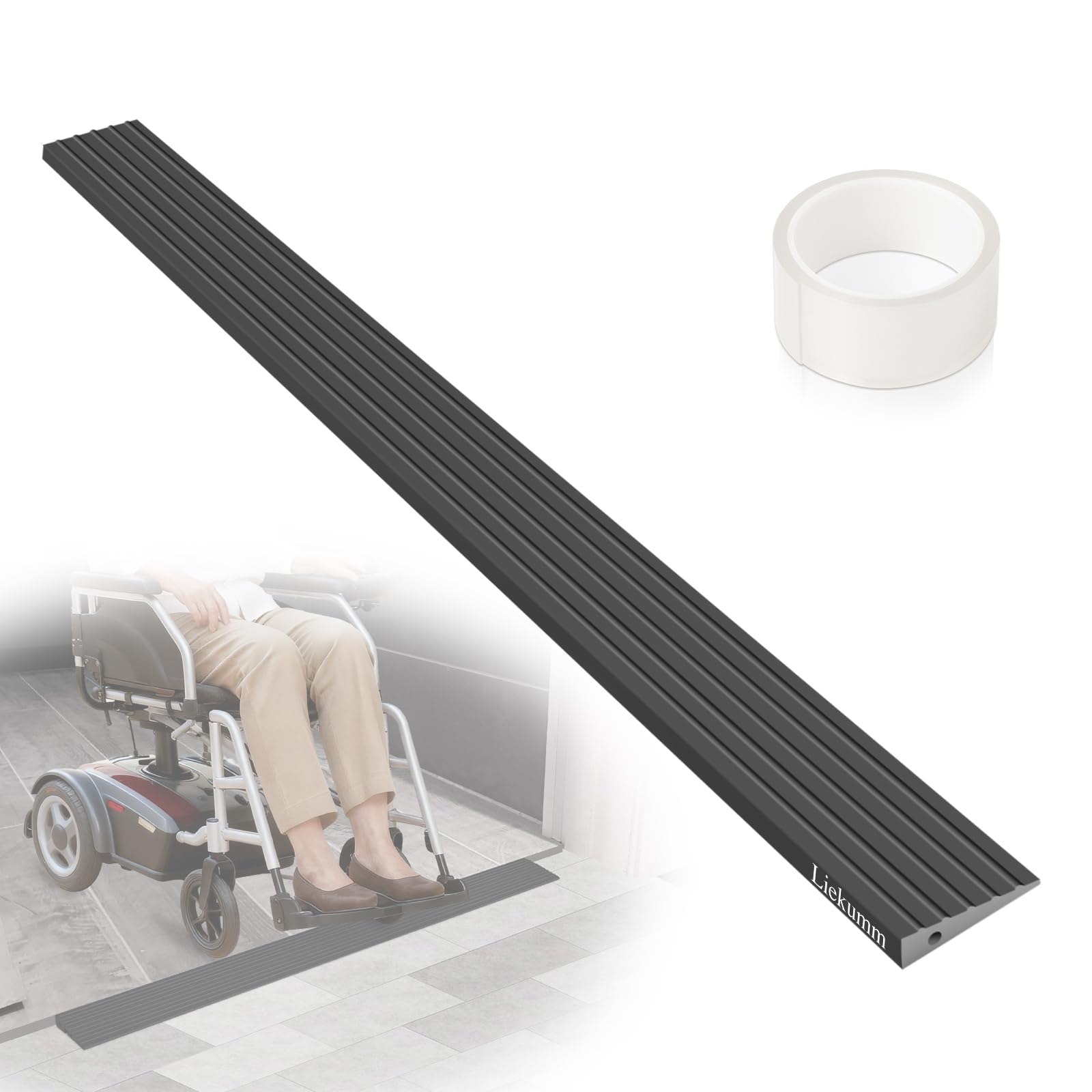
Type: Portable door ramp
Rise: 3/8 inch
Capacity: 2200 lbs
Surface: Anti-slip
Intended use: Strollers, walkers, garages and robot vacuums
Construction: Heavy-duty, odorless
LIEKUMM 3/8" Odorless Threshold Ramp for Doorways, 2200 lbs Capacity is the heavy-traffic pick. The 2200 lbs capacity rating is far beyond what a robot vacuum needs, which tells the buyer this ramp is meant to be walked and rolled over as well as vacuumed across. The 3/8 inch rise is modest, and the odorless rubber formulation matters in a closed garage or a small entryway.
The anti-slip surface and heavy-duty build make it a good fit for a garage-to-house transition or a doorway shared with a walker or stroller. It suits households where the threshold takes real foot traffic and the robot vacuum is only one of several users. The limitation is that 3/8 inch is a small rise — a taller step needs a proper cuttable ramp, and the portable design is not intended to be permanently fixed in place.
Trade-off: The low 3/8 inch rise and portable build suit light transitions, not tall or permanent installations.
Check the current price on Amazon
Before You Buy
- Material: Solid rubber holds up under foot traffic and robot wheels; thin adhesive strips are lighter duty and better for low lips.
- Size: Measure the rise and the doorway width first. A 1.2 inch rise needs a wide ramp, while a few millimeters is a strip job.
- Compatibility: Brand-matched strips fit one vacuum family; grooved generic ramps cover most robot vacuums across brands.
- Surface: Grooved or anti-slip tops matter on tile and laminate, where smooth ramps let drive wheels spin.
- Installation: Double-sided tape and peel-and-stick backing suit renters; cuttable ramps need trimming to fit odd openings.
- Care: Rubber ramps collect dust and hair at the base — a quick wipe keeps the incline clear for the vacuum.
- Traffic: If people, strollers, or walkers share the threshold, pick a rated heavy-duty ramp rather than a slim strip.
Frequently Asked Questions
-
Do robot vacuums need a threshold ramp?
Most robot vacuums can climb a small lip, but a ramp reduces scraping, wheel slip, and failed crossings. A ramp helps most on tile, thick carpet edges, and raised bathroom floors. -
How tall a rise can a threshold ramp handle?
Slim strips handle only a few millimeters, while cuttable ramps like the VEVOR model cover a 1.2 inch rise. Match the ramp’s rise to the actual step height before buying. -
Will a threshold ramp work with any robot vacuum brand?
Grooved generic ramps list compatibility with Roborock, Ecovacs and most robot vacuums. Brand-matched strips are the safer bet for a specific model. -
Can a threshold ramp be trimmed to fit?
Cuttable rubber ramps can be trimmed to an odd doorway width. Self-adhesive strips usually come in fixed lengths and are not designed for cutting. -
How are threshold ramps installed?
Options include peel-and-stick backing, double-sided tape, and portable placement. Adhesive types need a clean, flat, dust-free surface to hold. -
Are threshold ramps safe for walkers and strollers?
Heavy-duty ramps rated for high weight capacity, like the LIEKUMM model, are built for strollers, walkers, and foot traffic as well as robot vacuums.
Bottom Line
For most homes, the Robot Vacuum Ramp, 15° Rubber Threshold Ramp for Doorway Transitions is the best threshold ramp for a robot vacuum: a gentle incline, a grooved non-slip surface, and broad brand compatibility at a budget price. Buyers with a taller step should step up to the cuttable VEVOR ramp, and Roborock owners who want a factory-fit part can start with the roborock strip.
