Why there are Amazon links here: Brave Review is paid a commission for qualifying Amazon purchases made through the links below. Your price does not change, and using our links is entirely optional. How this works
Flood Buzz Small Water Leak Detectors vs Zircon Leak Alert Water Leak Detector: Six Alarms or Two Loud Ones
This comparison settles a single buying question: does a household get more protection from a six-pack of small reusable alarms or from a two-pack of louder, purpose-built detectors? The Flood Buzz small water leak detectors suit owners who want cheap coverage in many spots at once. The Zircon Leak Alert suits owners who want fewer units that are harder to ignore when they trigger. Both are no-setup, battery-style alarms that sit on the floor and sound off when water reaches them.
Flood Buzz Small Water Leak Detectors
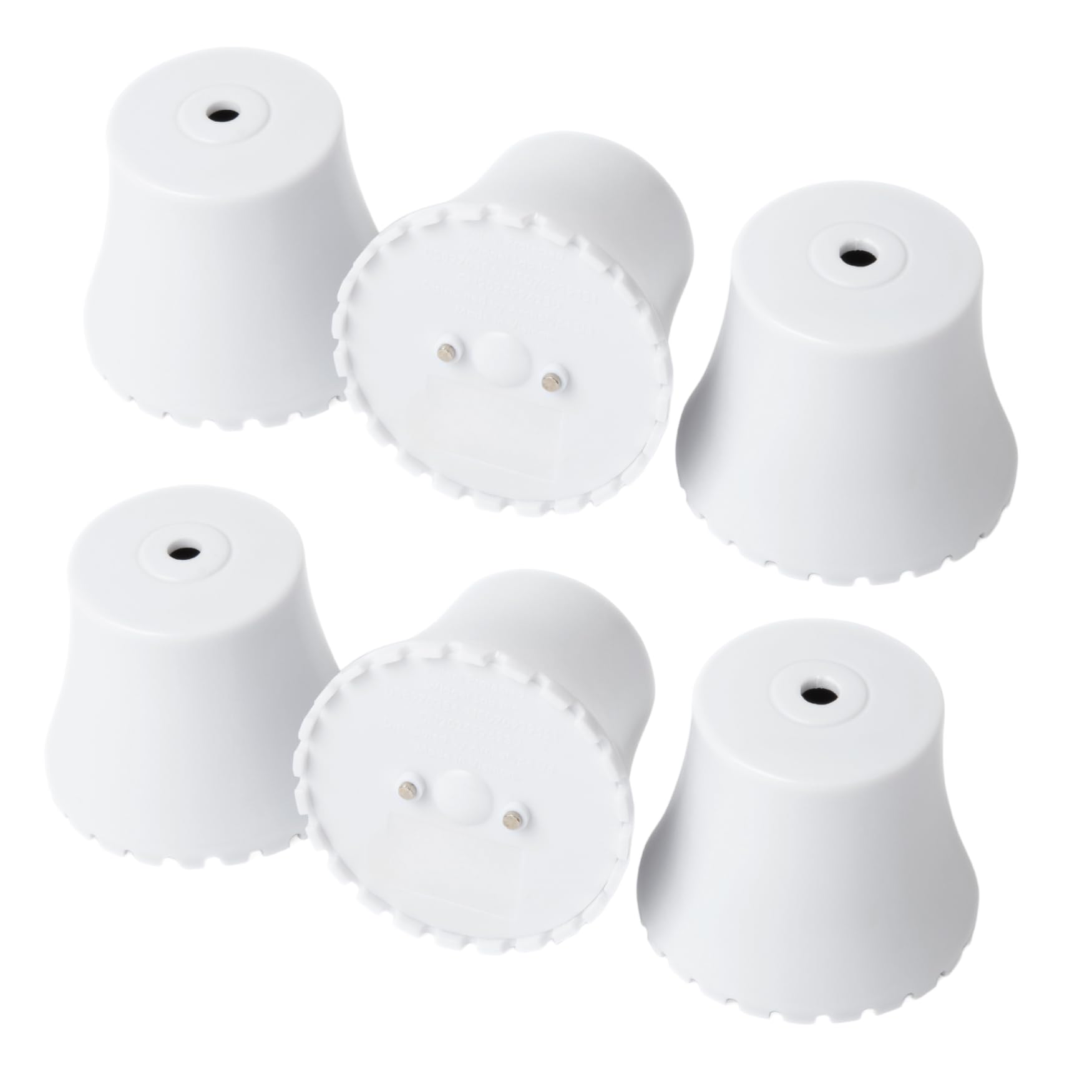
Type: Reusable point-of-leak water alarm
Pack Size: 6 alarms
Setup: None required — place and go
Design: Patented design, small model
Placement: Under sink, toilet, basement, RV, water heater, dishwasher
Intended Use: Homes and businesses
The Flood Buzz units are the purest form of leak alarm: a small puck that sits flat on the floor and shrieks when water bridges its contacts. There is no wiring, no app, no pairing step — the pack arrives and each unit goes where water would pool first. The patented design is the selling point here, and the small footprint means one fits inside a sink cabinet, behind a toilet, or on the floor of an RV compartment without being knocked aside.
The real argument for this pack is coverage per dollar. Six alarms mean a basement, a laundry room, two bathroom cabinets, and a water heater closet can all be watched at once, and a leak in any one of them gets caught early rather than whenever the owner next walks past. For a landlord, a small business, or a homeowner with several risk spots, that spread matters more than any single unit’s volume.
Trade-off: A small-model alarm at a six-pack price is built to be affordable and disposable rather than loud or long-lived, so it is the wrong pick for anyone who needs an alarm heard through a closed door or across a large house.
Zircon Leak Alert Water Leak Detector
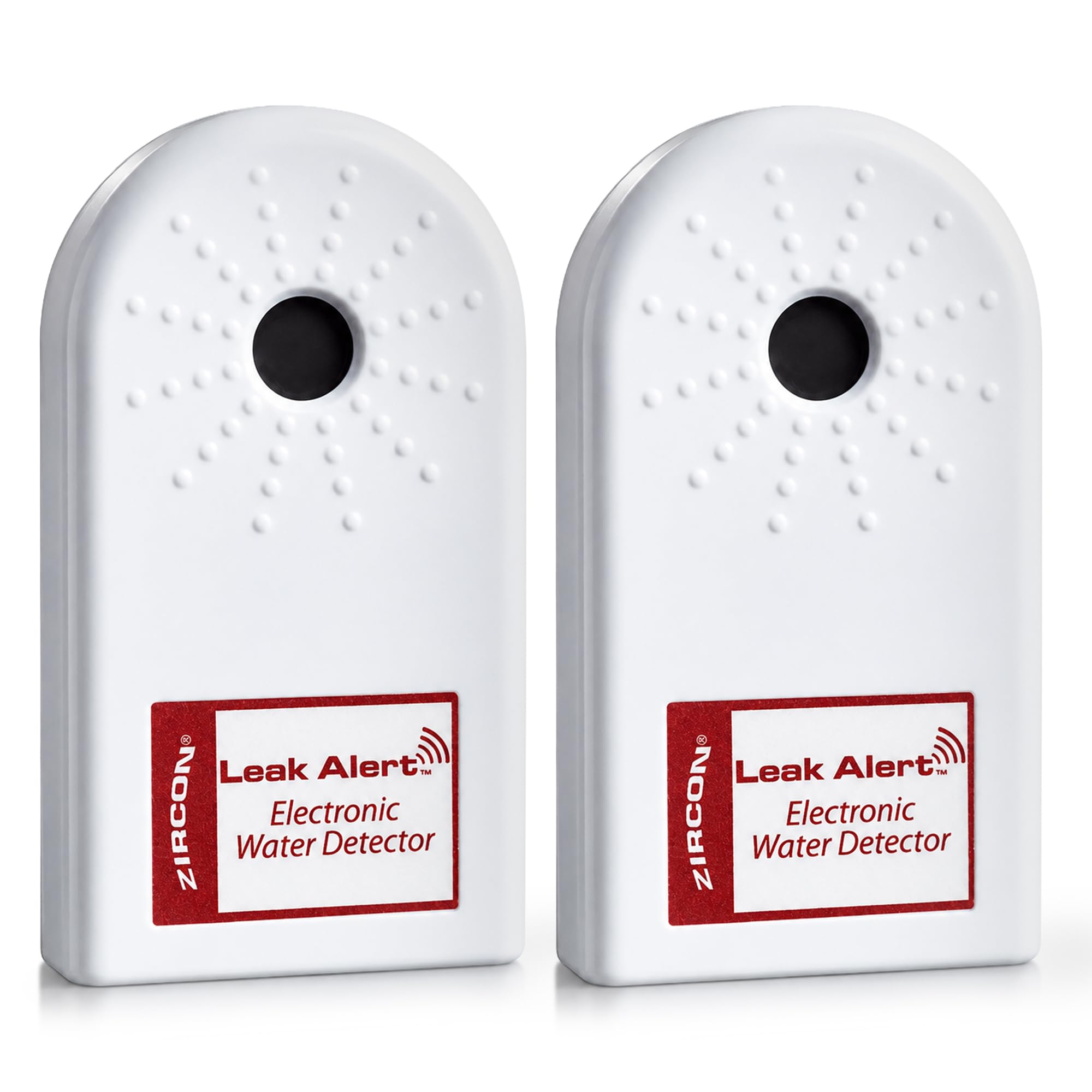
Type: No-setup water leak detector
Pack Size: 2 detectors
Alarm: 90 dB water alarm
Setup: No setup required
Placement: Water heaters, sinks, appliances, plumbing fixtures
Intended Use: Early detection before costly water damage
The Zircon Leak Alert is the same idea executed louder. The name states a 90 dB alarm, which is in the range of a smoke detector and comfortably above normal conversation — the kind of sound that carries from a basement to the floor above. That single specification is the whole pitch: two units, each loud enough that a leak announces itself instead of waiting to be discovered.
Two detectors is a deliberate limitation as much as a feature. The pack pushes buyers to identify the two highest-risk locations — typically the water heater and the washing machine, or the water heater and the sink cabinet — and protect those properly. Zircon is a name associated with detection tools, and this product reads as a focused instrument rather than a scattergun pack.
Trade-off: Two units at a premium per-alarm price leave most of a house unwatched, so a buyer with more than a couple of risk spots will need a second pack or a different strategy entirely.
Side-by-Side: Flood Buzz vs Zircon Leak Alert
| Specification | Flood Buzz Small Water Leak Detectors | Zircon Leak Alert Water Leak Detector |
|---|---|---|
| Pack size | 6 alarms | 2 detectors |
| Setup | None required | No setup required |
| Alarm loudness | Small-model alarm, not stated | 90 dB |
| Design | Patented design, small model | Leak Alert detector |
| Placement | Under sink, toilet, basement, RV, water heater, dishwasher | Water heaters, sinks, appliances, plumbing fixtures |
| Intended use | Homes and businesses | Early detection before costly water damage |
| Reusability | Reusable | Reusable point-of-leak detector |
| Price tier | Budget per alarm | Premium per alarm |
The Dimensions That Separate Them
Coverage is the first split. Six alarms against two is a three-to-one difference in the number of places that can be watched, and that ratio decides most purchases on its own. A house with a basement, a laundry closet, two bathrooms, and a kitchen sink has five or six genuine leak risks; the Flood Buzz pack covers all of them out of the box, while the Zircon pack covers two and leaves the rest exposed.
Loudness is the second split, and it cuts the other way. The Zircon name states 90 dB, which is loud enough to be heard from another room in most homes. The Flood Buzz listing does not make a volume claim, and small-model alarms at a budget per-unit price are generally built to be adequate rather than piercing. In a finished basement with a closed door, that gap matters.
Placement guidance is the third. Flood Buzz lists a long set of locations — under sink, toilet, basement, RV, water heater, dishwasher — which signals a product meant to be scattered widely. Zircon names water heaters, sinks, appliances, and plumbing fixtures, which reads as a tighter set of high-value targets. Neither list is a restriction; both describe where the manufacturer expects the unit to earn its keep.
Build and longevity run with price. A reusable puck at a six-pack price is a simple device, and simple devices at that price point are not built for a decade of service. The Zircon units cost more per alarm and are positioned as detection instruments, which usually means better sealing and a longer expected service life. Neither product name states a battery type or a lifespan, so buyers should plan on checking both periodically rather than assuming either runs forever.
The verdict per dimension: coverage goes to Flood Buzz, loudness goes to Zircon, placement flexibility goes to Flood Buzz, and per-unit build quality goes to Zircon. There is no clean sweep in either direction, which is exactly why the choice comes down to the layout of the property.
Which Should You Buy?
Choose Flood Buzz if the goal is broad coverage on a budget: a rental unit, a basement plus laundry plus two bathrooms, an RV with several wet systems, or a small business with multiple utility closets. Six alarms placed at six risk points will catch more leaks than two alarms placed at the two best risk points.
Choose Zircon if the property has one or two dominant leak risks — a water heater in a closet, a washing machine on an upper floor — and the priority is being alerted loudly enough to act before damage spreads. Two 90 dB alarms in the right spots beat six quiet ones nobody hears.
Buy neither as a complete solution if the property has both many risk points and a need for loud alerts. The honest answer in that case is a Zircon pack for the high-value locations plus a Flood Buzz pack to blanket the rest.
FAQ
-
Do these alarms need Wi-Fi or a smartphone app?
No. Both are standalone audible alarms that sit on the floor and sound when water reaches them. Neither product name mentions connectivity, app control, or smart-home integration. -
How many alarms does a typical house need?
Count the places where a supply line, appliance, or fixture could leak onto a floor: water heater, washing machine, dishwasher, under each sink, behind each toilet, and any basement or utility area. Six covers a small house well; a larger property needs more units or a mix of both products. -
Is the Zircon alarm really louder than the Flood Buzz?
The Zircon name states 90 dB, which is comparable to a smoke alarm. The Flood Buzz listing makes no volume claim and describes itself as a small model. Buyers who need an alarm heard through walls should weight that difference heavily. -
Can these be reused after they go off?
Both are described as reusable point-of-leak alarms. Once the area is dried and the unit is dry, it can go back into service. A unit that has sat in standing water for a long period should be inspected before being trusted again. -
Where exactly should each alarm sit?
Flat on the floor, in the lowest spot near the appliance or fixture, and clear of anything that would block water from reaching the contacts. Under a sink, that means the cabinet floor; near a water heater, the floor at its base. -
Will either alarm work in an RV or a vacation property?
The Flood Buzz name explicitly lists RV use. The Zircon name focuses on home plumbing and appliances. For a seasonal property with no one present, a loud alarm only helps if a neighbor can hear it — coverage and placement matter more than volume in that case. -
Do these replace a water shutoff valve or a monitored leak system?
No. Both are alert-only devices. They tell someone that water is present; they do not stop the flow. A property that needs automatic shutoff requires a different class of product. -
Which pack is the better value?
Flood Buzz wins on cost per alarm by a wide margin, since six units cost less than two Zircon units at list price. Zircon wins on cost per decibel. The better value depends on whether the buyer is buying coverage or buying loudness.
Bottom Line
For most households the Flood Buzz small water leak detectors are the smarter first purchase: six reusable alarms cover the realistic leak points in a typical home for less than a single premium detector, and catching a leak early is the entire job. The Flood Buzz 6-pack is the pick for broad, budget-friendly coverage — with a Zircon two-pack added later for the water heater closet if loudness turns out to matter.
