Why there are Amazon links here: Brave Review is paid a commission for qualifying Amazon purchases made through the links below. Your price does not change, and using our links is entirely optional. How this works
Best Waterproof Placement for Detectors to Stop Leaks Before They Spread
Water damage usually starts in a spot nobody watches — under a sink, behind a washer, along a basement wall. This guide covers five products that solve that problem two ways: self-contained leak alarms rated for wet, dusty places, and rugged enclosures that shield outdoor sensors from rain and sun. It suits homeowners protecting a basement or laundry room, landlords watching multiple units, and maintenance teams running sensors along a building perimeter. The overview below sorts all five by job and price tier so a choice takes under a minute.
The Picks at a Glance
| Product | Key Spec | Best Use | Price Tier |
|---|---|---|---|
| 5-Year Battery Life 5 Pack Water Leak Alarm | IP67, dual probes, 0–120dB adjustable | Whole-home coverage on a budget | Budget |
| Water Leak Detector Sensor Alarm | Adjustable wet/moisture alert | Single sink or basement spot | Budget |
| 6Pcs Waterproof Alarm Box | UV-stabilized ABS, lidded | Campus and perimeter sensor housing | Mid-range |
| 4 Pack Waterproof Alarm Enclosure Box | Impact-resistant ABS | Outdoor electronics protection | Mid-range |
| TECKNET Water Leak Detector | IP66, 120dB, battery included | Bathroom, laundry, window sills | Budget |
The table splits into two families. The three leak alarms are finished products that sit on a floor or under a pipe and sound off on their own. The two enclosure boxes are housings — they protect a sensor that already exists, which matters when the placement is outdoors and exposed to weather.
Buyers who want protection running the same day should stay with the alarms. Buyers placing sensors along a fence line, a rooftop unit or a campus perimeter need the boxes, because a bare sensor will not survive a season outdoors no matter how good its electronics are.
Best Waterproof Leak Alarms and Enclosures
5-Year Battery Life, Dual Probes Sensitive Leak and Drip Sensor Alarm, 5 Pack

Pack Size: 5 alarms
Waterproof Rating: IP67
Sensors: Dual probes for leaks and drips
Alarm Volume: 0–120dB, adjustable
Battery Life: 5 years
Placement: Kitchen, basement, sink, laundry
5-Year Battery Life, Dual Probes Sensitive Leak and Drip Sensor Alarm, 5 Pack
The IP67 rating is the headline here. That seal means dust cannot get in and the unit survives being submerged briefly, which is exactly the condition a floor alarm faces when a pipe lets go overnight. Dual probes catch both a slow drip running down a supply line and standing water spreading across a floor.
Five units in one box is the practical draw. A single order covers the water heater, both sink cabinets, the laundry closet and the basement corner without buying twice. The adjustable volume lets a buyer set a loud alarm near a sleeping area and a softer one in a crawlspace.
Trade-off: The five-year battery claim assumes the alarm stays quiet — a unit that triggers repeatedly will drain faster, so buyers in chronically damp spots should plan on earlier replacement.
Best for: Households that want full coverage in one purchase. Not for: buyers who need a smartphone alert, since this is a sound-only alarm.
Water Leak Detector Sensor Alarm

Type: Standalone leak and moisture alarm
Detection: Wet and moisture alert
Sensitivity: Adjustable
Placement: Basement floor, sink, overflow areas
Coverage: Pipe leakage and drip detection
Water Leak Detector Sensor Alarm
This unit is built around one job: sit on a floor or in a cabinet and make noise when water arrives. The adjustable sensitivity is the useful part, because a buyer can tune it to trip on a thin film of moisture near a water heater rather than waiting for a full flood.
It reads as a straightforward single-spot alarm, the kind that goes under a kitchen sink or beside a basement floor drain. Setup is a placement decision rather than an installation project — set it down, confirm it chirps, walk away.
Trade-off: A single-unit alarm protects one small area, so a buyer with several risk spots will need more than one, and the coverage cost adds up quickly.
Best for: A first alarm or a single known trouble spot. Not for: whole-home coverage in one purchase.
6Pcs Waterproof Alarm Box for Outdoor Sensors
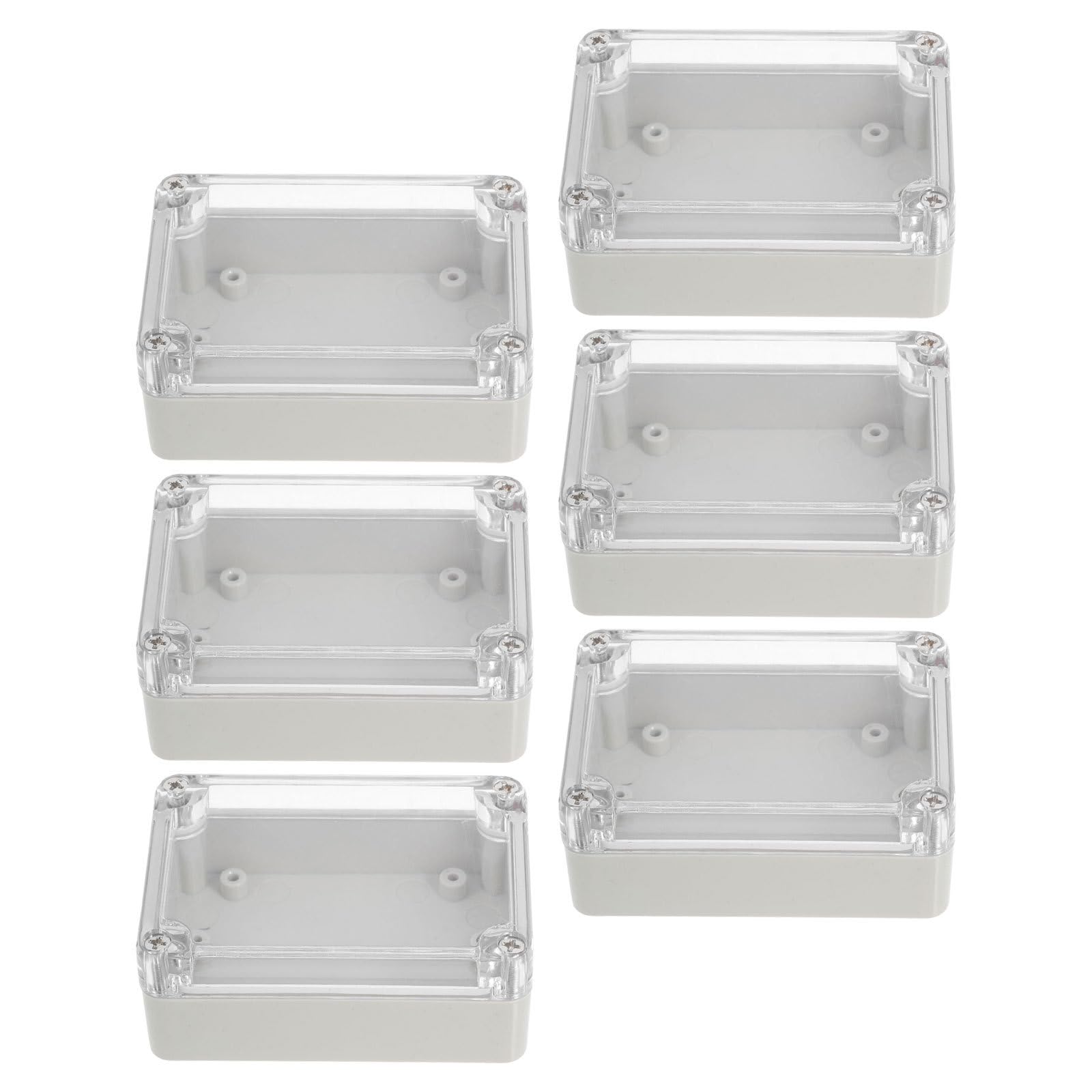
Material: ABS plastic
Weather Protection: UV-stabilized sealing
Closure: Lid included
Pack Size: 6 boxes
Dimensions: 8.3 x 5.8 x 3.3 cm
Intended Use: Campus perimeters, maintenance teams
6Pcs Waterproof Alarm Box for Outdoor Sensors
This is not an alarm — it is the housing that keeps an outdoor sensor alive. The ABS shell resists impact and the UV-stabilized sealing guards the gasket against sunlight, which is the failure point on cheap outdoor boxes that go brittle after a summer on a wall.
Six compact boxes suit a maintenance team installing a run of sensors along a perimeter or across a campus. The lid gives access for battery changes without pulling the whole unit off its mount. At roughly palm size, the boxes fit small electronics rather than large control gear.
Trade-off: The compact interior leaves little room for bulky sensors or extra wiring, so buyers should measure their device before ordering a set.
Best for: Facilities and grounds crews housing small outdoor sensors. Not for: anyone expecting a working alarm out of the box.
4 Pack Waterproof Alarm Enclosure Box for Outdoor Electronics
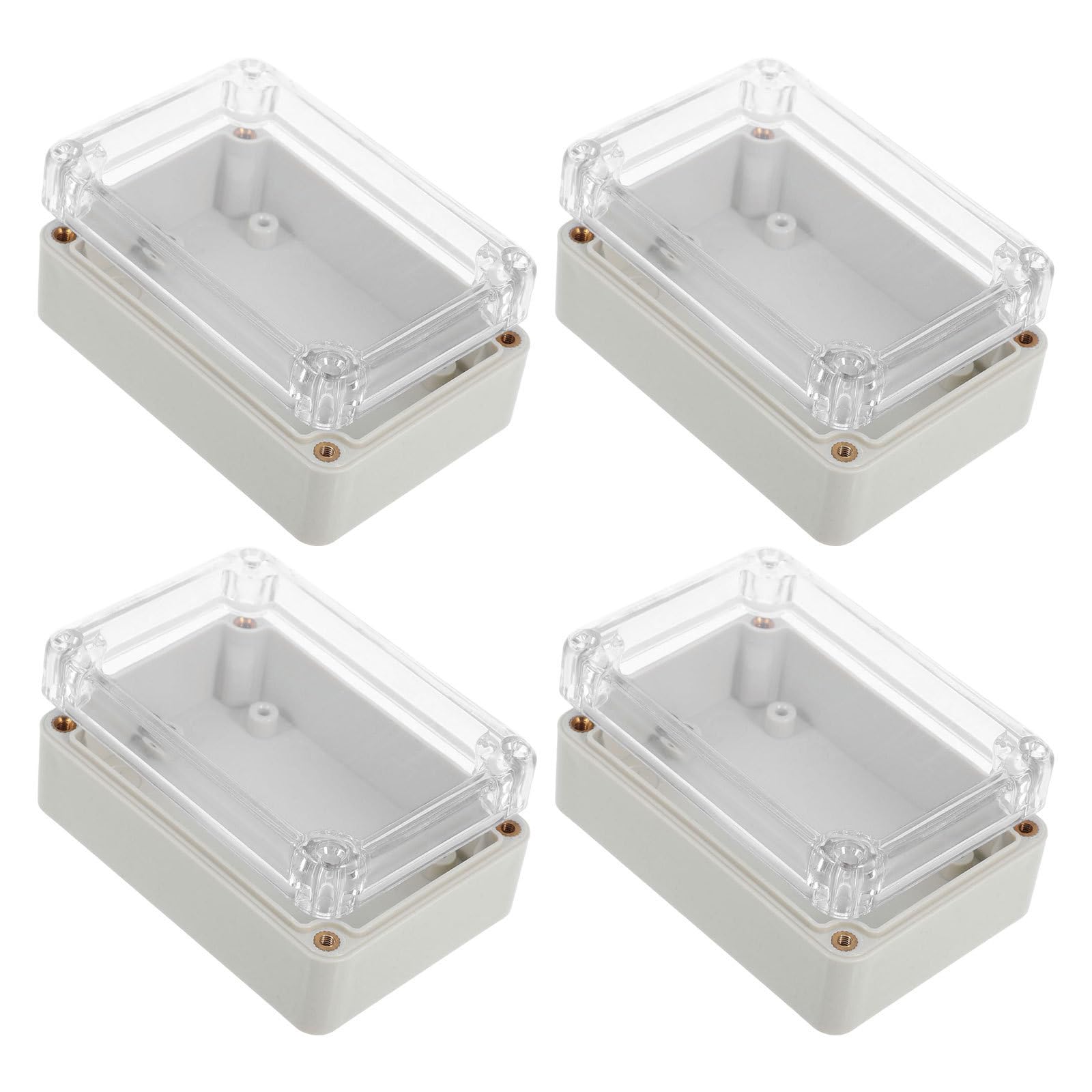
Material: ABS
Build: Impact-resistant design
Pack Size: 4 boxes
Installation: Easy installation
Intended Use: Home protection, outdoor electronics
4 Pack Waterproof Alarm Enclosure Box for Outdoor Electronics
This set leans toward home use rather than commercial runs. The impact-resistant ABS build shrugs off knocks from garden tools, hail and the occasional ladder, and the four-pack size matches a typical house — one box at the gate, one on the shed, one by the garage, one spare.
Easy installation is the pitch, and for a homeowner that usually means a straightforward mount and a lid that seals without fuss. It is the friendlier entry point for someone who has never housed an outdoor sensor before.
Trade-off: Four boxes cover a small property well but fall short for a long perimeter, and the impact-resistant shell adds bulk compared with slimmer housings.
Best for: Homeowners shielding a few outdoor sensors. Not for: large installations that need a dozen or more enclosures.
TECKNET Water Leak Detectors for Home, 1 Pack
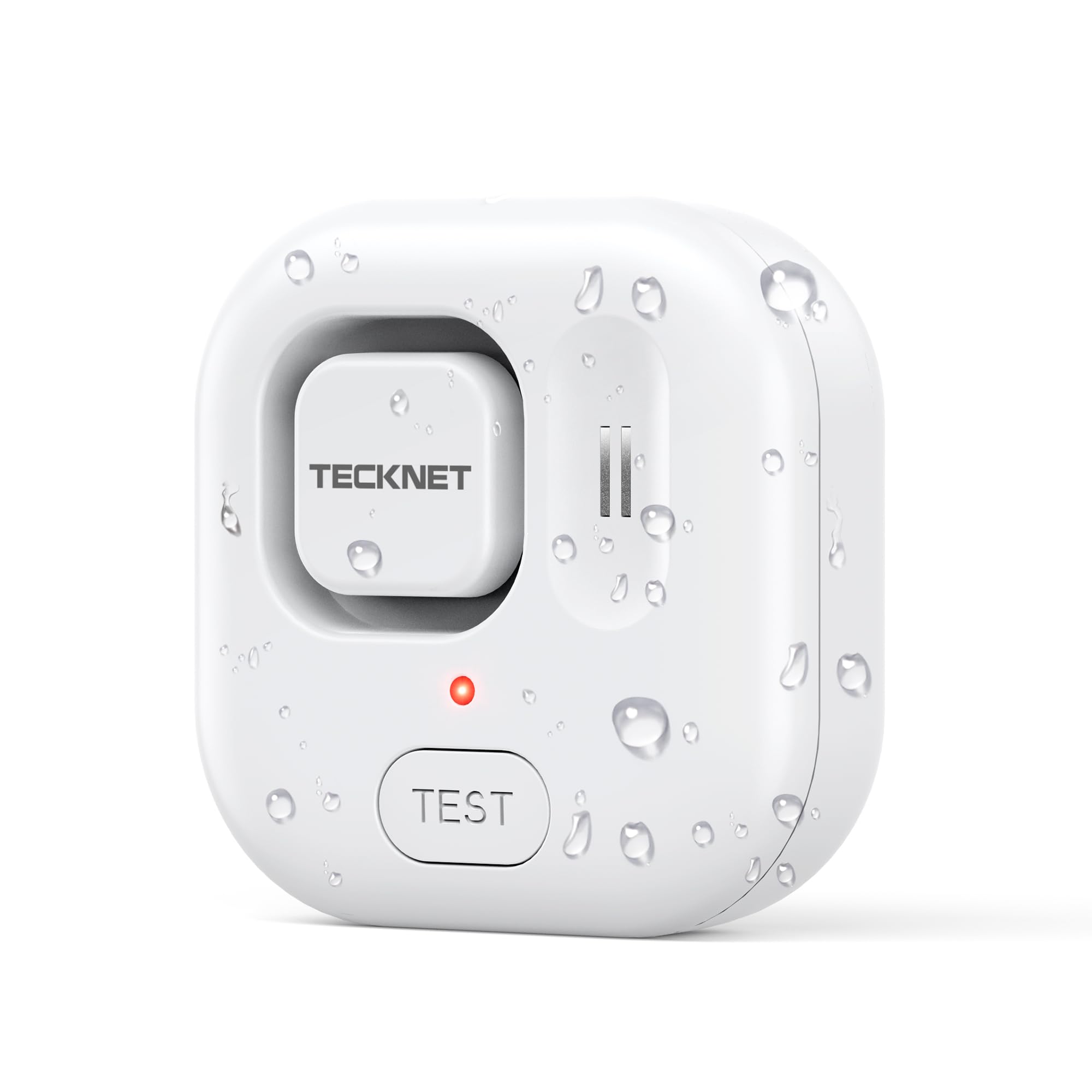
Waterproof Rating: IP66
Alarm Volume: 120dB
Power: Battery included
Pack Size: 1 unit
Placement: Bathroom, sink, laundry, window, basement, kitchen
The IP66 rating makes this a strong choice for splash-prone spots — a bathroom floor, a windowsill during a storm, the space behind a washing machine. It handles powerful water jets, so a burst supply line spraying across the room will not take it out.
The 120dB alarm is loud enough to carry through a closed door, and the battery ships in the box, so the unit works the moment it is placed. One pack suits a renter or a buyer who wants to test the concept at a single trouble spot before committing to a multi-pack.
Trade-off: A single unit at this price protects one small area, and the fixed loud alarm cannot be dialed down for a quiet room.
Best for: Renters and first-time buyers testing one spot. Not for: covering a whole house without buying several.
Before You Buy
- Waterproof rating: IP67 survives brief submersion, IP66 handles jets and splashes — match the rating to the spot, not the marketing.
- Placement surface: Floor alarms need flat ground to sit level; enclosures need a wall or post with a solid mounting point.
- Interior size: For enclosures, measure the sensor and any wiring before ordering — compact boxes will not swallow bulky units.
- Power source: Check whether batteries ship included; alarms placed in crawlspaces should be easy to reach for changes.
- Alarm volume: Adjustable volume matters near bedrooms and shared walls; fixed loud alarms suit basements and utility rooms.
- Pack size: Count the risk spots first — water heater, sinks, laundry, windows — and buy to match rather than ordering twice.
- UV exposure: For outdoor placement, a UV-stabilized seal is the difference between a box that lasts seasons and one that cracks.
Frequently Asked Questions
-
Can a waterproof leak detector go outdoors?
Only if it is rated for it. The enclosure boxes here are built for outdoor sensors, while the alarms are designed for indoor wet rooms and should stay under cover. -
What does IP67 mean for placement?
IP67 means dust-tight and able to survive brief immersion, which suits floor-level spots where water pools during a leak. -
Is an enclosure enough on its own?
No. The boxes protect an existing sensor — they do not detect water, so a sensor still has to go inside. -
How many alarms does a typical home need?
Most homes have three to five risk spots: under sinks, near the water heater, by the washer and in the basement. A five-pack covers that in one order. -
Should the alarm volume be adjustable?
It helps near sleeping areas. Fixed 120dB alarms are better suited to basements and utility rooms where volume is an asset. -
Do the alarms need wiring?
No. These are battery-powered standalone units that sound locally, so placement is a matter of setting them down.
Bottom Line
For most homes, the 5-Year Battery Life dual-probe 5-pack is the fastest path to full coverage — IP67 sealing, adjustable volume and enough units to guard every wet spot in one purchase. Buyers housing outdoor sensors instead should start with the UV-stabilized 6-piece enclosure set.
