Why there are Amazon links here: Brave Review is paid a commission for qualifying Amazon purchases made through the links below. Your price does not change, and using our links is entirely optional. How this works
Veise VE001 Keyless Entry Deadbolt: A Budget Smart Lock That Skips the App
The Veise VE001 keyless entry deadbolt is a keypad lock for buyers who want a code on the front door without paying smart-lock money. It runs on user codes, a one-touch lock button and a pair of backup keys, and it stays entirely off Wi-Fi and Bluetooth. This review covers its specifications, how the pieces fit together, and who should and should not buy it.
The short version: the VE001 suits a rental unit, a garage entry door, a back door or anyone who wants to stop hiding a spare key under the mat. Buyers who want to unlock from a phone or hand out temporary guest codes remotely should look elsewhere.
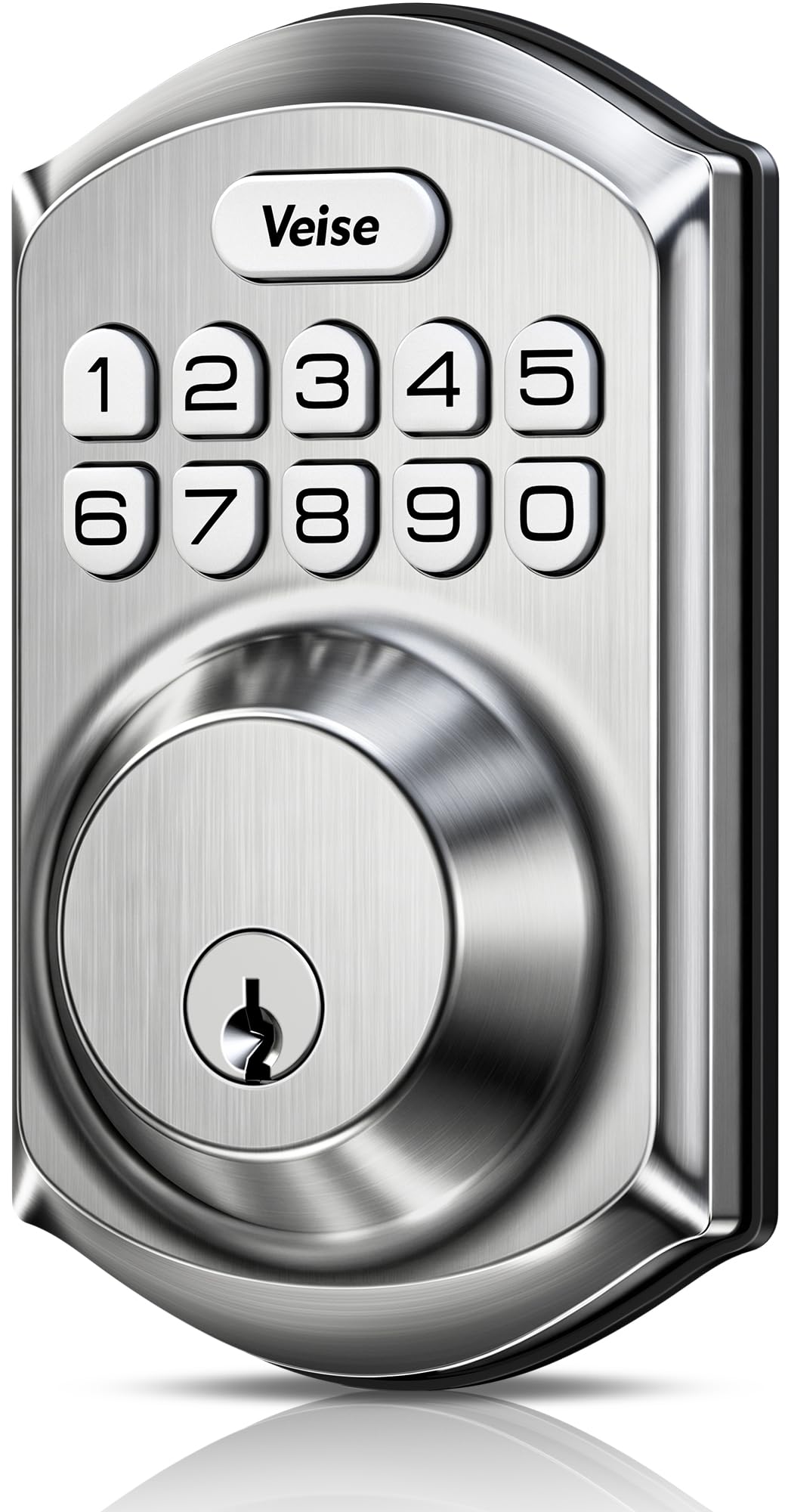
Features and Specifications
The name on the listing carries most of what matters, so the table below stays close to it.
| Attribute | Detail |
|---|---|
| Type | Keyless entry deadbolt / electronic keypad lock |
| Security Rating | ANSI Grade 3 |
| User Codes | 20 |
| Access Methods | Keypad code and two backup keys |
| Weather Rating | IP55 waterproof |
| Keypad Feature | Anti-peep password entry |
| Convenience Feature | One-touch lock |
| Alert | Low battery alert |
| Finish | Satin Nickel |
Trade-off: At this price point the lock is a standalone keypad unit, so it offers no app, no remote access and no scheduling — every code has to be set at the keypad itself.
The headline number for most shoppers is the ANSI Grade 3 rating. Grade 3 is the entry tier of the ANSI/BHMA residential scale, which is the honest way to read it: it is a real, third-party-referenced durability and security standard rather than marketing language, but it is not the Grade 1 hardware found on commercial doors. For a home front door, a garage side door or an apartment, that is a reasonable place to land.
The 20 user codes are the other number worth pausing on. That is a generous allowance for a household, and it is enough to give a code each to family members, a cleaner, a dog walker and a contractor without recycling the same PIN. Codes can be added and removed as people come and go, which is the quiet advantage of a keypad over a key — no locksmith trip when a roommate moves out.
Build and Hardware
The satin nickel finish is the standard brushed look that matches most residential door hardware, and it hides fingerprints better than polished finishes. The deadbolt is a full-size unit rather than a rim latch, so it replaces an existing deadbolt in the same door prep rather than adding new hardware alongside it. The two backup keys are the important part of the build story: if the electronics fail or the battery dies at the wrong moment, the door still opens with a physical key, which is the failure mode buyers should care about most on a lock that has no app to fall back on.
The ANSI Grade 3 rating tells a buyer what to expect from the bolt and strike over years of use, not what to expect from a determined intruder with tools. It is a residential-grade lock built to a price, and it should be judged that way.
Capacity and Code Management
Twenty codes is more than most households will ever use, and that headroom is the point. A four-person family might occupy four slots, leaving sixteen for guests, service providers and the occasional short-term visitor. Because the lock has no app, code management happens at the keypad, which means adding or deleting a code is a hands-on task at the door rather than something done from a couch. Buyers who change codes often should weigh that against the savings.
The anti-peep password feature addresses a real weakness of keypad locks: someone standing nearby watching which numbers get pressed. The exact implementation lives in the manual, but the concept is standard on better keypad locks — a masking digit or two typed around the real code so an observer cannot tell which digits mattered.
Power and Weatherproofing
The lock runs on batteries, and the low battery alert is the feature that keeps the whole arrangement honest. A keypad lock that dies without warning is a lockout waiting to happen, so the alert gives the household time to swap cells before the keypad goes dark. The backup keys cover the gap if the alert is ignored.
IP55 is the rating to understand here. The first digit covers dust protection and the second covers water jets, which means the lock is built to shrug off rain on an exposed door rather than to survive submersion. For a covered porch or a typical front door it is more than adequate; for a door taking direct, driving rain with no overhang, the buyer should think about how exposed the keypad really is.
Installation and Maintenance
The VE001 is a DIY-friendly replacement for an existing deadbolt, and the job is the standard one: remove the old hardware, fit the new bolt and keypad, and set the codes. The one-touch lock button is the day-to-day convenience feature — a single press locks the door on the way out, so leaving the house does not require a code or a key.
Maintenance is minimal. Batteries get replaced when the alert sounds, the keypad gets wiped occasionally, and the finish needs nothing beyond a soft cloth. There is no hub to update and no app to keep current, which is the upside of a lock that never connects to anything.
Strengths and Weaknesses
The strengths line up cleanly: a real ANSI Grade 3 rating, twenty user codes, IP55 weather resistance, a low battery alert and two physical backup keys — all at a price that undercuts most smart locks by a wide margin. The one-touch lock and anti-peep entry round out a feature set that covers the practical basics of keyless entry.
The weaknesses follow from the same design decision. With no Wi-Fi or Bluetooth, there is no app control, no remote unlocking, no temporary codes issued from a phone and no activity log. Code changes happen at the keypad. The lock also has no auto-lock timer or scheduling built in, so locking is a deliberate act — the one-touch button makes that easy, but it is still a manual step.
Trade-off: The VE001 trades smart-lock connectivity and app convenience for a low price and a self-contained design that keeps working when the Wi-Fi does not.
Who Should Buy the Veise VE001
The VE001 fits a specific buyer well. Renters who cannot swap out a landlord’s lock but want keyless entry on their own unit, homeowners adding a keypad to a back door or garage entry, and anyone managing a small rental who wants to hand out codes instead of keys all get real value here. Households with kids who lose keys, or with a dog walker and a cleaner who need regular access, will find the twenty-code allowance genuinely useful.
Buyers who should look elsewhere are equally clear. Anyone who wants to unlock the door from a phone, check whether it is locked from the office, or issue a one-time code to a delivery driver needs a connected smart lock, not this one. Buyers on an exposed door with no overhang should also think carefully about whether IP55 is enough for their weather.
Check the current price of the Veise VE001 on Amazon
FAQ
-
Is the Veise VE001 a smart lock?
No. It is a standalone electronic keypad deadbolt with no Wi-Fi or Bluetooth connection, so it does not pair with a phone app, a smart home hub or a voice assistant. It works entirely at the door. -
How many codes does the Veise VE001 hold?
The lock supports 20 user codes, which is enough for a household plus regular visitors such as a cleaner, a dog walker or a contractor. Codes are managed at the keypad rather than through an app. -
What does ANSI Grade 3 mean on a deadbolt?
ANSI Grade 3 is the entry tier of the residential security and durability scale used for door hardware. It indicates the lock has been rated to a recognized standard for home use, though it sits below the heavier-duty grades used on commercial doors. -
Is the Veise VE001 waterproof?
The lock carries an IP55 rating, which means it is protected against dust and against water jets. It is built for outdoor doors and typical rain exposure, but it is not designed to be submerged or to sit in constant standing water. -
What happens if the battery dies?
The lock has a low battery alert that gives warning before the cells run out. If the battery does die, the two included backup keys open the door mechanically, so the household is not locked out. -
Does the Veise VE001 have a key backup?
Yes. Two physical backup keys are included, which is the main safety net for a lock that has no app or remote override. Keeping one key somewhere sensible outside the house is worth doing. -
Can the Veise VE001 be installed without a locksmith?
It is designed as a direct replacement for an existing deadbolt and uses standard door prep, so a reasonably handy buyer can install it with basic tools. Buyers with unusual door thickness or non-standard prep should check compatibility first. -
What is the anti-peep password feature?
Anti-peep entry lets a user type extra digits around the real code so that someone watching from a distance cannot tell which numbers are part of the actual PIN. It is a common safeguard on keypad locks. -
Does the Veise VE001 lock automatically?
The one-touch lock button lets a user lock the door with a single press on the way out, but the lock does not include an auto-lock timer that secures the door on its own after a set delay. -
Who is the Veise VE001 not for?
Buyers who need remote unlocking, app-based code management, temporary guest codes issued from a phone or an activity log should choose a connected smart lock instead. The VE001 is a self-contained keypad lock, not a smart home device.
Bottom Line
The Veise VE001 keyless entry deadbolt is the right answer for a buyer who wants keyless entry on a budget and does not need the door on the network. The ANSI Grade 3 rating, twenty user codes, IP55 weather resistance, low battery alert and two backup keys cover the practical essentials, and the satin nickel finish blends in with standard residential hardware. Buyers who want a lock they can control from a phone should spend more on a connected model; everyone else gets a capable, self-contained keypad deadbolt for very little money.
