Why there are Amazon links here: Brave Review is paid a commission for qualifying Amazon purchases made through the links below. Your price does not change, and using our links is entirely optional. How this works
Kidde Smoke Detector 20SD10: Ten Years Without a Battery Swap
The Kidde 20SD10 is a battery-powered smoke detector built around a sealed lithium cell that is designed to outlast the unit itself, so the homeowner never shops for a nine-volt again. It suits landlords, cabin owners, and anyone replacing an alarm in a spot where running wires is impractical or expensive. This review covers the specifications that matter, how the sealed-battery design changes ownership, and the cases where a different alarm makes more sense. Readers who already know the job want done can jump straight to the price check.
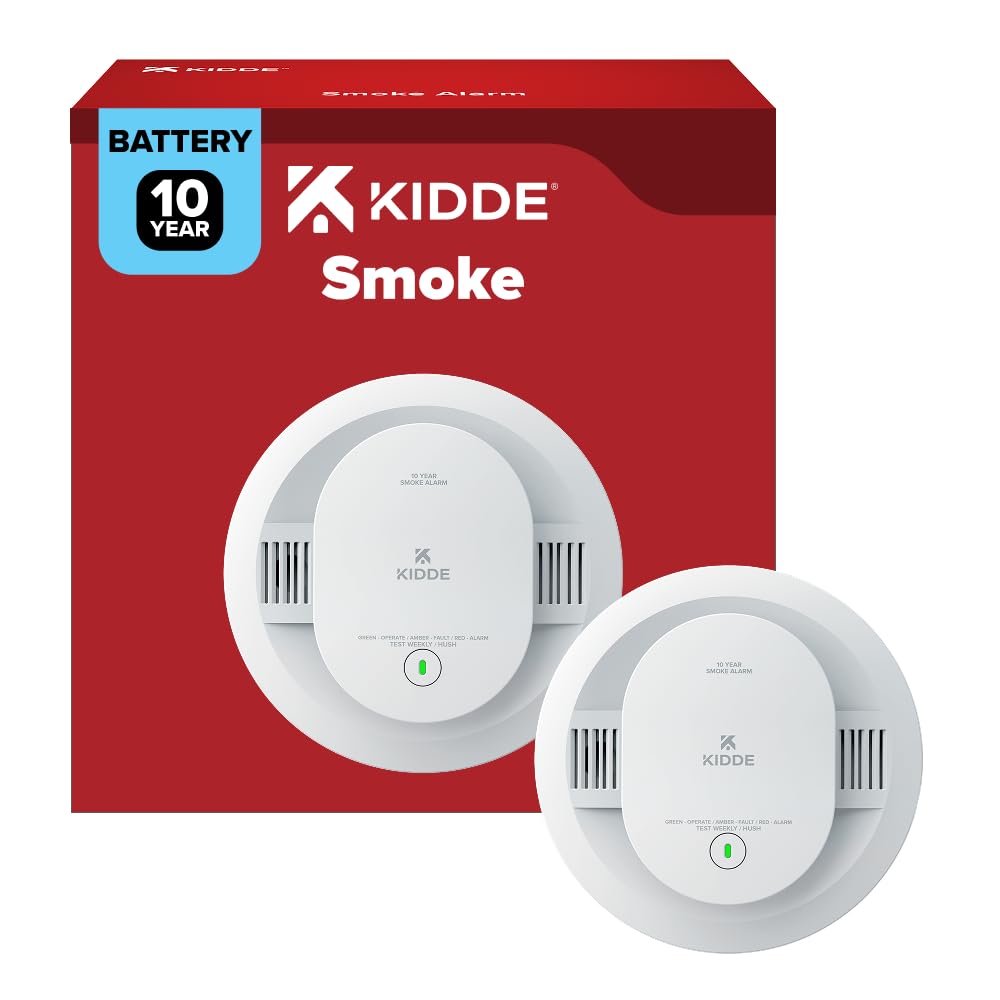
Check the current price on Amazon
Features and Specifications
Type: Battery-powered smoke detector
Power Source: Sealed 10-year battery
Alarm: 85 dB horn
Status Indicator: LED status lights
Model: 20SD10
Pack Size: 1 pack
The 10-year power source is the headline. Kidde seals a lithium cell inside the housing, so the battery is not meant to be removed, replaced, or borrowed for a remote control. The unit and the power supply retire together, which is the point: the alarm keeps working through the decade without a homeowner remembering to swap cells every year.
The 85 dB horn is the standard alert level for residential smoke alarms, loud enough to wake most sleepers in a normal bedroom layout. LED status lights give a visual read on whether the unit is powered and monitoring, which helps during a quick walk-through of a rental property or a seasonal home.
That is the whole spec sheet, and the simplicity is deliberate. There is no smart-home radio, no app pairing, no interconnect wiring in this model. The 20SD10 is a standalone alarm that does one job — sense smoke and make noise — without asking anything of the owner in between.
Build and Design
The housing is a compact ceiling or wall unit in the usual smoke-alarm form factor, sized to mount with the included bracket and a couple of screws. Kidde builds this class of alarm in molded plastic with a twist-off or press-fit mounting system, so installation is a ladder job measured in minutes rather than an afternoon.
Because the battery is sealed, the case does not have a battery door that opens in normal use. That removes a common failure point — a loose or missing battery after a homeowner pulls it to silence a chirp — but it also means the unit is disposable by design. When the cell reaches the end of its service life, the whole alarm gets replaced, not just the power source.
The LED status lights sit on the face of the unit where they can be read from the floor. A quick glance tells a property manager whether the alarm is live, which is more useful than it sounds in a building with a dozen units to check.
Trade-off: The sealed battery cannot be replaced, so a unit that develops a fault or reaches end of life before the decade is up has to be discarded entirely rather than repaired with a fresh cell.
Power and the 10-Year Battery
The sealed lithium cell is the reason to buy this alarm, and also the reason to think before buying it. For a landlord or a second-home owner, the value is obvious: no annual battery run, no tenant calling because an alarm is chirping at 2 a.m., no liability question about whether the detector was actually powered. The unit arrives ready to mount and monitors for the long haul.
For a household that already replaces batteries on a schedule, the advantage is smaller. A conventional alarm with a user-replaceable battery costs less up front, and the annual swap is a five-minute chore. The 20SD10 trades that chore and that lower price for a decade of hands-off operation.
Buyers should also confirm local code requirements before purchase. Some jurisdictions require interconnected alarms or specific mounting configurations, and a standalone battery unit like this one may not satisfy every rule. The alarm itself is straightforward; the installation rules around it are not always.
Alarm and Status Indicators
The 85 dB horn is the working part of the device, and it is loud enough to serve its purpose in a typical home. Smoke alarms are designed to exceed ambient noise in a sleeping household, and this unit sits in the standard residential range. It will not be mistaken for a quiet notification.
The LED status lights handle the quieter communication: power present, unit monitoring, and fault indication. For anyone managing multiple properties, the visual check is faster than pressing a test button on every unit during an inspection.
What this model does not do is talk to anything. There is no wireless interconnect, no phone alert, no voice announcement naming the room. Buyers who want a notification on their phone when they are away from home need a smart alarm, and this is not one.
Trade-off: The lack of interconnect and smart features means a smoke event in one room alerts only the people within earshot of that unit, not the whole house or a phone.
Maintenance and Replacement
Maintenance on the 20SD10 is close to nothing, which is the entire appeal. There is no battery to change, so the routine reduces to pressing the test button periodically and dusting the sensing chamber area as the manufacturer directs. Kidde recommends regular testing on all its alarms, and this unit is no exception.
The replacement horizon is the number to remember. A sealed 10-year alarm is expected to be retired at the end of that period, and the unit typically signals end of life through its status indicators or a chirp pattern. When that happens, the whole device comes down and a new one goes up.
That makes the cost comparison a decade-long one rather than a single purchase. Buyers weighing this alarm against a cheaper battery model should compare the total across ten years, including the batteries and the labor of changing them, not just the sticker on the shelf.
Trade-off: Disposal is part of ownership — the sealed cell means the alarm cannot simply be refilled with a cheap battery, so end-of-life replacement is a full unit purchase.
Who It Suits and Who It Does Not
This alarm fits landlords, property managers, owners of cabins and rental units, and anyone who wants a detector installed and then forgotten. It also suits a homeowner replacing an alarm in a hallway or bedroom where a wired unit is not practical and where the annual battery ritual has been skipped more than once.
It is not the right pick for buyers who want interconnected alarms across a large house, phone notifications, or smart-home integration. It is also a poor fit for anyone who prefers to keep a unit running indefinitely with cheap replaceable batteries, since the sealed design rules that out.
FAQ
-
How long does the Kidde 20SD10 last?
The battery is rated for 10 years, and the alarm is designed to be replaced at the end of that period. The unit and the power supply reach end of life together. -
Does the 20SD10 need a battery change?
No. The lithium cell is sealed inside the housing and is not user-replaceable. There is no annual battery swap. -
How loud is the Kidde 20SD10 alarm?
The horn is rated at 85 dB, which is the standard residential alert level and loud enough to wake most sleepers in a normal bedroom. -
Can the 20SD10 be hardwired?
No. This is a battery-only model with no wiring connections. It mounts with its bracket and runs on the sealed cell. -
Does the Kidde 20SD10 connect to other alarms?
No. It is a standalone unit with no interconnect or smart-home radio, so it alerts only within earshot of that alarm. -
Where should the 20SD10 be installed?
On a ceiling or high on a wall in a hallway, bedroom, or living area, following the manufacturer’s placement guidance and local code. It is a single-pack unit, so larger homes need multiple alarms. -
What do the LED status lights mean?
The lights indicate power and monitoring status, and they also signal faults or end of life. A quick visual check confirms the unit is live. -
Is the Kidde 20SD10 good for a rental property?
Yes, for many landlords. The sealed battery removes the annual battery chore and the common tenant complaint about chirping alarms, though local code requirements should be checked first. -
What happens when the 10-year battery runs out?
The alarm signals end of life through its indicators, and the whole unit is replaced. The battery cannot be swapped on its own. -
Does the 20SD10 detect carbon monoxide?
No. This is a smoke detector only. Homes that need CO coverage require a separate carbon monoxide alarm.
Bottom Line
The Kidde Smoke Detector 20SD10 is the right buy for anyone who wants a smoke alarm installed once and left alone for a decade — landlords, cabin owners, and households that have skipped one too many battery changes. Buyers who need interconnected alarms, phone alerts, or a unit they can refill with cheap batteries should look elsewhere. For everyone else, the sealed 10-year cell and the simple 85 dB alert make this a low-effort, long-horizon pick.