Why there are Amazon links here: Brave Review is paid a commission for qualifying Amazon purchases made through the links below. Your price does not change, and using our links is entirely optional. How this works
Best Smart Lock Privacy and Account Security for a Safer, More Private Home
A smart lock is only as good as the data it guards, so the best smart lock privacy and account security picks balance convenient keyless entry with local-first storage, encrypted app control, and no-nonsense account management. This roundup suits renters and first-time smart-home buyers, privacy-conscious households, and hosts who need scheduled access without handing out keys. Each of the five picks below is judged on how much control the owner keeps over credentials, cloud data, and remote access. The overview table makes the shortlist readable in seconds.
Overview of the Picks
| Product | Key Spec | Best Use | Price Tier |
|---|---|---|---|
| eufy Security Smart Lock C220 | Built-in Wi-Fi, IP53, BHMA Grade 3 | Budget fingerprint entry | Budget |
| Schlage Encode Smart WiFi Deadbolt | Certified security, Alexa/Google/Ring/Airbnb | Premium ecosystem integration | Premium |
| Wyze Palm Lock | Palm vein recognition, dual battery | Hands-free privacy-first entry | Mid-range |
| Tapo Smart Wi-Fi Door Lock DL110 | BHMA Grade 2, fingerprint, in-app monitoring | Scheduled access and monitoring | Mid-range |
| Fingerprint Door Lock Smart Door Handle | Biometric door knob, keypad | Bedroom and home office privacy | Budget |
eufy Security Smart Lock C220
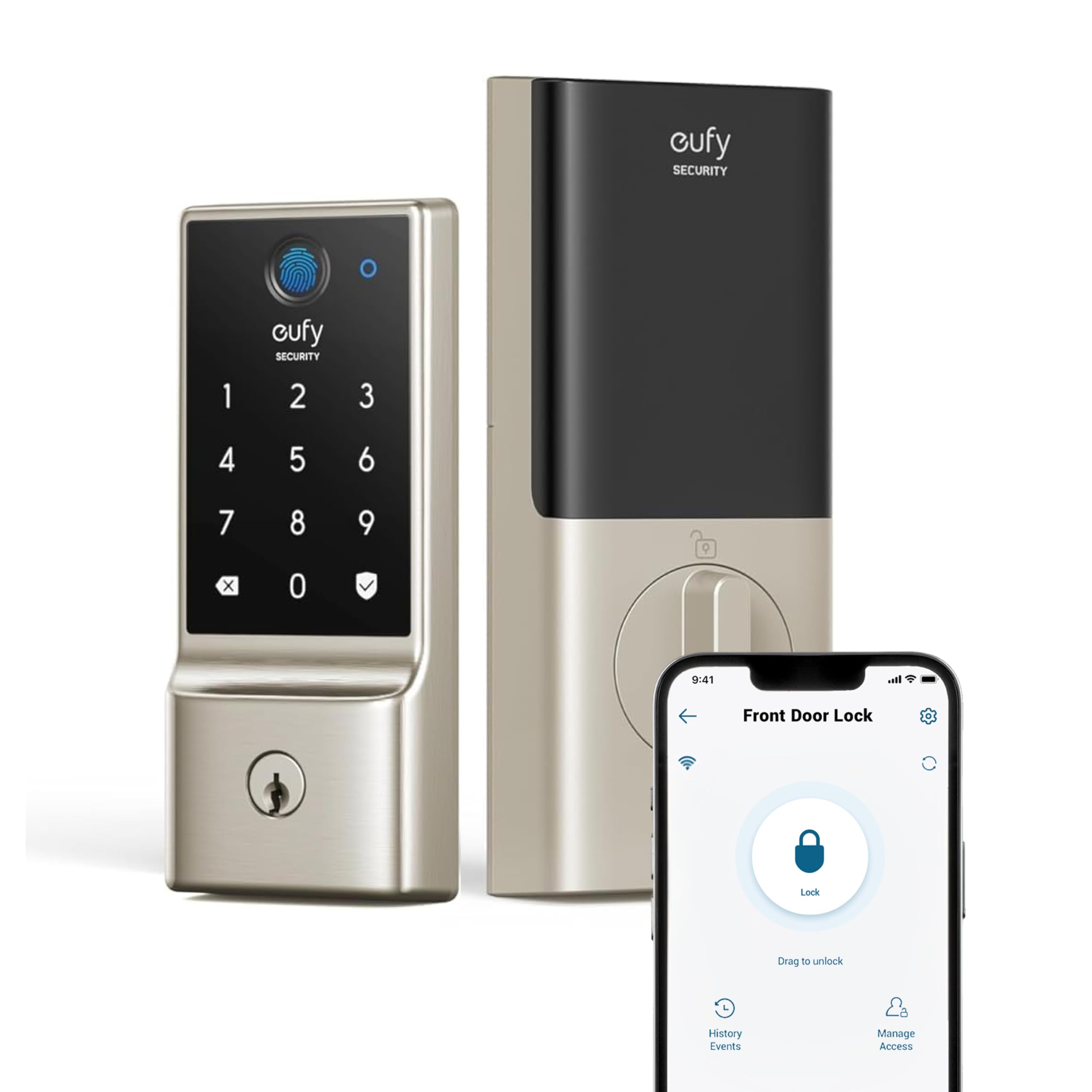
Type: Smart deadbolt with fingerprint keyless entry
Connectivity: Built-in Wi-Fi, app remote control
Battery: Up to 8-month battery life
Weather rating: IP53
Security grade: BHMA Grade 3
The C220 is the value pick for buyers who want fingerprint entry without a hub. Built-in Wi-Fi means the lock talks to the app directly, and the IP53 rating signals it tolerates dust and light rain at the front door. An eight-month battery window keeps maintenance low. The BHMA Grade 3 rating places it at the entry level of the durability scale, which fits a budget deadbolt.
This lock suits renters and first-time smart-lock buyers who want app control and biometric entry in one package. It earns its place as the cheapest route to a Wi-Fi deadbolt with a fingerprint reader. Trade-off: The Grade 3 build and plastic-heavy trim are built for light residential use, so a high-traffic main entrance may wear faster than a premium lock.
Schlage Encode Smart WiFi Deadbolt with Century Trim
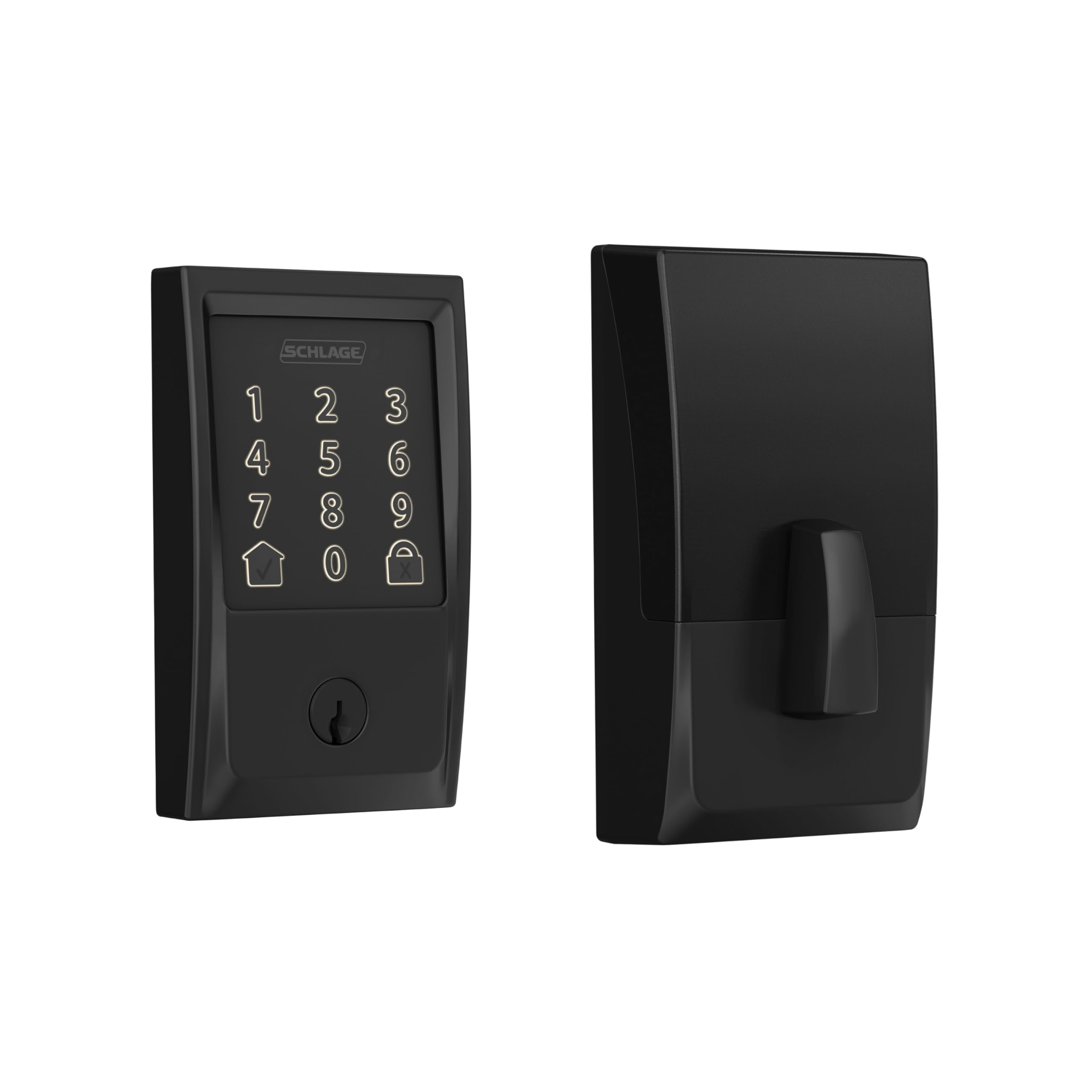
Type: Smart Wi-Fi deadbolt with touchscreen keypad
Connectivity: Wi-Fi, app control, Alexa, Google Home, Ring
Compatibility: Airbnb integration
Trim: Century trim, matte black
Security: Certified security rating
The Encode is the premium pick for households already living inside a smart ecosystem. The touchscreen keypad handles code-based entry, while the app and voice integrations cover Alexa, Google Home, and Ring. Airbnb compatibility makes it a natural fit for short-term rental hosts who rotate guest codes. The certified security rating and matte black Century trim signal a sturdier build than budget locks.
This model suits hosts, multi-user households, and buyers who want one lock that plays nicely with everything else. It earns its place on ecosystem breadth and certified hardware. Trade-off: The premium price buys integration and finish, not fingerprint entry, so buyers who want biometric access will need to look elsewhere.
Wyze Palm Lock
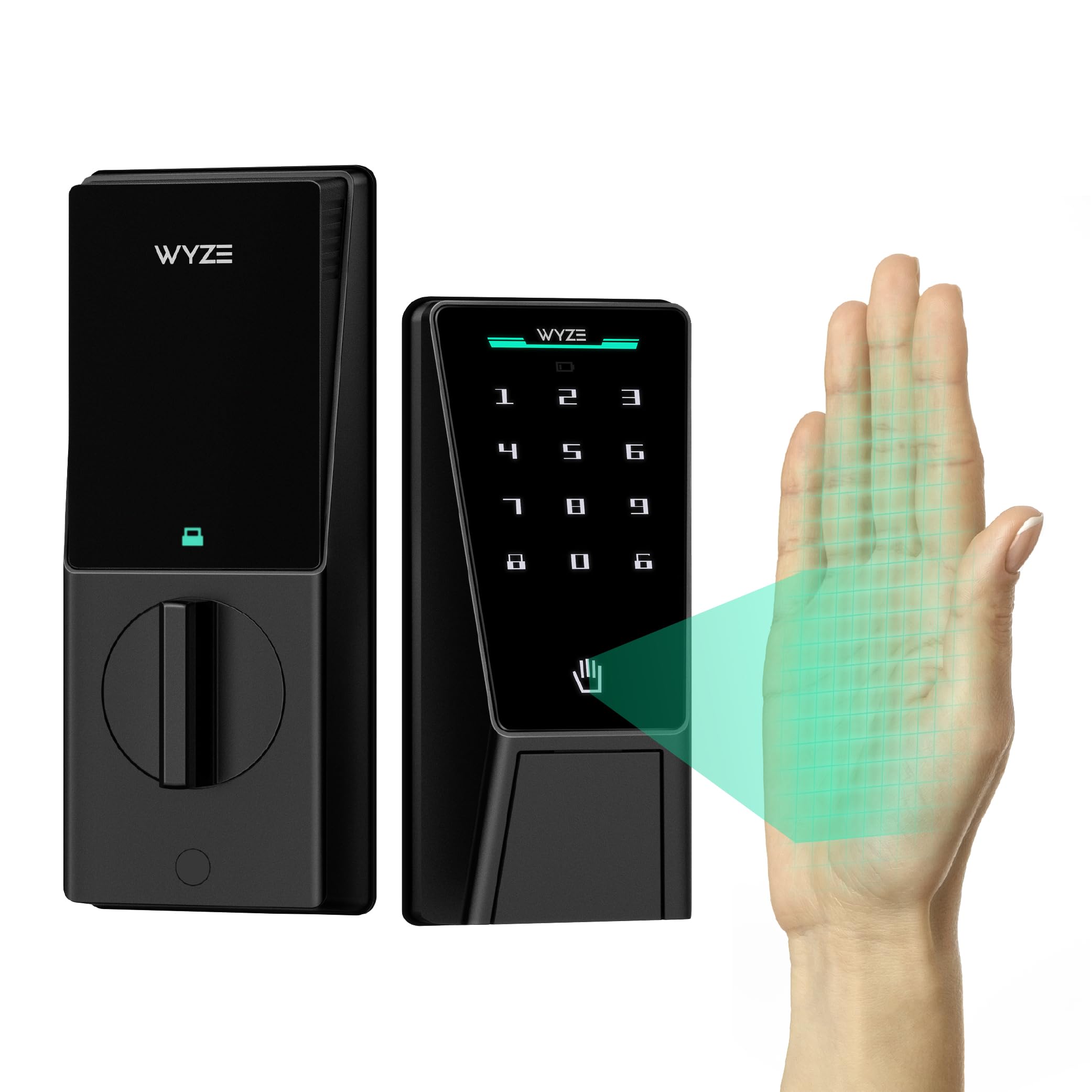
Type: Smart deadbolt with palm vein recognition
Entry methods: Palm vein, keypad, mechanical key
Battery: Dual battery
Connectivity: Wi-Fi, Alexa and Google
Ratings: BHMA, IP53
The Palm Lock stands out for palm vein recognition, which reads a pattern under the skin rather than a fingerprint surface. That approach appeals to privacy-minded buyers who dislike leaving biometric prints on a sensor. Dual batteries add redundancy, and the keypad plus mechanical key give fallbacks when hands are full or power runs low. BHMA and IP53 ratings round out the hardware story.
This lock suits privacy-focused households and anyone who wants hands-free entry without a phone. It earns its place as the most distinctive biometric option in the group. Trade-off: Palm vein readers are fussier about hand placement than fingerprint sensors, so a first-time user may need a few tries to get the scan right.
Tapo Smart Wi-Fi Door Lock DL110
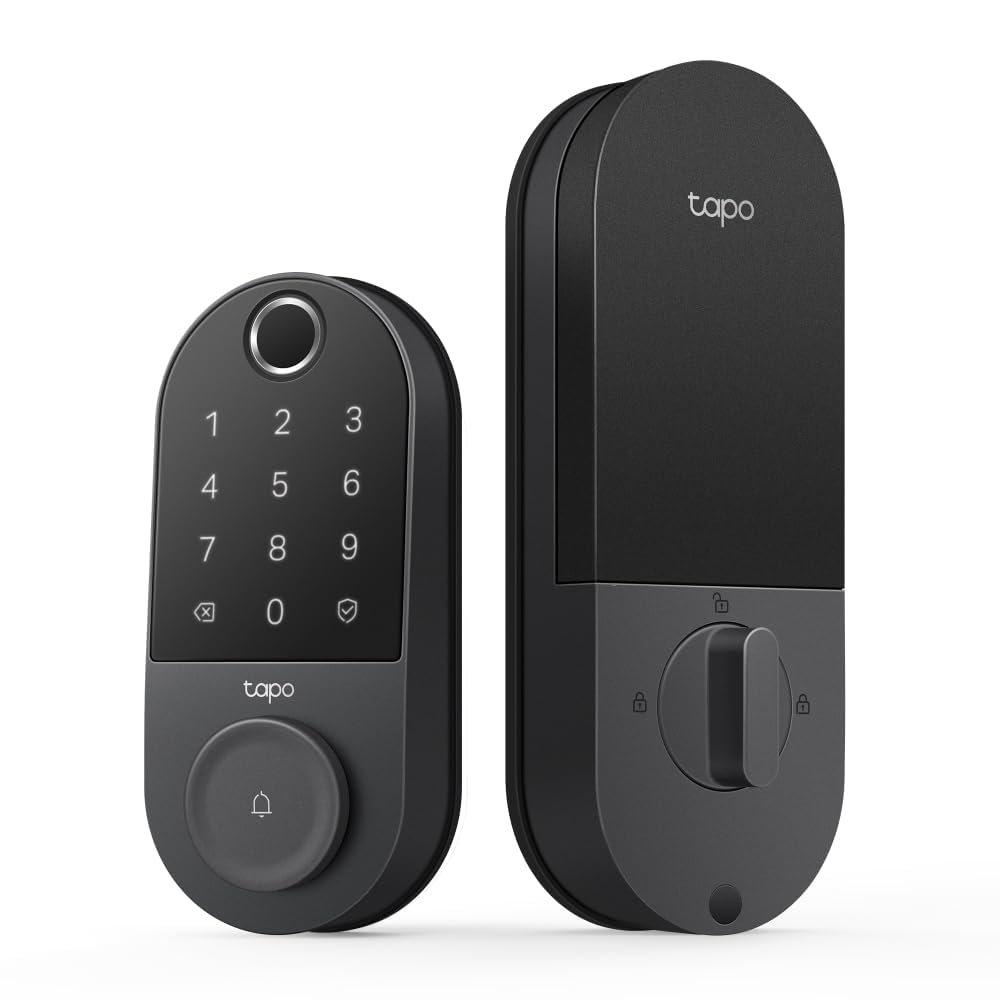
Type: Smart Wi-Fi deadbolt with fingerprint recognition
Entry methods: Touchscreen keypad, fingerprint, keyless entry
App features: In-app monitoring, scheduled access
Battery: 1-year rechargeable battery
Security grade: BHMA Grade 2
The DL110 is the monitoring pick, pairing a touchscreen keypad and fingerprint reader with in-app activity monitoring. Scheduled access lets the owner set windows for cleaners, dog walkers, or family without sharing permanent codes. A one-year rechargeable battery cuts disposable-cell waste, and the BHMA Grade 2 rating sits a step above the budget locks here.
This lock suits households that want to see who came and went, and buyers who prefer recharging over swapping batteries. It earns its place on scheduled access and a stronger durability grade. Trade-off: The rechargeable battery means the lock is out of service while charging unless a backup entry method is kept ready, so planning matters.
Fingerprint Door Lock Smart Door Handle
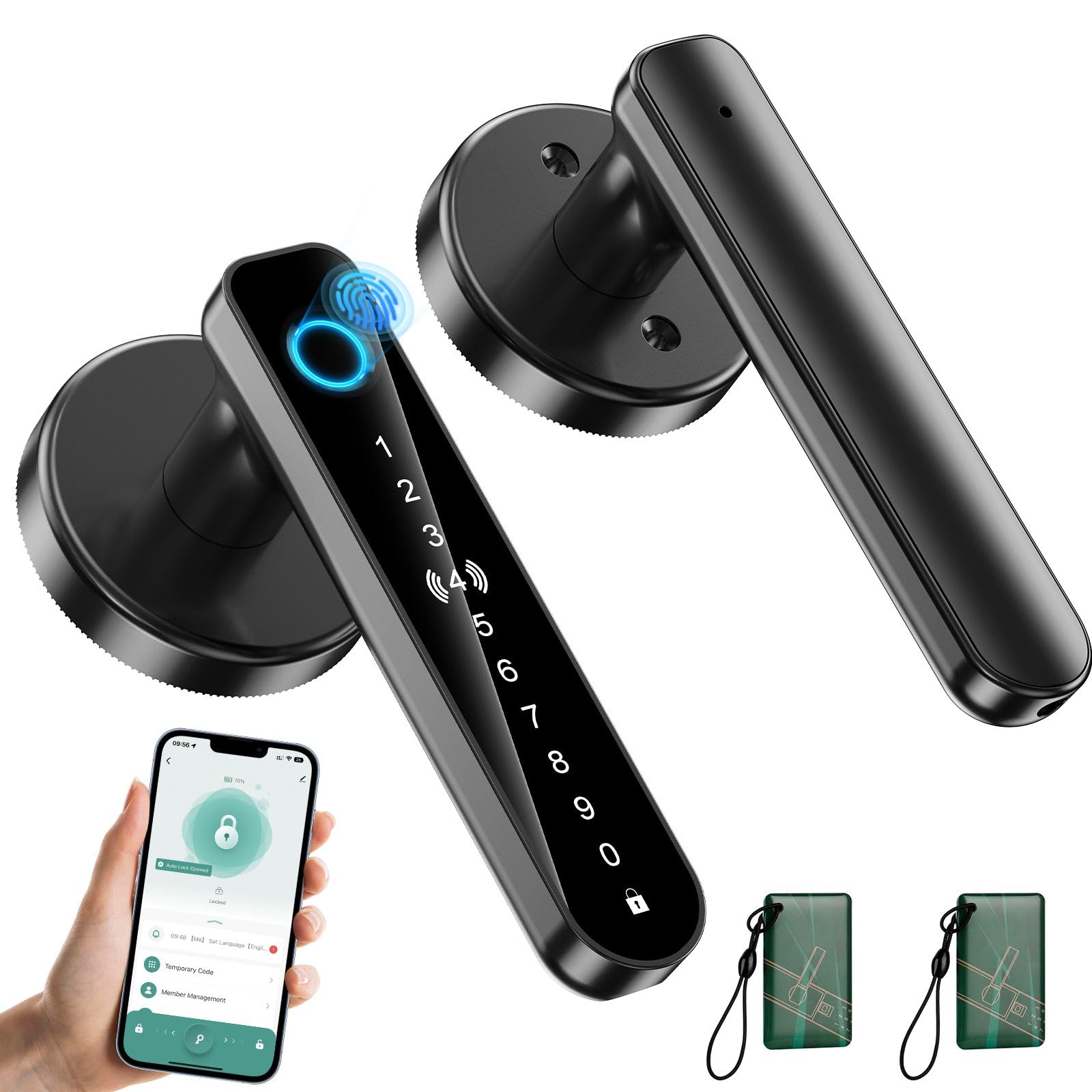
Type: Smart door handle with biometric keypad
Entry methods: Fingerprint, keypad
Intended use: Bedroom, home office
Format: Door knob/handle style
Price tier: Budget
This handle-style lock is the interior-privacy pick. It replaces a standard knob rather than a deadbolt, which makes it a fit for bedrooms, home offices, and other interior doors where a full deadbolt is overkill. Fingerprint and keypad entry keep private spaces off-limits without a physical key. The handle format installs where a deadbolt cannot.
This lock suits renters and homeowners who want to secure a single interior room, not the front door. It earns its place as the cheapest way to add biometric privacy indoors. Trade-off: A handle lock offers far less physical security than a deadbolt, so it should not be relied on as a primary exterior entry lock.
Before You Buy
- Compatibility: Check the door’s backset and bore hole against the lock type; deadbolts and handle locks are not interchangeable.
- Connectivity: Built-in Wi-Fi skips a hub, while some locks need a bridge for remote access and voice control.
- Account security: Prefer locks with app-based two-factor authentication, per-user codes, and the ability to revoke access instantly.
- Power source: Rechargeable batteries cut waste but create downtime; disposable cells are simpler but need spares on hand.
- Weather rating: An IP53 rating suits covered porches; exposed doors in heavy rain need more protection.
- Security grade: BHMA Grade 2 hardware outlasts Grade 3 in high-traffic entries.
- Access fallback: Keep the mechanical key or a backup code stored safely outside the home.
Frequently Asked Questions
-
Are smart locks a privacy risk?
Any Wi-Fi lock sends some data to an app, so the safest choices offer local storage options, encrypted connections, and easy account deletion. Review the app’s permissions before pairing. -
Do smart locks work without an internet connection?
Most keep working at the door via keypad, fingerprint, or key, but remote app access and voice control need connectivity. -
How often do smart lock batteries need changing?
It varies by model and use; budget locks often run several months, while some rechargeable models claim up to a year. -
Can a smart lock be hacked?
Physical attacks are rare, but weak account passwords are the bigger risk. Strong unique passwords and two-factor authentication close most of the gap. -
Is a handle lock enough for a front door?
No. Handle locks suit interior rooms; exterior doors need a deadbolt for meaningful physical security. -
What should renters check before buying?
Confirm the landlord allows lock changes and that the lock fits the existing door preparation without permanent modification.
Bottom Line
For most buyers, the eufy Security Smart Lock C220 delivers the best balance of privacy-friendly fingerprint entry, direct Wi-Fi control, and budget pricing. Hosts and ecosystem-heavy homes should step up to the Schlage Encode, while interior privacy seekers can spend far less on the handle-style biometric lock.
