Why there are Amazon links here: Brave Review is paid a commission for qualifying Amazon purchases made through the links below. Your price does not change, and using our links is entirely optional. How this works
Best Record Keeping for Safety Devices for Audit-Ready Paperwork
Record keeping for safety devices is the unglamorous half of workplace safety: the paper trail that proves a lockout was applied, a drill was run, or a daily walk-through happened. This roundup covers five purpose-built logbooks that do that job, from a broad daily safety log to a dedicated fire drill record. It suits site supervisors and safety officers who need defensible documentation, small crews who want a cheap single book, and facility managers juggling several separate compliance records. The overview table below ranks all five so a decision can be made in under a minute.
The 5 Best Record Keeping Logbooks Compared
| Product | Key Spec | Best Use | Price Tier |
|---|---|---|---|
| Daily Workplace Safety Log Book | Daily safety record, professional series | General daily site documentation | Budget |
| Lockout Tagout Logbook (100 Pages) | 100 pages, large print, 8.5 x 11 in | High-volume lockout tagging | Budget |
| SAFBY Lockout Tagout Logbook | 15 pages, 8.3 x 11.2 in | Short audits and single-equipment logs | Premium |
| Lockout Tagout Log Book (Large Print) | Large print, lockout record format | Crews that need readable entries | Budget |
| Fire Drill Log Book | 100 pages, 8.5 x 11 in | Schools, offices, evacuation drills | Budget |
1. Daily Workplace Safety Log Book
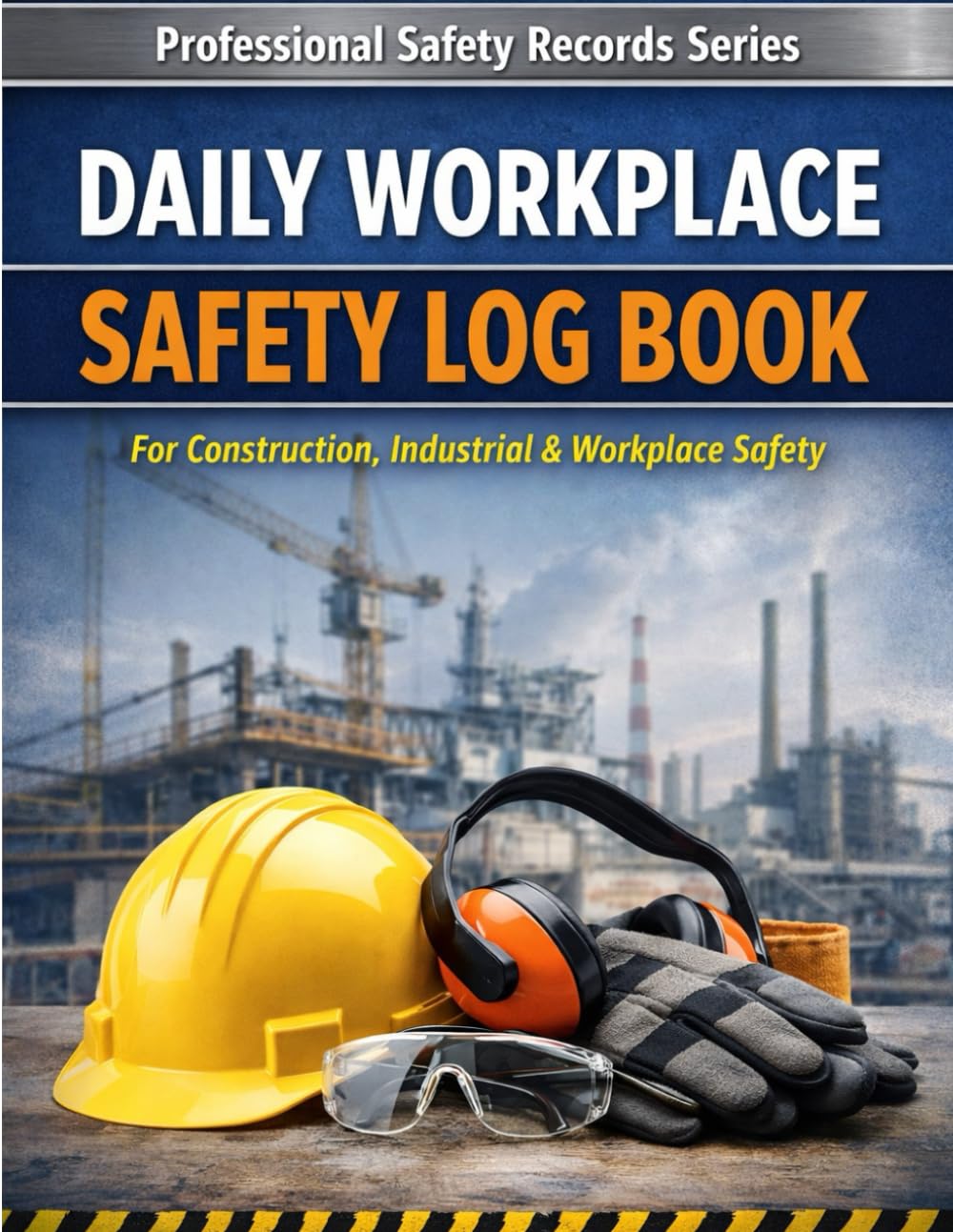
Format: Bound daily safety log
Series: Professional Safety Records Series
Intended Use: Construction, industrial and general workplace safety
Page Size: Standard book format
Best For: Day-to-day safety walk-throughs
Daily Workplace Safety Log Book is the broadest tool in this set. It is built around a repeating daily entry, so a supervisor can record a walk-through, note hazards and sign off in one place rather than on loose sheets. The construction and industrial framing makes it a natural fit for job sites where a daily paper trail is expected.
It earns its place as the default pick for anyone who needs general record keeping for safety devices rather than a single-issue book. The trade-off is focus: because it covers daily safety broadly, it is not a substitute for a dedicated lockout tagout or drill record.
Trade-off: A general daily log leaves no structured space for equipment-specific lockout or drill details, so crews with strict single-issue compliance may need a second book.
Check the current price on Amazon
2. Lockout Tagout Logbook (100 Pages, Large Print)

Type: Lockout tagout log sheet
Pages: 100
Print: Large print
Size: 8.5 x 11 inches
Best For: High-volume lockout record keeping
Lockout Tagout Logbook is the workhorse of the group. The 100-page count and full letter-size sheets mean a busy maintenance team can log lockouts for months before replacing the book, and the large print keeps handwritten entries legible for auditors.
The 8.5 x 11 inch format gives room to record tag numbers, equipment IDs and sign-offs without cramming. It suits maintenance crews and facilities with frequent lockout events. The trade-off is bulk: a 100-page letter-size book is not something that slips into a pocket for a quick field check.
Trade-off: The large page count and letter-size format make this a desk or shop-book rather than a portable field log.
Check the current price on Amazon
3. SAFBY Lockout Tagout Logbook

Type: Lockout tagout record book
Pages: 15
Size: 8.3 x 11.2 inches
Brand: SAFBY
Best For: Short-run or single-equipment logs
SAFBY Lockout Tagout Logbook is the specialist pick: a slim 15-page book sized just above letter dimensions. It is aimed at situations where a full 100-page log is overkill — a single machine, a short project, or a dedicated binder per piece of equipment.
The low page count keeps it light and cheap to deploy across several locations, so a facility can give each work area its own book. It costs more per page than the high-volume options, so it is best reserved for targeted use. The trade-off is capacity: 15 pages fill quickly in a busy shop.
Trade-off: At 15 pages the book runs out fast in high-traffic areas, and the per-page cost is the highest of the lockout options here.
Check the current price on Amazon
4. Lockout Tagout Log Book (Large Print)

Type: Lockout tagout record logbook
Print: Large print
Format: Lockout record pages
Best For: Readable handwritten entries
Lockout Tagout Log Book is a straightforward lockout record book built around large-print entry fields. The emphasis on legibility matters in lockout documentation, where a smudged tag number or unclear signature can undermine the whole record.
It fits crews that fill out lockout sheets by hand in dim plant rooms or on shop floors. It is a no-frills option focused on the core task. The trade-off is that it offers nothing beyond the standard lockout fields — no room for broader daily safety notes.
Trade-off: This book is lockout-only, so teams that also need daily hazard or drill records will have to pair it with another log.
Check the current price on Amazon
5. Fire Drill Log Book

Type: Fire drill and evacuation record book
Pages: 100
Size: 8.5 x 11 inches
Intended Use: Schools, offices, industrial facilities
Best For: Evacuation drill documentation
Fire Drill Log Book covers the drill side of safety record keeping. It is a 100-page letter-size book formatted for logging fire drills and emergency evacuations, which makes it a clean fit for schools, offices and industrial sites that must show a drill history.
The page count means a facility can keep years of drill records in one place, and the standard letter size files neatly with other compliance paperwork. It is the cheapest pick here and the most focused. The trade-off is scope: it documents drills only, so it will not cover device inspections or lockouts.
Trade-off: Drill-only formatting means it cannot double as a general safety log or lockout record.
Check the current price on Amazon
Before You Buy
- Scope: Decide whether the record is for daily safety, lockout tagout or drills — a single-issue book documents one process properly, a general log covers the rest.
- Page count: High-volume sites burn through pages fast; 100-page books last longer, while 15-page books suit single machines or short projects.
- Size: Letter-size books (8.5 x 11 in) file with other compliance paperwork; check the stated dimensions before committing a binder.
- Legibility: Large-print formats help when entries are handwritten in poor light or by several people.
- Deployment: Facilities with several work areas may prefer several slim books over one shared log.
- Retention: Plan how many books are needed per year so records are not lost when a single book fills up.
Frequently Asked Questions
-
What is record keeping for safety devices?
It is the written documentation of safety actions — daily checks, lockout tagout applications and emergency drills — kept so a site can prove compliance during an audit or investigation. -
Do these logbooks cover every safety record?
No. Each book is formatted for one process, so most facilities use a combination: a daily log, a lockout book and a drill record. -
Which pick suits a small crew?
The SAFBY 15-page book or the Fire Drill Log Book, depending on whether the priority is lockout records or drill history. -
Which is best for a busy industrial site?
The 100-page Lockout Tagout Logbook offers the most room for frequent lockout entries in a letter-size format. -
Can a general daily log replace a lockout book?
Generally no. A dedicated lockout book provides structured fields for tags and equipment that a general daily log does not.
Bottom Line
For most sites, the Daily Workplace Safety Log Book is the best starting point for record keeping for safety devices, because it captures day-to-day checks in one place. Pair it with the 100-page Lockout Tagout Logbook for high-volume lockout records, and add the Fire Drill Log Book if drills need their own paper trail.
