Why there are Amazon links here: Brave Review is paid a commission for qualifying Amazon purchases made through the links below. Your price does not change, and using our links is entirely optional. How this works
Best Conduit and Cable Planning Tools for a Clean, Code-Ready Install
Conduit and cable planning is the step most people skip, and it is the one that decides whether a finished wall looks tidy or looks like a mistake. This guide covers five picks that handle different parts of the job: hiding cords on a wall, running cable along a desk, and learning how conduit and tray work is actually done. The picks suit renters hiding a TV cord, home-office builders routing desk cables, and DIYers planning a longer surface run. The overview table below shows every option side by side.
Overview of the Picks
| Product | Key Spec | Best Use | Price Tier |
|---|---|---|---|
| D-Line 157in Cord Cover Kit | 10 lengths, 1.18" W x 0.59" H, paintable | Whole-room wall runs | Mid |
| ZhiYo 126in Cord Hider Kit | 8 x 15.7in, 0.95" W x 0.55" H, paintable | Budget TV cord hiding | Budget |
| Common Sense Conduit Bending and Cable Tray Techniques | Book format | Learning conduit and tray practice | Mid |
| Conduit Connection Support Metal Desk Cable Tray | 1300 x 130 x 90mm metal tray | Desk and workplace routing | Premium |
| Silicone Flexible Cable Cover | 78in, 1.08" W x 0.6" H, side-open, flexible | Curved and corner wall runs | Mid |
1. D-Line 157in Cord Cover Kit

Format: Self-adhesive raceway kit
Length: 157in total
Width: 1.18"
Height: 0.59"
Finish: Paintable white
Included: 10 lengths and 19 accessories
D-Line 157in Cord Cover Kit is the largest kit here, and the accessory count is what sets it apart. The extra corners, couplers, and end caps matter because a wall run rarely goes in a straight line. The self-adhesive backing means no drilling for light cables, and the paintable surface lets the channel disappear into the wall color.
This is the pick for a full-room or whole-wall job where a single short channel will not reach. Buyers who want one box that covers the length and the fittings should start here. The wider profile holds thicker bundles than the budget kits.
Trade-off: The wider, taller profile is more visible on a bare wall until it is painted, and the adhesive is only as good as the surface it meets.
2. ZhiYo 126in Cord Hider Kit

Format: Self-adhesive raceway kit
Length: 126in total
Pieces: 8 lengths at 15.7in
Width: 0.95"
Height: 0.55"
Finish: Paintable white
ZhiYo Cord Hider Kit is the budget entry and the narrowest channel of the wall-mounted options. The 15.7in sections are easy to handle on a ladder, and the slim profile suits a single TV power cord plus one HDMI. Paintable white keeps it neutral against most walls.
This pick suits a renter or a first-time cord hider who wants a short run behind a wall-mounted TV without spending much. It is not the choice for a long hallway run or a thick bundle of cables, where the shorter total length and narrow channel run out fast.
Trade-off: The lower price buys fewer fittings and a shorter total run, so a longer or multi-corner job will need two kits.
3. Common Sense Conduit Bending and Cable Tray Techniques

Format: Print reference book
Topic: Conduit bending
Topic: Cable tray technique
Intended use: Trade learning and reference
Common Sense Conduit Bending and Cable Tray Techniques is the only pick here that is not a physical routing product. It is a reference book on how conduit is bent and how cable tray systems are laid out. For anyone planning a real electrical run rather than a cosmetic cord cover, that background is what keeps the plan workable.
This suits a DIYer or apprentice who wants to understand bends, offsets, and tray layout before buying materials. It is not for someone who only wants to hide a TV cord, and it is not a substitute for local electrical code.
Trade-off: A book teaches method but supplies no hardware, so the reader still has to source every fitting and length separately.
4. Conduit Connection Support Metal Desk Cable Tray
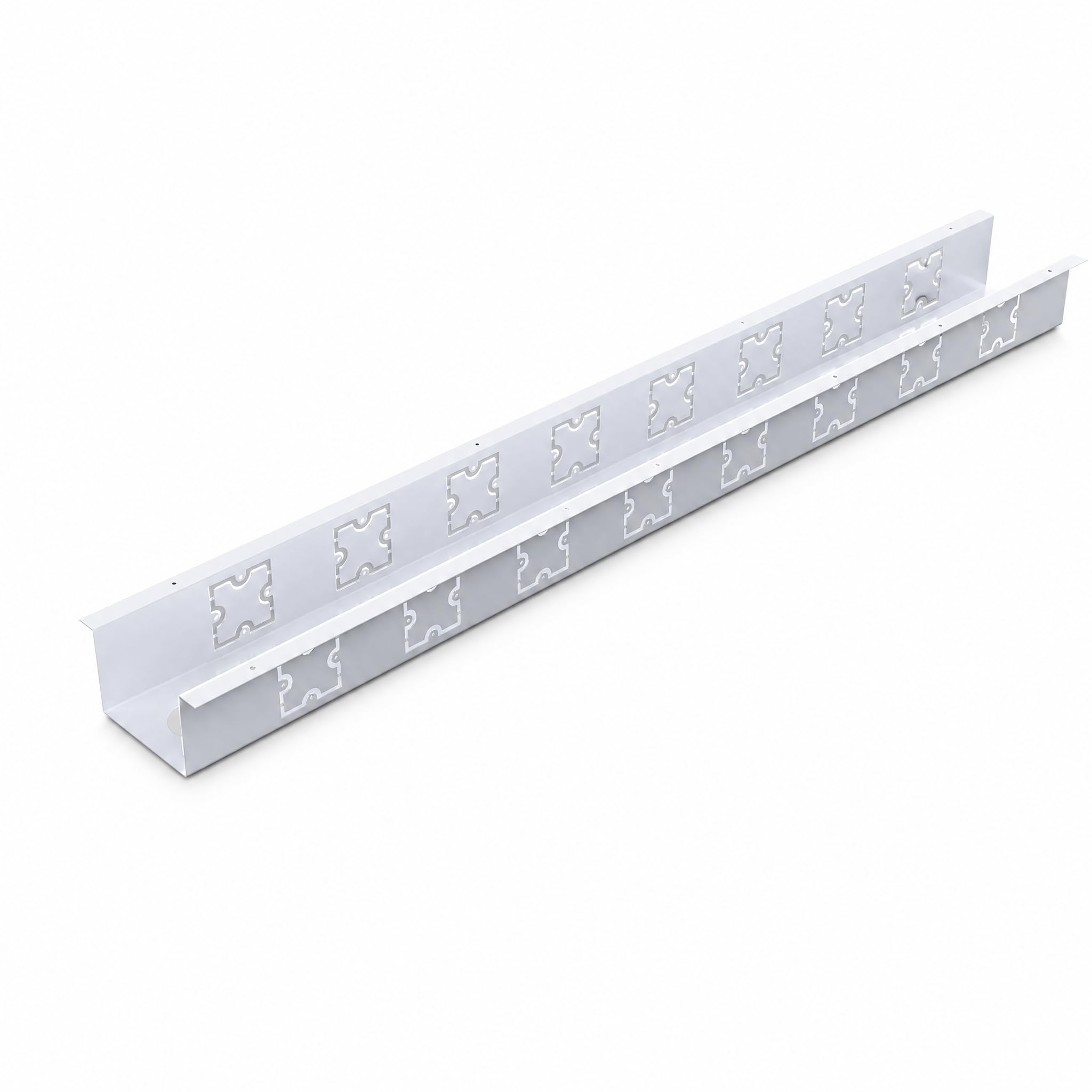
Format: Metal desk cable tray
Length: 1300mm (130cm)
Width: 130mm
Height: 90mm
Material: Metal
Intended use: Desk and workplace routing
Conduit Connection Support Metal Desk Cable Tray is a metal tray aimed at workplace planners rather than home users. The 130cm span runs under or along a desk and gathers peripheral cables into one channel. Metal construction holds shape under a load of cables and adapters that a plastic channel would sag under.
This is the pick for an office fit-out or a heavy desk setup where cables need to be off the floor and out of the way. It is not for a renter hiding a single cord, and the price tier puts it well beyond casual use.
Trade-off: The premium price and fixed 130cm span make it a poor fit for small desks or one-off home jobs.
5. Silicone Flexible Cable Cover

Format: Flexible side-open channel
Length: 78in
Width: 1.08"
Height: 0.6"
Material: Silicone
Finish: White
Silicone Flexible Cable Cover is the only flexible pick, and that changes what it can do. The silicone body bends around corners and follows a wall that is not perfectly straight. The side-open design means cables press in from the side rather than threading through an end.
This suits a wall run with a corner or a curve where rigid raceway would need extra fittings. It is not the pick for a long straight run, where a rigid kit covers more distance for the money.
Trade-off: Flexible silicone is softer than rigid plastic, so a heavy bundle can pull the channel out of shape over time.
Before You Buy
- Material: Rigid plastic suits straight runs and paint; silicone suits curves; metal suits heavy desk loads.
- Size: Match channel width and height to the thickest bundle, not to a single cord.
- Compatibility: Check the total length against the wall run, and count corners before buying.
- Included accessories: Corners, couplers, and end caps are often the difference between a clean run and a gap.
- Care: Paintable surfaces need a light scuff and a thin coat; adhesive needs a clean, dry wall.
- Purpose: Cosmetic covers hide cords; a bending and tray reference covers real conduit planning.
Frequently Asked Questions
- What is conduit and cable planning? It is the step of mapping where cables run, what carries them, and how they turn corners before any hardware is bought.
- Is a cord cover the same as conduit? No. Cord covers are cosmetic surface channels, while conduit is a raceway system subject to electrical code.
- Which pick suits a wall-mounted TV? The ZhiYo kit for a short budget run, or the D-Line kit for a longer run with more fittings.
- Can these channels be painted? The D-Line and ZhiYo kits are paintable; check the finish before coating any channel.
- What handles a corner or curve? The silicone flexible cover bends around corners without extra fittings.
- Who needs the book? Anyone planning an actual conduit or cable tray install rather than hiding a cord.
Bottom Line
For most buyers, the D-Line 157in Cord Cover Kit is the safest single purchase: it covers the most length and ships with the fittings a real wall run needs. Buyers on a tight budget with a short TV run can drop to the ZhiYo kit, and anyone planning true conduit work should add the bending and tray reference before buying hardware.
