Why there are Amazon links here: Brave Review is paid a commission for qualifying Amazon purchases made through the links below. Your price does not change, and using our links is entirely optional. How this works
Best Energy Advice Tools for a Household
Cutting a household energy bill starts with knowing where the power actually goes, and these five picks cover every way to get there. The list suits three kinds of buyers: renters who want a cheap plug-in meter, homeowners ready to track circuits at the breaker panel, and DIYers who prefer a book over a gadget. The overview below puts all five side by side, and each review says who the pick fits and who it does not.
The Picks at a Glance
| Product | Key Spec | Best Use | Price Tier |
|---|---|---|---|
| 100 Things Every Homeowner Must Know | 100 expert tips, illustrated | Budget advice for new owners | Budget |
| Upgraded Electrical Usage Monitor | 7 modes, backlight, overload protection | Testing single appliances | Budget |
| Meross Smart Home Energy Monitor | 18-circuit monitoring, real-time tracking | Whole-home circuit-level data | Premium |
| The Ultimate Guide to Home Energy Efficiency | Practical DIY handbook, digital | Free starting point for planning | Free |
| Ultimate Guide to Home Repair and Improvement | 3,400 photos and illustrations | Fixing and upgrading after the audit | Mid-range |
100 Things Every Homeowner Must Know
Format: Illustrated tip book
Publisher series: Family Handyman 100
Topic: Money-saving home maintenance
Best for: New homeowners

100 Things Every Homeowner Must Know
This is a compact reference book built around short, illustrated entries rather than long chapters, which makes it easy to dip into one tip at a time. The focus is practical maintenance and small fixes that quietly protect a budget, from sealing gaps to keeping systems running efficiently. It earns its place as the cheapest way to build general home awareness before spending on any hardware.
Trade-off: It is general advice rather than an energy-specific audit, so a buyer who wants hard numbers on consumption will still need a meter or a monitor.
Who It Suits: New homeowners and first-time renters-to-owners who want a broad, low-cost foundation. It is not for anyone hunting for detailed consumption data.
Upgraded Electrical Usage Monitor
Type: Plug-in power meter
Display modes: 7
Features: Backlight, overload protection
Measures: Consumption, voltage, amps

This is a plug-through meter: an appliance goes into the meter, the meter goes into the wall, and the display cycles through consumption, voltage and amps. The backlight helps in dim corners like a garage or utility room, and overload protection guards the unit itself. Seven display modes cover the readouts most households actually use, and it is the fastest way to find out what a fridge, heater or games console really costs.
Trade-off: It only measures one plug-in appliance at a time, so anything hardwired, like a water heater or central air, is out of reach.
Who It Suits: Renters and budget-focused owners who want to test individual appliances before replacing them. It is not for anyone who wants whole-home data in one shot.
Meross Smart Home Energy Monitor
Type: Whole-home energy monitor
Circuits monitored: 18
Features: Real-time tracking, solar surplus detection, smart alerts
Compatibility: Home Assistant support
Subscriptions: None
Warranty: 2 years
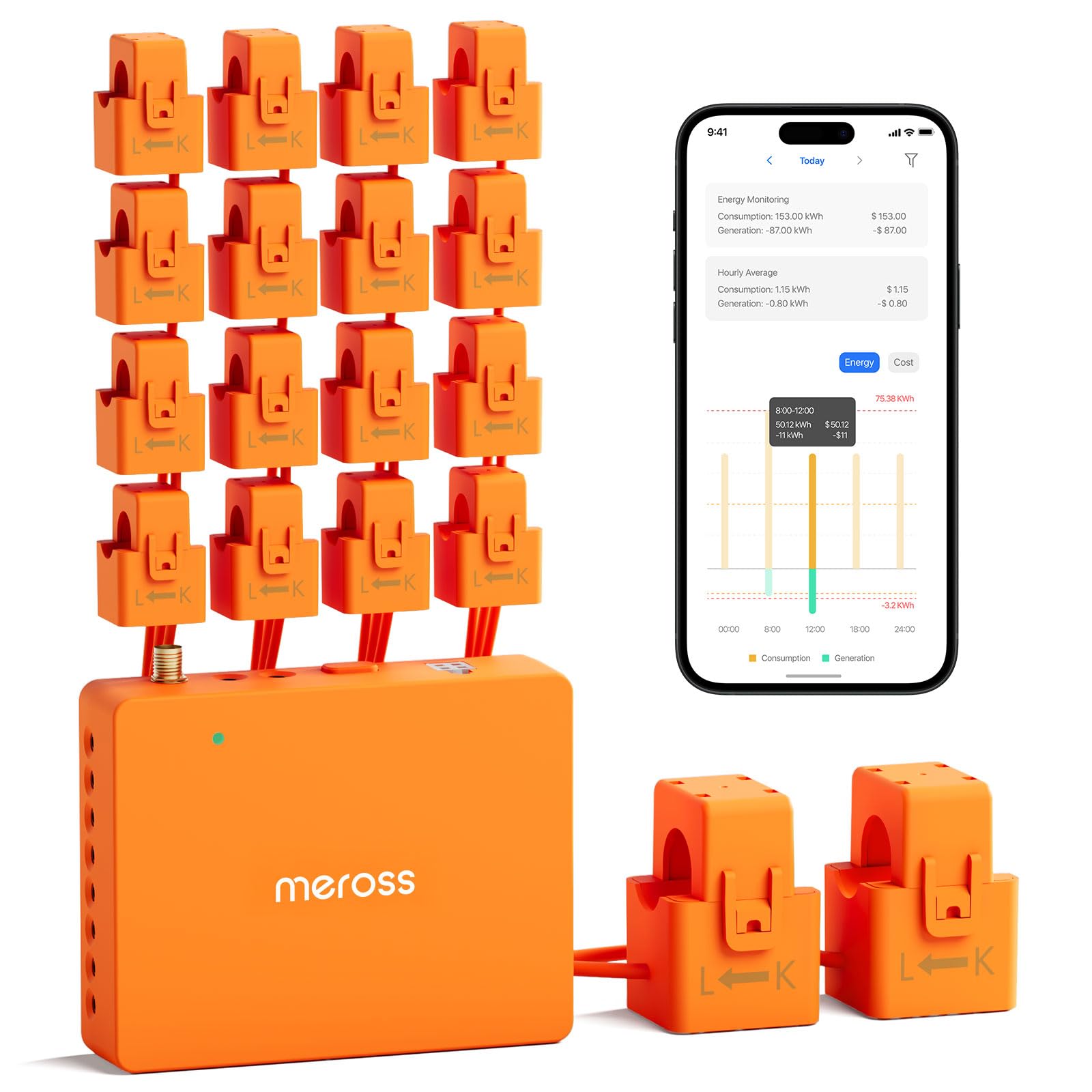
This unit installs at the breaker panel and watches up to 18 circuits, which turns vague guesses into circuit-by-circuit data in real time. Home Assistant support matters for anyone already running a smart home, and solar surplus detection helps owners with panels use more of what they generate. Smart alerts flag unusual usage, and there are no subscriptions to keep the features alive, backed by a two-year warranty.
Trade-off: Panel-level installation is a job for a qualified electrician in most homes, so the true cost sits above the sticker price.
Who It Suits: Homeowners with a panel they can access and a real interest in long-term tracking, especially solar owners. It is not for renters or anyone uncomfortable with electrical work.
The Ultimate Guide to Home Energy Efficiency
Format: Digital handbook
Approach: Practical DIY
Topics: Energy solutions, saving money, power management
Best for: Planning before spending

This is a digital handbook that walks through efficiency improvements step by step, aimed at readers who want to do the work themselves. It covers the usual ground of insulation, drafts, lighting and appliance habits, framed as a plan rather than a pile of trivia. Because it costs nothing to download, it works well as the first item on the list before any hardware money is spent.
Trade-off: A free digital guide is only as current as its edition, and it cannot measure anything in a specific house.
Who It Suits: Readers who want a structured plan before buying tools. It is not for anyone who wants a physical reference book to keep on a shelf.
Ultimate Guide to Home Repair and Improvement, 3rd Updated Edition
Format: Large illustrated reference
Edition: 3rd, updated
Content: 3,400 photos and illustrations
Covers: Plumbing, electrical, carpentry

This is the heavy reference in the group, a step-by-step manual with thousands of photos and illustrations covering plumbing, electrical and carpentry work. It pairs naturally with an energy audit: once a meter shows where the waste is, this book explains how to fix the cause. The updated third edition keeps the wiring and repair guidance in line with current practice, and the visual format suits readers who learn by watching a sequence.
Trade-off: It is a large, costly reference that rewards committed DIYers and overwhelms casual readers who just want a checklist.
Who It Suits: Hands-on owners planning real repairs and upgrades after identifying problems. It is not for renters or anyone who hires out every job.
Before You Buy
- Measurement type: A plug-in meter covers single appliances; a panel monitor covers whole circuits. Pick the one that matches the question being asked.
- Installation: Panel monitors typically need an electrician, so budget for labor alongside the device.
- Compatibility: Check that a smart monitor works with the existing hub or app setup, such as Home Assistant.
- Subscription cost: Confirm whether features are free or tied to a paid plan before committing to a monitor.
- Format: Digital guides are instant and cheap; printed references cost more but suit repeated, hands-on use.
- Skill level: Match the book to the reader — general tips for beginners, full repair manuals for confident DIYers.
Frequently Asked Questions
-
What is the best energy advice tool for a renter?
A plug-in meter is the simplest choice, since it needs no wiring and can move between apartments. -
Does a smart energy monitor need an electrician?
In most homes the panel installation is best handled by a qualified electrician, so factor that into the cost. -
Is a free digital guide worth downloading?
Yes, as a planning tool. It costs nothing and helps a household decide where to spend on hardware next. -
Can these tools work together?
They pair well: a guide sets the plan, a meter or monitor finds the waste, and a repair manual shows how to fix it. -
Which pick gives the most detail for the money?
The panel monitor delivers the most granular data, but only after installation costs are counted.
Bottom Line
For most households, the fastest useful answer comes from the Upgraded Electrical Usage Monitor, which costs little and reveals exactly what each appliance draws. Homeowners ready to go further should step up to the Meross Smart Home Energy Monitor for circuit-level tracking, and pair either one with a guide to turn the readings into savings.
