Why there are Amazon links here: Brave Review is paid a commission for qualifying Amazon purchases made through the links below. Your price does not change, and using our links is entirely optional. How this works
TECKNET Water Leak Detectors: A 3-Pack Alarm for the Rooms That Flood
The TECKNET water leak detectors are a three-pack of battery-powered alarms built to sit on the floor beside a sink, a washing machine, a water heater or a basement wall and sound off the moment water reaches them. This review covers what the 120dB alarm and IP66 housing mean in practice, where the 3-pack fits best, and which households should look elsewhere. The short version: a buyer with three at-risk spots and a modest budget can check the price and move on.
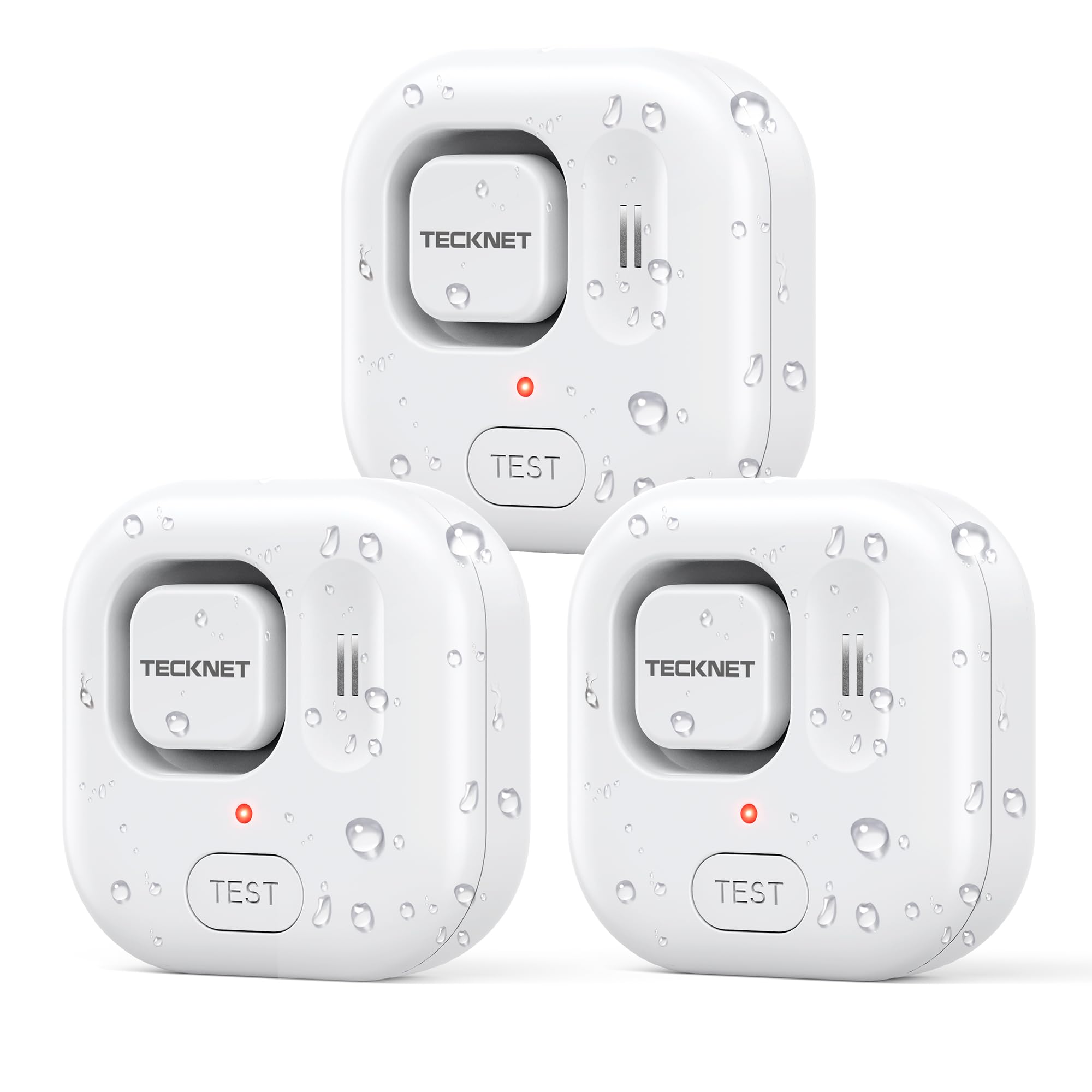
Features and Specifications
Pack Size: 3 detectors
Alarm: 120dB audible
Ingress Rating: IP66 waterproof
Power: Battery included
Intended Rooms: Bathroom, sink, laundry, window, basement, kitchen
Type: Standalone water sensor alarm
Check the current price on Amazon
The headline number here is the 120dB alarm. That is loud — roughly the level of a power tool or a passing truck — and it is the reason this class of detector works at all. A leak under a kitchen sink is invisible until the cabinet rots; a leak that announces itself from two rooms away gets dealt with the same evening.
The IP66 rating is the second fact worth understanding. The first digit, 6, means the housing is sealed against dust. The second, 6, means it survives powerful water jets. For a device whose entire job is to be sitting in a puddle, that is not a marketing extra; it is the difference between a detector that keeps beeping through a flood and one that dies in it.
Batteries come in the box, so the detectors are usable on arrival. Nothing in the product name suggests these units connect to Wi-Fi, a hub or a phone app, and buyers should assume they do not. These are standalone alarms: water touches the sensor, the alarm sounds, someone in the building has to hear it.
Build and Sealing
The IP66 housing sets the physical character of the unit. It is the reason these detectors can be placed on the floor of a basement, inside a sink cabinet, or on a windowsill where condensation collects, without the electronics being the weak point. Buyers are not handling a delicate sensor board; they are handling a sealed puck that expects to get wet.
That sealing also shapes where the detector can and cannot go. A small standalone alarm sits low and stays put, which suits the flat floor of a laundry room or the base of a water heater. It does not clamp onto a pipe, and it will not detect a slow drip running down the inside of a wall. Placement is a floor job, and the detector only knows about water that reaches it.
Trade-off: The sealed, floor-level design means a leak that starts high — a supply line under a bathroom vanity, a dripping joint in a ceiling — only triggers the alarm once water has travelled down to where the unit sits.
Alarm and Coverage
A 120dB alarm is genuinely useful in a house with people in it. It cuts through a running washing machine, a television and a closed door, which is the scenario these detectors are built for: someone is home, something bursts, and the alarm buys the minutes needed to shut off the water before damage spreads.
The 3-pack is where the value sits. Most homes have more than one candidate spot — under the kitchen sink, behind the washing machine, beside the water heater, in the basement — and a single detector forces a buyer to guess which one floods first. Three units let a household cover the three likeliest places at once, which is a meaningfully better use of a budget than one premium unit in one spot.
The limitation is equally clear. A standalone audible alarm only works if someone is within earshot. A detector in a holiday home, an empty rental or a basement nobody visits will sound its alarm to an empty room. Buyers who need a phone notification while away are shopping in a different category.
Trade-off: There is no remote alerting, so the 3-pack protects a home only while someone is there to hear it.
Power and Maintenance
Batteries in the box means no separate purchase on day one, and the maintenance routine is about as simple as home safety gear gets: check the units periodically, replace the batteries on a schedule, and test each detector by wetting a finger or a damp cloth against the sensor contacts. A detector that has sat silent for a year is worth a two-minute test.
The IP66 seal is a long-term asset here. In a damp basement or a cabinet under a sink, an unsealed electronic device corrodes and fails quietly. A sealed one has a better chance of still working when the day comes that it matters. That said, the seal is only as good as its condition — a cracked housing or a battery compartment left ajar gives up the protection.
Because these are standalone units, there is nothing to configure and no app account to maintain. Buyers who dislike smart-home setup will see that as a feature. Buyers who want logs, schedules and remote checks will see it as the reason to look elsewhere.
Trade-off: The simple battery-and-buzzer design means no app, no history and no way to confirm from another room that a detector is still alive.
Who It Suits and Who It Does Not
These detectors suit the household that wants cheap, immediate, no-setup protection in three known risk spots — the classic under-sink, laundry and basement trio — and has people around to hear an alarm. They also suit landlords fitting out a property without wiring anything in, and anyone who wants leak protection without adding another app to a phone.
They do not suit owners of a vacant property, a holiday home or a remote cabin, where an audible alarm has nobody to alert. They do not suit buyers who want a push notification, an email or a smart-home automation. And they do not replace a proper look at the plumbing: a detector tells the household a leak has started, it does not stop one.
FAQ
-
How loud is a 120dB water leak alarm?
120dB is roughly the noise of a power tool or a heavy truck at close range. It is loud enough to be heard through a closed door over a running appliance, which is the point — the alarm has to compete with the house. -
Are the TECKNET water leak detectors waterproof?
The housing carries an IP66 rating, which means it is sealed against dust and protected against powerful water jets. That is the right rating for a device designed to sit in a puddle. -
Do these detectors need Wi-Fi or a phone app?
Nothing in the product name points to connectivity, and buyers should treat them as standalone alarms. Water reaches the sensor, the alarm sounds, and someone nearby has to hear it. -
How many detectors does a house need?
The 3-pack covers the three most common trouble spots — under the kitchen sink, by the washing machine and near the water heater or in the basement. Larger homes with more wet rooms may want a second pack. -
Where should a water leak detector be placed?
On the floor, in the lowest point of the risk area, close to the appliance or pipe most likely to fail. Under a sink cabinet, behind the washer, beside the water heater and along a basement wall are the standard positions. -
Do the batteries come included?
Yes. The product ships as a 3-pack with batteries included, so the detectors can be placed and tested straight out of the box. -
Will these detectors alert a phone while away from home?
No. These are audible standalone alarms, so they protect a home only while someone is present to hear them. Remote notification requires a different type of leak sensor. -
How are the detectors tested?
By touching the sensor contacts with a damp finger or cloth and listening for the alarm. A quick periodic test confirms the battery and the sensor are still working. -
Can a water leak detector prevent water damage?
It cannot prevent a leak, but it shortens the time between a leak starting and someone reacting, which is usually the difference between a mop and a repair bill. -
Are these suitable for a rental property or vacant home?
For a rented property with tenants in residence, yes. For a vacant home or holiday let, no — an audible alarm with nobody there to hear it does little good.
Bottom Line
The TECKNET water leak detectors are the sensible buy for a household that wants three loud, sealed, battery-included alarms in the three rooms most likely to flood, without an app or a hub in sight. Buyers who need remote alerts should shop elsewhere; everyone else can check the price on Amazon and place the units the same afternoon.
