Why there are Amazon links here: Brave Review is paid a commission for qualifying Amazon purchases made through the links below. Your price does not change, and using our links is entirely optional. How this works
Best What a Small Power Station Really Runs for Everyday Backup and Camping
Most shoppers overestimate a small power station and then underuse it. The truth is that a compact unit runs phones, laptops, lights, fans, a CPAP, a router, a small TV, and a mini fridge cycle — and it stops there. This guide covers five units that each fit a different buyer: the light traveler, the budget first-timer, the CPAP user, the home backup planner, and the road-tripper who wants fast charging. The overview table below shows the differences at a glance before the reviews.
Overview of the Picks
| Product | Key Spec | Best Use | Price Tier |
|---|---|---|---|
| Backup LiFePO4 Battery 640Wh | 640Wh, 1200W surge, 4 AC | Home backup and RV | Mid |
| EnginStar 150W 155Wh | 155Wh, 150W, 6 outputs | Light camping and phones | Budget |
| Daran 89.6Wh LiFePO4 | 89.6Wh, 100W, PD fast charge | Pocket carry and day trips | Budget |
| ALLWEI 300W 256Wh | 256Wh, 300W, pure sine | CPAP and small devices | Mid |
| BLUETTI Elite 30 V2 | 288Wh, 600W, 10ms UPS | Blackout and road trip | Premium |
1. Backup LiFePO4 Battery 640Wh Portable Power Station
Type: Portable power station with UPS function
Battery chemistry: LiFePO4
Capacity: 640Wh
Output: 1200W surge, 4 AC ports
Charge time: 1.5 hours
Transfer time: 10ms UPS
Build: Metal enclosure
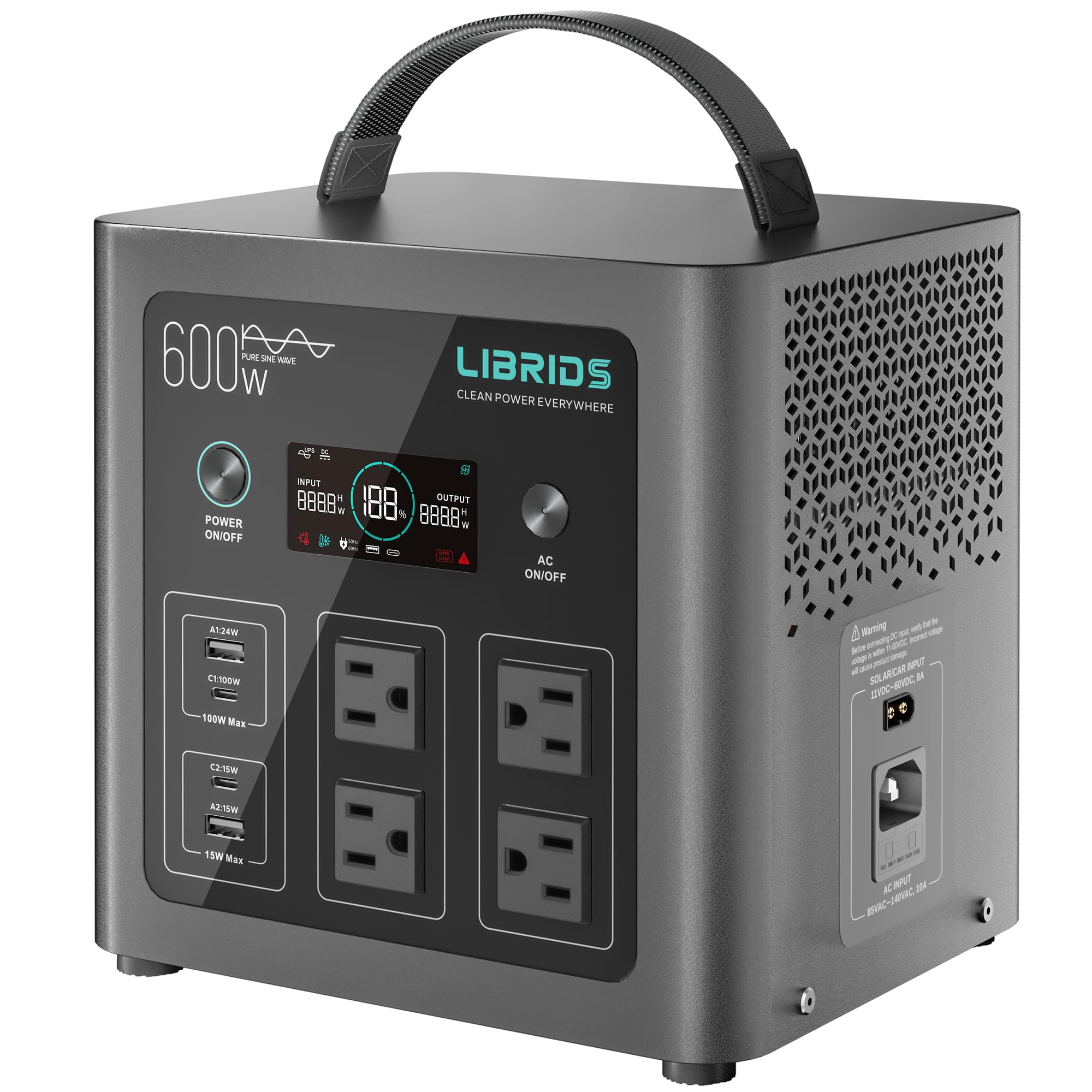
Backup LiFePO4 Battery 640Wh Portable Power Station
This is the largest unit here, and the one that takes real household loads seriously. The LiFePO4 cells are the durable chemistry — they tolerate deep discharges better than older lithium blends — and the metal housing suggests a unit built to sit in a garage rather than a backpack. The 1.5-hour recharge is the standout spec: a unit this size that refills over a lunch break changes how it gets used. Eight ports and four AC outlets mean a router, a lamp, a laptop and a fan can all stay live at once.
The 10ms UPS transfer makes it a genuine standby device — plug it between the wall and a router or desktop, and it switches over fast enough that most equipment never notices the outage. Buyers planning a home backup shelf or an RV kit get the most from it. It is not for anyone who needs to carry power in a daypack; this unit is heavy and wants a cart, a shelf or a vehicle.
Trade-off: The capacity and metal build that make it a strong home backup also make it the heaviest and least portable pick in this group.
2. EnginStar 150W 155Wh Portable Power Station
Type: Portable power bank with AC outlet
Capacity: 155Wh
Output: 150W, 110V AC
Ports: 6 outputs
Extras: LED light
Best for: Camping and laptop charging

EnginStar Portable Power Station 150W 155Wh
The EnginStar is the classic entry point: a power bank with a real AC outlet rather than a wall adapter. Six outputs cover USB devices, a laptop and one small AC load, and the built-in LED light is genuinely useful during a power cut or inside a tent after dark. The 150W ceiling is the honest limit here — a laptop, a fan, a light, a phone, and a camera battery all fit; a kettle or a space heater does not.
This is the pick for a first-time buyer who wants to test the category without spending much, or for a camper who mostly needs phones and a laptop topped up. Buyers with a CPAP or any motor-driven device should look elsewhere — the output is too low and the waveform is not described as pure sine. It also runs out fast under continuous AC load, so it suits short sessions rather than all-night running.
Trade-off: The low output ceiling and modest capacity mean it handles gadgets well but stalls on anything with a heating element or a motor.
3. Daran 89.6Wh LiFePO4 Portable Power Station
Type: Compact solar power bank with AC outlets
Battery chemistry: LiFePO4
Capacity: 89.6Wh
Output: 100W (200W peak)
Charging: PD fast charging
Solar: Panel optional
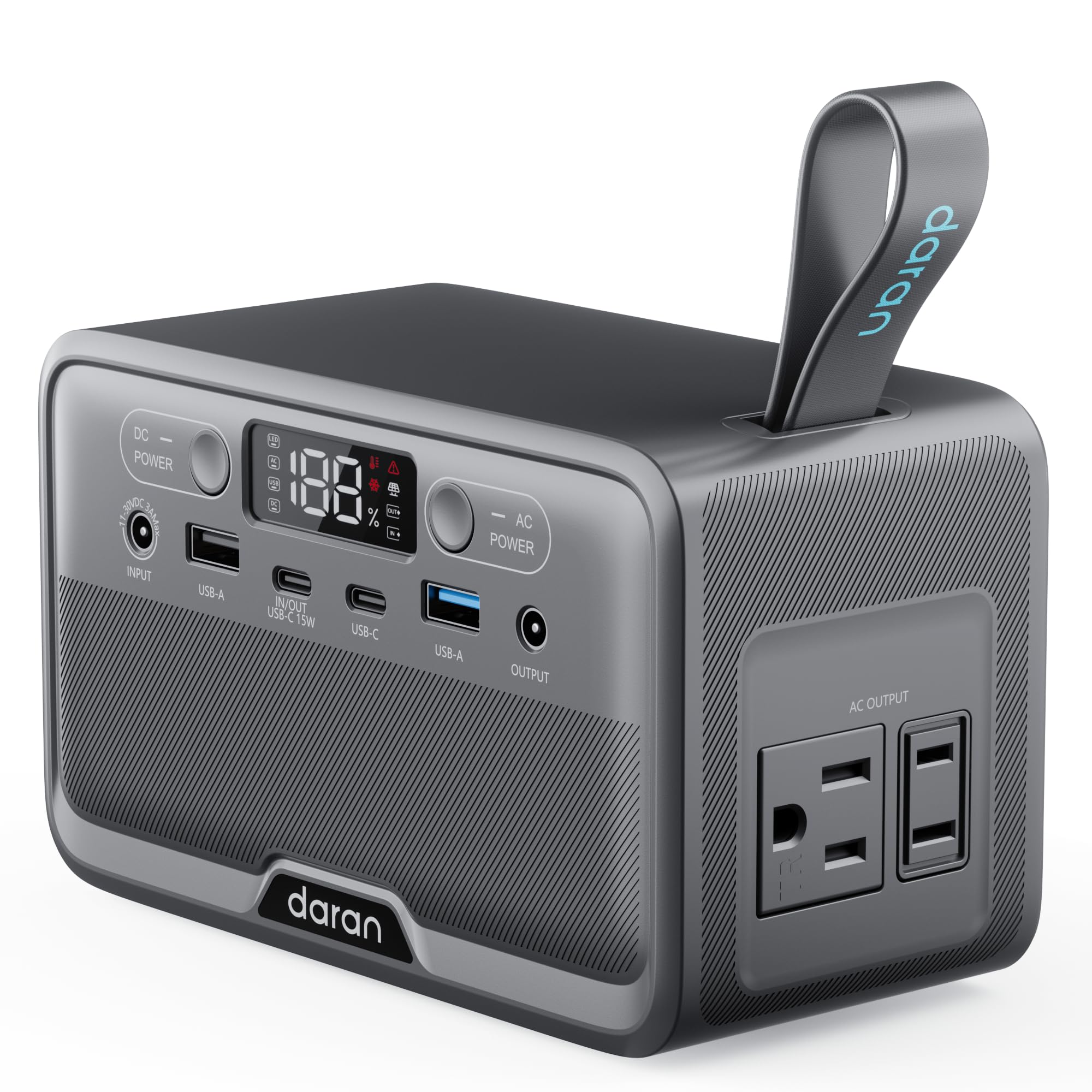
Daran Portable Power Station 89.6Wh LiFePO4
The Daran is the smallest unit in the roundup and the one that actually fits in a bag. LiFePO4 chemistry at this size is a real advantage — the pack tolerates being drained and recharged often, which is exactly what a commuter or day-hiker does with it. PD fast charging means it refills from a USB-C charger rather than a dedicated brick, and the optional solar panel turns it into a trickle-charging backup for a multi-day trip.
The 200W peak rating helps with small devices that spike on startup, but the sustained 100W ceiling keeps expectations in check: a laptop, a phone, a tablet, a camera and a light are the natural loads. Buyers who want a true emergency backup for a fridge or a heater will be disappointed. It is also the pick most likely to need a solar panel bought separately, which adds to the real cost.
Trade-off: The tiny capacity that makes it pocketable also means it covers a single device for a few hours, not a household during an outage.
4. ALLWEI 300W 256Wh Portable Power Station
Type: Portable power station with pure sine wave output
Capacity: 256Wh
Output: 300W, pure sine wave AC
Charging: PD 60W fast charging, MPPT solar input
Protection: BMS
Best for: CPAP and small home devices
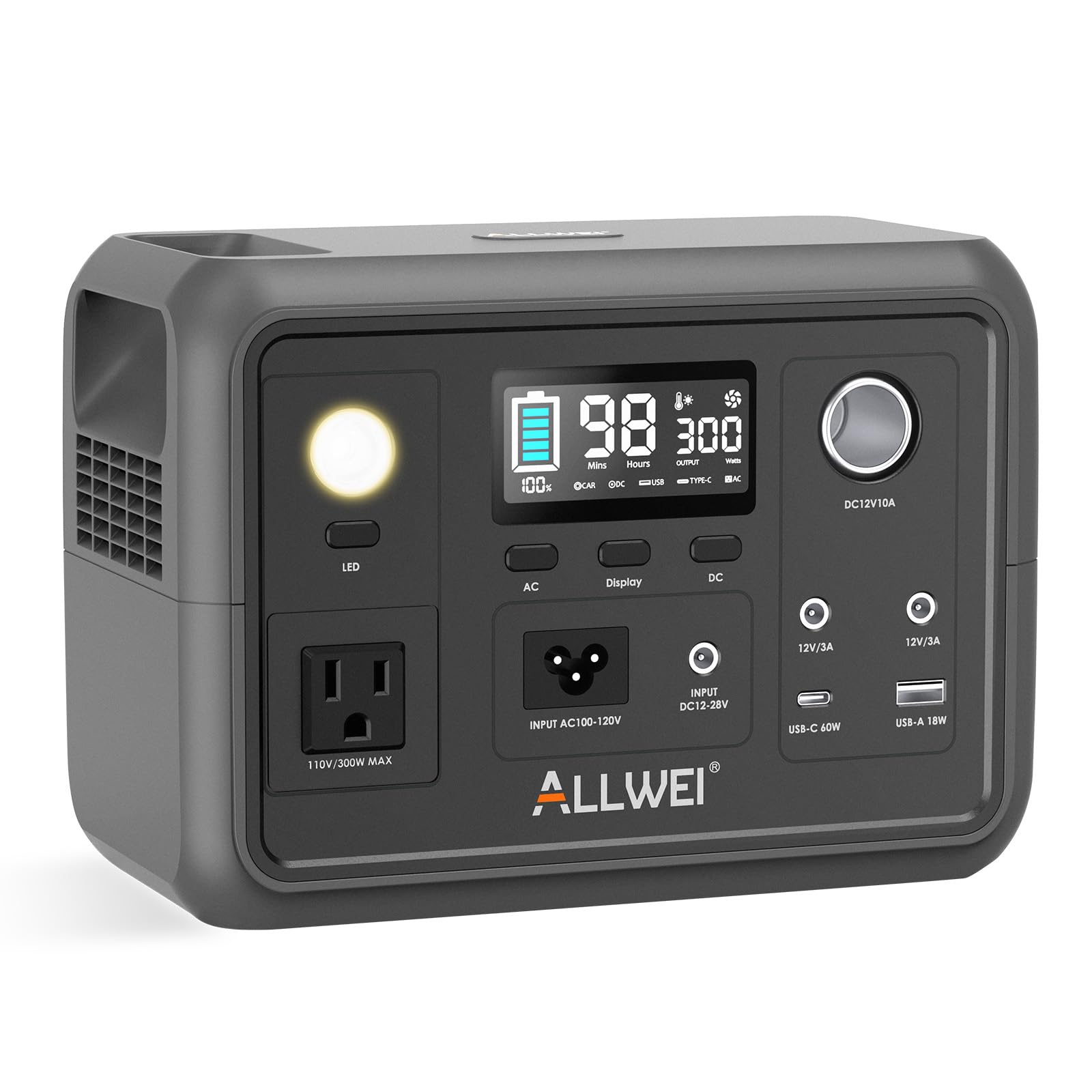
ALLWEI Portable Power Station 300W 256Wh
This is the pick that matters most for medical devices. Pure sine wave output is the spec that makes a power station safe for a CPAP, a fan motor, or sensitive electronics, and it is the first thing a sleep-apnea buyer should check. The 256Wh capacity is enough for a night of CPAP use with room to spare for a phone, and the BMS protection guards against overcharge and short circuits. MPPT solar input means a panel can recharge it efficiently during a longer outage.
The 300W ceiling is modest but honest — it runs the devices this unit is designed for and not much more. Buyers who need to run a fridge or a microwave should step up to a larger class. It is also a mid-size unit: light enough to move between rooms, not light enough to forget in a backpack.
Trade-off: The pure sine wave and CPAP focus come with a power ceiling that rules out most kitchen and heating appliances.
5. BLUETTI Elite 30 V2 Portable Power Station
Type: Portable power station with UPS
Battery chemistry: LFP (LiFePO4)
Capacity: 288Wh
Output: 600W, 1500W power lifting
Charge time: 45 min to 80%
Transfer time: 10ms UPS
Best for: Blackout, camping and road trip
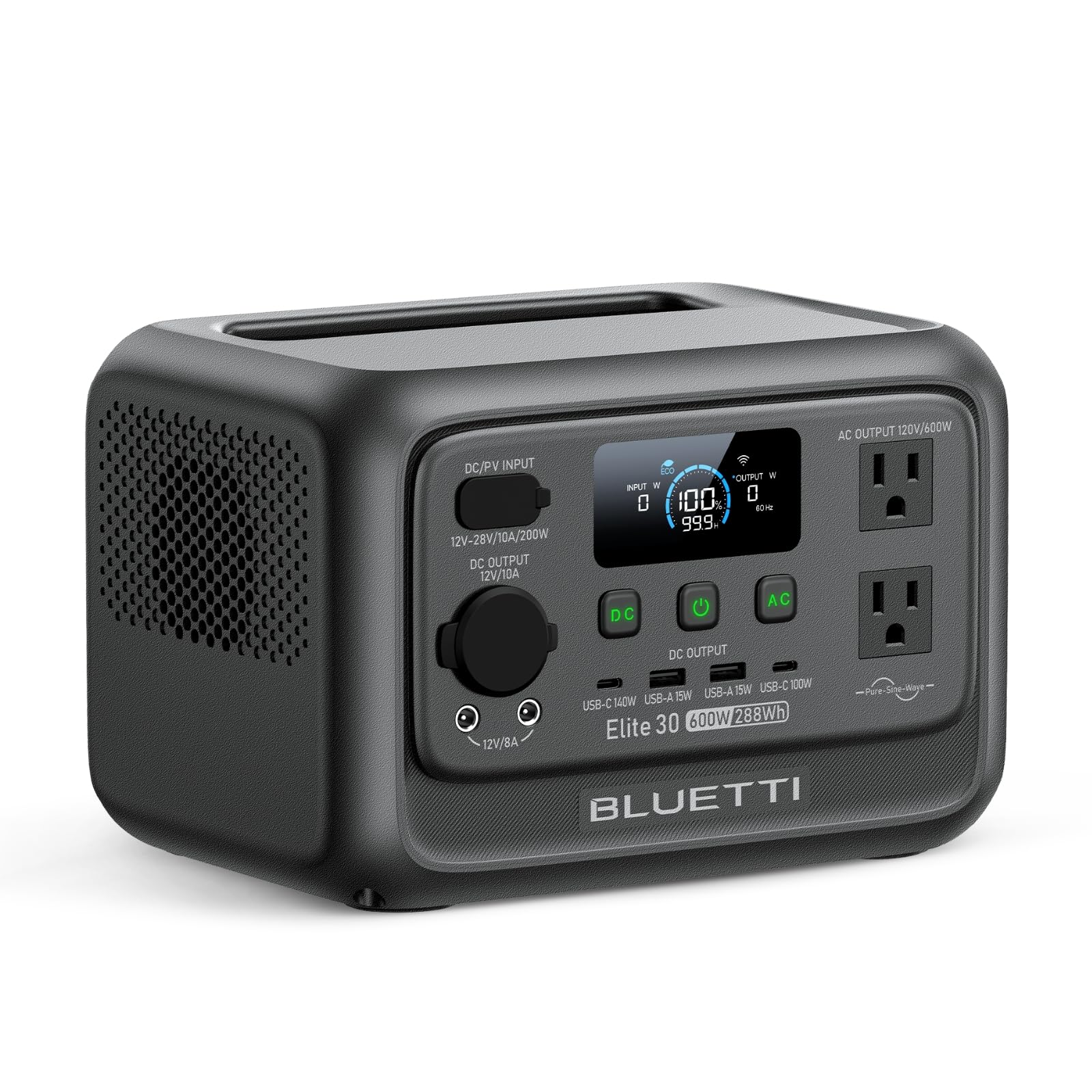
BLUETTI Elite 30 V2 Portable Power Station
The Elite 30 V2 packs the most usable power into the smallest footprint here. The 600W continuous rating with 1500W power lifting means it can start devices that would trip a lesser unit, and the LFP cells give it long service life. The 45-minute charge to 80% is the headline feature — a unit that refills that fast turns a coffee-shop stop into a full recharge on a road trip. The 10ms UPS transfer makes it a legitimate blackout companion for a router or a desktop.
This is the premium pick, and the price reflects the fast charging, the lifting capability and the LFP chemistry. Buyers on a tight budget can get most of the everyday function for less. It is also not a whole-home solution — 288Wh runs devices, not appliances, and a fridge or a heater will drain it quickly.
Trade-off: The premium price buys fast charging and power lifting, but the capacity still limits it to devices rather than large appliances.
Before You Buy
- Capacity: Match watt-hours to the device — a phone needs a few, a CPAP needs a night’s worth, a fridge needs far more than any unit here.
- Output ceiling: Check the continuous watt rating against the device’s draw; heating elements and motors need headroom.
- Waveform: Pure sine wave is essential for CPAP machines, motors and sensitive electronics.
- Chemistry: LiFePO4 and LFP last longer and tolerate deep cycles better than older lithium blends.
- Recharge speed: A fast-charging unit gets used more; a slow one sits on the charger.
- Portability: Weight and size decide whether a unit lives in a bag or on a shelf.
- Solar compatibility: An MPPT input and an optional panel extend runtime on multi-day trips.
Frequently Asked Questions
-
What can a small power station actually run?
Phones, laptops, lights, fans, routers, a CPAP, a small TV and a mini fridge cycle. Heating appliances and large fridges are out of reach for this class. -
How long will a 300Wh station run a CPAP?
Roughly a night for most CPAP models, depending on pressure settings and whether a humidifier is used. The humidifier draws the most. -
Is pure sine wave necessary?
For CPAP machines, motors and sensitive electronics, yes. Modified sine wave can cause buzzing or malfunctions in those devices. -
Can a small power station run a fridge?
Only a small, efficient unit for a short cycle, and only on the larger picks here. A full-size fridge needs a much bigger station. -
How fast do these units recharge?
It varies widely. The fastest picks here reach most of a charge in well under two hours; budget units take considerably longer. -
Do these work with solar panels?
Most do, but the panel is usually sold separately. Check for an MPPT input before buying a panel.
Bottom Line
The right pick depends on the job: the Backup LiFePO4 640Wh handles home backup and RV duty, the ALLWEI 300W is the CPAP-safe choice, and the BLUETTI Elite 30 V2 is the premium road-trip unit. For most buyers who want one unit that covers devices and a night of backup, the Backup LiFePO4 Battery 640Wh Portable Power Station is the strongest all-round pick.
