Why there are Amazon links here: Brave Review is paid a commission for qualifying Amazon purchases made through the links below. Your price does not change, and using our links is entirely optional. How this works
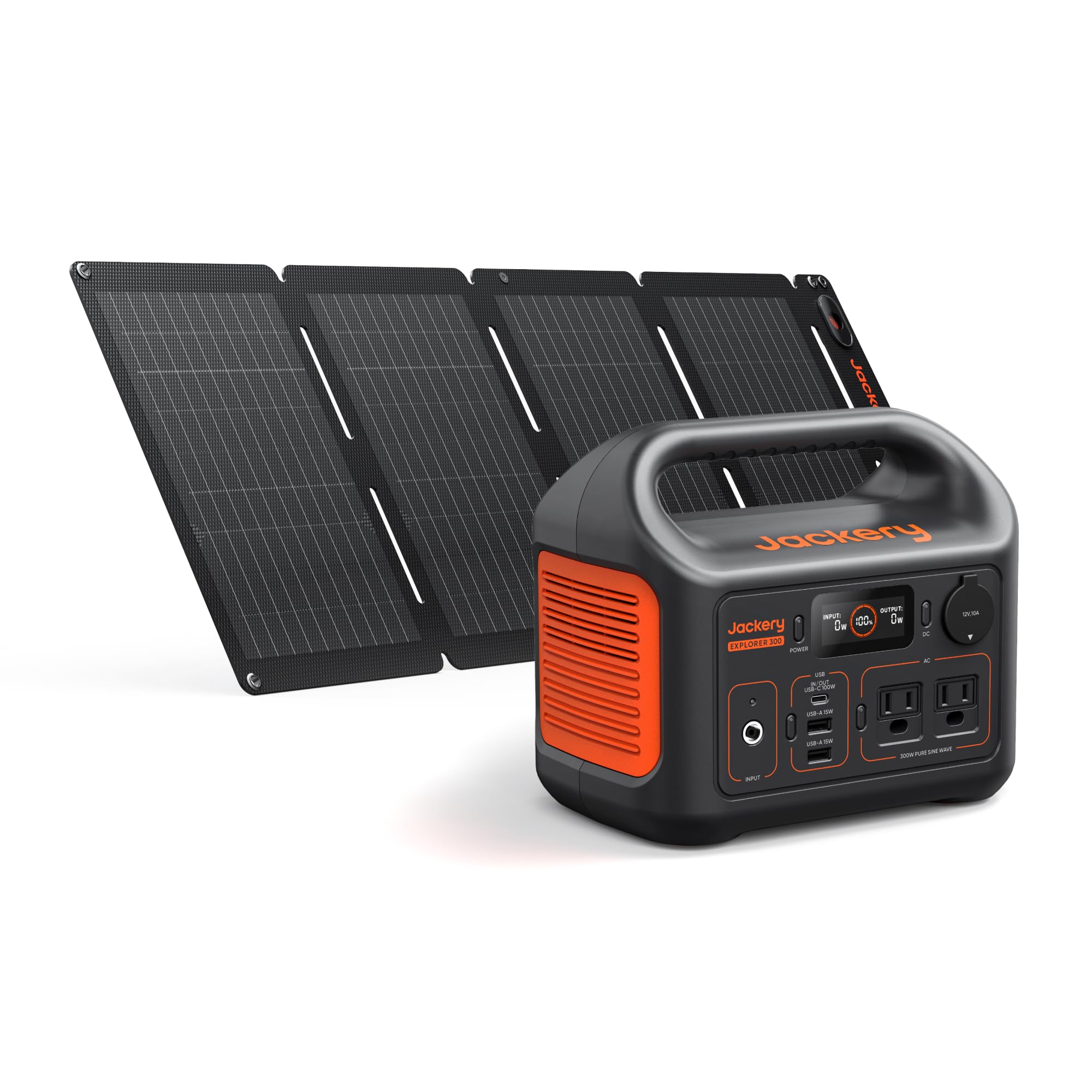
Jackery Solar Generator 300 and 40W Solar Panel: Compact Power for Camping and Blackouts
The Jackery Solar Generator 300 and 40W Solar Panel is a compact solar-ready power bundle for campers, RV owners and households that want backup power without dragging around a heavy generator. This review covers what the unit is built to do, what the 292Wh capacity and 300W AC output mean in everyday use, and where the bundle makes compromises. Readers comparing portable power stations will find the key numbers laid out below, followed by a plain verdict on who should buy it.
Features and Specifications
Product: JackeryPure Sine Wave AC Outlet, for RV, Outdoors, Camping, Travel, Blackout Solar Generator 300 and 40W Solar Panel,292Wh,300W AC
Capacity: 292Wh
AC Output: 300W
AC Outlet Type: Pure sine wave
Included Solar Panel: 40W
Intended Use: RV, outdoors, camping, travel, blackout backup
Power Source: Solar panel or AC charging
Color: Black
The headline numbers here are the 292Wh battery and the 300W pure sine wave AC outlet. The capacity figure describes how much energy the internal battery holds, while the wattage figure describes how much load it can push through the AC outlet at once. The included 40W solar panel turns the bundle into a self-contained off-grid power kit rather than a unit that needs a wall socket to recharge.
The pure sine wave label matters more than most shoppers realize. Sensitive electronics — laptops, camera gear, medical devices, modern TVs — expect the same smooth alternating current that comes from a household outlet. A pure sine wave inverter produces that waveform, which reduces the risk of buzzing, overheating or erratic behavior in delicate equipment.
Build and Portability
This is a compact, carry-friendly design, which is the entire point of the 300-class format. The trade-off is straightforward: a smaller chassis and lower weight come at the cost of total storage, so the 292Wh figure is modest compared with larger stations built for whole-home backup. Buyers who need to move the unit from car trunk to campsite to kitchen counter will appreciate the manageable size; buyers who want to run a fridge for a day will not.
The black housing and integrated handle layout are typical of the category and suit outdoor storage, though any portable power station should be kept out of direct rain and prolonged sun exposure when not in use.
Capacity and Runtime Expectations
Capacity is where this bundle makes its biggest compromise, and buyers should set expectations accordingly. At 292Wh, the station is sized for small-to-medium loads over short periods — phones, laptops, lights, a fan, a small TV, camera batteries — rather than for heavy appliances or multi-day off-grid living.
The math buyers should do before purchasing is simple: divide 292 by the wattage of whatever needs running. A low-draw device like a phone charger or LED lamp stretches the battery across many hours, while anything drawing a few hundred watts will exhaust it quickly. This is normal for the class, not a defect, but it is the single most common source of disappointment in compact stations.
Check the Jackery Solar Generator 300 price on Amazon
Power Output and Pure Sine Wave AC
The 300W AC output sets a hard ceiling on what the outlet can feed. Small kitchen appliances, fans, lights, routers, laptops and most consumer electronics sit comfortably within that envelope. Space heaters, kettles, microwaves and power tools generally do not, and some of those loads also surge well above their running wattage at startup, which can trip the outlet’s protection.
The pure sine wave design is the standout feature at this tier. Budget stations sometimes ship with modified sine wave inverters that run hot and misbehave with sensitive gear. A pure sine wave outlet makes this bundle a safer match for laptops, audio equipment, CPAP machines and other electronics that buyers care about protecting.
Solar Charging and the 40W Panel
The bundled 40W solar panel is the reason this product reads as a system rather than a standalone battery. It gives buyers a way to recharge away from wall power, which is the defining requirement for camping, RV and emergency use. The panel size is modest, though, and solar recharging a 292Wh battery from a 40W panel is a slow process under anything less than strong, direct sunlight.
Buyers planning serious off-grid trips should treat the included panel as a starter panel rather than a complete solar solution. Those who mostly charge from a wall outlet at home and keep the panel for occasional top-ups will find the bundle well balanced.
Maintenance and Everyday Care
Maintenance for a unit like this is mostly about good habits rather than service. Storing the battery at a partial charge rather than fully drained or fully topped off, keeping it cool and dry, and recharging it periodically during long idle stretches all help preserve usable capacity over time. The solar panel needs a clean surface and unobstructed sun to perform, and its cable and connectors should be checked before each trip.
Buyers should also expect to wipe down the housing and keep vents clear of dust and sand, especially after beach or desert use.
Trade-off: The 292Wh capacity and 300W ceiling keep the unit light and affordable, but they rule out running high-draw appliances or sustaining multi-day off-grid power without a larger panel.
Who It Suits and Who It Does Not
This bundle fits weekend campers, RV owners who want a quiet alternative to a fuel generator, road-trippers, and households that want a small emergency backup for phones, lights and a router during an outage. It also suits photographers, remote workers and anyone who needs clean pure sine wave power for sensitive electronics away from home.
It is not the right pick for buyers who need to run a refrigerator, space heater, microwave or power tools, nor for anyone planning to live off-grid for extended periods. Those buyers need substantially more capacity and a larger solar array, and should look at higher-tier stations instead.
FAQ
-
What can the Jackery Solar Generator 300 actually run?
It runs small and medium loads — phones, laptops, lights, fans, routers, a small TV, camera gear and similar electronics — within its 300W AC output limit. High-draw appliances like heaters, kettles and microwaves exceed that ceiling. -
How long does a 292Wh battery last?
Runtime depends entirely on the load. Divide 292 by the wattage of the device to estimate hours of use. A 50W load lasts roughly several hours, while a 250W load drains the battery much faster. -
Why does pure sine wave matter?
Pure sine wave output mimics household AC power, which keeps sensitive electronics like laptops, audio gear and medical devices running safely. Modified sine wave inverters can cause buzzing, heat or malfunctions in those devices. -
How long does the 40W solar panel take to recharge the station?
A 40W panel recharges a 292Wh battery slowly, and real-world output drops with cloud cover, shade and panel angle. Buyers should expect solar charging to be a gradual top-up rather than a fast refill. -
Can the station be charged from a wall outlet?
Yes. The bundle supports standard AC charging in addition to solar, which makes it practical to top up at home before a trip and rely on the panel while away. -
Is it safe to use indoors during a blackout?
Yes. A battery-based power station produces no exhaust fumes, unlike a fuel generator, so it can be used inside a home during an outage. It should still be kept away from water and excessive heat. -
Can it charge a CPAP machine overnight?
Many CPAP users run their machines from stations in this class, but the heated humidifier draws significantly more power. Buyers should check their machine’s wattage and consider disabling the humidifier to extend runtime. -
Does the 40W panel work in partial shade?
Solar panels lose output quickly when shaded, and a 40W panel has little margin to spare. The panel performs best in direct, unobstructed sunlight with a clear view of the sky. -
Is this bundle a good value compared with buying the parts separately?
Bundles typically save buyers the hassle of matching a panel to a station and usually cost less than buying both pieces individually. Buyers who already own a compatible panel may prefer the station on its own. -
How should the battery be stored between trips?
Store it in a cool, dry place at a partial charge rather than fully drained, and recharge it periodically during long idle periods to protect usable capacity.
Bottom Line
The Jackery Solar Generator 300 and 40W Solar Panel is a well-matched starter bundle for camping, RV travel and small-scale blackout backup, with pure sine wave output that protects sensitive electronics and a panel that makes off-grid top-ups possible. Buyers who need to run heavy appliances or stay off-grid for days should size up, but for everyone else this is a sensible, portable first solar generator.