Why there are Amazon links here: Brave Review is paid a commission for qualifying Amazon purchases made through the links below. Your price does not change, and using our links is entirely optional. How this works
Best Underlay With Thermal Properties for Warmer, Quieter Floors
A good underlay with thermal properties does three jobs at once: it slows heat loss through the floor, deadens impact noise, and keeps moisture away from the finished surface. This short roundup covers five picks for three kinds of buyer — the homeowner laying laminate or engineered wood, the budget renovator working room by room, and the van or RV converter insulating a much smaller footprint. The overview table below puts all five side by side, and each review explains who the pick suits and where it falls short.
Overview of the Picks
| Product | Key Spec | Best Use | Price Tier |
|---|---|---|---|
| 3-in-1 Acoustic Premium Floor Underlayment | 200 sq ft roll, 3mm EPE with silver foil | Full-room laminate and wood installs | Mid |
| RV Camper Insulation Roll | 16.5" x 315" roll, water-resistant | Van, RV, and truck conversions | Budget |
| ROBERTS Unison Premium 2-in-1 Underlayment | 100 sq ft roll, 2-in-1 build | Small rooms and single-room refreshes | Budget |
| PRODURA 3-in-1 Advanced Foam Underlayment | 200 sq ft, 3mm foam with self-sealing lip | Large floating-floor projects | Mid |
| PolyFoam Multipurpose Foam Underlayment | 100 sq ft roll, moisture-resistant foam | Value-focused laminate and wood jobs | Entry |
3-in-1 Acoustic Premium Floor Underlayment
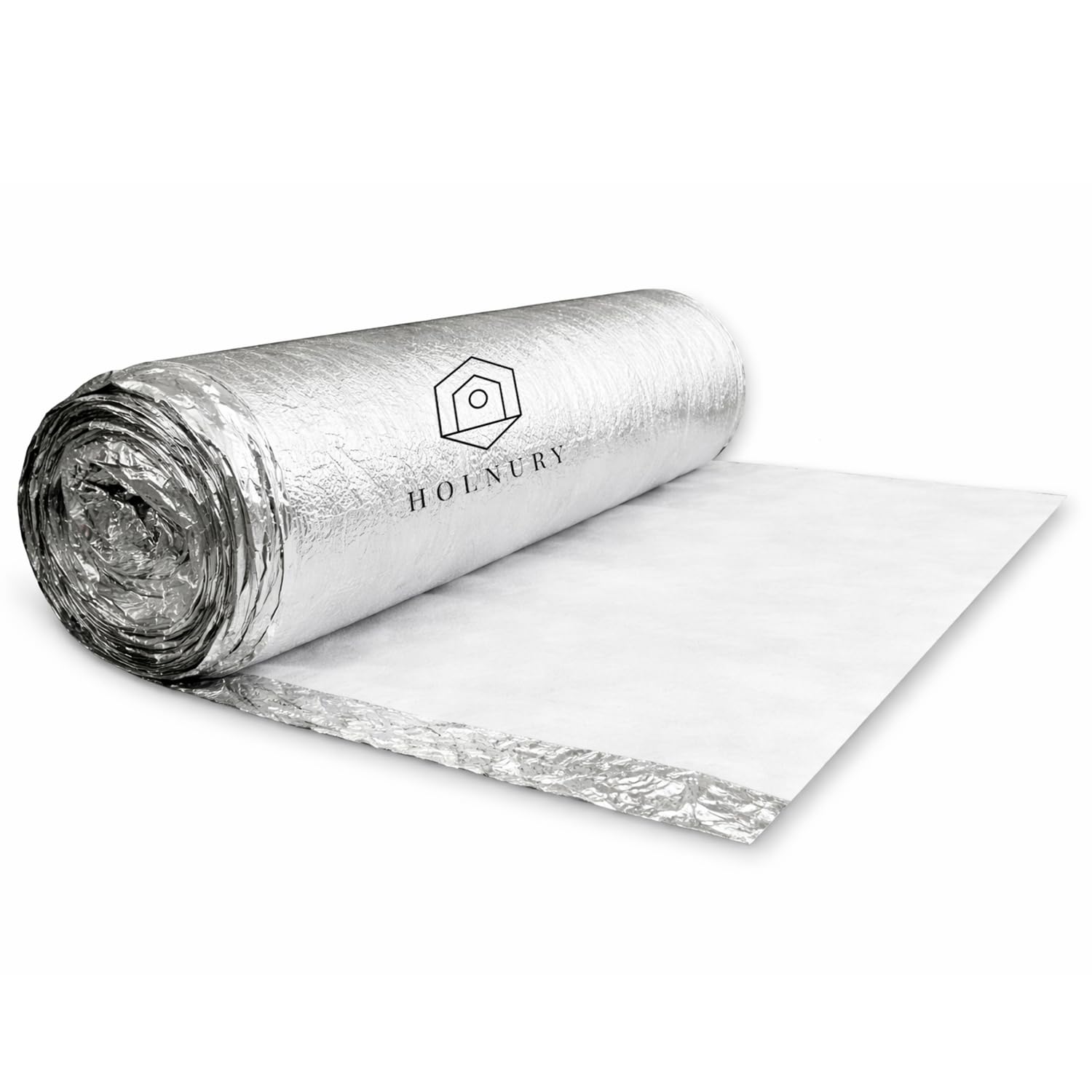
Type: 3-in-1 floor underlayment
Coverage: 200 sq ft roll
Thickness: 3mm
Material: EPE foam with silver foil vapor barrier
Included: Tape
Intended use: Moisture barrier, thermal insulation, sound insulation
3-in-1 Acoustic Premium Floor Underlayment is the most complete package in this group. The EPE foam core handles cushioning and impact noise, while the silver foil face acts as a vapor barrier and reflects radiant heat back into the room rather than letting it drain through the slab. The included tape means seams can be sealed without a separate trip to the hardware store.
The 200 sq ft roll is sized for a genuine room, not a closet, so it suits a homeowner doing a full laminate or engineered wood install in one pass. The foil facing is the reason it earns a place here: it is the closest thing in this lineup to a true thermal barrier rather than plain foam. Buyers installing over concrete, cold slabs, or a crawl space will get the most from it.
Trade-off: The foil surface is less forgiving to work with than plain foam — it creases, and seams need to be taped flat or they telegraph through thin floating floors.
RV Camper Insulation Roll
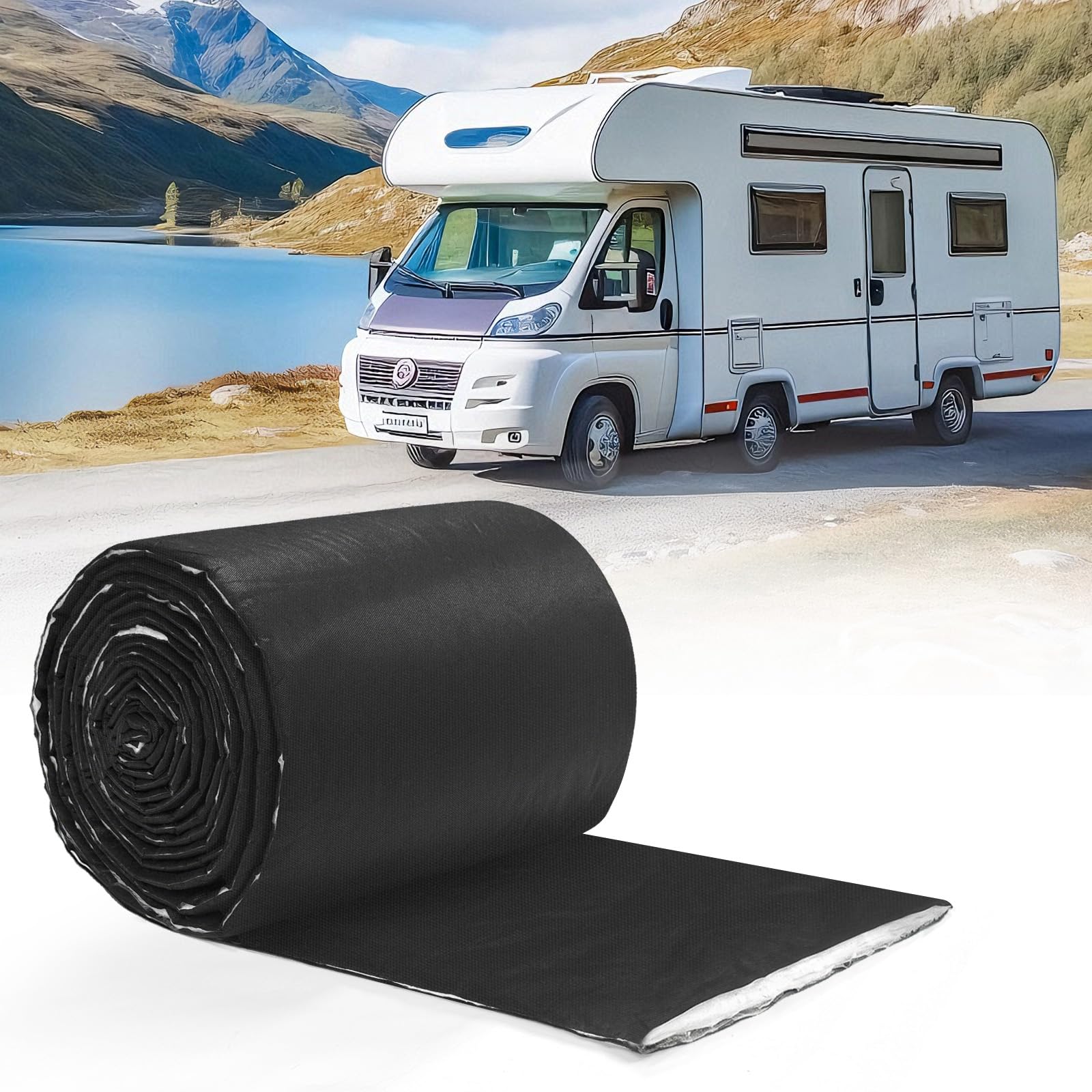
Type: Thermal and sound barrier roll
Dimensions: 16.5" x 315"
Material: Water-resistant insulation
Intended use: Van conversions, RVs, trucks
Water resistance: Yes
RV Camper Insulation Roll is the odd one out here, and deliberately so. It is not a flooring underlay — it is a thermal and sound barrier built for the walls, ceiling, and floor of a camper, van, or truck. The narrow 16.5-inch width is designed to weave between ribs and framing members, and the long 315-inch run covers a lot of surface without constant splicing.
For a van converter, this is the pick that addresses the actual problem: a metal shell that radiates cold in winter and bakes in summer. The water-resistant build matters in a vehicle, where condensation is a fact of life. The roll is also light enough to handle solo during a build-out.
Trade-off: The narrow width and vehicle-first sizing make it a poor fit for a standard room — buyers laying laminate in a house should look at the floor-specific picks instead.
ROBERTS Unison Premium 2-in-1 Underlayment

Type: 2-in-1 underlayment
Coverage: 100 sq ft
Brand: ROBERTS
Intended use: Flooring underlayment
Format: Roll
ROBERTS Unison Premium 2-in-1 Underlayment is the smallest roll in the lineup and the easiest to justify for a single room. ROBERTS is a name most flooring installers recognize, and the 2-in-1 design combines cushioning with a moisture barrier in one layer, which saves a step on a straightforward laminate or wood install.
The 100 sq ft coverage is the key number. It is enough for a bedroom, a small office, or a hallway — not enough for an open-plan living area. Buyers who are refreshing one room at a time, or who want to test a product before committing to a whole house, will find this the least risky entry point.
Trade-off: At 100 sq ft, the roll runs out fast on larger jobs, and buying multiple rolls pushes the per-square-foot cost above the bigger 200 sq ft options.
PRODURA 3-in-1 Advanced Foam Underlayment

Type: 3-in-1 advanced foam underlayment
Coverage: 200 sq ft
Thickness: 3mm
Included: Self-sealing lip and tape
Intended use: Laminate, vinyl, WPC, SPC, bamboo, engineered and solid hardwood
PRODURA 3-in-1 Advanced Foam Underlayment is the most broadly compatible pick here. The name lists laminate, vinyl, WPC, SPC, bamboo, engineered, and solid hardwood — which covers nearly every floating floor a homeowner is likely to install. The self-sealing lip and tape are the practical highlight: seams close without a separate tape roll, and the lip keeps the vapor barrier continuous across the floor.
The 3mm foam provides thermal and acoustic cushioning, and the 200 sq ft coverage matches the largest roll in the group. For a whole-floor renovation where the subfloor is flat and the planks are floating, this is a straightforward, low-fuss choice.
Trade-off: Foam at this thickness is a cushioning layer first and a thermal barrier second — buyers over a cold concrete slab should expect modest heat retention compared with a foil-faced product.
PolyFoam Multipurpose Foam Underlayment

Type: Multipurpose foam underlayment
Coverage: 100 sq ft roll
Intended use: Laminate and wood flooring
Properties: Moisture-resistant, shock-absorbing, lightweight
Origin: Made in USA
PolyFoam Multipurpose Foam Underlayment is the value pick, and the popularity figures back it up. The 100 sq ft roll covers a single room, the foam is lightweight and easy to cut with a utility knife, and the moisture-resistant build protects laminate and wood from below. Made in USA is a genuine selling point for buyers who care about domestic sourcing.
The shock-absorbing foam takes the harshness out of a hard floor underfoot and reduces impact noise between levels. It is the simplest product here to install — no foil facing, no self-sealing lip, just roll, cut, and lay. For a first-time installer or a tight budget, that simplicity has real value.
Trade-off: This is the most basic build in the lineup — no foil vapor barrier and no seam tape — so buyers over a damp slab should plan on a separate moisture barrier.
Before You Buy
- Material: Foam handles cushioning and impact noise; a foil face adds radiant heat reflection and a true vapor barrier. Match the material to the subfloor.
- Coverage: Measure the room and add 10 percent for cuts and waste. A 100 sq ft roll rarely finishes a room that measures close to 100 sq ft.
- Compatibility: Check the underlay against the specific floor type — laminate, vinyl, WPC, SPC, bamboo, engineered, or solid hardwood. Not every foam suits every floating floor.
- Subfloor: Concrete slabs and crawl spaces need a vapor barrier; a foil-faced or 2-in-1 product saves a separate layer.
- Included accessories: Self-sealing lips and seam tape are worth paying for — they keep the barrier continuous and cut install time.
- Installation: Foam underlay is cut with a utility knife and laid loose; plan the seams so they do not line up with plank joints.
Frequently Asked Questions
-
Does underlay with thermal properties actually keep a floor warmer?
Yes, to a degree. Foam slows heat transfer and a foil face reflects radiant heat back into the room. The effect is most noticeable over cold concrete or unheated spaces below. -
Can the same underlay be used for laminate and vinyl?
Only if the product name lists both. Some foams are rated for laminate and wood but not for rigid vinyl planks, so check compatibility before buying. -
How much underlay is needed for an average room?
A 100 sq ft roll covers a small bedroom or office; a 200 sq ft roll suits a living area. Always add 10 percent for cuts and waste. -
Is a separate vapor barrier still needed?
With a foil-faced or 2-in-1 product, usually not. With plain foam, over a damp slab, a separate barrier is the safer choice. -
Can the RV insulation roll be used under flooring in a house?
It is sized and built for vehicle walls, ceilings, and floors. For a room, a floor-specific underlay is the better fit. -
Does thicker underlay mean better thermal performance?
Not necessarily. Material and the presence of a foil vapor barrier matter more than a small difference in thickness.
Bottom Line
For most homeowners laying laminate, vinyl, or engineered wood, the 3-in-1 Acoustic Premium Floor Underlayment is the strongest all-round pick: 200 sq ft of coverage, a foil vapor barrier for genuine thermal performance, and seam tape in the box. Van and RV converters should go straight to the RV Camper Insulation Roll, and budget renovators working one room at a time will find the PolyFoam roll the easiest entry point.
