Why there are Amazon links here: Brave Review is paid a commission for qualifying Amazon purchases made through the links below. Your price does not change, and using our links is entirely optional. How this works
Best Carbon Monoxide Alarm for a Room with a Wood Burner: 5 Picks That Actually Belong There
A wood burner is a comfort until the flue or the draught goes wrong, and that is exactly the moment a carbon monoxide alarm has to work. This short roundup covers five alarms that suit the room the stove lives in: a plug-in unit with a battery backup, a plain battery model, a plug-in with digital readout, a sealed ten-year combo unit, and a combined CO and explosive-gas alarm. The plug-in-with-backup picks suit most stove rooms, the battery-only pick suits a wall with no outlet, and the sealed-battery combo suits a buyer who wants one unit on the ceiling and no battery swaps. The overview below puts the differences side by side, and each review explains who the alarm is wrong for as well as who it fits.
The Picks at a Glance
| Product | Key Spec | Best Use | Price Tier |
|---|---|---|---|
| Kidde Plug-in CO Detector with AA Battery Backup | Plug-in, AA backup, 85 dB | Most stove rooms with a free outlet | Budget |
| First Alert CO400 Battery CO Alarm | Battery only | Walls without power nearby | Lowest |
| First Alert CO606 Plug-in with 9V Backup | Plug-in, 9V backup | Bedrooms and living rooms | Budget |
| Heiman 10-Year Sealed Battery Combo | Sealed 10-year battery, smoke + CO | Ceiling coverage, no battery swaps | Mid |
| Kidde CO + Explosive Gas Alarm | Plug-in, 9V backup, digital display, gas detection | Stove rooms where propane or natural gas is also present | Premium |
Three alarms here are plug-ins, and that matters in a stove room: the outlet keeps the unit powered indefinitely, and the battery exists only for outages. Two run on batteries alone, which frees the position but puts the whole job on the cell. The one combo unit is the only smoke-and-CO alarm in the group, so it is the only one that can replace a ceiling smoke alarm at the same time.
Best Overall: Kidde Carbon Monoxide Detector, Plug-in with AA Battery Backup
Type: Plug-in carbon monoxide detector
Backup: AA battery
Alarm volume: 85 dB
Status indicators: LED status lights
Edition: 3rd Edition
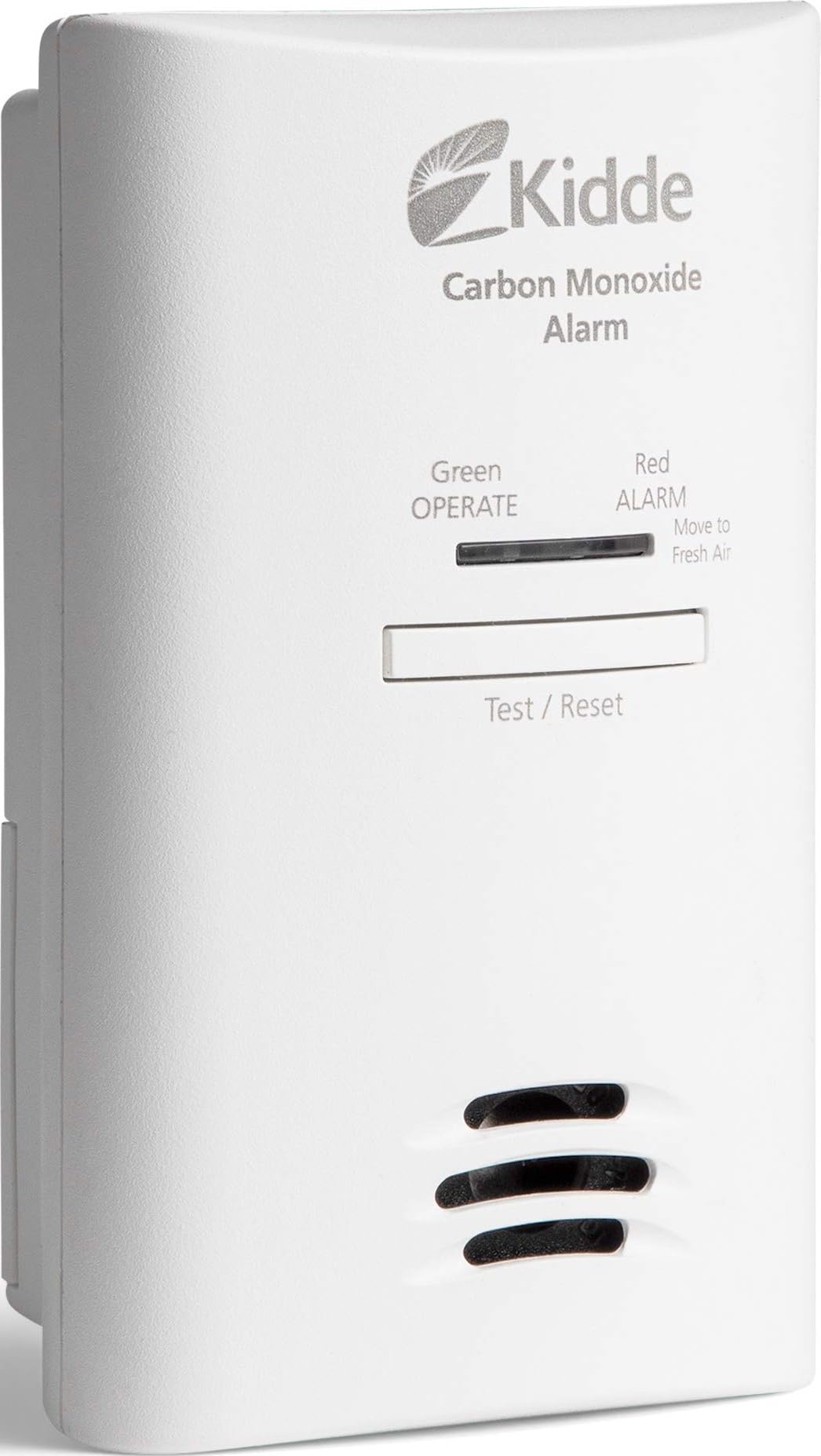
Kidde Carbon Monoxide Detector, Plug-in with AA Battery Backup
Check the current price on Amazon
The plug-in format keeps the unit running from the outlet, so the AA battery is a backup rather than the primary supply — a sensible arrangement in a room where a power cut during a storm is exactly when a blocked flue is most likely to be noticed late. The 85 dB alarm is loud enough to carry from a stove room into the next room, and the LED status indicators let a glance confirm the unit is powered and working. The 3rd Edition badge marks this as a current-generation Kidde model rather than old stock. It is the pick for the majority of stove rooms that have a free socket within reach.
This is the most straightforward choice for a stove room with an outlet near the hearth. It earned the top spot because plug-in power plus battery backup covers both the everyday case and the outage case, and the price sits in budget territory for a branded unit.
Trade-off: A plug-in alarm depends on a socket that stays live, and a switched outlet or a socket behind furniture quietly defeats the whole point without any warning.
Best Battery-Only: CO400 First Alert Battery Carbon Monoxide Alarm
Type: Battery-operated carbon monoxide alarm
Power source: Battery only
Brand: First Alert
Model: CO400

CO400 First Alert Battery Carbon Monoxide Alarm
Check the current price on Amazon
The CO400 is the simplest alarm in the group: a battery-powered First Alert unit with no cord and no outlet requirement. That makes it the one to choose for a wall where running a cord is awkward or where the nearest socket is already taken by a lamp or a stove fan. The lack of a plug-in mode also means the unit can sit at the height and position the installation guidance recommends rather than wherever the cable reaches. It is the cheapest way into a known brand for a second room or a backup position.
This pick suits a stove room with no convenient outlet, and it suits a buyer adding a second alarm rather than a first. It earned its place on price and placement freedom.
Trade-off: With battery as the only supply, the unit’s reliability rests entirely on the cell inside it, and a quiet dead battery leaves a room unprotected with no plug-in fallback.
Best Plug-in for Bedrooms and Living Rooms: First Alert CO606 Plug-in with 9V Backup
Type: Plug-in carbon monoxide alarm
Backup: 9V battery
Brand: First Alert
Model: CO606
CO606, 9V Battery Backup First Alert Plug in Carbon Monoxide Alarm
Check the current price on Amazon
The CO606 pairs a plug-in supply with a 9V battery backup, the same power logic as the Kidde above but in First Alert’s format. The 9V cell is a common, easy-to-find size, which simplifies the annual battery change that keeps the backup honest. Because it runs from the mains, it can sit in a bedroom or living room and stay powered without anyone thinking about it. It is a sensible second alarm for the rooms next to the stove, where a leak would travel while the household sleeps.
This pick suits the buyer who wants a plug-in alarm in a sleeping area and prefers First Alert’s styling. It earned its place as the bedroom-side companion to a stove-room alarm.
Trade-off: The plug-in body is bulky at the socket, so a double outlet can end up half-blocked, and the unit is only as good as the outlet it is left in.
Best Combo Unit: Heiman 10-Year Sealed Battery Smoke and CO Detector
Type: Smoke and carbon monoxide combination alarm
Power source: Sealed 10-year battery, not hardwired
Listings: ETL listed to UL 217 10th Ed. and UL 2034 5th Ed.
Sensor: Electrochemical CO
Alarm volume: 85 dB

Heiman 10-Year Sealed Battery Smoke and CO Detector
Check the current price on Amazon
This Heiman unit is the only alarm here that detects smoke and carbon monoxide in one body, and it does it on a sealed battery rated to last ten years. The electrochemical CO sensor is the standard type for domestic CO detection, and the ETL listings to UL 217 and UL 2034 name the smoke and CO standards the unit is tested against. Because it is not hardwired, it can go on a ceiling without an electrician, which makes it the practical upgrade for a room where the old smoke alarm is due for replacement anyway. The 85 dB alarm matches the rest of the group.
This pick suits the buyer who wants one ceiling unit covering both risks and no annual battery ritual. It earned its place as the only combo in the lineup and the only sealed-battery unit.
Trade-off: The sealed battery cannot be swapped, so the entire unit is replaced at end of life rather than refreshed with a cheap cell, and the combo body is larger than a CO-only alarm.
Best for Gas Appliances Too: Kidde Carbon Monoxide + Explosive Gas Alarm
Type: Plug-in carbon monoxide and explosive gas alarm
Detection: Carbon monoxide, natural gas, propane
Backup: 9V battery
Display: Digital display
Alarm volume: 85 dB
Indicators: LED status lights

Kidde Carbon Monoxide + Explosive Gas, Natural Gas & Propane Alarm
Check the current price on Amazon
This Kidde unit adds explosive gas detection for natural gas and propane to the usual carbon monoxide function, which is relevant in a stove room that also holds a gas hob, a gas fire or a propane cylinder. The digital display gives a readable CO level rather than a light alone, and the 9V backup keeps it alive through an outage. It is a plug-in with the same 85 dB alarm and LED indicators as the standard Kidde above. The 3rd Edition badge puts it in the current generation.
This pick suits a household where the wood burner shares space with any gas appliance, and where seeing an actual reading is worth paying for. It earned its place as the premium option for a room with more than one combustion risk.
Trade-off: The extra gas sensor pushes the price well above a CO-only alarm, and a buyer with no gas appliance in the house pays for a function that will never trigger.
Before You Buy
- Placement: Fit the alarm at the height and distance from the stove that the unit’s own instructions specify, and keep it out of the direct plume above the firebox.
- Power source: A plug-in with battery backup covers outages; a battery-only unit depends entirely on the cell, so weigh where the nearest live outlet sits.
- Backup battery size: AA and 9V cells are cheap and easy to find, while a sealed ten-year battery means replacing the whole unit at end of life.
- Coverage: One alarm per room with a fuel-burning appliance is the sensible baseline, and a second unit outside sleeping areas is worth the small extra spend.
- Detection scope: A CO-only alarm covers the stove; a combo or explosive-gas model covers smoke or a gas leak as well, and costs more for it.
- Listings: Check that the unit names the relevant UL standard in its product name, as the Heiman combo does, rather than relying on a generic safety claim.
- Maintenance: Test the unit on the schedule in its manual, and keep the vents free of soot and dust, which a stove room produces in quantity.
Frequently Asked Questions
-
Where should a carbon monoxide alarm go in a room with a wood burner?
Follow the manufacturer’s placement instructions, which normally put the unit at breathing height and away from the immediate plume above the stove. A plug-in unit should go in a socket that stays live at all times. -
Is a plug-in or battery alarm better for a stove room?
A plug-in with battery backup is the safer default because it stays powered in normal use and falls back to the cell in an outage. A battery-only unit is the better fit only when no suitable outlet exists. -
Does a wood burner need a carbon monoxide alarm by law?
Requirements vary by state and by property type, so check local rules. Regardless of the legal position, a CO alarm in the stove room is cheap insurance against a blocked flue or poor draught. -
Can one alarm cover both smoke and carbon monoxide?
Yes — the Heiman combo unit detects both and runs on a sealed ten-year battery. A CO-only alarm leaves smoke detection to a separate unit. -
Why does the alarm need a digital display?
A display shows a CO reading rather than only an alarm state, which helps a household judge whether a low-level reading is rising. It is a convenience, not a substitute for the alarm itself. -
How often should the battery be changed?
Change the backup cell on the schedule in the unit’s manual, and test the alarm at the same time. A sealed-battery model removes the task by making the whole unit the replacement interval.
Bottom Line
For most stove rooms, the Kidde Plug-in Carbon Monoxide Detector with AA Battery Backup is the pick: mains power for everyday reliability, an AA backup for outages, and a price that makes a second unit painless. Buyers with no outlet nearby should take the CO400, and anyone whose stove room also holds a gas appliance should step up to the Kidde explosive-gas model.
