Why there are Amazon links here: Brave Review is paid a commission for qualifying Amazon purchases made through the links below. Your price does not change, and using our links is entirely optional. How this works
DESLOC C100 Keyless Entry Door Lock: Code Access Without the Smart-Home Price
The DESLOC C100 is a keyless entry deadbolt for buyers who want code-based access at the front door without paying for Wi-Fi, apps or a full smart-home platform. It suits rental hosts, families handing out temporary codes and anyone tired of hiding a spare key. This review covers its build, its code capacity, its power and maintenance needs, and where the low price shows.
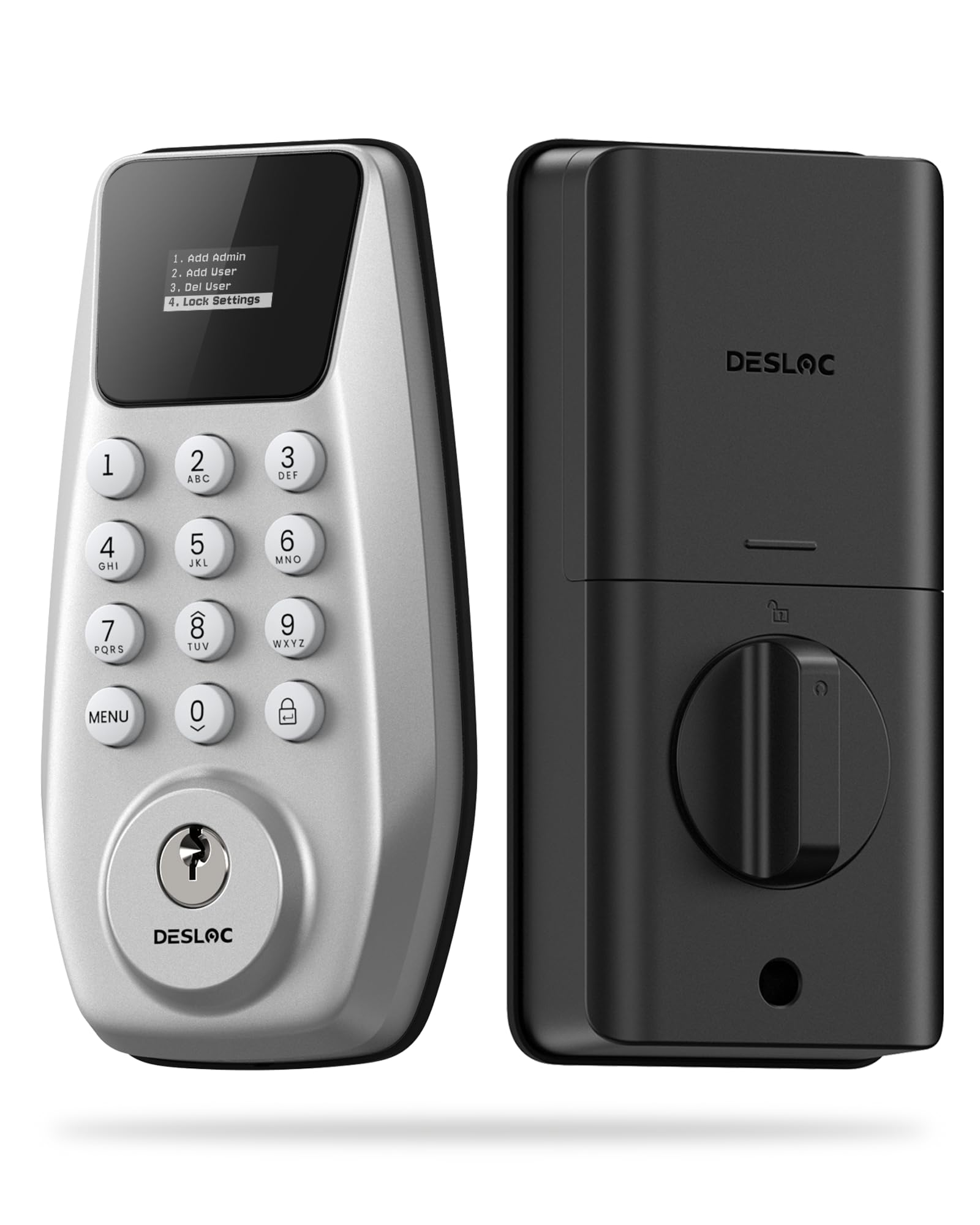
Features and Specifications
Type: Keyless entry door lock with visual display
Code Capacity: 100 customizable user codes plus 4 one-time codes
Battery Life: 12 months
Weather Rating: IP54
Security Rating: BHMA Grade 3
Finish: Silver
Installation: Easy installation, standard door prep
The headline number is 100 customizable user codes. That is far more than most households need, which tells the buyer who this lock is aimed at: short-term rental hosts, small offices, property managers and anyone who hands out access regularly and wants to revoke it just as regularly.
The four one-time codes are the other useful piece. A one-time code lets a cleaner, a dog walker or a delivery handoff get through the door once, then stops working. That is a feature normally found on locks costing several times as much.
Build and Security Rating
BHMA Grade 3 is the entry-level tier of the Builders Hardware Manufacturers Association scale, and it is the honest way to read this lock. Grade 3 hardware is rated for residential use and lighter duty than Grade 1 or Grade 2 commercial hardware. For a home front door, that is a normal and reasonable spec.
The practical meaning is that the DESLOC C100 is built for a house, not a busy storefront. Buyers should expect a solid residential deadbolt rather than a heavy commercial lock, and they should not expect the lock to shrug off sustained physical attack the way a Grade 1 unit would.
The silver finish is a plain, neutral choice that blends with most door hardware. It is not a designer statement, and buyers shopping for a specific finish to match a renovated entryway should check the color against their existing handle set before ordering.
Code Capacity and the Visual Display
The visual display is what separates this lock from a bare keypad. A screen lets the user see the code being entered, manage settings, and confirm changes without guessing at beep patterns. For buyers who find keypad-only locks frustrating, the display is the reason to pick this model.
One hundred codes sounds excessive for a single family, and for most homes it is. The feature pays off in shared or rotating-use situations: a host can assign a code per booking, a manager can issue codes per unit, and a household can give every family member and regular visitor a distinct code. Revoking one code does not disturb the others.
The four one-time codes work differently. They are designed for single use and then expire, which is exactly what a short visit or a one-off service call needs. The limit of four is worth noting: a buyer who wants a steady stream of temporary access will be assigning and reassigning those slots rather than generating unlimited single-use codes.
Power and Battery Life
The lock runs on battery power with a stated 12-month battery life. That figure assumes normal use, and a household that enters dozens of times a day will likely see shorter life than a guest house used a few times a week. Either way, annual battery changes are a manageable maintenance rhythm.
The caution here is planning, not the product. A battery-powered keyless lock needs a backup plan for the moment the battery dies. The name does not state a low-battery warning or an external power option, so buyers should keep a physical key or a second entry route available and treat the battery schedule as a household chore rather than an afterthought.
Installation and Auto Lock
Easy installation is part of the product name, and the lock is designed around standard door prep rather than a proprietary cutout. Buyers replacing an existing deadbolt should find the swap straightforward, though anyone cutting a fresh hole in a solid door should still expect the usual drilling and alignment work.
Auto lock is the feature that quietly matters most. The door relocks itself after closing, which removes the most common keyless-lock failure: a door left unlocked because nobody remembered to press the button. For rentals and for households with children, auto lock turns a good habit into a default.
The trade-off is that auto lock can surprise a household used to leaving a door open for a moment. Buyers who prop the door for deliveries or pets will want to confirm the lock’s settings before relying on it day to day.
Trade-off: The low price buys residential-grade hardware and no smart-home connectivity, so buyers who want app control, remote unlocking or integration with a home system should look at a connected lock instead.
Check the current price of the DESLOC C100 on Amazon
Who the DESLOC C100 Suits
The strongest fit is a short-term rental host or a property manager who needs many codes and a handful of one-time codes without paying for a subscription or a hub. The 100-code capacity and the four one-time slots do the work that app-based locks charge a premium for.
The second fit is a busy household that wants to stop hiding a spare key. Every family member gets a code, the door locks itself, and nobody has to remember a key on the way out. The display makes the setup readable for people who do not want to learn a keypad’s beep language.
It is a weaker fit for buyers who expect the lock to appear in a phone app. There is no stated Wi-Fi or Bluetooth capability here, so remote unlocking, guest-code scheduling from another city and voice-assistant integration are out of scope. Buyers who need those features are shopping in a different tier.
It is also a weaker fit for a commercial door or a building with heavy daily traffic. BHMA Grade 3 is a residential rating, and a lock at this price is built for a home’s use pattern rather than a storefront’s.
FAQ
-
Is the DESLOC C100 a smart lock?
No. It is a keyless entry lock with codes and a visual display. No Wi-Fi, Bluetooth or app control is stated, so it works as a standalone keypad lock rather than a connected smart lock. -
How many codes can the DESLOC C100 store?
It holds 100 customizable user codes plus 4 one-time codes. That is enough for a large household, a rental property or a small managed building with rotating guests. -
What is a one-time code used for?
A one-time code grants a single entry and then stops working. It suits a cleaner, a contractor, a pet sitter or a one-off delivery handoff where permanent access is not wanted. -
How long does the battery last?
The stated battery life is 12 months. Heavy daily use will shorten that, so buyers should plan a battery check on a yearly schedule. -
What does BHMA Grade 3 mean?
It is the entry tier of the BHMA security scale and is rated for residential use. It is a normal spec for a home deadbolt, not a commercial-grade rating. -
Is the DESLOC C100 weather resistant?
Yes, it carries an IP54 rating. That covers dust and splashing water, which suits a covered or sheltered exterior door. Buyers on a fully exposed door in driving rain should still consider how much weather the entryway actually sees. -
Does the lock relock itself?
Yes. Auto lock is part of the design, so the door relocks after closing. That is useful for rentals and for households with children. -
Can the DESLOC C100 be installed on an existing door?
It is built for easy installation and standard door prep. Replacing an existing deadbolt is the straightforward case; cutting a new hole in a solid door is a bigger job. -
Who should not buy this lock?
Buyers who need app control, remote unlocking or home-system integration, and buyers fitting a commercial door with heavy traffic. Both groups need a different tier of lock. -
Does the DESLOC C100 come with a physical key backup?
The product name does not list a keyed backup, so buyers should confirm the backup entry method before relying on the lock as the only way in.
Bottom Line
The DESLOC C100 is the right buy for a rental host or a busy household that wants code access, one-time codes and auto lock without a subscription or a smart-home setup. Its 100-code capacity and visual display are genuinely useful at this price tier, and its BHMA Grade 3 residential rating is honest about what it is. Buyers who need app control or commercial-grade hardware should spend more elsewhere; everyone else can check the current price on Amazon.
