Why there are Amazon links here: Brave Review is paid a commission for qualifying Amazon purchases made through the links below. Your price does not change, and using our links is entirely optional. How this works
Best Power Station for a Shed with a Freezer
A shed freezer is a small, steady load, but it is a load that cannot wait. This roundup covers five power stations that can sit in a shed or garage and keep a chest or upright freezer cold through an outage, a storm, or a long weekend away. The picks split into three groups: large-capacity home-backup units for whole-freezer protection, mid-size units for shorter outages, and one compact fast-charge model for short trips and light emergency duty. The overview table below lists each pick with its key spec and best use, and the reviews follow.
Overview of the Picks
| Product | Key Spec | Best Use | Price Tier |
|---|---|---|---|
| Jackery HomePower 3600 Plus | 3584Wh, 3600W | Whole-shed backup, expandable | Premium |
| Jackery HomePower 3000 | 3072Wh, 3600W | Large freezer, long outages | Premium |
| DYNESS Portable Power Station | 2048Wh, 2400W | Mid-size freezer, balanced price | Mid |
| DABBSSON 2000L | 2048Wh, 2200W | Fast recharge, mixed loads | Mid |
| BLUETTI Elite 30 V2 | 288Wh, 600W | Short outages, portability | Budget |
Jackery HomePower 3600 Plus

Battery Type: LFP (LiFePO4)
Capacity: 3584Wh
AC Output: 3600W
Expandable: Up to 21kWh
Intended Use: Home backup, emergencies, RV
Solar Panel: Optional
The HomePower 3600 Plus is the largest unit here, built on an LFP battery that is rated for long service life and tolerates being kept at partial charge. Its 3584Wh capacity and 3600W AC output are enough to run a shed freezer alongside lights, a radio, and a power tool charger without tripping the unit. The expandable design is the real distinction: buyers can add battery modules later, up to a combined 21kWh, so the system grows with the shed instead of being replaced. It is aimed at homeowners who want one box that can back up a freezer and a few household circuits.
This pick earns its place for anyone who wants headroom. A freezer that runs for hours on a large reserve, with capacity to spare for a second freezer or a fridge, is the whole point of a unit this size. The trade-off is that a station this large and heavy is a permanent fixture rather than something carried between the shed and the house, and the premium price reflects the expandable architecture.
Trade-off: The size and cost put it out of reach for buyers who only need to cover a short outage.
Jackery HomePower 3000
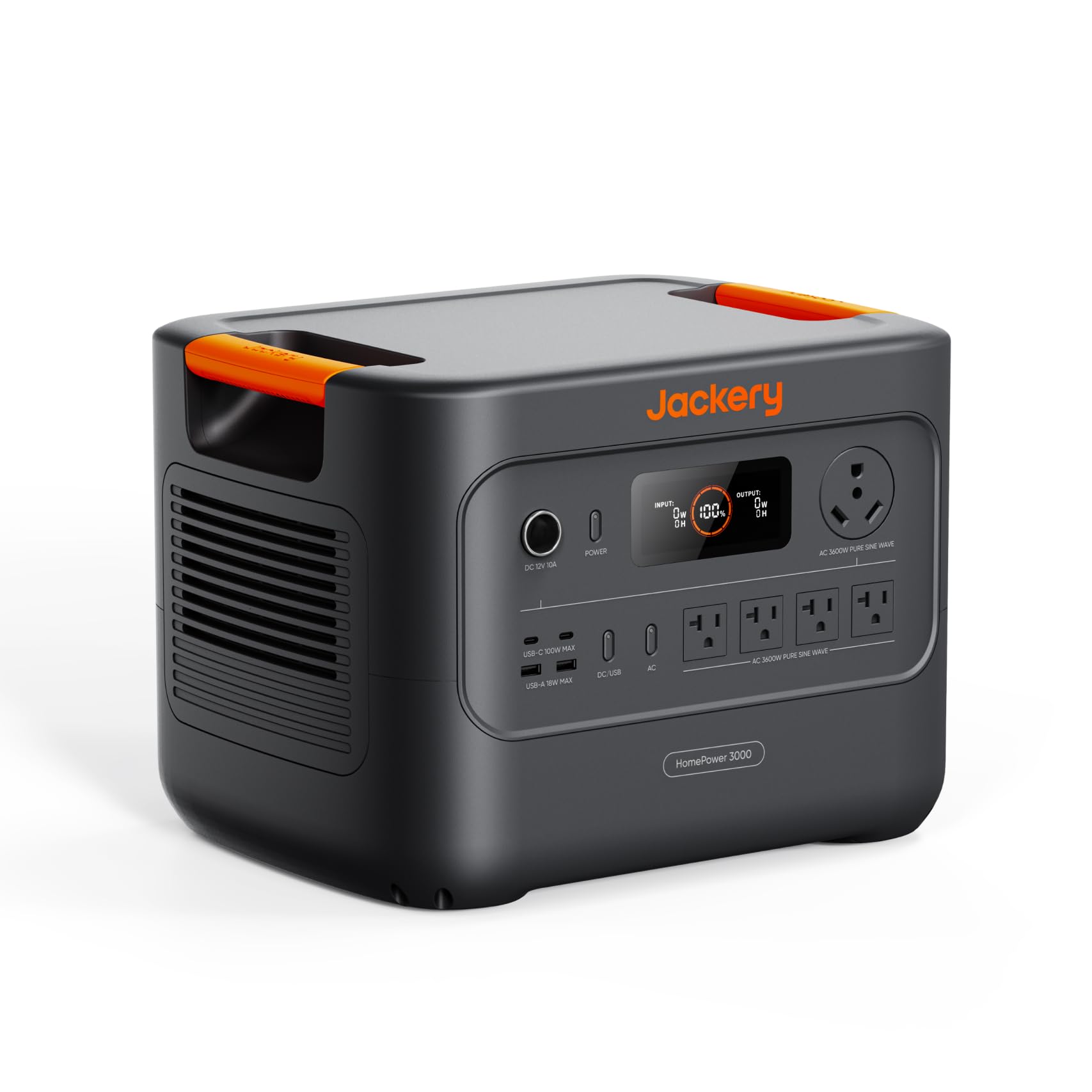
Battery Type: LFP (LiFePO4)
Capacity: 3072Wh
AC Output: 3600W
Surge Output: 7200W
Intended Use: Home backup, power outages
Solar Panel: Optional
The HomePower 3000 pairs a 3072Wh LFP battery with a 3600W AC output and a 7200W surge rating, which matters for appliances that pull a hard spike at startup. A freezer compressor is exactly that kind of load, and the surge headroom means the unit can absorb the kick without shutting down. LFP chemistry keeps the battery stable through long storage periods in an unheated shed. The unit is designed for home backup during outages and slots naturally into a shed or garage setup.
Buyers who want near-flagship capacity without the expandable premium should look here. It covers a full-size freezer for an extended outage and still has room for a few small loads, and the surge rating gives it an edge with older, harder-starting compressors. The trade-off is that it is still a heavy, premium-priced unit, and buyers who never plan to add batteries may find the 3600 Plus offers more future flexibility for a similar outlay.
Trade-off: It is heavy and expensive for a shed-only role, and the fixed capacity cannot be expanded later.
DYNESS Portable Power Station
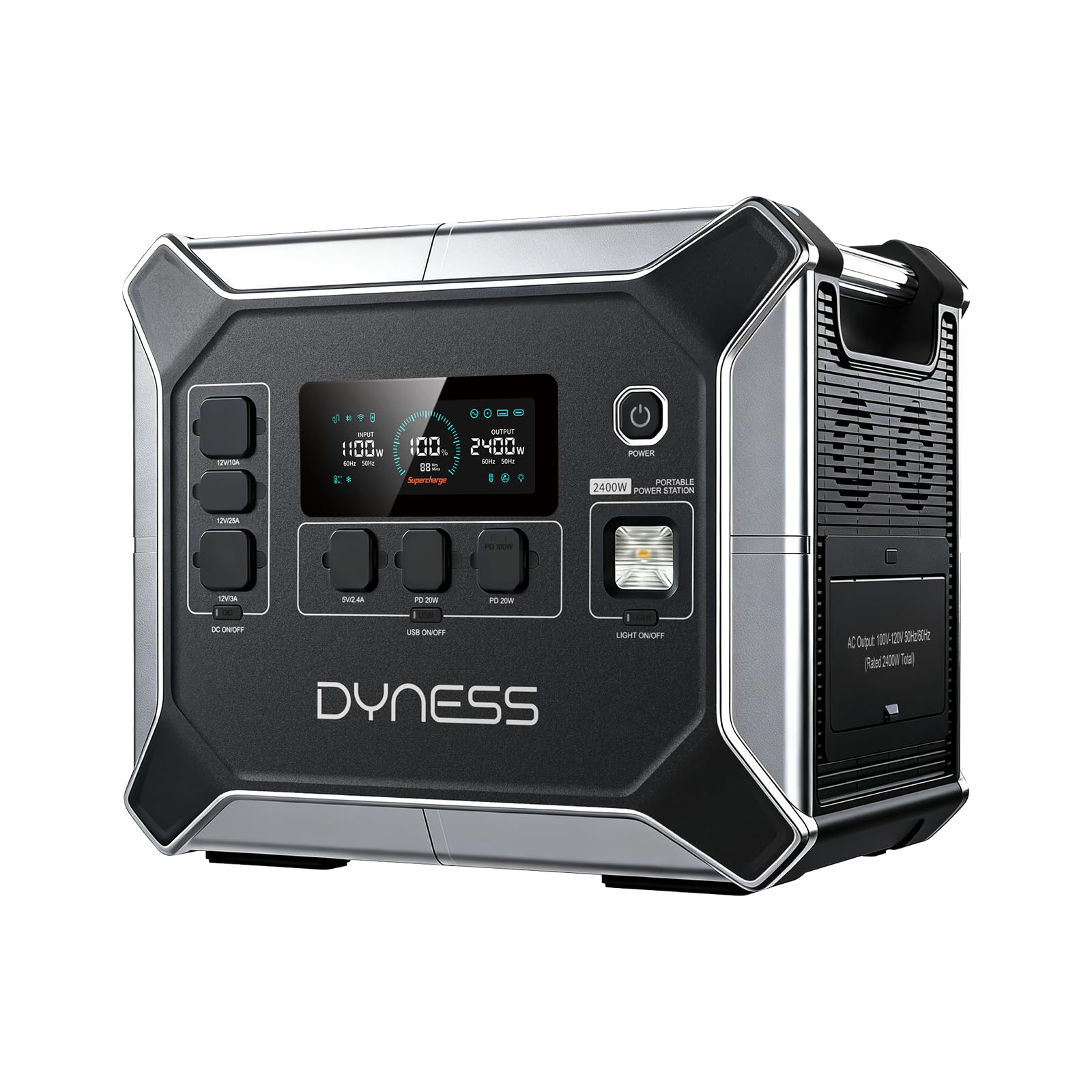
Battery Type: LiFePO4
Capacity: 2048Wh
AC Output: 2400W
Intended Use: Portable power, home backup
Solar Panel: Optional
DYNESS Portable Power Station, 2048Wh, 2400W Output, LiFePO4 Battery
The DYNESS station sits in the middle of the range with a 2048Wh LiFePO4 battery and a 2400W AC output, a combination that covers a standard shed freezer plus a work light and a battery charger. The LiFePO4 cells are the same long-life chemistry used by the premium picks, so buyers are not giving up battery durability to save money. The output is lower than the Jackery units, which is the main practical difference. It is built for portable power with home backup as a secondary role.
This is the pick for a shed owner who wants a real reserve without paying flagship prices. It handles a freezer through a typical outage and can be wheeled or carried to the house if needed. The trade-off is the lower 2400W output: a freezer plus a high-draw tool on the same circuit may exceed what the unit can deliver, so buyers should stagger loads rather than run everything at once.
Trade-off: The 2400W ceiling limits simultaneous loads compared with the larger units.
DABBSSON Portable Power Station 2000L
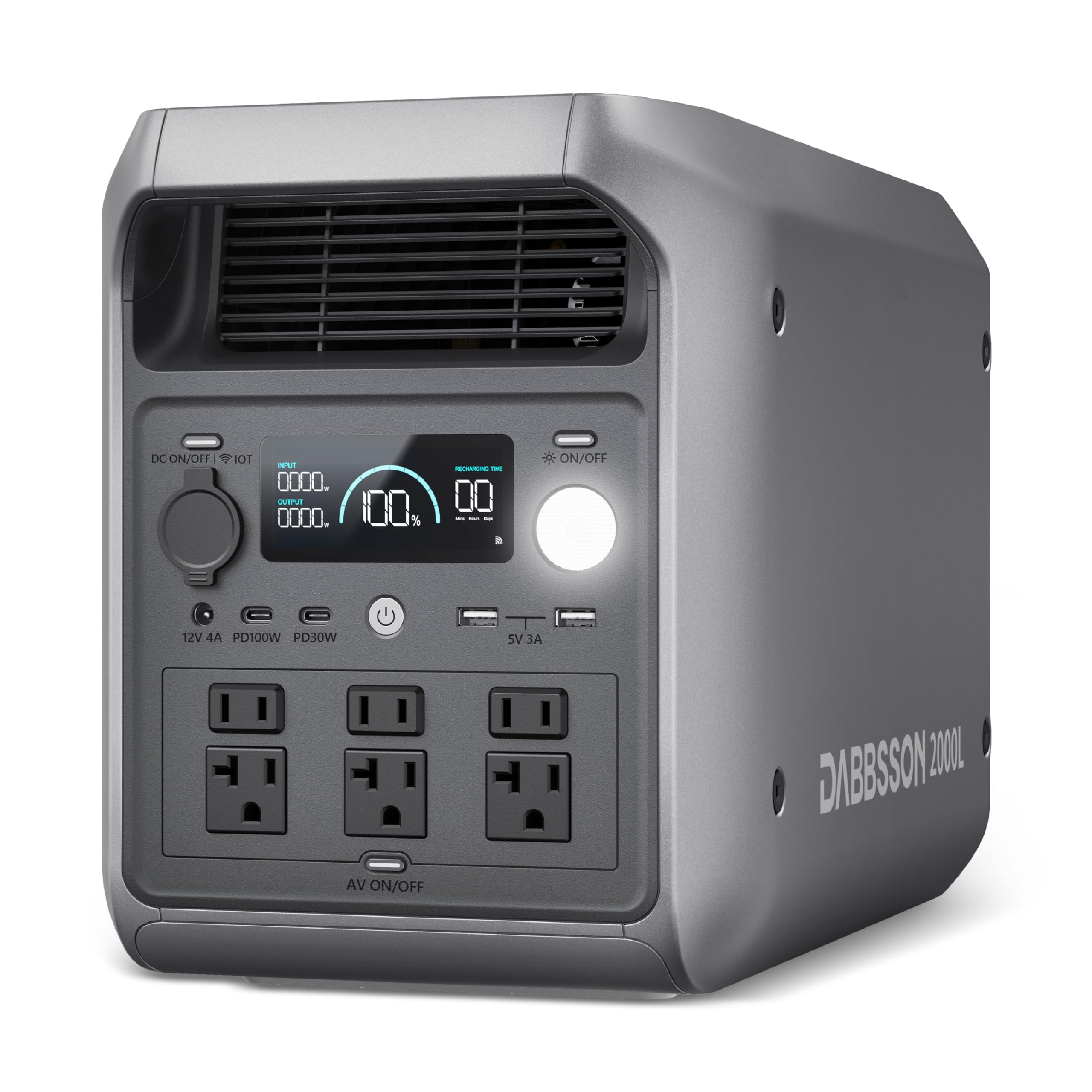
Battery Type: Semi-Solid LiFePO4
Capacity: 2048Wh
AC Output: 2200W
Power Boost: 3300W
Charge Time: 1 hour fast charge
Intended Use: Home backup, camping, RVs
Solar Panel: Optional
The DABBSSON 2000L matches the DYNESS on capacity at 2048Wh but uses a semi-solid LiFePO4 battery and adds a 3300W power boost mode on top of its 2200W rated output. The boost is useful for compressor startup surges, and the one-hour fast charge is a genuine convenience for a shed that has grid power most of the time. It is marketed for home backup, camping, and RVs, which fits a shed that doubles as a workspace. The semi-solid cell design is the notable build difference.
The fast charge is what earns this pick its place. A shed owner who wants the station topped up and ready between outages can plug it in and have it back to usable charge quickly, which removes the main excuse for leaving a backup unit flat. The trade-off is that boost modes are temporary by design, so sustained heavy loads should be planned around the rated output rather than the peak figure.
Trade-off: The boost rating is a short-term allowance, not a continuous output, so load planning matters.
BLUETTI Elite 30 V2
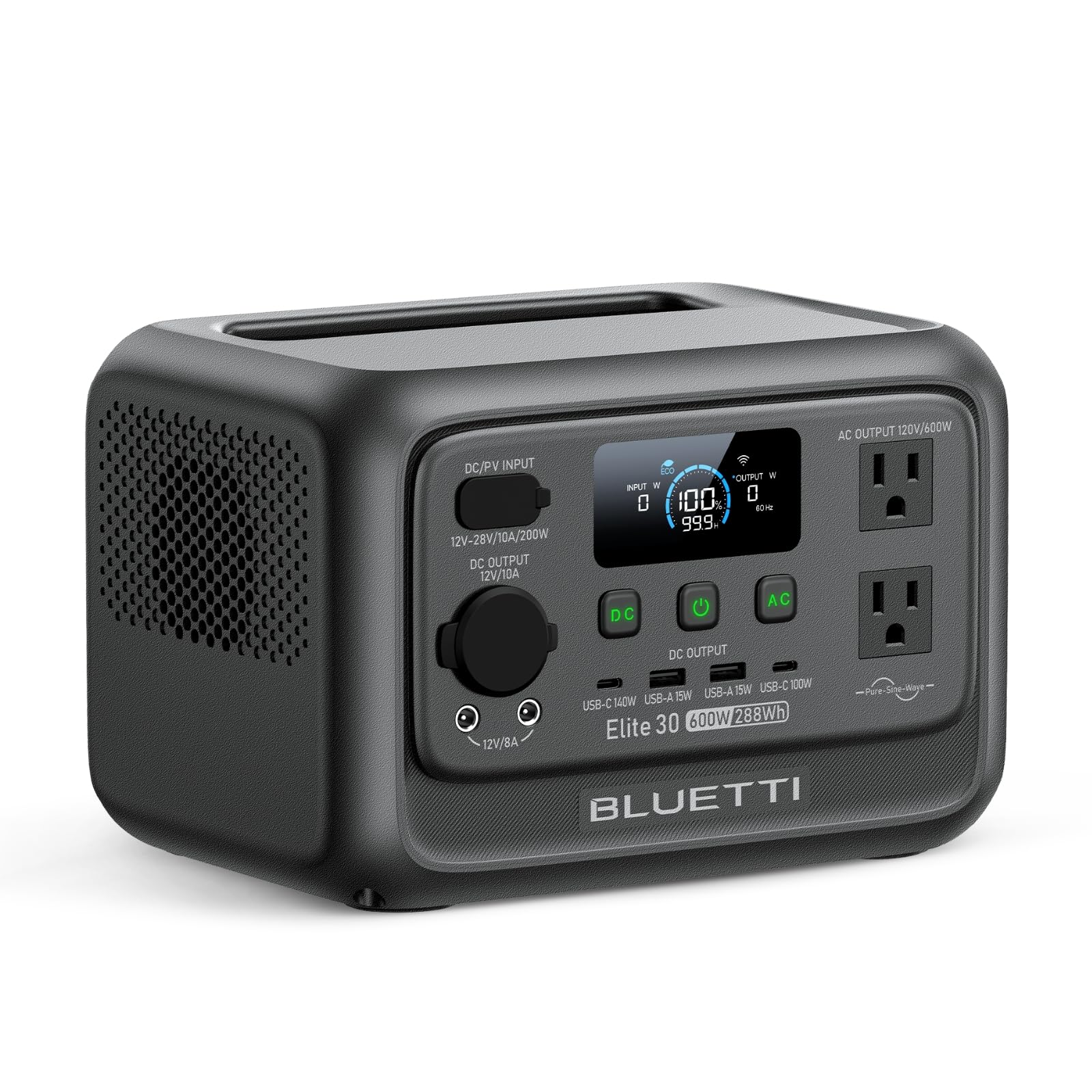
Battery Type: LFP
Capacity: 288Wh
AC Output: 600W
Power Lifting: 1500W
UPS Switchover: 10ms
Charge Time: 45 min to 80%
Intended Use: Blackout backup, camping, road trips
The Elite 30 V2 is a compact LFP unit with 288Wh of capacity and a 600W AC output, plus a 10ms UPS switchover and a 45-minute charge to 80%. Those specs point to a different job than the big stations: it is a grab-and-go box for short outages, road trips, and keeping a small load alive until the main system takes over. The UPS function means it can sit inline and switch fast enough for sensitive electronics. It is the most portable and most affordable pick here.
This pick suits buyers who want a shed freezer covered for a brief interruption rather than a multi-day event, or who want a backup that can be carried to the house. Its popularity reflects how many people want a small, cheap insurance policy. The trade-off is capacity: 288Wh will not carry a freezer for long, so it is a stopgap rather than a solution for extended outages.
Trade-off: The small battery limits it to short outages and light loads, not multi-day freezer protection.
Before You Buy
- Capacity: Match watt-hours to the freezer’s daily draw and the outage length expected; a large chest freezer needs far more reserve than a small one.
- Surge output: Freezer compressors spike at startup, so a unit’s surge rating matters as much as its continuous output.
- Battery chemistry: LFP and semi-solid LiFePO4 cells tolerate long storage and partial charging better than older chemistries, which suits a shed that sits idle for months.
- Recharge options: A fast-charge unit recovers quickly from grid power; solar input is worth having for sheds without reliable electricity.
- Placement: These units are heavy at the top end, so plan a permanent spot with ventilation rather than moving them often.
- Temperature: Sheds swing from hot to freezing; check the unit’s operating range before leaving it installed year-round.
- Load planning: Run the freezer first and add other loads only within the unit’s rated output, not its boost figure.
Frequently Asked Questions
-
How long will a power station run a freezer?
Runtime depends on the freezer’s draw and the unit’s capacity; a 2000Wh-class station covers a typical freezer for a meaningful stretch of an outage, while a 288Wh unit is a short stopgap. -
Is a power station safe to keep in a shed?
LFP-based units are stable and sealed, but they should be kept dry, ventilated, and within the manufacturer’s operating temperature range. -
Do these units need a solar panel?
No. All five can recharge from a standard outlet; solar panels are optional and mainly useful for sheds without reliable grid power. -
Can a power station run a freezer and a fridge at once?
The larger units here can, but the mid-size and compact picks should be limited to the freezer plus small loads to stay within rated output. -
What is the difference between rated output and surge output?
Rated output is what the unit sustains; surge output is a brief allowance for motor startup, which is what a freezer compressor needs. -
Should the station stay plugged in?
For UPS-style use, yes; otherwise charge it periodically and store it partially charged, which LFP chemistry handles well.
Bottom Line
For a shed freezer, the Jackery HomePower 3600 Plus is the top pick: its 3584Wh LFP battery, 3600W output, and expandability to 21kWh give the most headroom for long outages and future growth. Buyers who want flagship capacity without the expansion premium should look at the HomePower 3000, while the DYNESS and DABBSSON cover mid-size needs and the BLUETTI Elite 30 V2 handles short interruptions.
