Why there are Amazon links here: Brave Review is paid a commission for qualifying Amazon purchases made through the links below. Your price does not change, and using our links is entirely optional. How this works
Best Portable Power Station for a Holiday Let Between Guests
A holiday let turns over fast, and the gap between guests is when the cleaning, the laundry and the last-minute fixes have to happen. A portable power station keeps that window working when the mains, the sockets or the fuse board get in the way. The five picks below cover three buyer profiles: the owner running a small flat who wants a light, quiet backup, the host with a bigger property who needs serious output, and the budget-conscious landlord who wants reliable basics without overspending. The overview table below ranks every pick by what it does best, so the right one is usually obvious within a minute.
Overview of the Picks
| Product | Key Spec | Best Use | Price Tier |
|---|---|---|---|
| Jackery Explorer 300 | 292Wh, LiFePO4 | Light backup and travel between properties | Budget |
| BLUETTI Elite 30 V2 | 288Wh / 600W, 10ms UPS | Small flat, router and lighting backup | Budget |
| Portable Power Station 640Wh | 640Wh / 1200W surge, 8 ports | Mid-size let with several devices | Mid-range |
| EF ECOFLOW Delta 3 Classic | 1024Wh / 1800W, 100W USB-C | Larger property, appliances and RVs | Premium |
| BLUETTI Elite 100 V2 | 1024Wh / 1800W, compact body | Hosts short on storage space | Premium |
Jackery Explorer 300 Portable Power Station, 292Wh
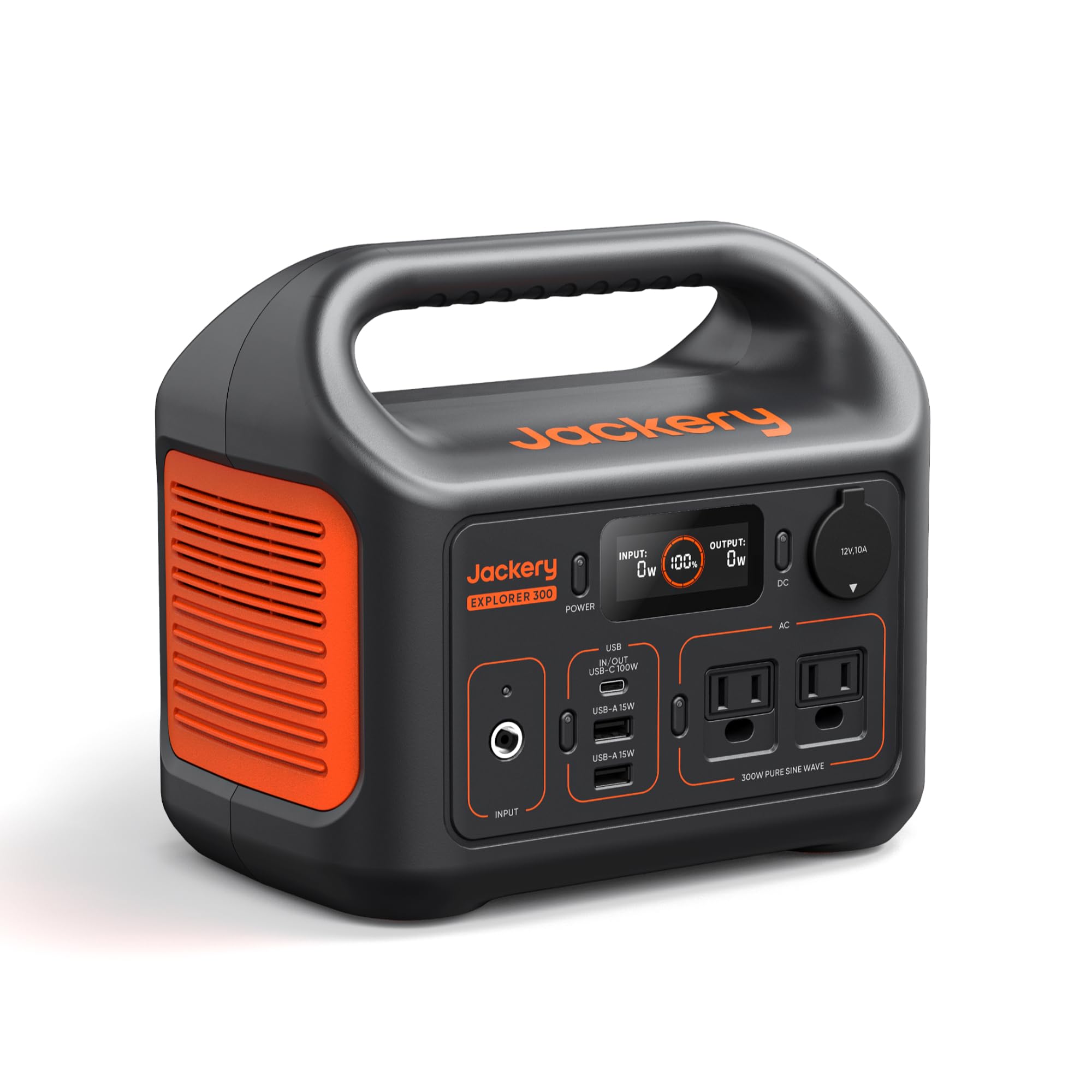
Battery Type: LiFePO4
Capacity: 292Wh
Intended Use: Outdoors, camping, travel, hunting, blackout
Solar Input: Solar panel optional
Best For: Light backup and portable use between lets
Jackery Explorer 300 Portable Power Station,292Wh
The Explorer 300 is the smallest and most travel-friendly unit here, built around a LiFePO4 battery in a compact shell that a host can carry from the car to the flat without a trolley. It suits the owner who needs a quiet source for a router, a lamp, a phone charger or a small fan during a turnaround, and it can be topped up from an optional solar panel on site. The popularity figures suggest it is the default first power station for a lot of households, which fits its role as a low-risk starter unit.
It earns its place as the budget pick because it covers the basics without demanding much space or setup. The trade-off is capacity: 292Wh will not run a kettle, a heater or anything with a heavy heating element, so buyers expecting whole-property backup should look at the larger units below.
BLUETTI Elite 30 V2 Portable Power Station, 288Wh 600W
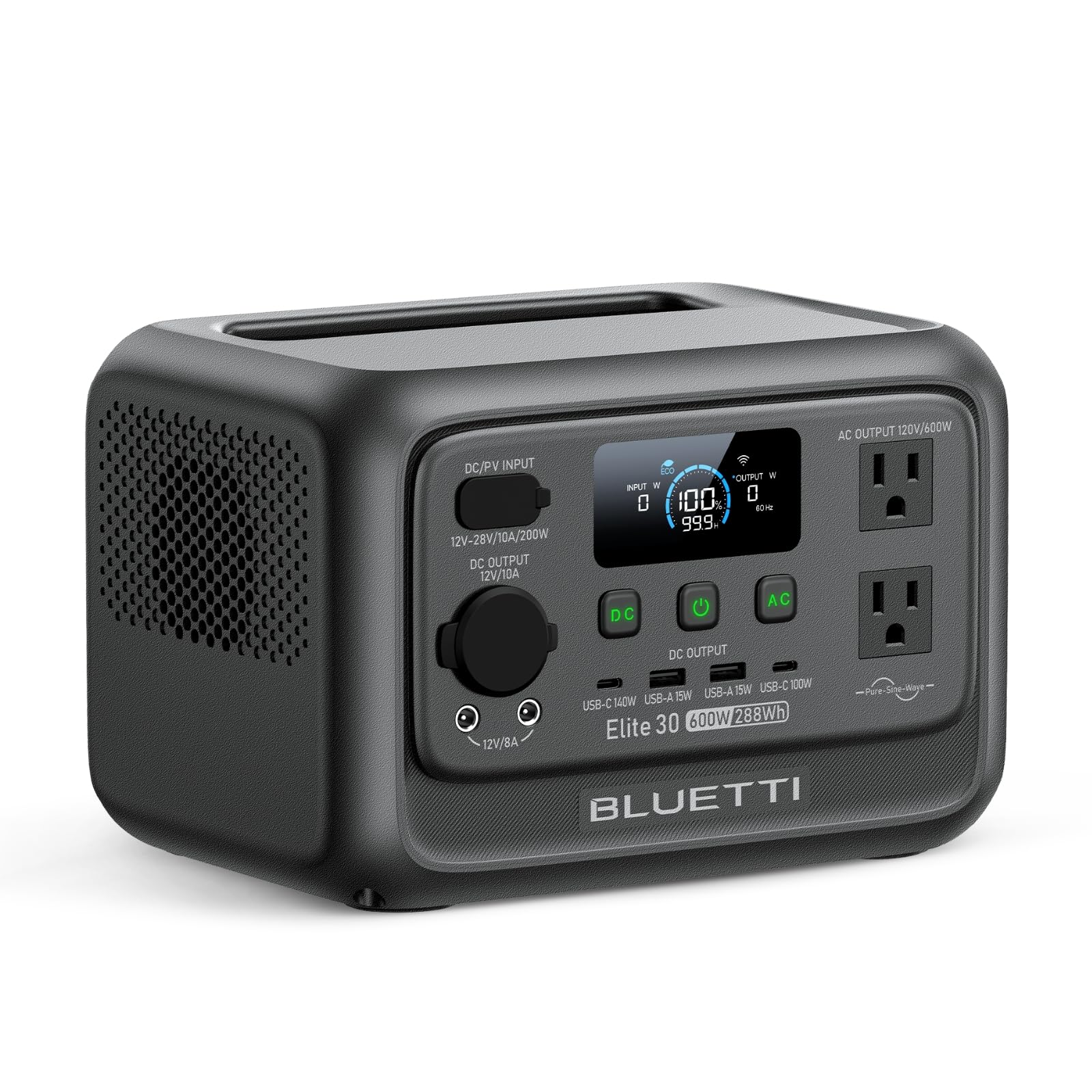
Battery Type: LFP (LiFePO4)
Capacity: 288Wh
AC Output: 600W
UPS Switchover: 10ms
Recharge Time: 45 min to 80%
Best For: Small flat, router and lighting backup
The Elite 30 V2 is a small LFP unit with a 10ms UPS mode, which means it can sit behind a router or a key appliance and take over almost instantly when the mains drops. The 45-minute fast charge to 80% is a genuine advantage between guests — a host can plug it in during the clean and have it ready before the next arrival. Its 600W AC output covers lights, laptops, a TV and small kitchen gadgets, and the 288Wh capacity keeps it in the same lightweight class as the Jackery.
This is the pick for the host of a small flat or studio who wants a quiet, always-ready backup that does not need a dedicated cupboard. The trade-off is that the fast-charge and UPS features come at a price premium over plain budget units, and 600W still will not touch high-draw appliances like kettles or space heaters.
Portable Power Station 640Wh, 1200W Surge
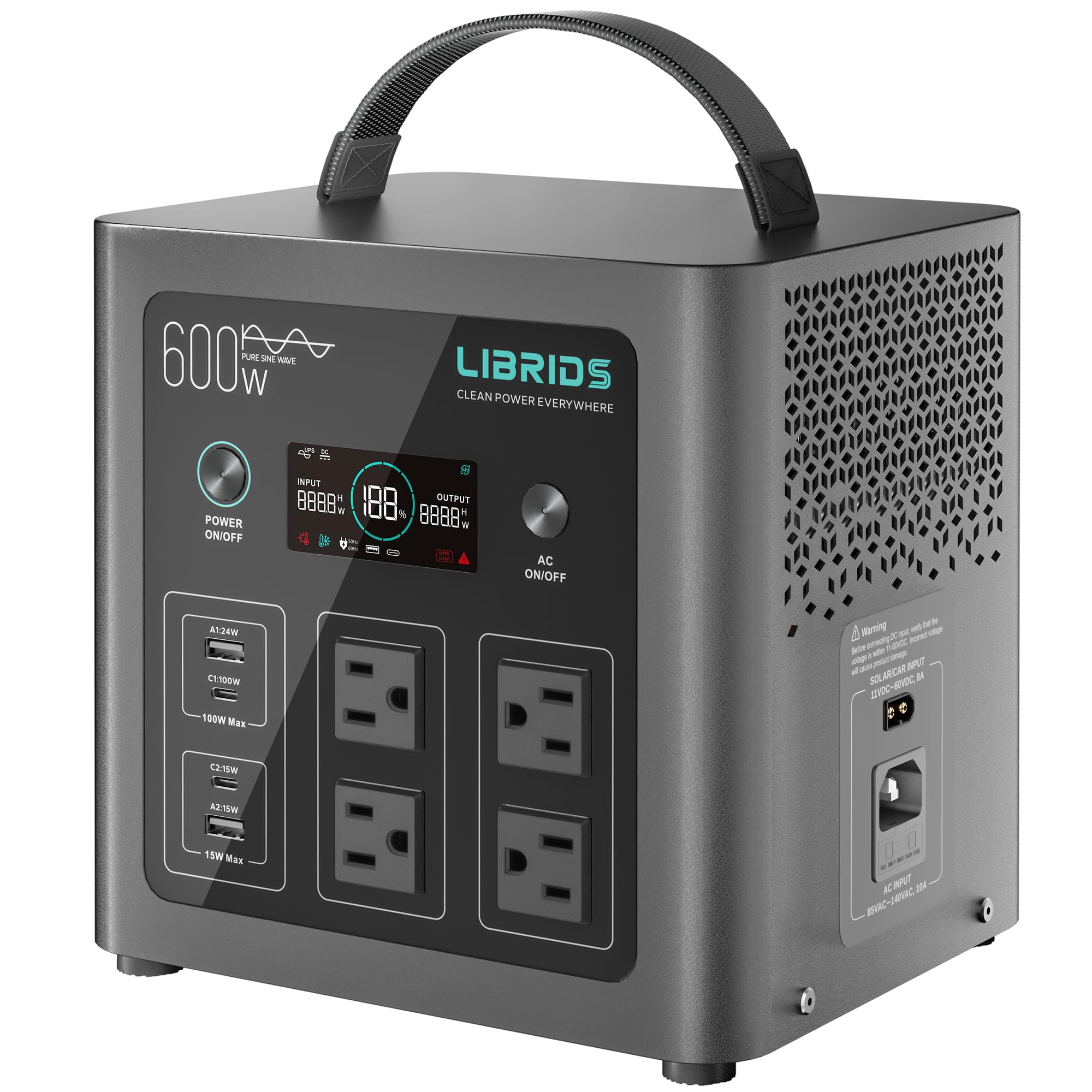
Battery Type: LiFePO4
Capacity: 640Wh
Surge Output: 1200W
UPS Switchover: 10ms
Recharge Time: 1.5 hr
Ports: 8
AC Outlets: 4
Build: Pure sine wave, metal design
Best For: Mid-size let with several devices
This mid-range unit doubles the capacity of the two budget picks and adds a metal housing, pure sine wave output and eight ports including four AC outlets. The 640Wh battery and 1200W surge give it enough headroom to run a fridge, a small heater or a microwave briefly, which is the difference between a device charger and a real backup for a mid-size let. The 1.5-hour charge and 10ms UPS make it practical to keep topped up and ready between bookings.
It suits the host of a two- or three-bedroom property who wants one unit that can cover the fridge, the boiler controls and a few lights during an outage. The trade-off is weight and size: a 640Wh metal-cased unit is noticeably heavier than the budget picks, so it is not the one to carry up three flights of stairs on every changeover.
EF ECOFLOW Delta 3 Classic, 1024Wh 1800W AC
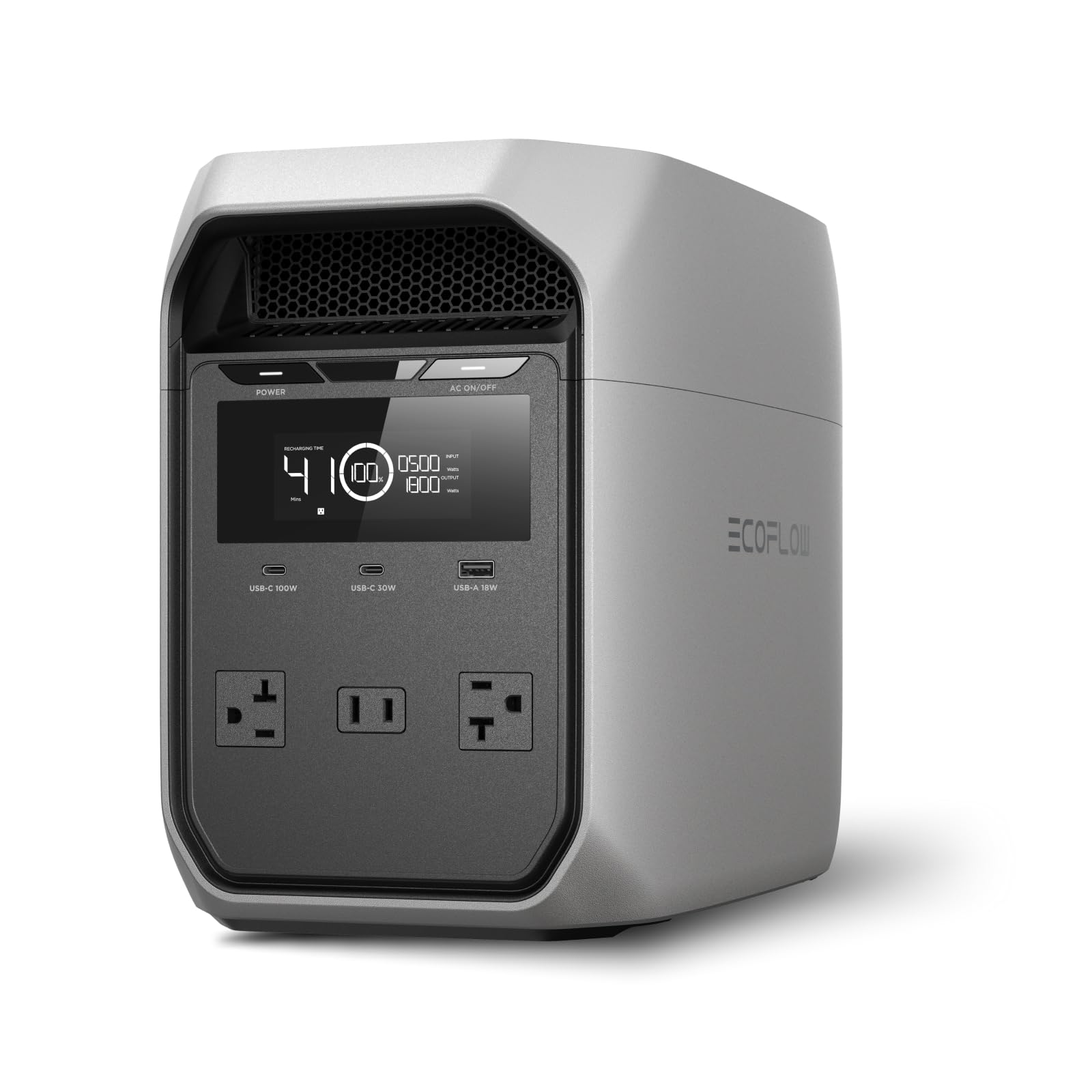
Battery Type: LiFePO4
Capacity: 1024Wh
AC Output: 1800W
Surge Output: 3600W
UPS Switchover: 10ms
Recharge Time: 1 hr
USB-C Output: 100W
Best For: Larger property, appliances and RVs
The Delta 3 Classic is the heavyweight of the group: 1024Wh of LFP storage, 1800W continuous AC output and a 3600W surge that can start appliances with motors or heating elements. The one-hour fast charge and 100W USB-C output make it useful for both emergency backup and everyday charging, and the 10ms UPS means it can sit on standby behind critical circuits. It is the pick for a larger let, a converted barn or a property with an RV hookup where the outage window has to be covered properly.
This unit earns its place as the premium pick because it can genuinely run a household’s essentials rather than just a few devices. The trade-off is cost and bulk: buyers pay a premium for the capacity and fast-charge speed, and the unit is heavy enough that it wants a permanent home on a shelf or in a cupboard rather than being carried between properties.
BLUETTI Elite 100 V2 Portable Power Station, 1024Wh 1800W
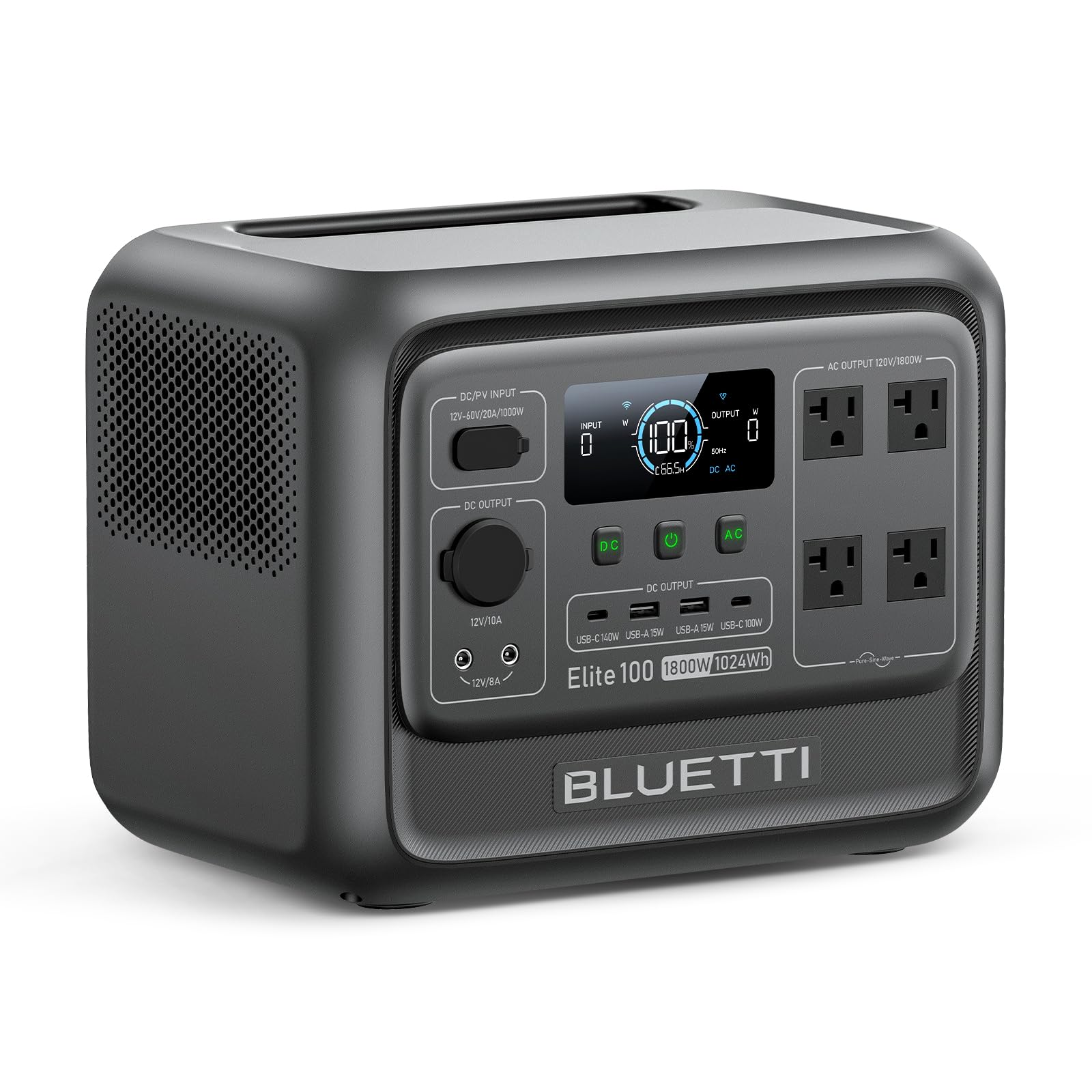
Battery Type: LiFePO4
Capacity: 1024Wh
AC Output: 1800W
Surge Output: 3600W
UPS Switchover: 10ms
Recharge Time: 45 min to 80%
Build: 35% smaller body
Best For: Hosts short on storage space
The Elite 100 V2 matches the Delta’s headline figures — 1024Wh, 1800W continuous, 3600W surge — but in a body the manufacturer states is 35% smaller, which matters in a holiday let where cupboard space is already at a premium. The 45-minute charge to 80% and 10ms UPS make it just as practical for between-guest readiness, and the LFP battery is the same chemistry used across this list. It is the pick for the host who wants premium capacity without a unit that dominates the utility cupboard.
It suits owners of compact but well-equipped lets, or hosts who move the unit between two properties. The trade-off is that the smaller body usually means a tighter port layout and less thermal headroom under sustained heavy loads, so buyers planning to run high-draw appliances for long stretches should weigh that against the space saving.
Before You Buy
- Capacity: Match watt-hours to what needs to run — a router and lights need far less than a fridge or a heater.
- Output: Check continuous watts against the appliance’s rating, and surge watts for anything with a motor or compressor.
- Battery chemistry: LiFePO4 (LFP) is the standard on every pick here and is the safer long-term choice for a unit kept on standby.
- UPS switchover: A 10ms transfer keeps routers and sensitive devices running through a brief outage; slower units may drop them.
- Recharge speed: Fast charging matters between guests — a unit that tops up in under an hour fits a turnaround window.
- Size and weight: A larger unit needs a permanent home; a small one can travel between properties.
- Ports: Count AC outlets and USB-C outputs against the devices the let actually uses.
Frequently Asked Questions
- What size power station does a holiday let need? A small flat can get by with a 288–300Wh unit for routers, lights and chargers, while a larger property running a fridge or boiler controls needs 640Wh or more.
- Can a portable power station run a fridge between guests? A mid-range or premium unit with 1000W+ continuous output can run a fridge for a limited time; budget units cannot.
- What does 10ms UPS mean for a holiday let? It means the unit switches to battery almost instantly when mains power drops, so routers and sensitive devices stay on.
- Is LiFePO4 better than other battery types? LiFePO4 is generally the preferred chemistry for units kept on standby because it handles regular partial charging well and lasts through many cycles.
- Can a power station be charged from solar between bookings? Yes — several picks support optional solar panels, which suits lets with outdoor space and no convenient socket.
- How should a power station be stored in a let? Keep it in a dry, temperate cupboard, topped up periodically, and away from guest access if the property is let to families.
Bottom Line
For most holiday-let hosts, the EF ECOFLOW Delta 3 Classic is the safest all-round choice: 1024Wh, 1800W continuous output and a one-hour recharge cover a real outage without needing a second unit. Hosts short on storage should look at the BLUETTI Elite 100 V2 instead, and anyone running a small flat can save money with the Jackery Explorer 300 or the BLUETTI Elite 30 V2.
