Why there are Amazon links here: Brave Review is paid a commission for qualifying Amazon purchases made through the links below. Your price does not change, and using our links is entirely optional. How this works
Best Pipe Lagging for a Cold Loft Conversion
A cold loft conversion puts plumbing and heating pipes in one of the most exposed spaces in the house, so the right lagging has to do two jobs: stop heat escaping from hot pipes and stop cold pipes freezing in winter. This guide covers five pipe lagging options, from foil-backed fiberglass wrap for awkward runs to thick closed-cell foam for mains runs. It suits DIY installers insulating a loft, homeowners chasing frost protection on tank feeds, and anyone upgrading old, crumbling pipe wrap. The overview below puts all five side by side so a choice can be made in under a minute.
Overview of the Picks
| Product | Key Spec | Best Use | Price Tier |
|---|---|---|---|
| Frost King SP42X/18 Foil-Backed Fiberglass Pipe Wrap | 3 in W x 1 in thick x 25 ft roll | Wrapping awkward runs and joints | Budget |
| Class B Foil Self-Seal Pipe Lagging | 30 mm thick, 108 mm ID | Large-diameter pipes needing flame-retardant lagging | Mid |
| Self-Seal Polyethylene Loft Pipe Lagging | 22–219 mm range, waterproof | Tank feed pipes in the loft | Budget |
| K-FLEX USA Elastomeric Pipe Insulation | 3/4 in wall x 6 ft length | Short runs and tight bends | Mid |
| Flexible Self-Seal Foam Lagging Tube | 20 mm thick, 165 mm ID | Big bore pipes with quick self-seal fit | Mid |
1. Frost King SP42X/18 Pipe Wrap Kit

Material: Foil-backed fiberglass
Format: Wrap roll
Width: 3 in
Thickness: 1 in
Length: 25 ft
Intended use: Pipe wrapping and frost protection
The Frost King kit is foil-backed fiberglass supplied as a flexible wrap rather than a pre-formed tube. That format lets it spiral around elbows, valves and short offsets where a rigid sleeve will not follow the pipe. The reflective foil face adds a radiant barrier on top of the fiberglass’s insulating value, and the 25 ft roll gives enough length to cover a decent run of narrow pipe. It is the pick for anyone facing a loft full of awkward pipework rather than clean straight runs.
This is the budget option, and the trade-off is speed and tidiness: wrapping takes longer than sliding on a sleeve, and the finish depends on how carefully the overlap is applied. Buyers who want a quick, neat job on long straight pipes will do better with a self-seal tube, while buyers with a maze of joints will get more from the wrap.
Trade-off: The wrap format is slow to install and relies on careful overlapping, so it is not the fastest choice for long, straight runs.
2. Class B Foil Self-Seal Pipe Lagging

Material: Foam with aluminum foil face
Format: Slit self-seal tube
Thickness: 30 mm
Inner diameter: 108 mm (4.3 in)
Fire rating: Class B flame retardant
Intended use: Frost-resistant pipe lagging and cladding
This is a heavy-duty self-seal tube aimed at larger pipes, with a 30 mm wall and a 108 mm inner diameter. The slit-and-self-seal design means it opens along its length, wraps around the pipe and closes again, so it can be fitted without disconnecting pipework. The aluminum foil facing gives a clean, reflective outer skin, and the Class B flame-retardant rating matters in a loft where cables and timber framing sit close to the pipe run. The thicker wall makes it the strongest thermal performer in this group.
It is a mid-priced option and the pick for buyers lagging a large-bore pipe who want serious insulation rather than a thin sleeve. The caution is fit: the tube is sized for a specific inner diameter, so it will not grip smaller pipes, and the foil face can crease if it is forced around tight bends.
Trade-off: The fixed 108 mm bore suits large pipes only, so it is not a general-purpose lagging for a mixed loft run.
3. Self-Seal Polyethylene Loft Pipe Lagging

Material: Polyethylene
Format: Self-seal tubing
Size range: 22–219 mm
Finish: Silver
Properties: Waterproof
Intended use: Loft pipes feeding a water tank
This one is sold specifically for loft pipes running up to a water tank, which is exactly the frost-risk run most cold lofts have. Polyethylene is a closed-cell foam, so it resists moisture uptake better than open materials, and the silver skin reflects a little radiant heat. The self-seal slit runs the full length, making it a quick fit on straight runs. The 22–219 mm range means the same product line covers small tank feeds and much larger pipes.
It is priced in the budget band, and the pick for buyers whose main worry is a tank feed pipe freezing. The caution is that the wide size range means the exact bore has to be matched at order, and polyethylene is a lighter insulator than a thick foil-faced foam, so it is better at frost protection than at holding heat on a hot run.
Trade-off: Polyethylene is a modest insulator compared with thick foam, so it suits frost protection better than high-heat-loss runs.
4. K-FLEX USA Elastomeric Pipe Insulation

K-FLEX USA 3/4" x 6 ft. Elastomeric Pipe Insulation
Material: Elastomeric foam
Format: Pre-formed tube
Wall thickness: 3/4 in
Length: 6 ft
Intended use: Short pipe runs and bends
K-FLEX elastomeric foam is a different animal from the wraps: a flexible, pre-formed tube that slides over a pipe end. Elastomeric foam is dense and closed-cell, so it holds heat well and resists moisture, and the material stays flexible so it follows gentle bends without splitting. The 6 ft length and 3/4 in wall make it a good fit for short, tidy runs. It is a recognized brand name in pipe insulation, which matters to buyers who want a known material rather than a generic import.
The drawback is the length: at 6 ft per piece, a long loft run needs several lengths and jointing, which adds cost and labour. The tube also has to be slid on before the pipe is connected, so retrofitting around existing pipework is harder than a self-seal product.
Trade-off: The 6 ft pieces and slide-on fitting suit new pipework better than retrofitting a long existing run.
5. Flexible Self-Seal Foam Lagging Tube
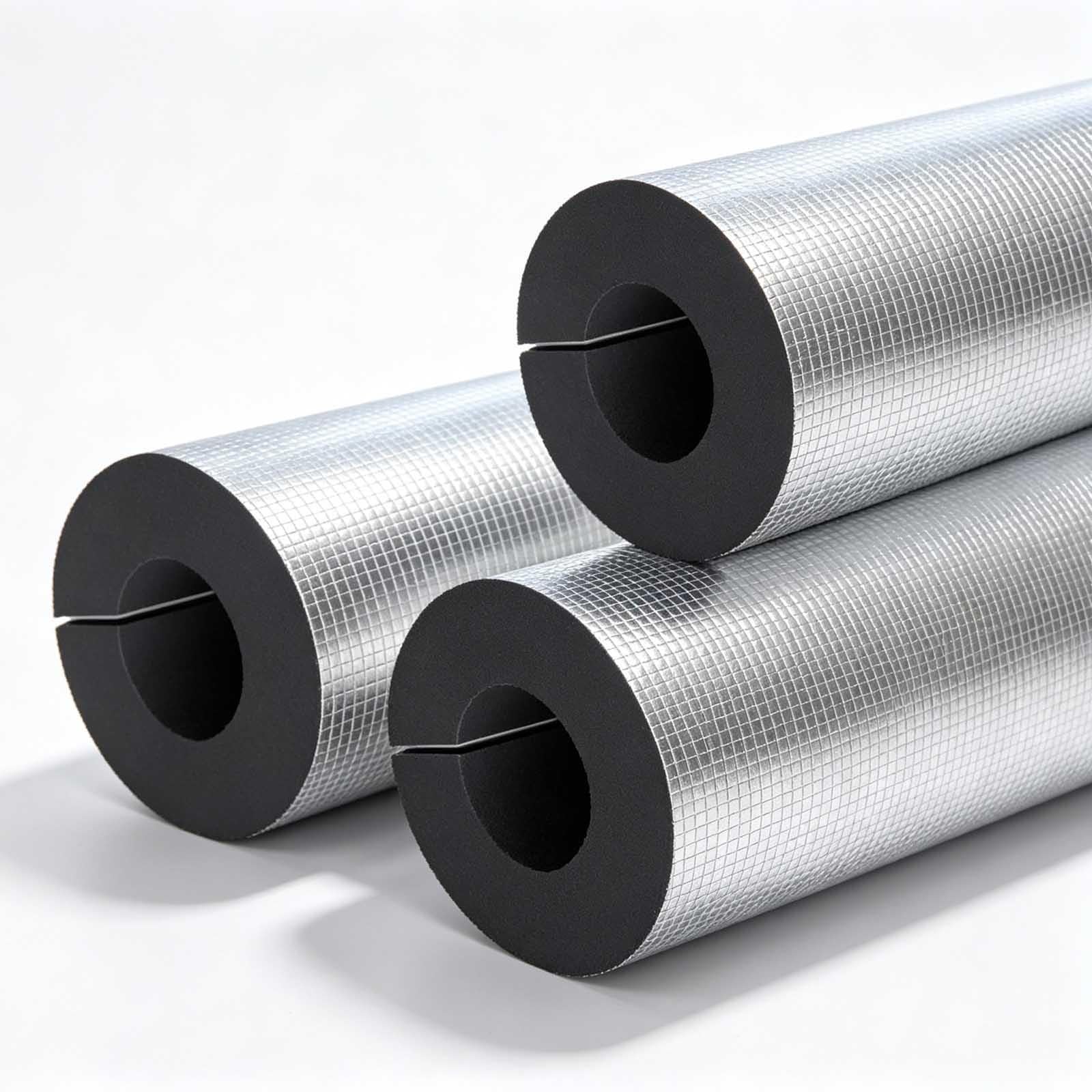
Material: Closed-cell foam
Format: Self-seal slit tube
Wall thickness: 20 mm
Inner diameter: 165 mm (6.5 in)
Intended use: Hot and cold pipe cladding
This is a large-bore closed-cell foam tube with a 20 mm wall and a 165 mm inner diameter. The self-seal slit means it opens up and closes around the pipe, so it fits existing runs without cutting and reconnecting. Closed-cell foam resists water absorption, which is useful in a loft that swings between damp and dry. It is sold for both hot and cold pipes, making it a general-purpose cladding for a big pipe.
It is a mid-priced pick and the one for buyers lagging a wide pipe who want a fast fit. The caution is the fixed 165 mm bore, which is too large for typical household plumbing and better suited to large-bore pipe or ducting. Buyers with small pipes will find it will not grip.
Trade-off: The 165 mm bore is oversized for standard household pipes, so it suits large-bore runs only.
Before You Buy
- Material: Match the material to the job — fiberglass wrap for awkward joints, closed-cell foam for frost protection and heat retention on straight runs.
- Size: Measure the outer diameter of the pipe before ordering; most self-seal tubes are sold by a fixed inner diameter and will not grip a pipe that is too small.
- Fire rating: In a loft with timber and cables nearby, a flame-retardant rating such as Class B is worth checking on any foam product.
- Fit method: Slit self-seal tubes fit existing pipework; pre-formed slide-on tubes need the pipe disconnected, so they suit new installations.
- Coverage: Check the length per piece or roll against the run to be covered, and allow extra for joints and overlaps.
- Moisture: Closed-cell foam and foil facings resist damp better than open materials, which matters in a cold, ventilated loft.
- Storage: Keep foil-faced products flat and uncreased before fitting, because creases weaken the reflective surface.
Frequently Asked Questions
- What is the best pipe lagging for a cold loft conversion?
For most buyers, a self-seal closed-cell foam tube is the best balance of speed, frost protection and heat retention, while foil-backed wrap suits awkward pipework. - Does pipe lagging stop pipes freezing in a loft?
Lagging slows heat loss and frost penetration, but it does not replace heating or ventilation; a lagged pipe in a well-ventilated loft still needs the tank feed protected. - Can self-seal lagging be fitted to existing pipes?
Yes — the slit runs the full length, so it opens around the pipe and closes again without disconnecting anything. - Is thick foam always better than thin foam?
A thicker wall insulates more, but it also needs the right bore to grip the pipe; fit matters as much as thickness. - Does lagging need a fire rating?
In a loft with timber and wiring nearby, a flame-retardant product such as Class B foam is a sensible choice. - How much lagging is needed for a loft run?
Measure the total pipe length, add extra for joints and overlaps, and check the length per roll or piece before ordering.
Bottom Line
For a cold loft conversion, the Class B foil self-seal lagging is the strongest all-round pick for large-bore pipes, with the Frost King foil-backed wrap the better choice for awkward joints and short offsets. Buyers insulating a tank feed should start with the polyethylene self-seal option, and anyone lagging a very wide pipe should check the 165 mm foam tube. Measure the pipe bore before ordering, then check current prices on Amazon and get the loft lagged before the first hard frost.
