Why there are Amazon links here: Brave Review is paid a commission for qualifying Amazon purchases made through the links below. Your price does not change, and using our links is entirely optional. How this works
TP-Link Deco X15: A Three-Pack Mesh System That Covers the Whole House
The TP-Link Deco X15 is a three-unit WiFi 6 mesh system built for homes that have outgrown a single router. It spreads one network name across up to 5,600 square feet and gives each unit wired Gigabit ports, which makes it a sensible pick for a two-story house or a long floor plan on a tight budget. This review covers what the hardware is, how the mesh setup behaves in practice, and where the system asks buyers to compromise. Readers who want the short version can jump to the bottom line, but the details below explain why this kit sits where it does.
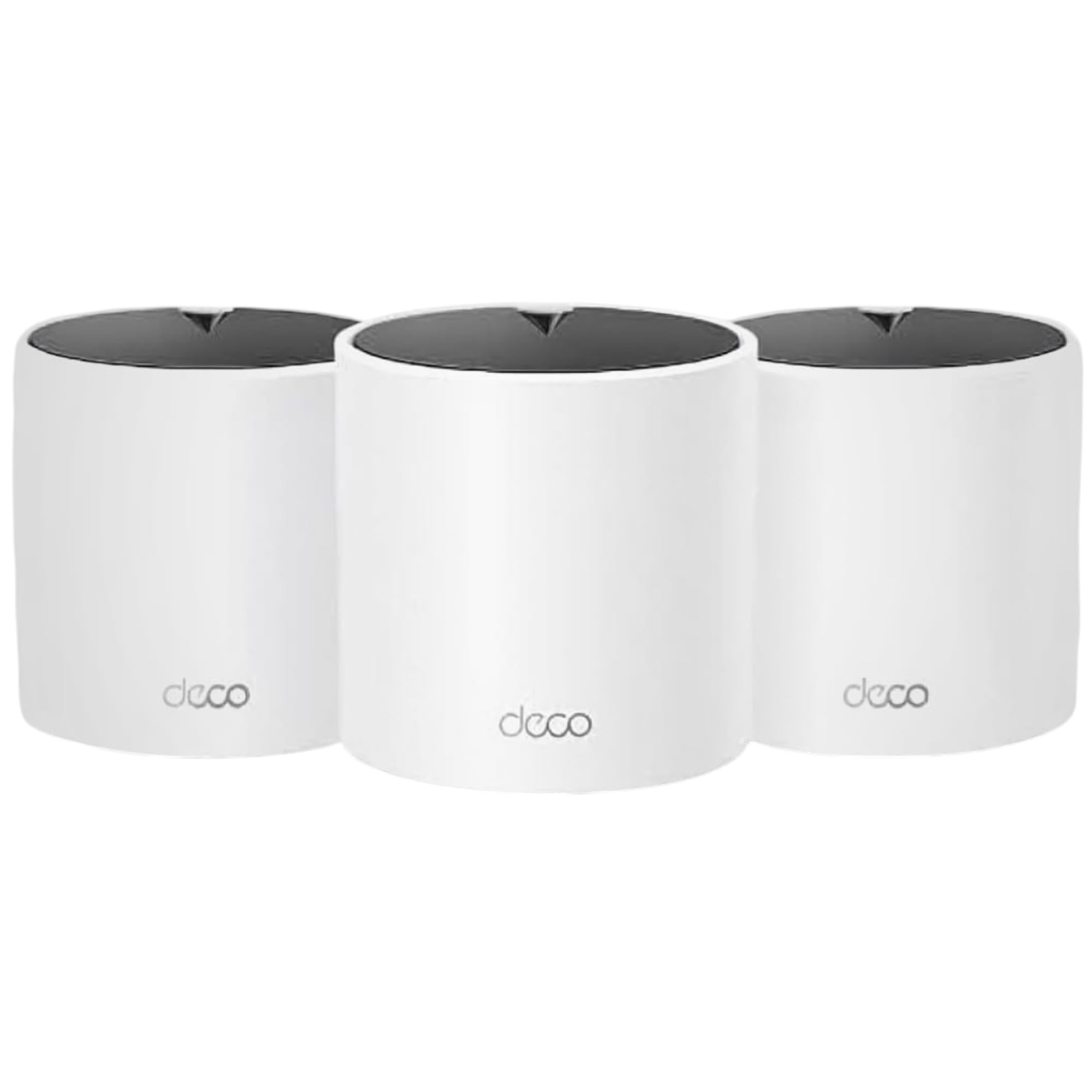
Features and Specifications
Type: Dual-band WiFi 6 mesh system, three units
WiFi Standard: AX1500 (WiFi 6)
Coverage: Up to 5,600 sq.ft. across the 3-pack
Ethernet: 2 Gigabit ports per unit
Backhaul: Supports Ethernet backhaul
Replaces: Routers and extenders
Best For: Multi-room homes, apartments with dead zones, wired backhaul setups
The numbers on the box tell most of the story. AX1500 is an entry-level WiFi 6 spec, and the 5,600 square foot figure is the manufacturer’s ceiling for the full three-pack, not a guarantee for every floor plan. The two Gigabit ports per unit are the detail that separates this kit from cheaper mesh hardware, because they let a buyer wire each node back to the main unit instead of relying on a wireless hop.
The Deco X15 is designed as a replacement for the router-plus-extender arrangement many homes end up with. Instead of juggling multiple network names and hoping devices switch cleanly, the three units broadcast a single SSID and hand devices off as the user moves through the house. That is the core promise of any mesh system, and it is the reason this class of product exists.
Build and Design
Deco units are compact, tower-style nodes rather than the spider-armed routers that dominated the previous generation. They are intended to sit on a shelf, a media console, or a side table, and the small footprint means a buyer can place one in a hallway or home office without it dominating the room.
That small chassis is also the system’s first compromise. Compact mesh nodes pack the radios and antennas into a tight enclosure, and the AX1500 spec already sits at the low end of WiFi 6. Buyers with very large homes, thick masonry walls, or a heavy load of simultaneous 4K streams should expect the three-pack to struggle at the outer edges of the advertised coverage rather than deliver full speed everywhere.
Capacity and Performance
AX1500 is a dual-band specification, meaning the system works on the 2.4 GHz and 5 GHz bands rather than adding a dedicated third radio. In a mesh system, that matters: with no separate backhaul band, the wireless link between nodes shares airtime with the traffic going to laptops, phones, and TVs. The result is fine for ordinary browsing, streaming, and video calls, but a household running many devices at once will see the ceiling sooner than it would on a tri-band system.
The Ethernet backhaul support is the workaround, and it is the single most useful feature here. A buyer who can run a cable from the main unit to each satellite gets the full benefit of the mesh without the wireless backhaul penalty. Homes that cannot run cable are still well served, but they should size expectations to the dual-band design rather than to the coverage headline.
Ports and Wired Connections
Two Gigabit ports per unit is generous for this price tier, where many mesh nodes ship with a single port or none at all. The main unit needs one port for the modem, leaving the second free for a wired device, and each satellite offers two more. That is enough to hardwire a desktop, a console, or a TV in the rooms where the satellites sit.
Buyers with more wired devices than that will need a switch, which is a normal add-on rather than a flaw. The ports are Gigabit rather than multi-Gig, so anyone on an internet plan above 1 Gbps will be limited by the hardware. For the vast majority of households on cable or fiber plans at or below a gigabit, the ports are not the bottleneck.
Setup and Maintenance
TP-Link’s Deco line is managed through a phone app, and the X15 follows that pattern. Setup is a guided process: connect the first unit to the modem, scan, name the network, then place the remaining two units where coverage is weak. The system is designed to be managed from the app afterward, including parental controls and device prioritization in the software layer.
The trade-off in app-managed mesh systems is that the advanced controls a power user might want, such as detailed per-band tuning or extensive logging, are typically thinner than on a standalone router with a full web interface. Buyers who like to tinker should check that the app exposes the settings they care about before committing. For everyone else, the guided setup is the point.
Trade-off: The AX1500 dual-band design and compact nodes are a fair match for the price, but a large home with many simultaneous devices will hit the system’s ceiling sooner than a tri-band mesh would, so buyers should plan on wired backhaul where possible.
Check the current price on Amazon
Who the Deco X15 Suits and Who It Does Not
The Deco X15 is a good fit for a renter or first-time mesh buyer in a two- or three-bedroom home who wants one network name and no dead corners. It is also a sensible choice for a homeowner who can run Ethernet to a couple of rooms and wants a cheap, reliable backbone without paying for tri-band hardware. The three-pack covers a typical single-family floor plan without requiring the buyer to think hard about placement.
It is not the right pick for a very large home, a multi-story house with dense walls, or a household with dozens of always-on smart devices and several simultaneous 4K streams. Those buyers should look at a tri-band system with a dedicated backhaul radio. Nor is it aimed at anyone on a multi-gig internet plan, since the Gigabit ports cap wired throughput.
FAQ
-
Is the TP-Link Deco X15 good for a 3,000 square foot house?
Yes. The 3-pack is rated for up to 5,600 square feet, so a 3,000 square foot home sits comfortably inside the coverage envelope, assuming normal interior walls and reasonable node placement. -
Does the Deco X15 support WiFi 6?
Yes. The X15 is an AX1500 WiFi 6 system, so it works with WiFi 6 devices and remains backward compatible with older WiFi 5 and WiFi 4 hardware. -
Can the Deco X15 units be wired together?
Yes. Each unit has two Gigabit ports, and the system supports Ethernet backhaul, so satellites can be cabled to the main unit for a more stable link. -
How many Ethernet ports does each Deco X15 unit have?
Two Gigabit ports per unit. On the main unit one port connects to the modem, leaving one free, and each satellite offers two ports for wired devices. -
Is the Deco X15 a replacement for a router and extender?
Yes. The system is designed to replace both, broadcasting a single network name across the three units instead of running separate router and extender networks. -
Does the Deco X15 work with a modem from an internet provider?
Yes. The main unit connects to an existing modem, and the mesh handles routing and WiFi for the home network. -
Is the Deco X15 good for gaming?
It is workable for casual gaming, but competitive players should use the Ethernet ports for a wired connection, since the dual-band design shares airtime between backhaul and client traffic. -
Can the Deco X15 handle a gigabit internet plan?
The Gigabit ports match a 1 Gbps plan, but actual throughput depends on whether the nodes are wired or wireless. Wired backhaul gets the most out of the hardware. -
Does the Deco X15 support parental controls?
Yes. The Deco app includes parental controls and device management, which is one of the reasons the system appeals to families. -
Is the Deco X15 worth it compared to a single router?
For homes with dead zones or multiple floors, yes. A single router struggles to cover a large floor plan, while the three-unit mesh spreads coverage and keeps one network name throughout the house.
Bottom Line
The TP-Link Deco X15 3-pack is the sensible budget entry into WiFi 6 mesh: three units, one network name, two Gigabit ports per node, and Ethernet backhaul support for buyers who can run cable. It is not a tri-band powerhouse and it will not flatter a very large or very crowded home, but for a typical house that needs coverage more than raw speed, it does the job at a price that undercuts most of the mesh market.
