Why there are Amazon links here: Brave Review is paid a commission for qualifying Amazon purchases made through the links below. Your price does not change, and using our links is entirely optional. How this works
Best Carbon Monoxide Alarm for a Bedsit: 5 Compact Picks That Fit Small Rooms
A bedsit packs sleeping, cooking and living into one room, so a carbon monoxide alarm needs to be small, simple to fit and loud enough to wake someone at night. The five alarms below cover renters who want a no-wiring battery unit, occupants with a free wall socket, and anyone living near a gas boiler or bottled-gas heater. Each pick is matched to a specific kind of bedsit, and the overview table sums up the differences in under a minute. Every product name links straight to Amazon for current pricing.
Overview of the Picks
| Product | Key Spec | Best Use | Price Tier |
|---|---|---|---|
| CO400 First Alert Battery Carbon Monoxide Alarm | Battery powered | Simplest renter-friendly install | Budget |
| Kidde Carbon Monoxide Detector, AA Battery Powered | AA battery, portable | Small rooms with no free socket | Budget |
| Rotating Plug with Power Surge Immunity, 5th Edition Kidde | Plug-in with AA battery backup | Bedsits with one awkward socket | Mid |
| CO606, 9V Battery Backup First Alert Plug in | Plug-in with 9V backup | Anyone wanting a plug-in with a battery fallback | Budget |
| Kidde Carbon Monoxide + Explosive Gas | Plug-in with 9V backup, digital display | Bedsits with bottled gas or a gas hob | Premium |
CO400 First Alert Battery Carbon Monoxide Alarm

Type: Battery-powered carbon monoxide alarm
Power source: Battery
Brand: First Alert
Mounting: Wall or ceiling, no wiring
CO400 First Alert Battery Carbon Monoxide Alarm
This is the plainest alarm in the group, and that is the point. A battery-only unit means no socket, no cable and no electrician, so a tenant can fit it in a bedsit and take it to the next place. First Alert builds it as a compact standalone unit that mounts on a wall or ceiling near the sleeping area. The single-button design keeps operation obvious for anyone who has never owned a CO alarm before.
The CO400 suits renters who cannot touch the wiring and want the lowest-cost way to cover a single room. It is the pick for a bedsit where the only socket is already taken by a fridge or a charger. Its caution is the battery itself: a unit that relies entirely on a cell will go silent if the battery is never swapped, so a reminder on the calendar matters more here than on a mains-powered model.
Trade-off: Battery-only operation means the alarm is only as reliable as the cell inside it, and there is no mains power to fall back on.
Check the current price on Amazon
Kidde Carbon Monoxide Detector, AA Battery Powered

Type: Battery-powered carbon monoxide detector
Power source: AA batteries
Features: LEDs, test-reset button, low battery indicator
Portability: Portable, freestanding or mounted
Kidde’s AA-powered detector is the flexible option. It runs on standard AA cells rather than a specialist battery, so replacements come from any shop or drawer. The low battery indicator gives warning before the unit goes quiet, and the test-reset button lets an occupant check it without tools. Because it is portable, it can sit on a shelf or bedside table and move around the room as furniture changes.
This one earns its place for bedsit occupants who want a detector they can reposition and take with them when they move out. It is a good fit for a room where drilling into the wall is not allowed. The caution is coverage: a single portable unit protects the room it sits in, so a bedsit with a separate hallway or shared kitchen needs more than one.
Trade-off: One portable detector covers one room, so larger or divided layouts will need a second unit.
Check the current price on Amazon
Rotating Plug with Power Surge Immunity, 5th Edition Kidde Carbon Monoxide Detector
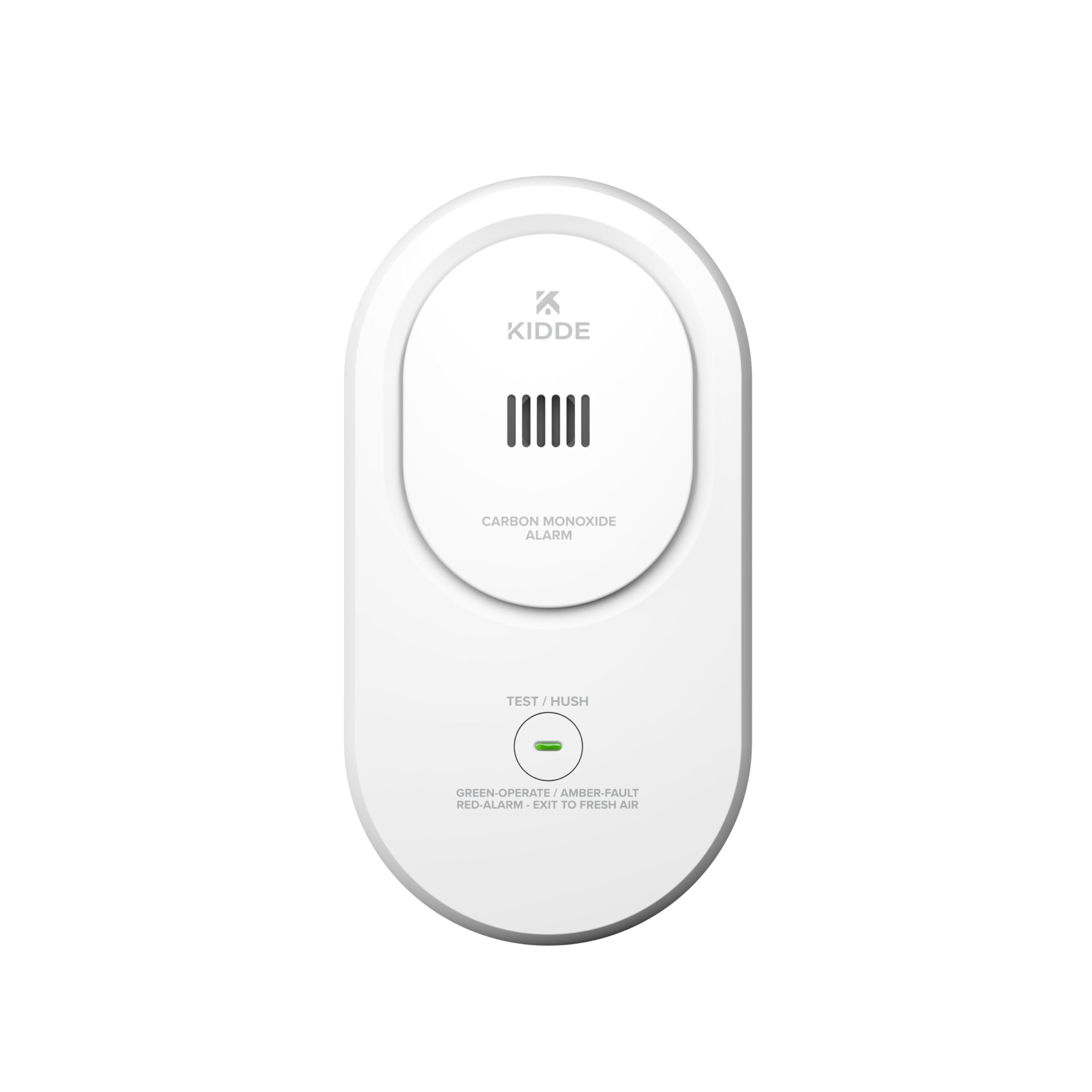
Type: Plug-in carbon monoxide detector
Power source: Mains plug with AA battery backup
Features: Rotating plug, surge immunity, LED status lights, 85 dB alarm
Edition: 5th Edition
The rotating plug is the feature that matters in a bedsit. Small rooms rarely have a socket in a convenient spot, and a plug head that turns lets the unit sit flat against the wall whichever way the outlet faces. Surge immunity protects the electronics from spikes on the ring main, and the AA backup keeps it working through a power cut. An 85 dB alarm is loud enough to cut through a small room at night.
This is the pick for a bedsit with one free socket near the sleeping area and a landlord who will not allow wall fixings. The LED status lights make it easy to confirm the unit is powered at a glance. The caution is socket dependence: if the only outlet is low on a wall behind furniture, or is switched off at the wall out of habit, the alarm loses mains power and runs on backup alone.
Trade-off: It needs a live, unswitched socket in a useful position, which not every bedsit has.
Check the current price on Amazon
CO606, 9V Battery Backup First Alert Plug in Carbon Monoxide Alarm
Type: Plug-in carbon monoxide alarm
Power source: Mains plug with 9V battery backup
Brand: First Alert
Backup: 9V battery
CO606, 9V Battery Backup First Alert Plug in Carbon Monoxide Alarm
This First Alert model combines mains power with a 9V battery backup, which is the arrangement most safety guidance prefers for a main living space. Plugged in, it draws continuous power without battery changes; unplugged or during an outage, the 9V cell takes over. The plug-in format keeps the unit slim and out of the way, and there are no wires to route.
It suits a bedsit occupant who has a spare socket and wants the reassurance of a backup cell without giving up mains operation. It is a sensible middle option for anyone who finds a battery-only alarm too easy to forget. The drawback is the 9V battery: it is a less common cell than AA, so keeping a spare on hand takes a little planning, and the unit still depends on a socket being free.
Trade-off: The 9V backup cell is less common than AA, so a spare is worth buying at the same time.
Check the current price on Amazon
Kidde Carbon Monoxide + Explosive Gas, Natural Gas & Propane Alarm

Type: Combination carbon monoxide and explosive gas alarm
Power source: Plug-in with 9V battery backup
Gases covered: Carbon monoxide, natural gas, propane
Features: Digital display, 85 dB alarm, LED status indicators
Edition: 3rd Edition
This is the only unit here that watches for explosive gas as well as carbon monoxide. A bedsit with a gas hob, a bottled-gas heater or a propane cylinder benefits from a detector that flags a leak before it becomes a fire risk. The digital display gives a readable status readout, the 85 dB alarm is the loudest in this group, and the 9V backup covers power cuts.
It is the premium pick for occupants whose bedsit includes any gas appliance beyond a central boiler, particularly bottled gas, which is common in converted outbuildings and annexes. The extra coverage justifies the higher price for that specific setup. The caution is that it is more expensive and more complex than a CO-only alarm, so a bedsit with no gas appliance at all would be paying for protection it does not need.
Trade-off: The combination sensing and digital display push the price up, which is hard to justify where no gas appliance exists.
Check the current price on Amazon
Before You Buy
- Power source: A battery-only alarm needs no socket but depends on the cell; a plug-in with backup is more dependable where a free socket exists.
- Socket position: A rotating plug helps in a bedsit, but the outlet must stay live and unswitched for mains power to count.
- Backup battery type: AA cells are the easiest to source; 9V backups need a spare kept on hand.
- Gas appliances: A CO-only alarm is enough for a gas boiler, but a bedsit with a hob, heater or bottled gas needs explosive-gas sensing too.
- Room layout: One alarm covers one room, so a divided bedsit or a separate kitchen needs a second unit.
- Mounting: Wall fixings may not be allowed in rented bedsits, so freestanding or plug-in formats are safer choices.
- Alarm volume: An 85 dB alarm is loud enough for a small room; quieter units may not wake a heavy sleeper.
Frequently Asked Questions
-
Where should a CO alarm go in a bedsit?
Near the sleeping area and within earshot, ideally on a wall or shelf at head height. A plug-in unit goes in a socket near the bed, not behind furniture. -
Is a battery or plug-in alarm better for a bedsit?
Battery-only suits renters who cannot rely on a free socket; plug-in with backup is more dependable where one is available. Both work in a single room. -
Does a bedsit need an explosive gas alarm as well as CO?
Only if the room has a gas hob, bottled-gas heater or propane cylinder. A gas boiler alone is covered by a standard CO alarm. -
How often should the alarm be replaced?
Follow the manufacturer’s replacement date on the unit; CO sensors degrade over time. Test the alarm with its button regularly and swap the battery as soon as the low-battery warning sounds. -
Can a tenant fit an alarm without drilling?
Yes. Battery units and plug-in units both avoid wall fixings, which suits rented bedsits where alterations are not permitted. -
Will a CO alarm detect a gas leak from a hob?
A standard CO alarm will not. Only a combination unit that lists natural gas and propane sensing will respond to an explosive gas leak.
Bottom Line
For most bedsits, the Rotating Plug Kidde is the best carbon monoxide alarm for a bedsit: the turning plug copes with awkward sockets, the AA backup covers power cuts, and the 85 dB alarm is loud enough for a single room. Occupants with a gas hob or bottled gas should step up to the Kidde combination unit instead, while pure renters on a tight budget can start with the CO400. Whichever fits, check the current price before ordering.
