Why there are Amazon links here: Brave Review is paid a commission for qualifying Amazon purchases made through the links below. Your price does not change, and using our links is entirely optional. How this works
Best Smart Heating Controls for a House With No Thermostat
Homes without an existing thermostat usually fall into two camps: older houses where heating was never centrally controlled, and rooms or zones added later without a control of their own. The picks below cover both, from a budget Wi-Fi unit to a line-voltage model built for electric baseboard heaters. Buyers replacing a worn-out dial, adding a first smart control, or wiring a single room should each find a fit in the overview table. Read that table first, then jump to the review that matches the setup.
Overview of the Picks
| Product | Key Spec | Best Use | Price Tier |
|---|---|---|---|
| Sensi Smart Thermostat, Wi-Fi, DIY, Alexa, Energy Star Certified, ST55 | Wi-Fi, Alexa, Energy Star | First-time smart upgrade | Budget |
| Smart WiFi Thermostat for Home with App Remote Control | 7-day / 5-1-1 / non-programmable modes | Lowest-cost app control | Budget |
| meross Matter Smart Thermostat for Electric Baseboard Heaters | 120-240V, Matter, HomeKit/Alexa/Google | Electric baseboard heat | Mid-range |
| ecobee Smart Thermostat Premium | Wi-Fi, Siri & Alexa built-in, smart sensor | Whole-home premium setup | Premium |
| Honeywell Home RTH9585WF1004 Wi-Fi Smart Color Thermostat | 7-day programmable, touch screen, Alexa ready | Color touch-screen control | Mid-range |
Sensi Smart Thermostat, Wi-Fi, DIY, Alexa, Energy Star Certified, ST55
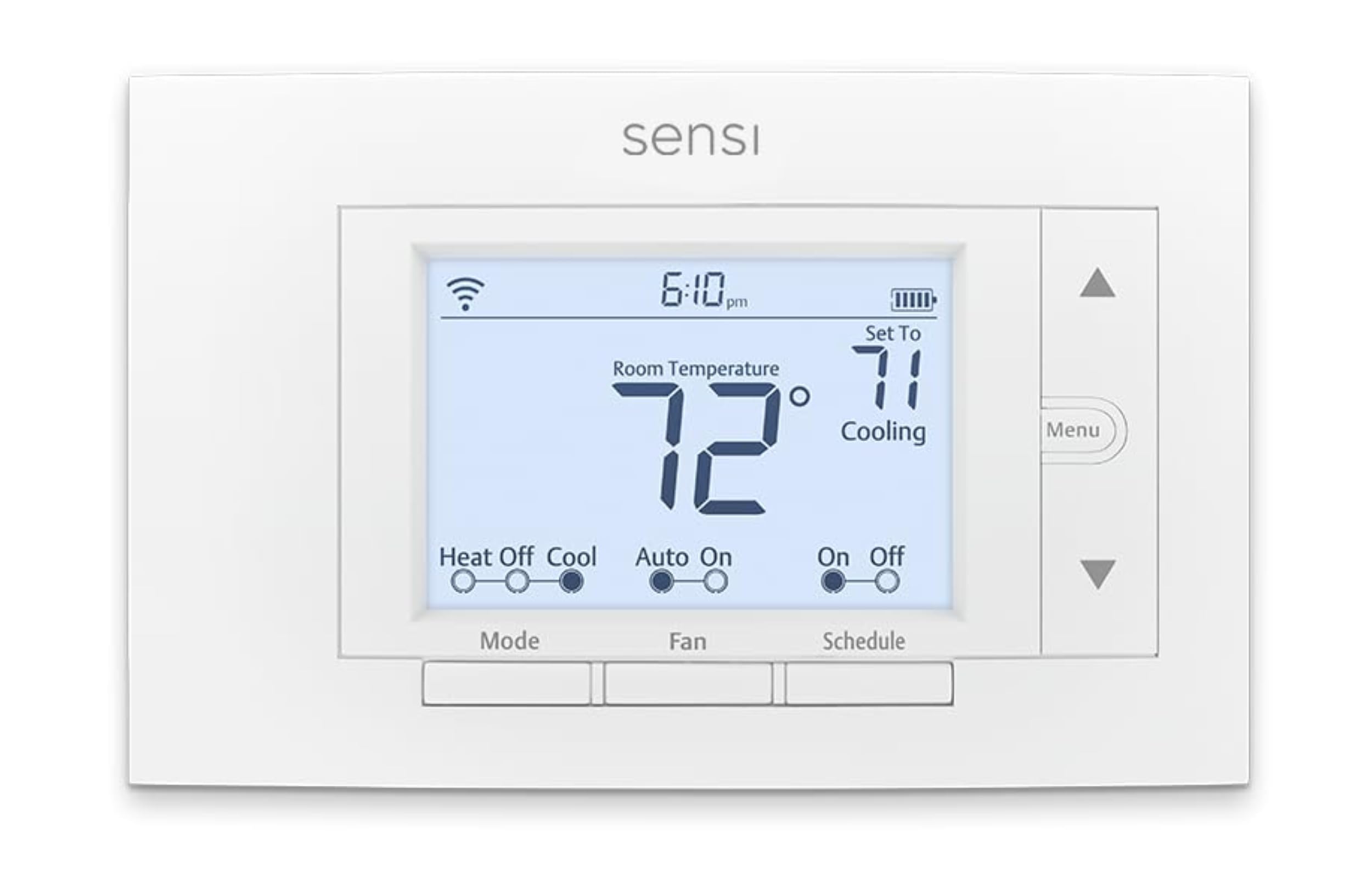
Type: Wi-Fi smart thermostat
Voice control: Alexa
Certification: Energy Star
Installation: DIY
Connectivity: Wi-Fi
The Sensi ST55 is the straightforward entry point for a house that has never had a smart control. It is a DIY unit, so the install is aimed at a competent homeowner rather than a contractor, and the Alexa support plus Energy Star listing cover the basics most buyers want first. The build is a standard wall-mounted thermostat with a clean face and app-based scheduling. It suits a first smart upgrade where the goal is remote control and a schedule, not a full ecosystem.
This is the pick for a single-zone house or a homeowner who wants app and voice control without paying premium prices. The trade-off is that Alexa is the only voice assistant named, so households standardized on Google or Apple should look elsewhere.
Check the current price on Amazon
Smart WiFi Thermostat for Home with App Remote Control
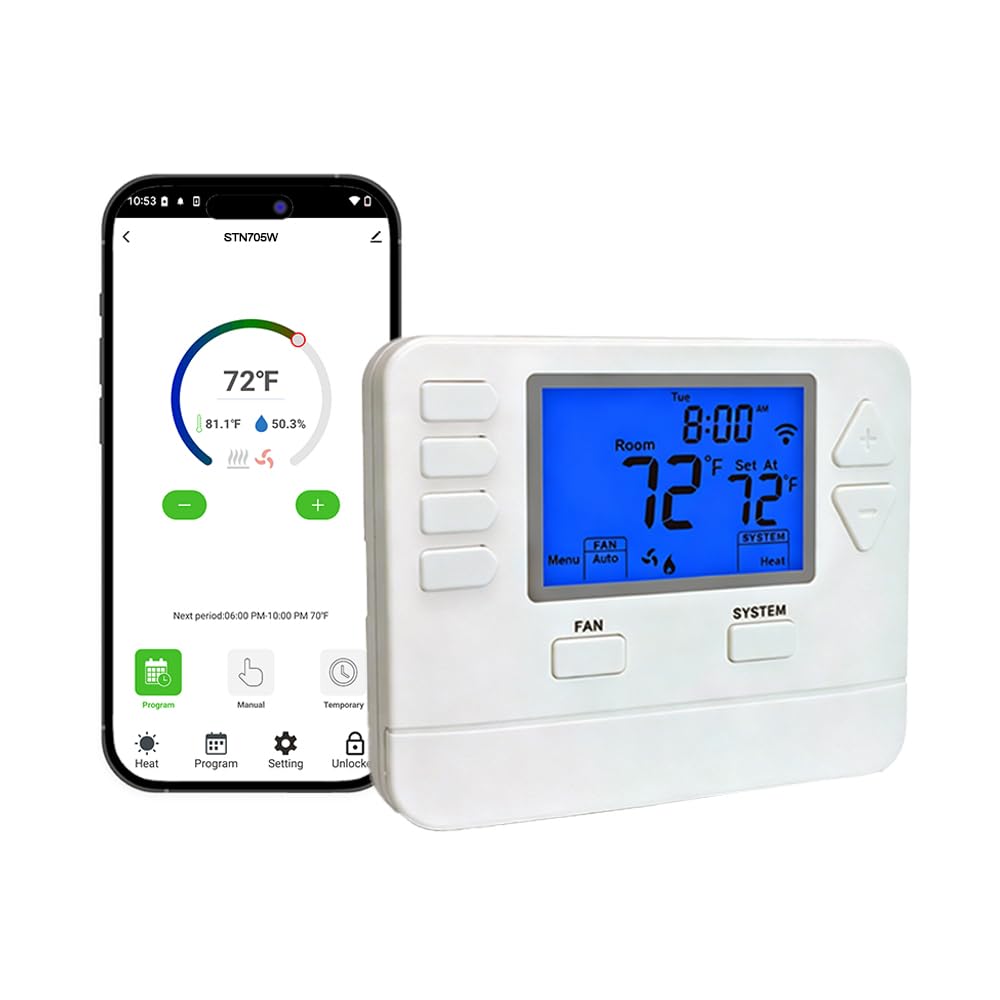
Type: Wi-Fi programmable thermostat
Control: App remote control
Programming: 7-day, 5-1-1 day, or non-programmable
Connectivity: Wi-Fi
This unit is the budget option, and its selling point is flexibility in scheduling. Buyers can run a full 7-day program, a weekday/weekend 5-1-1 split, or switch programming off entirely and use it as a simple manual control. That last mode matters for a house where routines are irregular and a fixed schedule would fight the occupants. App control means the heat can be adjusted remotely, which is the core reason most people go smart in the first place.
It fits a renter-friendly or low-budget install where app control is the whole goal. The trade-off is that a unit at this price tier typically skips the polish of name-brand models — expect a plainer interface and fewer integrations, and confirm the wiring matches before ordering.
Check the current price on Amazon
meross Matter Smart Thermostat for Electric Baseboard Heaters
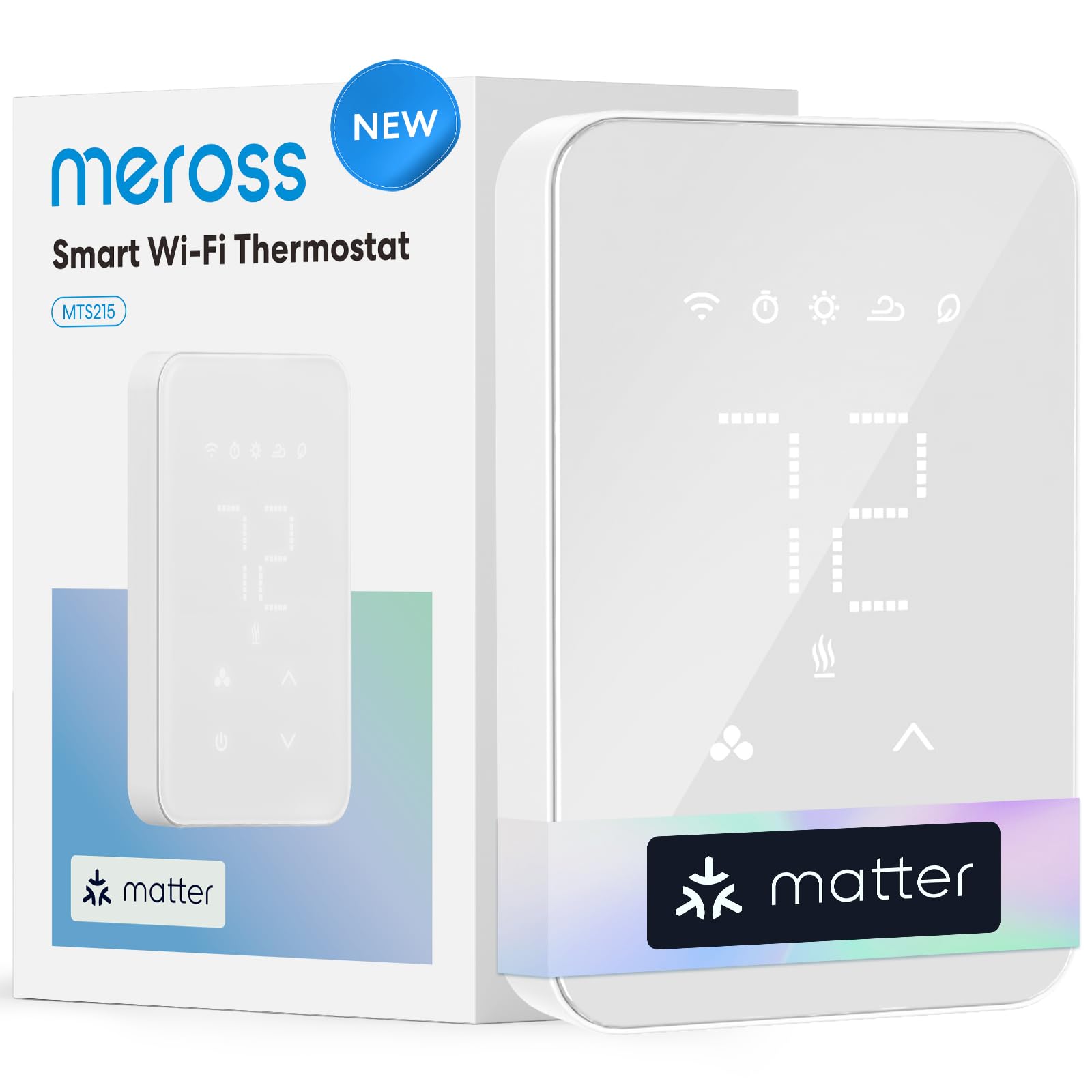
Type: Line-voltage smart thermostat
Voltage: 120-240V
Protocol: Matter
Ecosystems: HomeKit, Alexa, Google Home, SmartThings
Intended use: Electric baseboard heaters
Feature: Energy saving, remote control
Electric baseboard heaters are the classic "no thermostat" problem — they often run on line-voltage wiring that a standard low-voltage thermostat cannot handle. This meross unit is built for that job at 120-240V, and Matter support means it works across HomeKit, Alexa, Google Home and SmartThings rather than locking a household into one platform. Remote control and energy-saving scheduling round out the feature set.
It is the right pick for a room or home heated by electric baseboard, where a generic thermostat would be the wrong tool. The trade-off is that line-voltage installs carry real electrical risk, so buyers unsure of their wiring should budget for an electrician rather than treating this as a plug-and-play swap.
Check the current price on Amazon
ecobee Smart Thermostat Premium – WiFi, Siri & Alexa Built-In, Smart Sensor

Type: Premium Wi-Fi smart thermostat
Voice assistants: Siri and Alexa built-in
Sensor: Smart sensor included
Air quality: Air quality monitor
Connectivity: Wi-Fi
The ecobee Premium is the top of this list and the one to choose when the goal is a full smart-home center rather than a simple controller. Siri and Alexa are built into the unit itself, so it doubles as a voice point, and the included smart sensor extends temperature awareness beyond the wall where the thermostat sits. An air quality monitor adds a second job that most thermostats on this list do not attempt.
It suits a buyer who wants one device to handle heating, voice and indoor air insight, and who is comfortable with the premium price. The trade-off is cost: this is the most expensive pick here, and a household that only needs a schedule and app control will pay for features it never uses.
Check the current price on Amazon
Honeywell Home RTH9585WF1004 Wi-Fi Smart Color Thermostat

Type: Wi-Fi smart thermostat
Display: Color touch screen
Programming: 7-day
Certification: Energy Star
Voice control: Alexa ready
Color: Gray
The Honeywell Home RTH9585WF1004 sits in the middle of the range and leads with its interface. The color touch screen is the differentiator — a wall control that is easy to read and adjust without reaching for a phone. A 7-day program, Energy Star listing and Alexa readiness cover the practical side, and the gray finish keeps it neutral on a hallway wall.
This is the pick for a household that wants a well-known brand and a screen-first experience rather than app-first control. The trade-off is that "Alexa ready" points to a single assistant, so a Google- or Apple-centered home may find the integration thinner than expected.
Check the current price on Amazon
Before You Buy
- Wiring type: Confirm whether the existing setup is low-voltage or line-voltage (120-240V); electric baseboard needs a line-voltage model.
- Compatibility: Check the heating system — forced air, baseboard and heat pumps do not all use the same control.
- Ecosystem: Match the thermostat to the household’s voice assistant, since support varies between Alexa, Siri, Google Home and SmartThings.
- Installation: DIY units suit confident homeowners, but line-voltage work is best left to an electrician.
- Scheduling: Decide whether a fixed 7-day program fits the routine or whether non-programmable manual control is more realistic.
- Extras: Weigh whether air quality monitoring or a remote sensor is worth the premium, or whether app control alone is enough.
Frequently Asked Questions
-
Can a smart thermostat be installed in a house that never had one?
In most cases yes, provided the heating system has compatible wiring. Line-voltage systems need a dedicated model, and a professional install is the safer route there. -
Which pick is best for electric baseboard heaters?
The meross Matter model, which is rated for 120-240V and built specifically for electric baseboard heat. -
Do these controls work without a subscription?
Core heating control and app scheduling are handled on the device; premium extras vary by brand, so check the listing before buying. -
Is a budget model enough for a first smart thermostat?
For app control and a schedule, yes. The budget picks cover the essentials, while premium models add sensors, voice hardware and air quality monitoring. -
What if the household uses Google or Apple instead of Alexa?
The meross unit supports HomeKit, Google Home and SmartThings, and the ecobee Premium builds in Siri, making either a better fit than Alexa-only models.
Bottom Line
For most houses going smart for the first time, the Sensi ST55 is the safest starting point — DIY install, Energy Star efficiency and Alexa control at a budget price. Households with electric baseboard heat should go straight to the meross Matter model, while buyers who want a full smart-home hub should stretch to the ecobee Premium.
