Why there are Amazon links here: Brave Review is paid a commission for qualifying Amazon purchases made through the links below. Your price does not change, and using our links is entirely optional. How this works
Best Smoke Alarm for a Care Home Room: 5 Picks That Get Noticed Fast
A care home room needs an alarm that wakes a resident who may not move quickly and that a staff member can test or silence without a ladder. The five picks below cover battery-only, hardwired and interconnected options so a buyer can match the existing wiring and the resident’s needs. Each entry states who it suits and where it falls short, and the overview table gives a one-line comparison for a fast decision.
Overview of the Picks
| Product | Key Spec | Best Use | Price Tier |
|---|---|---|---|
| First Alert SMI100 Battery Smoke Alarm | Battery-powered, 1-pack | Simple retrofit in rooms without wiring | Budget |
| Kidde Compact Smoke Detector 10SDR | 4-inch body, 85 dB alarm, AA battery | Small rooms and tight ceiling space | Budget |
| SITERWELL Hardwired Interconnected Alarm | Hardwired with 9V backup, interconnect | Buildings that need linked alarms | Mid-range |
| First Alert SMI100-AC Hardwire Alarm | Hardwired with 9V battery backup | Rooms already fitted with mains wiring | Budget |
| X-Sense SD2J0AX Smoke Detector | 10-year battery, hush and self-test, UL 217 | Low-maintenance rooms with cooking nearby | Budget |
1. First Alert SMI100 Battery Smoke Alarm
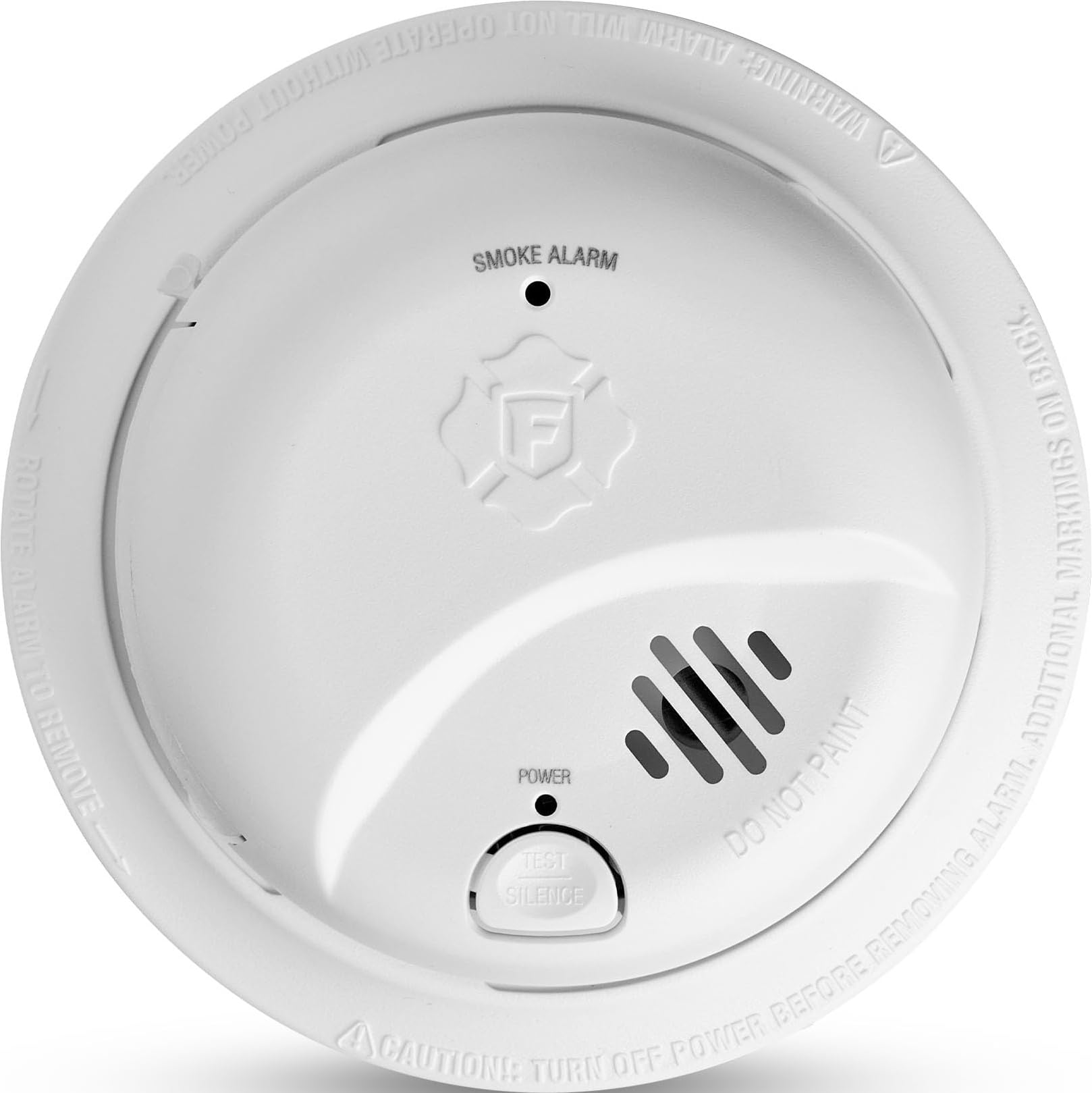
Type: Battery smoke alarm, 1-pack
Power source: Battery
Installation: No wiring required
Brand: First Alert
Pack size: 1 alarm
The SMI100 is the straightforward choice for a room with no mains wiring and no plans to add any. It runs on a battery alone, so a maintenance worker can mount it on a ceiling in minutes and a resident is never left without cover during an electrical outage. First Alert is a name most facilities teams already recognise, which helps when a manager has to sign off on equipment.
This alarm suits small bedrooms, respite rooms and any space where running cable is impractical or too disruptive. It is also the sensible pick for a temporary room or a converted space that may change use later.
Trade-off: A battery-only alarm depends entirely on someone remembering to change the cell, so it needs a written test-and-replace routine rather than a one-off installation.
2. Kidde Compact Smoke Detector 10SDR
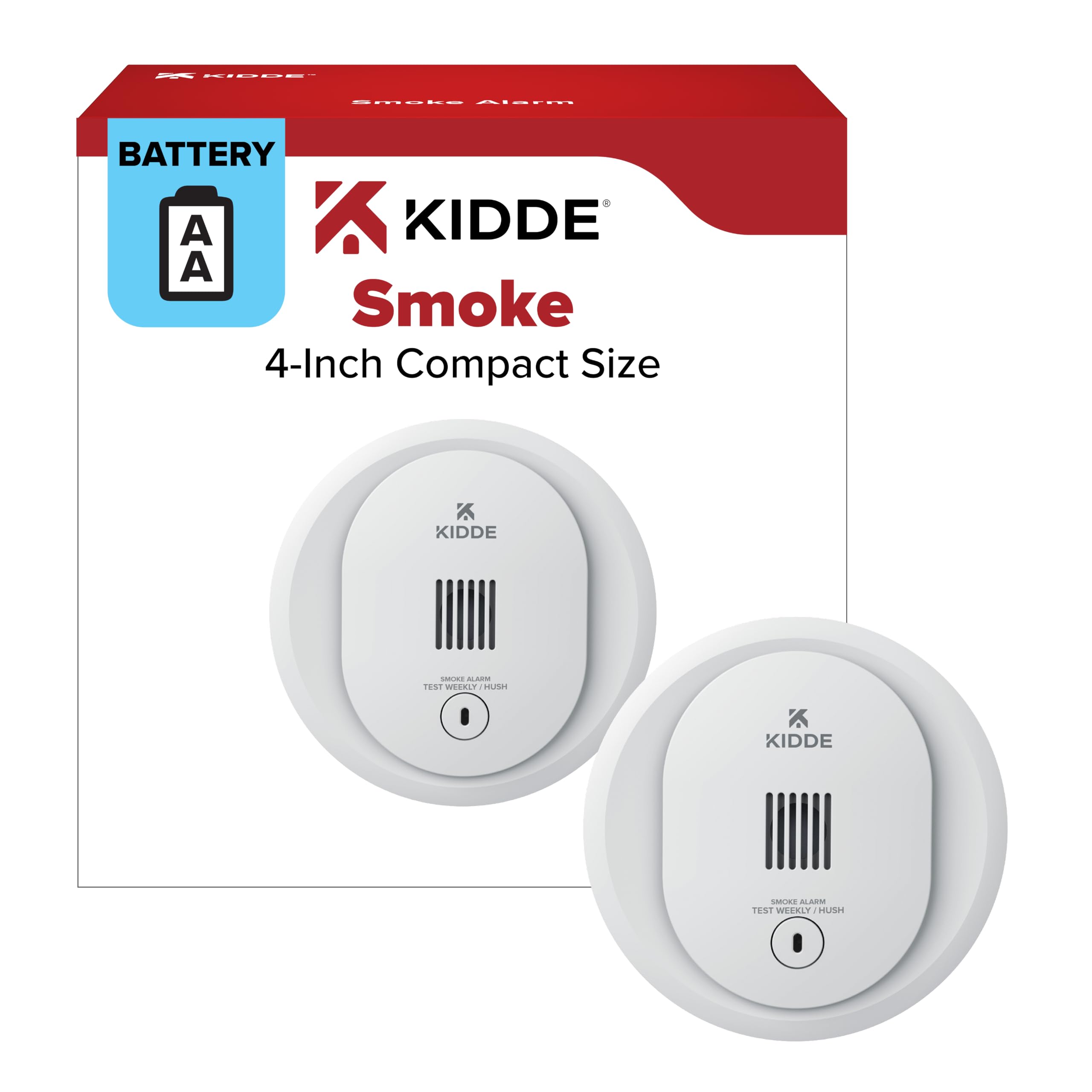
Type: Compact battery smoke detector
Power source: AA battery
Alarm output: 85 dB
Body size: 4-inch
Status indicator: LED status lights
Brand: Kidde
The compact 4-inch body is the headline here. Care home rooms are often small, and a ceiling already carrying a light fitting or a call-system sensor leaves little room for a bulky alarm. The LED status lights let a staff member glance up and confirm the unit is powered without touching it, which matters on a busy round.
The 85 dB alarm is loud enough to be heard through a closed door in most room layouts. This unit suits smaller bedrooms and en-suite-adjacent spaces where a full-size detector would look out of place or crowd the ceiling.
Trade-off: The compact housing leaves less room for the sensor chamber and battery bay, so this is a room-by-room unit rather than a whole-corridor solution, and the AA cell will need routine replacement.
3. SITERWELL Hardwired Interconnected Smoke Alarm
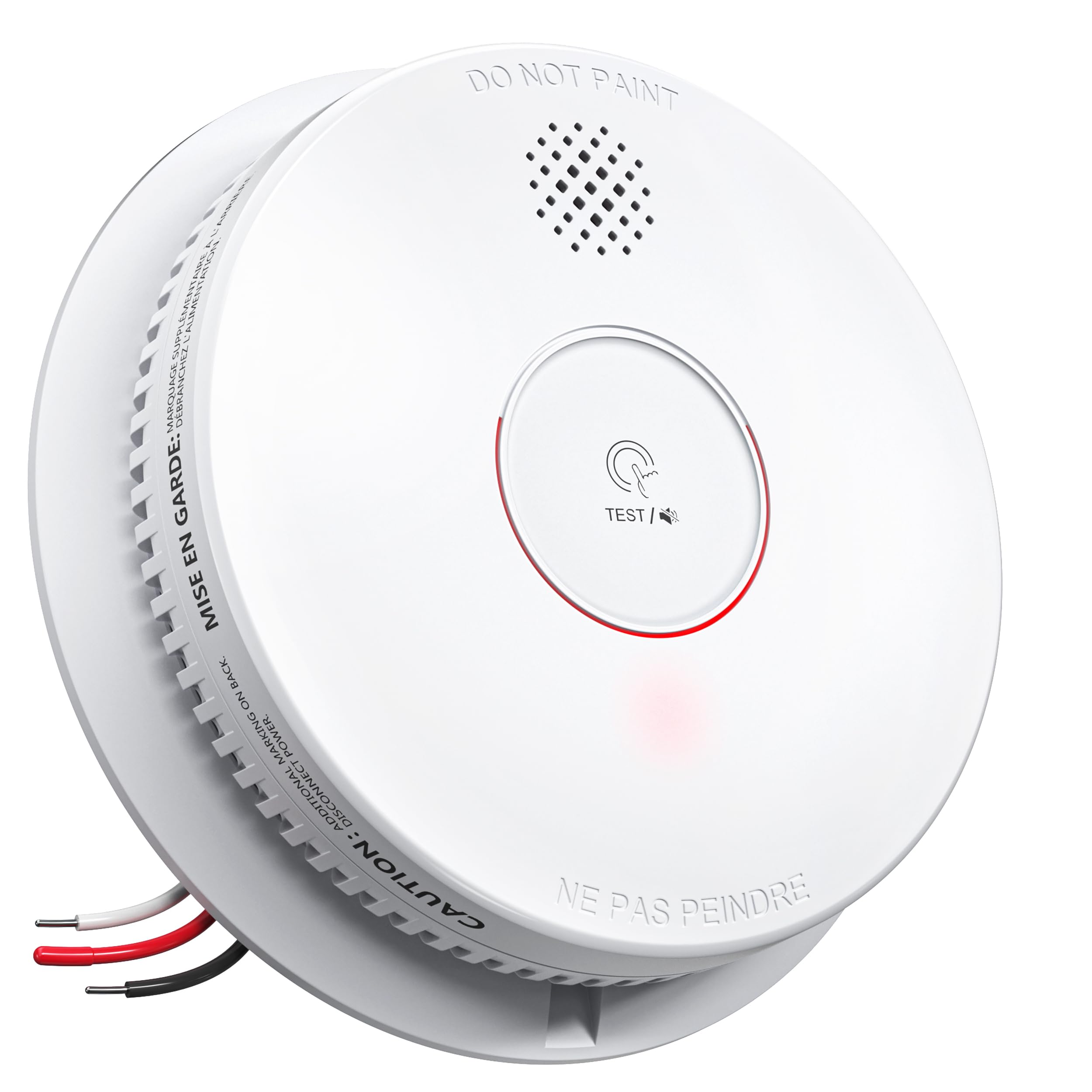
Type: Hardwired photoelectric smoke alarm
Power source: Mains with 9V backup battery
Interconnection: Links with other compatible alarms
Controls: Test/Silence button
Sensor: Photoelectric
Pack size: 1 alarm
Interconnection is the feature that earns this unit its place. When one alarm senses smoke, linked units sound together, so a fire starting in a closed bedroom raises the alarm in the corridor and the next room as well. For a care setting that is a meaningful safety gain over standalone units.
The photoelectric sensor is the type generally favoured for smouldering fires, which are common in bedding and soft furnishings. The 9V backup keeps the unit live through a power cut, and the front test/silence button means staff can handle a false trigger without dismantling anything.
Trade-off: Interconnection only works with compatible units on the same circuit, so this alarm makes sense for a building being fitted out or upgraded as a system, not as a single drop-in replacement.
4. First Alert SMI100-AC Hardwire Smoke Alarm
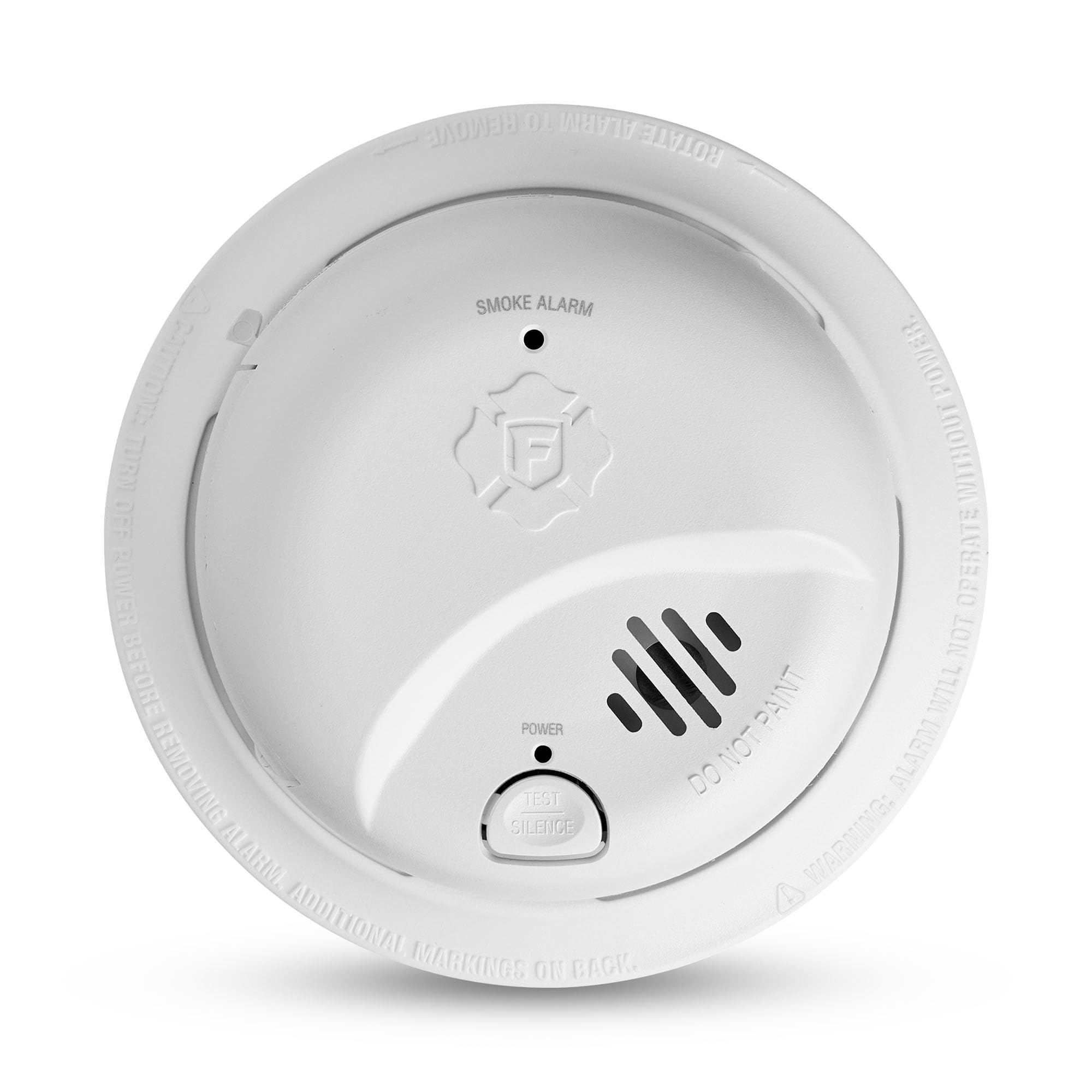
Type: Hardwired smoke alarm
Power source: Mains with 9V battery backup
Brand: First Alert
Pack size: 1 alarm
This is the mains-powered counterpart to the first pick, and it suits rooms that already have a ceiling feed from a previous alarm or a lighting point that can be adapted. Running on mains power removes the battery-only weak point, while the 9V backup keeps protection in place during an outage.
The unit is aimed at straightforward replacement work: a maintenance team swapping out old hardwired alarms room by room gets a familiar form factor and a known brand. It is a practical choice for a rolling refurbishment rather than a new-build specification.
Trade-off: It needs a qualified person to isolate and reconnect the mains supply, so the true cost includes labour, and it will not interconnect with a different manufacturer’s system.
5. X-Sense SD2J0AX Smoke Detector

Type: Photoelectric smoke alarm
Power source: 10-year sealed battery
Sensor: Photoelectric, tuned against cooking nuisance alarms
Controls: One-button hush and self-test
Certification: UL 217
Installation: No-wire
Pack size: 1 alarm
The 10-year battery is the reason this unit stands out for care settings, where maintenance time is always stretched. Once fitted, the alarm needs no cell changes for its service life, which removes the most common cause of a dead detector. The photoelectric sensor is designed to be less prone to cooking fumes, and the hush button lets staff silence a nuisance trigger without removing the unit.
The self-test function gives a quick confirmation that the alarm is working, and the no-wire mounting keeps installation simple. It suits resident bedrooms, staff break rooms and any space near a kitchenette where nuisance alarms would otherwise be a daily irritation.
Trade-off: A sealed 10-year battery cannot be replaced, so the whole unit is retired at end of life, and the hush button only helps if staff are on hand when cooking smoke drifts.
Before You Buy
- Power source: Decide between battery-only, mains with backup, and sealed long-life battery — the choice is driven by whether the room has a ceiling feed.
- Interconnection: If the building needs all alarms to sound together, only an interconnected model delivers that; standalone units alert the room and the corridor only.
- Alarm loudness: A care home room needs an alarm that carries through a closed door, so check the stated dB output rather than assuming.
- Sensor type: Photoelectric sensors are the usual pick for smouldering fires in soft furnishings and bedding.
- Installation labour: Hardwired units need an electrician, so factor fitting cost into the comparison, not just the shelf price.
- Maintenance routine: Any replaceable battery needs a written test schedule; a sealed 10-year unit removes that task but must still be tested.
- Mounting space: Measure the ceiling first — a compact 4-inch body fits where a full-size detector will not.
Frequently Asked Questions
-
What is the best smoke alarm for a care home room?
For most rooms, a photoelectric alarm with a long-life battery and a hush button is the simplest fit, while buildings that need linked alarms should choose an interconnected hardwired model. -
Should a care home room use a battery or hardwired alarm?
Hardwired with battery backup is the more robust option where wiring exists, but a battery-only or sealed 10-year unit is a sound choice for rooms without a ceiling feed. -
Why does interconnection matter in a care setting?
Linked alarms sound together, so smoke in one bedroom raises the alert in the corridor and neighbouring rooms, giving staff and residents more time to respond. -
Will a photoelectric alarm reduce false alarms from cooking?
Photoelectric sensors are generally less prone to cooking nuisance triggers than other types, and a hush button lets staff silence a false alarm quickly. -
How often should a care home smoke alarm be tested?
A regular scheduled test is essential regardless of power source, and any replaceable battery should be swapped on a fixed timetable rather than left until it chirps. -
Can one alarm cover a whole room?
A single unit protects the room it is mounted in; cover corridors and neighbouring rooms with additional alarms, ideally interconnected.
Bottom Line
The strongest all-round pick for a care home room is the X-Sense SD2J0AX, because the sealed 10-year battery removes the most common failure point and the photoelectric sensor with hush cuts nuisance alarms. Where the building already has mains wiring and needs linked alarms, the SITERWELL hardwired interconnected unit is the better system choice. Check the X-Sense price on Amazon and confirm the power source before ordering.
