Why there are Amazon links here: Brave Review is paid a commission for qualifying Amazon purchases made through the links below. Your price does not change, and using our links is entirely optional. How this works
Reolink Home Hub vs Reolink Home Hub Pro: Which Central Hub Fits Your Camera Count
The Reolink Home Hub vs Reolink Home Hub Pro decision comes down to scale and local storage. The standard Home Hub is the compact, lower-cost central controller for a small battery or Wi-Fi camera setup. The Home Hub Pro is the larger unit with a built-in hard drive, expandable storage and room for far more cameras. Buyers with a handful of cameras should read the first section; buyers building a whole-property system should read the second.
The Picks at a Glance
| Product | Key Spec | Best Use | Price Tier |
|---|---|---|---|
| Reolink Home Hub | Up to 8 battery/Wi-Fi cameras, Wi-Fi 6, no monthly fee | Small homes and renters with a few cameras | Budget |
| Reolink Home Hub Pro | 2TB HDD included, up to 16TB, up to 24 cameras | Whole-property systems and long local recording | Premium |
Reolink Home Hub
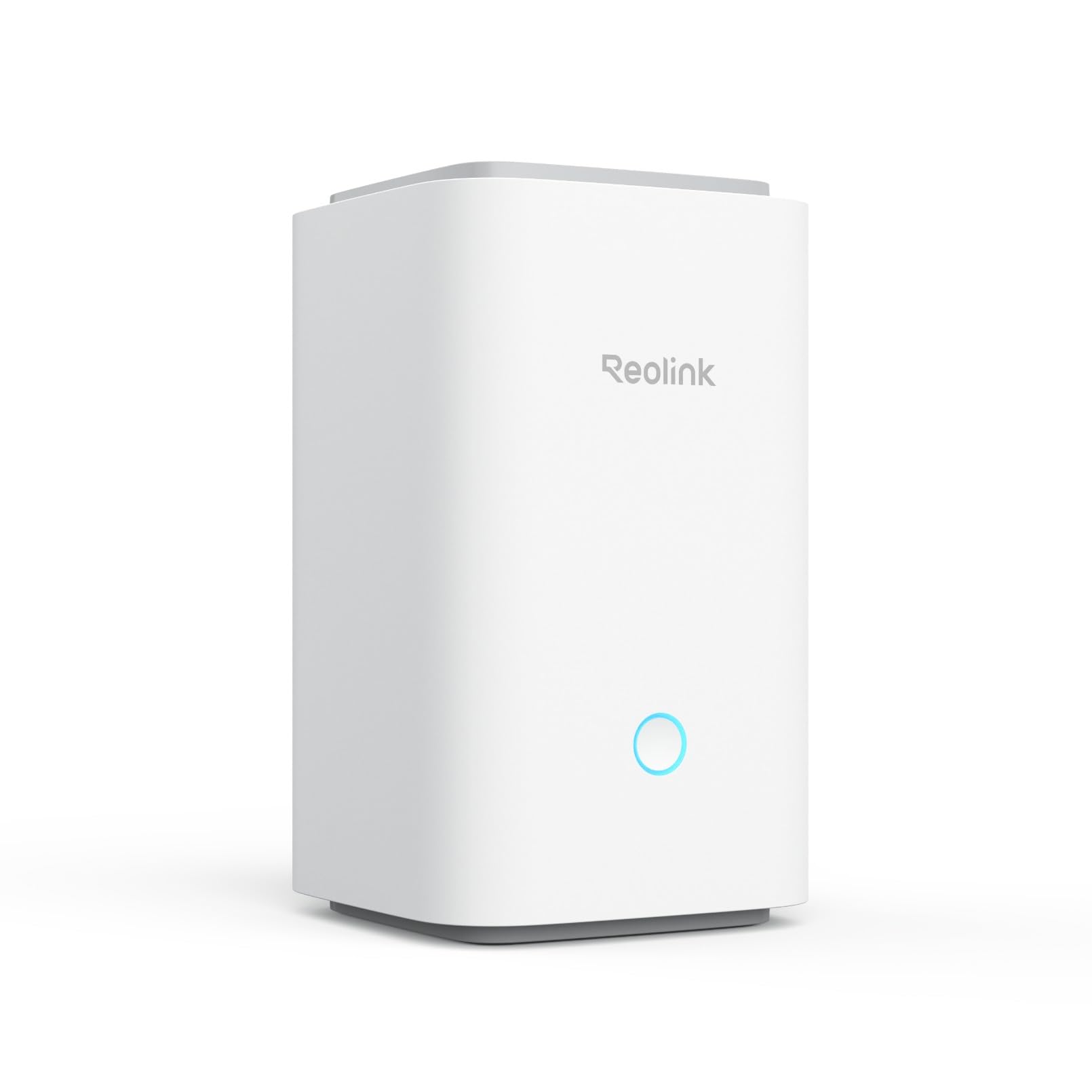
Camera Capacity: Up to 8 battery or Wi-Fi cameras
Wireless: 2.4/5GHz Wi-Fi 6
Subscription: No monthly fee
Privacy: Encryption with no third-party support
Reporting: Daily security summary
Role: Centralized control hub
The Reolink Home Hub is the entry point into Reolink’s centralized control system. It pulls a small fleet of battery and Wi-Fi cameras under one interface, so the household manages recordings and alerts in one place instead of juggling separate camera apps. The dual-band Wi-Fi 6 radio is the practical headline here: it keeps the hub on the less crowded 5GHz band while still supporting older 2.4GHz cameras.
The no-monthly-fee promise matters as much as the hardware. Local encryption keeps footage on the hub rather than in a paid cloud plan, and the daily security summary condenses a day of motion events into a short digest. Buyers who want a simple, private setup without a subscription should find the feature set matched to the job.
Trade-off: With no built-in hard drive in the name and a cap of eight cameras, this hub expects buyers to supply their own storage and to stay within a small system — anyone planning to expand across a large property will outgrow it.
Reolink Home Hub Pro

Included Storage: 2TB HDD
Maximum Storage: Up to 16TB HDD
Encryption: AES-128
Streaming: 16MP
Wireless: Wi-Fi 6
Siren: 120dB
Camera Capacity: Up to 24 Reolink security cameras
Subscription: No monthly fees
The Reolink Home Hub Pro is the same idea scaled up into a proper recording appliance. It ships with a 2TB hard drive already installed, which means local recording works the moment it is set up, and the drive bay accepts up to 16TB for buyers who want weeks of footage rather than days. AES-128 encryption protects what sits on that drive.
The rest of the spec sheet reads like a small NVR. Support for up to 24 cameras covers a full property, 16MP streaming keeps high-resolution cameras at their native detail, and the 120dB siren gives the hub its own deterrent rather than relying on each camera’s speaker. Wi-Fi 6 and the no-monthly-fee model round it out.
Trade-off: The Pro carries a premium price and a larger physical footprint, and buyers with only three or four cameras will be paying for capacity and a hard drive they may never fill.
Side-by-Side Comparison
| Feature | Reolink Home Hub | Reolink Home Hub Pro |
|---|---|---|
| Camera Capacity | Up to 8 battery/Wi-Fi cameras | Up to 24 Reolink cameras |
| Storage Included | None listed | 2TB HDD |
| Maximum Storage | Not expandable in the name | Up to 16TB HDD |
| Encryption | Encryption privacy | AES-128 |
| Wireless | 2.4/5GHz Wi-Fi 6 | Wi-Fi 6 |
| Streaming | Standard camera streams | 16MP streaming |
| Siren | None listed | 120dB |
| Monthly Fees | None | None |
| Price Tier | Budget | Premium |
Where the Two Hubs Diverge
Camera capacity is the first fork. Eight cameras versus twenty-four is not a small gap — it separates a home setup from a whole-property deployment. A buyer with a doorbell, a driveway camera and a couple of backyard units sits comfortably inside the standard hub’s limit. A buyer wiring a gate, a garage, a shed and multiple floors needs the Pro’s headroom, because the standard hub simply stops at eight.
Storage is the second and arguably bigger fork. The standard Home Hub does not include a drive in its name, so recording capacity depends on what the buyer adds or on the camera-side storage. The Pro arrives with 2TB installed and accepts drives up to 16TB, which is the difference between reviewing yesterday’s clips and reviewing last month’s. For anyone who wants continuous local recording without a subscription, the Pro is the only one of the two built for it out of the box.
Encryption and streaming favor the Pro. AES-128 is named explicitly on the Pro, and 16MP streaming means high-resolution cameras are not downsampled at the hub. The standard hub advertises encryption privacy without a named standard, which is fine for a small setup but less reassuring for a buyer recording a whole property.
The siren is a Pro-only feature. A 120dB siren built into the hub gives the system a centralized alarm rather than one scattered across individual cameras. Buyers who want an audible deterrent at the center of the system should weight this more heavily than it looks on paper.
Both share the same subscription-free philosophy. Neither hub requires a monthly fee, and both use Wi-Fi 6. That means the decision is not about ongoing cost — it is purely about capacity, storage and the extra hardware the Pro brings.
Which Should You Buy?
Choose the Reolink Home Hub if the camera count stays small, storage can live on the cameras or an added drive, and the priority is a low-cost, subscription-free way to manage a handful of battery or Wi-Fi cameras in one app. It suits renters, apartments and small homes where eight cameras is more than enough.
Choose the Reolink Home Hub Pro if the system is growing past a few cameras, local recording needs to be substantial, and high-resolution streams plus a built-in siren are worth the premium. It suits homeowners covering a full property who want an appliance-like hub that records locally from day one.
FAQ
-
What is the main difference between the Reolink Home Hub and the Home Hub Pro?
Capacity and storage. The standard hub supports up to 8 battery or Wi-Fi cameras with no drive included, while the Pro supports up to 24 cameras and ships with a 2TB hard drive expandable to 16TB. -
Does either hub require a monthly subscription?
No. Both are advertised as having no monthly fees, so recordings and features stay local without an ongoing cloud plan. -
Can the standard Home Hub record locally?
It does not include a hard drive in its listed specification, so local recording depends on added storage or on the cameras themselves. Buyers who want built-in recording should look at the Pro. -
How many cameras can each hub manage?
The standard Home Hub handles up to 8 battery or Wi-Fi cameras. The Home Hub Pro handles up to 24 Reolink security cameras. -
What encryption do the hubs use?
The Home Hub Pro specifies AES-128 encryption. The standard Home Hub advertises encryption privacy without naming a standard in its listing. -
Is the 120dB siren available on both hubs?
No. The 120dB siren is listed on the Home Hub Pro only, giving that unit a centralized audible alarm. -
Which hub is better for high-resolution cameras?
The Home Hub Pro, which lists 16MP streaming so high-resolution cameras are not downsampled at the hub. -
Which hub is the better value for a small setup?
The standard Home Hub, since a buyer with a few cameras will not use the Pro’s extra capacity or built-in drive.
Bottom Line
For most households with a handful of cameras, the Reolink Home Hub is the sensible pick: it delivers centralized control, Wi-Fi 6 and no monthly fees at the lower price tier. The Home Hub Pro earns its premium only when camera count climbs toward the twenties and substantial local recording matters — at that point its included 2TB drive and 16TB ceiling make it the more capable system.
