Why there are Amazon links here: Brave Review is paid a commission for qualifying Amazon purchases made through the links below. Your price does not change, and using our links is entirely optional. How this works
Best Home Battery for a Flat With No Outdoor Space
A flat with no balcony, no garden and no roof access rules out solar panels and fixed wall batteries, so the practical answer is a portable power station that charges from a wall socket and lives in a cupboard. This roundup covers five LiFePO4 units that suit three kinds of buyer: the renter who wants a small emergency backup, the flat owner running a fridge and router through a power cut, and the household that wants serious capacity without an installer. The overview table below puts every pick side by side, and each review explains who the unit is and is not for.
The Picks at a Glance
| Product | Key Spec | Best Use | Price Tier |
|---|---|---|---|
| Backup LiFePO4 Battery 640Wh | 640Wh, 1200W surge, 8 ports | Small flat emergency backup | Budget |
| Anker SOLIX C300 DC | 288Wh, 300W, no wall charger | Desk and travel backup | Budget |
| EF ECOFLOW Delta 3 | 1024Wh, 1800W AC | Fridge and router through outages | Mid-range |
| Anker SOLIX F3000 | 3,072Wh, expandable to 24kWh | Whole-flat backup | Premium |
| 1000W Portable Power Station 1024Wh | 1024Wh, 2000W peak, 60W USB-C PD | Camping crossover with home duty | Mid-range |
1. Backup LiFePO4 Battery, 640Wh
Capacity: 640Wh
Surge Output: 1200W
Charge Time: 1.5 hours
UPS Switchover: 10ms
Ports: 8
Waveform: Pure sine wave
Build: Metal design
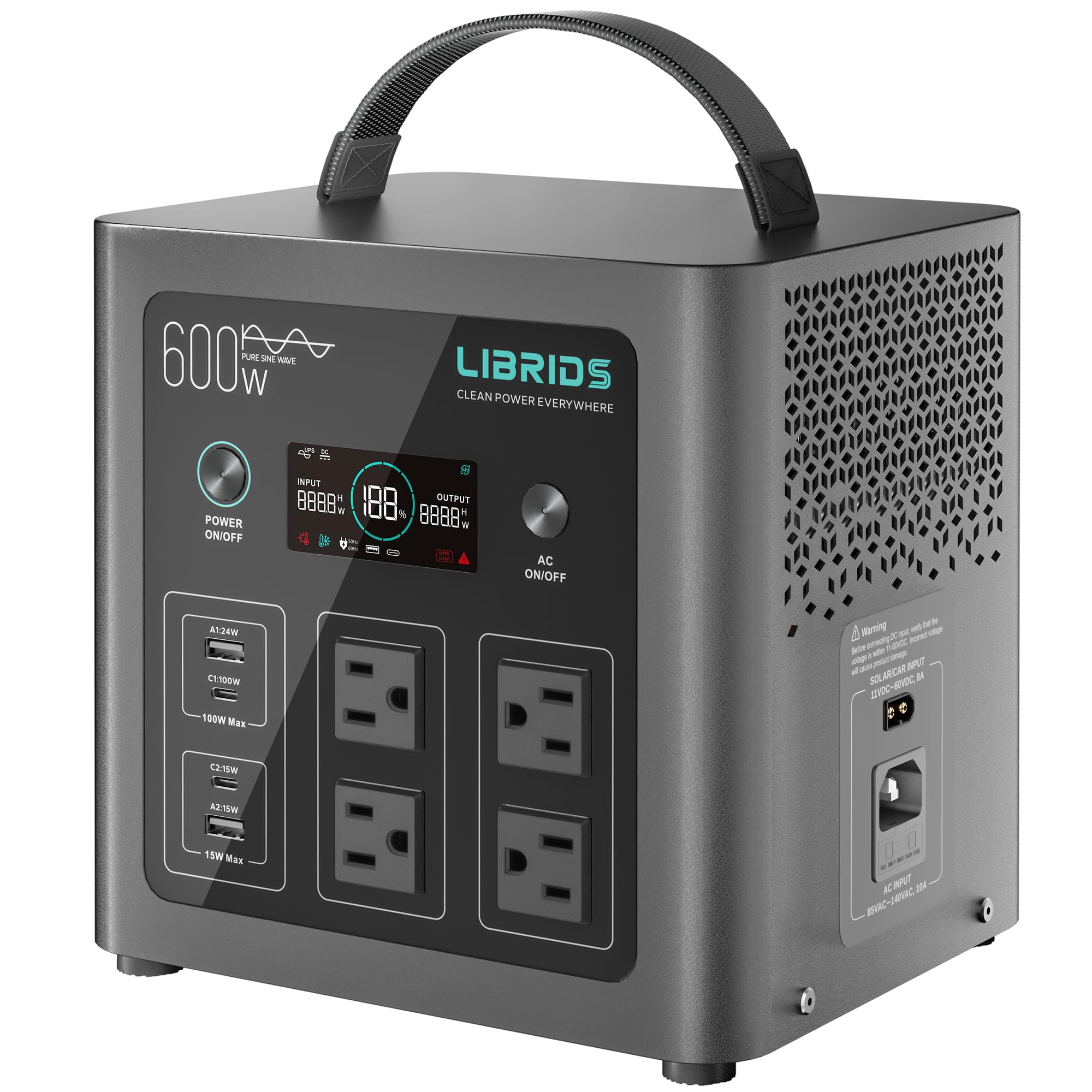
The metal housing is the standout here, because most units at this price use plastic shells that look out of place in a living room. The 10ms UPS switchover means the unit can sit between the wall socket and a router or a lamp and take over almost instantly when the mains drops. Eight ports across AC and USB cover a phone, a laptop, a light and a small appliance at the same time. The 1.5-hour charge time matters in a flat, where the unit has to be topped up quickly between uses rather than left on a balcony all day.
This pick earns its place as the entry point for renters who want one box that handles a short outage without rewiring anything. Buyers charging a laptop, running a lamp and keeping the router alive through an evening cut are the target. It is not for a household expecting to run a full-size fridge or a heater, since 640Wh drains fast under that load and 1200W surge will not start a large compressor.
Trade-off: The metal body adds weight and bulk compared with plastic rivals, so it is awkward to lift onto a high shelf and better kept at floor level in a cupboard.
2. Anker SOLIX C300 DC Portable Power Station, 288Wh
Capacity: 288Wh
Output: 300W
Battery Type: LiFePO4
Wall Charger: Not included
Intended Use: UPS, travel, emergency
Brand: Anker SOLIX

The C300 is the smallest unit here and the one that fits a drawer rather than a cupboard. LiFePO4 chemistry gives it a long service life for a battery this size, and the DC-focused output suits phones, laptops, a router and a fan rather than mains appliances. Anker builds it as a travel and emergency unit, so the shell is designed to be carried rather than installed. For a flat where storage space is the binding constraint, that small footprint is the whole argument.
This is the pick for a single person in a studio or a small flat who wants a phone and router backup and nothing more. It also suits buyers who already own a USB-C wall charger, since the unit ships without one. It is not for anyone who needs to run a mains fridge, a kettle or a heater, because 300W will not carry those loads and the capacity is gone in minutes under that draw.
Trade-off: No wall charger in the box means an extra purchase before the unit can be recharged from the mains, which pushes the real cost above the sticker.
3. EF ECOFLOW Delta 3 Portable Power Station, 1024Wh
Capacity: 1024Wh
AC Output: 1800W
USB-C Output: 100W
Full Charge Time: 56 minutes
Battery Type: LiFePO4
Intended Use: Home backup, camping, RVs

This is the sweet spot for a flat that wants real backup without a permanent installation. The 1800W AC output runs a fridge, a router, lights and a laptop at once, and the 56-minute full charge means the unit can be topped up between outages rather than sitting half empty. LiFePO4 cells hold up to repeated partial charging better than older chemistry, which suits a unit that lives plugged in as a UPS. The 100W USB-C port charges a laptop directly without an adapter.
It suits a couple or small family in a flat who want the fridge and the internet to survive a multi-hour cut. The unit is also the natural step up for anyone who started with a small station and found it ran dry too quickly. It is not for a buyer on the tightest budget, and it is not for a household trying to run an electric hob or a tumble dryer, which sit well beyond what a portable station should carry.
Trade-off: At this capacity the unit is heavy enough that moving it between rooms is a two-hand job, so the spot where it lives needs to be decided before it is unboxed.
4. Anker SOLIX F3000 Portable Power Station, 3,072Wh
Capacity: 3,072Wh
Expandable: To 24kWh
Output: 3,600W, 6,000W peak
Battery Type: LiFePO4
Features: Generator-ready, UPS
Intended Use: Home, RVs, emergencies
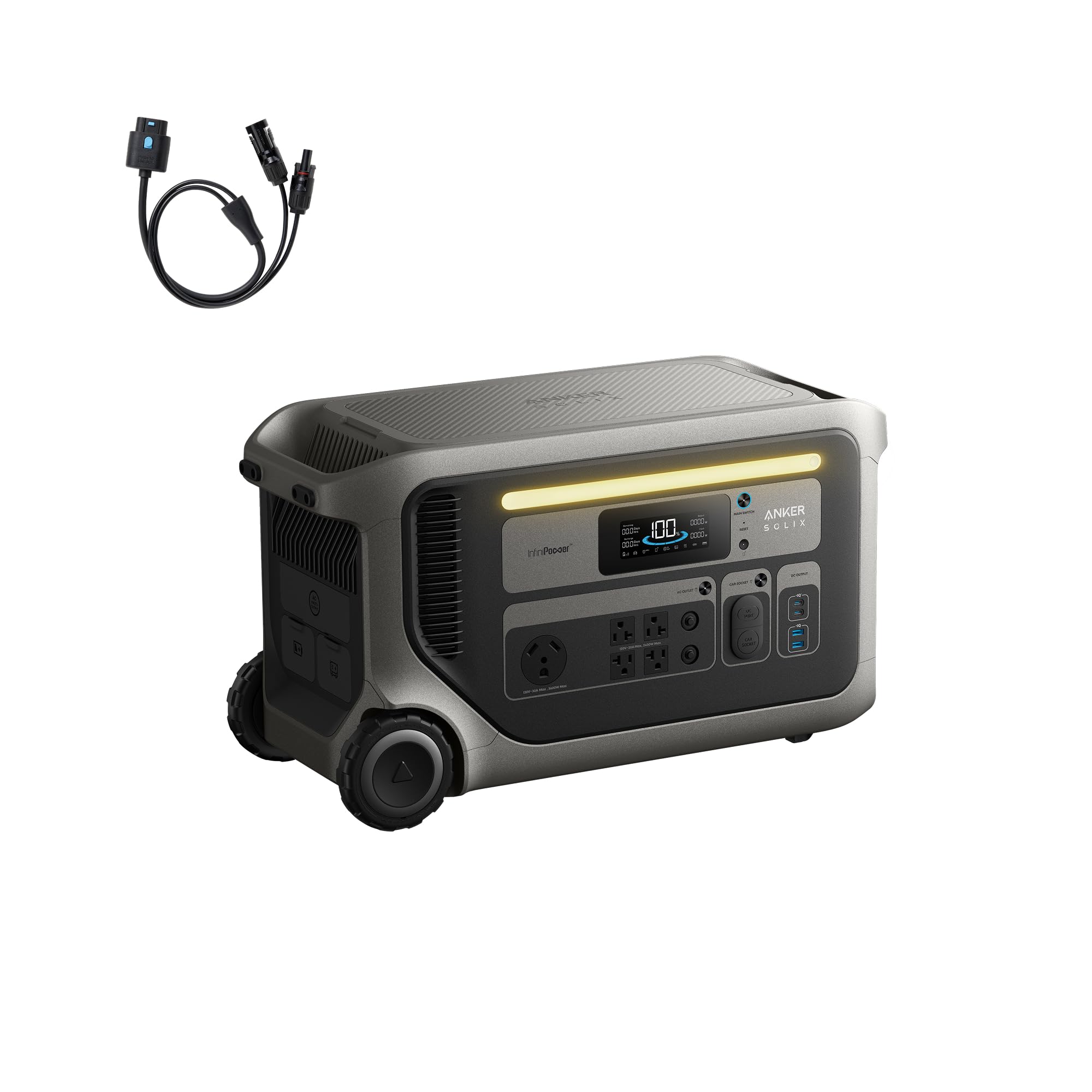
The F3000 is the closest a flat can get to a fixed home battery without an installer or a wall. Its 3,072Wh base capacity covers a fridge, lights, router and a few small appliances for an extended outage, and the expansion path to 24kWh means the system can grow with the household instead of being replaced. The 3,600W continuous output with a 6,000W peak handles motor starts that stall smaller stations. UPS behaviour means it can sit inline and take over automatically.
This is the pick for a flat owner who has decided that a proper backup is worth the money and wants one unit that covers the whole property. It also suits a household in a region with long, frequent outages where a small station would be exhausted before the first day is out. It is not for a renter unwilling to give up a large slice of floor space, and it is not for anyone expecting to move it regularly.
Trade-off: This is a large, heavy unit that needs a permanent floor position near a socket, so a small flat has to lose storage space to house it.
5. 1000W Portable Power Station, 1024Wh
Capacity: 1024Wh
Continuous Output: 1000W
Peak Output: 2000W
USB-C PD Output: 60W
Charge Time: 1 hour
Battery Type: LiFePO4
Intended Use: Camping, emergency, RV, van travel, home
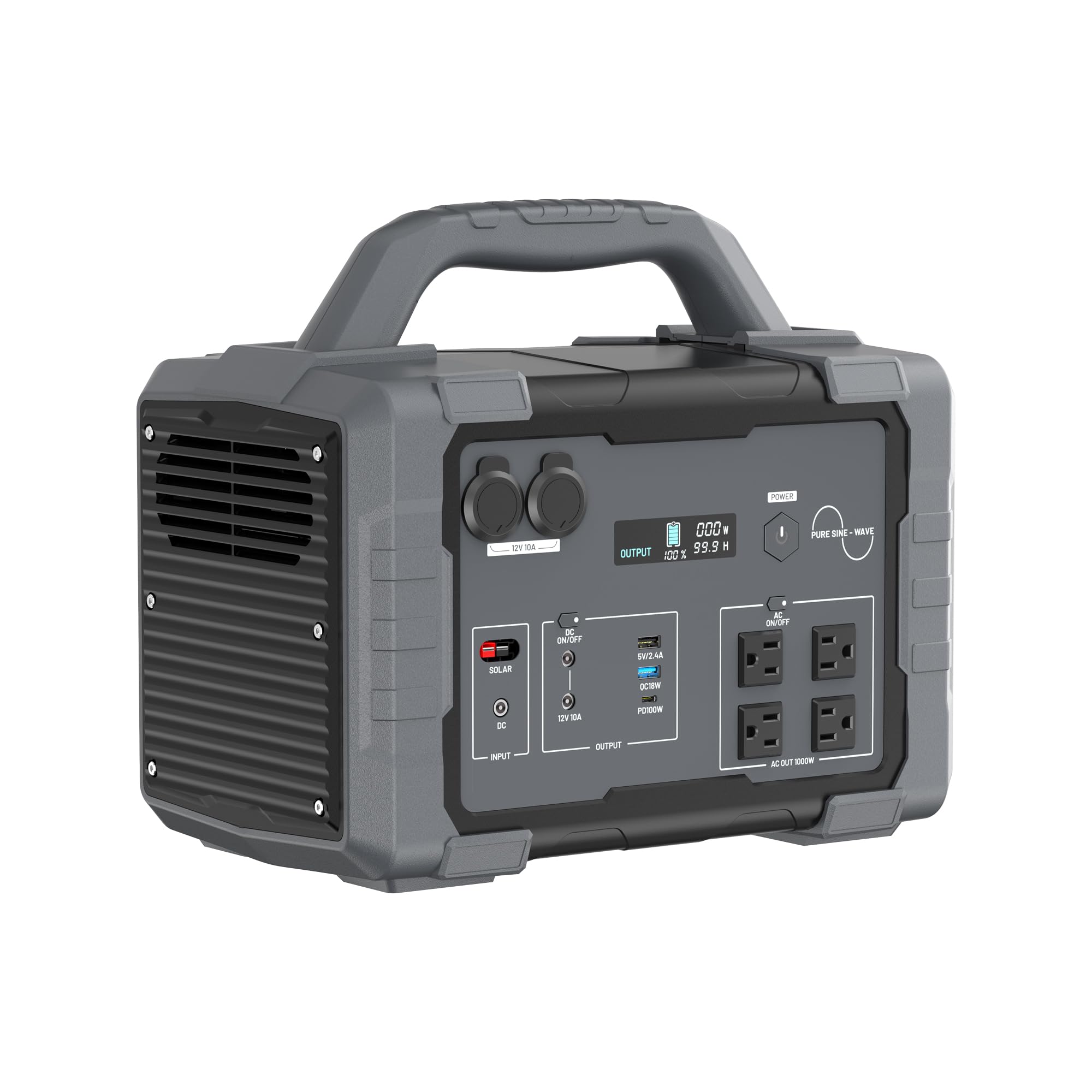
This unit matches the Delta 3 on capacity but aims at a lower continuous output, which keeps the price down and the unit a little easier to live with. The 2000W peak gives it enough headroom to start a fridge compressor, and the one-hour charge time makes it practical to keep topped up in a flat. The 60W USB-C PD port is enough for a laptop or a tablet, and LiFePO4 cells suit a unit that is charged and discharged often. It is built as a camping and van unit first, home backup second.
It suits a buyer who wants one station for weekends away and for the flat during an outage, so the money does double duty. The lower continuous rating is fine for a fridge, lights and electronics running together. It is not for a household that needs to run high-draw appliances simultaneously, and it is not the pick for someone who wants the fastest possible recharge from a wall socket at this capacity.
Trade-off: The 1000W continuous ceiling is the tightest here for its capacity, so running two appliances at once needs more planning than with the Delta 3.
Before You Buy
- Capacity: Match watt-hours to the load, not to the flat’s size. A router and a laptop need a fraction of what a fridge draws over the same hours.
- Output ceiling: Check the continuous wattage against the appliance that matters most. Motor-driven appliances such as fridges need peak headroom to start.
- Footprint and weight: Measure the cupboard or floor space before ordering. High-capacity units are heavy and are not designed to be lifted often.
- Charging route: A flat with no outdoor space charges from a wall socket, so recharge time and whether a wall charger is included both matter.
- Noise and heat: These units need airflow and produce some fan noise under load, so a closed cupboard is a poor home for one in use.
- Expansion: If the plan is to add capacity later, confirm the model supports expansion rather than assuming it does.
- Storage: LiFePO4 tolerates partial charge well, but a unit stored for months should be checked and topped up periodically.
Frequently Asked Questions
-
Can a home battery work in a flat with no outdoor space?
Yes, provided it is a portable power station charged from a wall socket rather than a solar-and-wall system. These units need no installer, no roof access and no balcony. -
How much capacity does a flat actually need?
A router, lights and phones run on a few hundred watt-hours. Adding a fridge over a multi-hour outage pushes the requirement into the 1000Wh range and above. -
Is LiFePO4 better than older battery chemistry for flat use?
LiFePO4 handles frequent partial charging well and has a long service life, which suits a unit that lives plugged in as a backup and is rarely fully cycled. -
Can these units run a fridge?
The larger picks can, provided the continuous and peak ratings clear the compressor’s startup draw. The smallest unit here cannot. -
Do these units need ventilation?
Yes. They produce heat and fan noise under load, so they need clear space around them and should not run inside a closed cabinet. -
Can capacity be added later?
Only on models built for it. The Anker SOLIX F3000 is the one pick here with a stated expansion path.
Bottom Line
For most flats, the EF ECOFLOW Delta 3 is the best home battery for a flat with no outdoor space: 1024Wh and 1800W cover a fridge, router and lights, and the fast recharge makes it practical to keep ready. Buyers who only need phone and router backup should take the smaller Anker SOLIX C300, while anyone planning for long outages should step up to the Anker SOLIX F3000.
