Why there are Amazon links here: Brave Review is paid a commission for qualifying Amazon purchases made through the links below. Your price does not change, and using our links is entirely optional. How this works
BLUETTI Apex 300 vs EcoFlow DELTA 3 Max Plus: Capacity vs Recharge Speed
The BLUETTI Apex 300 and the EcoFlow DELTA 3 Max Plus are two of the most capable portable power stations in their class, and they solve the same problem from opposite directions. The BLUETTI leans on raw capacity and heavy output; the EcoFlow leans on fast recharge and a lower entry price. This comparison breaks down the differences that actually matter and names the buyer each one fits.
BLUETTI Apex 300 Portable Power Station
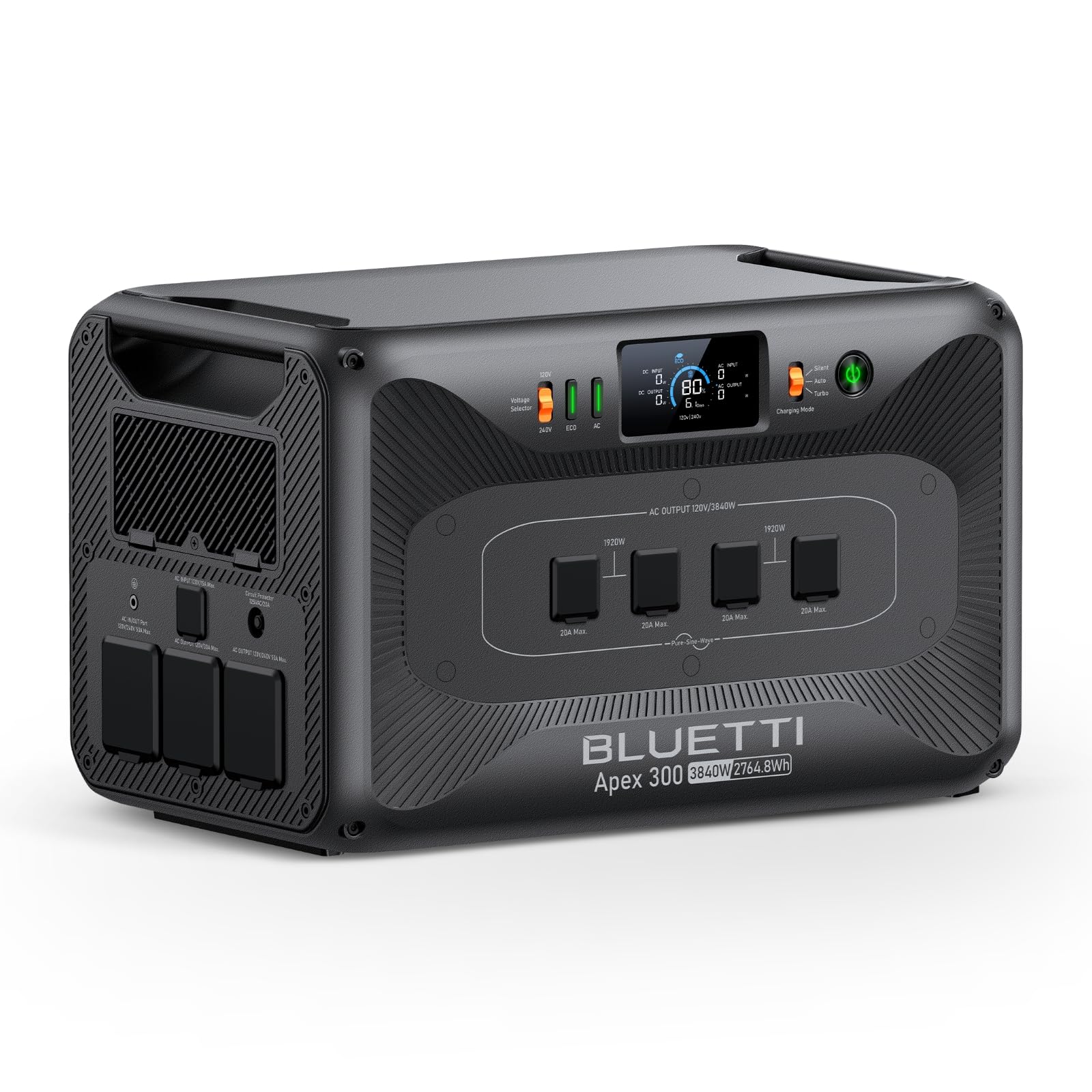
Capacity: 2764.8Wh
Battery Chemistry: LFP (lithium iron phosphate)
AC Output: 3840W continuous, 7680W surge
AC Ports: 6
Output Modes: Simultaneous 120V/240V
Special Feature: Black Start capability
Intended Use: Home backup, RV, emergencies
The Apex 300 is built around capacity and muscle. Nearly 2.8kWh of LFP storage paired with 3840W of continuous AC output puts it in a class where it can run serious household loads rather than just phones and laptops. LFP chemistry is the durable choice for a station meant to sit charged for months and then work hard during an outage.
The 120V/240V simultaneous output is the feature that separates it from most portable units. A 240V feed opens up well pumps, dryers and other heavy appliances that single-voltage stations cannot touch, and the black start capability means the unit can bring power back up without grid support. Six AC ports give it enough outlets to act as a small distribution panel for a home or a fully loaded RV.
Trade-off: The capacity and output that make it capable also make it heavy and expensive, so it is a poor fit for anyone who needs to carry a station up stairs or into a tent.
Check the current price on Amazon
EcoFlow DELTA 3 Max Plus Portable Power Station
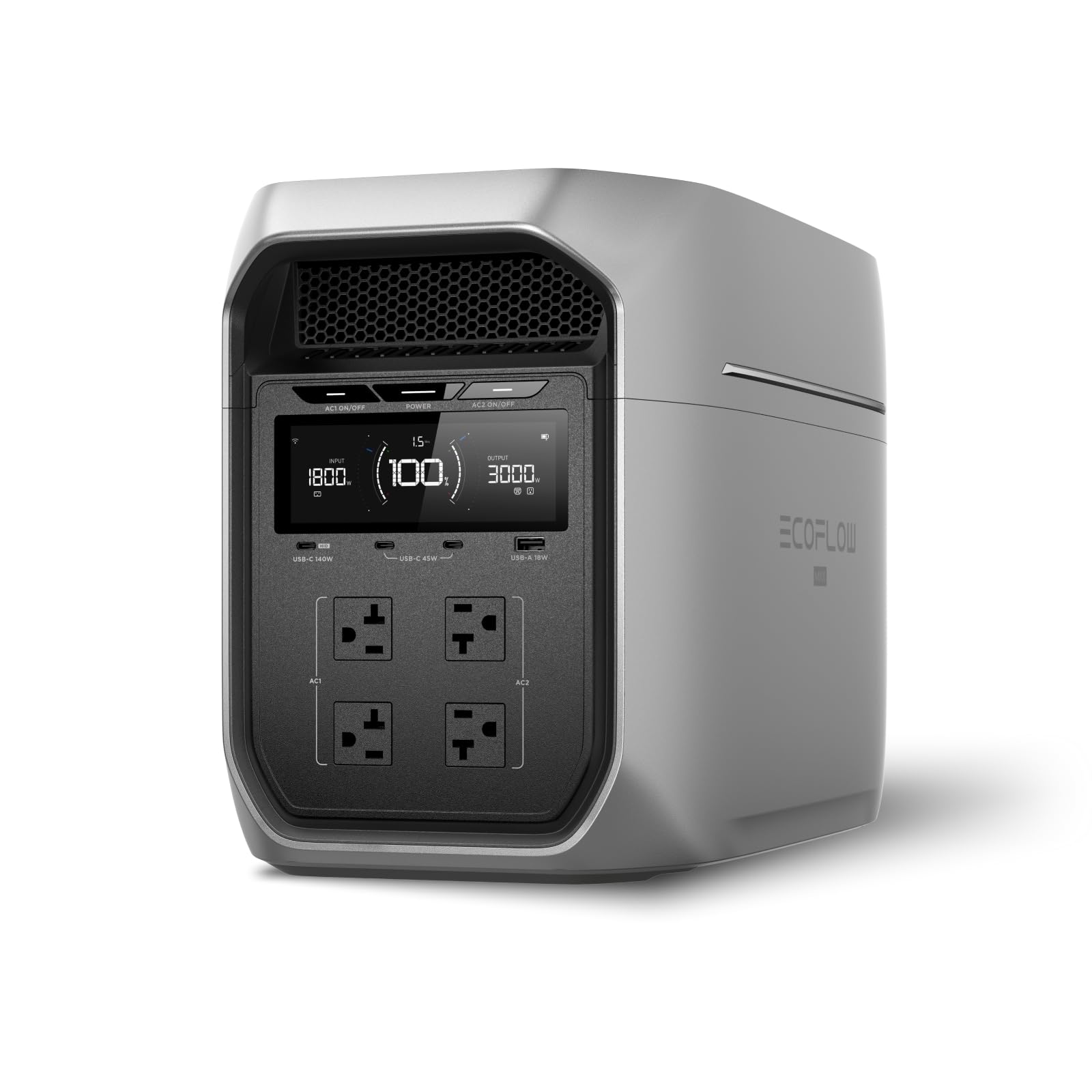
Capacity: 2048Wh
AC Output: 3000W continuous
X-Boost Output: 3800W
Recharge Speed: 0–80% in 64 minutes
Power Source: AC, solar (panel optional)
Intended Use: Home backup, RV, camping
The DELTA 3 Max Plus trades some capacity for speed and agility. Just over 2kWh is still enough for a fridge, a router, lights and a laptop through a long evening, and the 3000W continuous output covers most household appliances one or two at a time. X-Boost pushes it to 3800W for devices that draw a spike on startup, which widens the list of things it can actually run.
The headline number is the recharge time: 0–80% in 64 minutes from a wall outlet is genuinely fast for a station this size, and it changes how the unit gets used. A station that refills in about an hour is easy to top up between outages, between campsites or during a short grid window, rather than needing an overnight charge.
Trade-off: The smaller battery and the lack of a 240V output mean it cannot carry a whole home or run heavy 240V appliances the way the BLUETTI can, and the fast charging puts more heat and stress on the cells over years of use.
Check the current price on Amazon
Side-by-Side Comparison
| Spec | BLUETTI Apex 300 | EcoFlow DELTA 3 Max Plus |
|---|---|---|
| Capacity | 2764.8Wh | 2048Wh |
| Battery Chemistry | LFP | Not stated in name |
| AC Output (Continuous) | 3840W | 3000W |
| Surge / Boost Output | 7680W surge | 3800W X-Boost |
| AC Ports | 6 | Not stated in name |
| Voltage Output | 120V/240V simultaneous | Single voltage |
| Recharge Speed | Not stated in name | 0–80% in 64 minutes |
| Black Start | Yes | Not stated in name |
| Solar Input | Supported | Supported (panel optional) |
| Price Tier | Premium | Mid-to-premium |
The table makes the split obvious. BLUETTI wins on capacity, continuous output, surge headroom and voltage flexibility; EcoFlow wins on recharge speed and price. Those are not small differences — they point to two different kinds of buyer.
Capacity is the first real divider. The Apex 300 carries roughly a third more stored energy, which translates into more hours of the same load or the same hours at a heavier load. For a multi-day outage or a household with medical equipment, that margin matters more than any other spec on the page.
Output and voltage are the second. 3840W continuous against 3000W is a meaningful gap, and the 240V capability is a category difference rather than a spec difference. A buyer with a well pump, an electric dryer or a 240V workshop tool has essentially one option here.
Recharge speed is where EcoFlow answers back. A 64-minute run to 80% makes the DELTA 3 Max Plus far easier to live with on a daily or weekly cycle, and for camping and RV use that convenience often beats extra capacity that never gets drained.
Which Should You Buy?
Choose the BLUETTI Apex 300 if: the priority is whole-home or heavy-appliance backup, a 240V load is on the list, or the station will sit as insurance rather than travel. Buyers who want maximum runtime and the durability of LFP for long-term standby should start here.
Choose the EcoFlow DELTA 3 Max Plus if: the station will be used often and refilled often, the budget is tighter, or the loads are ordinary household and camping devices. Buyers who value a fast turnaround between charges over maximum stored energy will get more day-to-day value from it.
FAQ
-
Which one has more battery capacity?
The BLUETTI Apex 300, at 2764.8Wh against 2048Wh for the EcoFlow DELTA 3 Max Plus. That is roughly a third more stored energy. -
Can the EcoFlow DELTA 3 Max Plus run a whole home?
Not in the way the BLUETTI can. It lacks a 240V output, so heavy 240V appliances such as well pumps and dryers are out of reach, and its 2048Wh capacity limits how long it can carry a full household load. -
Which one recharges faster?
The EcoFlow, which reaches 0–80% in 64 minutes. The BLUETTI’s recharge speed is not stated in its listing, so buyers who prioritize fast turnaround should confirm that figure before deciding. -
Is LFP chemistry a real advantage?
Yes, for a standby unit. LFP cells tolerate being held at full charge and cycled hard over many years better than older chemistries, which suits a station that spends most of its life waiting for an outage. -
Which is better for RV use?
It depends on the RV. The BLUETTI’s 240V output and six AC ports suit a large rig with heavy draws; the EcoFlow’s lighter weight and fast recharge suit a smaller rig or a camper who moves often. -
Do both support solar charging?
Yes. Both are solar generators, and the EcoFlow listing notes that its solar panel is optional, so panels are a separate purchase on that model. -
Which one costs more?
The BLUETTI sits in a higher price tier, which follows from its larger battery and higher output. The EcoFlow is the more accessible of the two on price.
Bottom Line
The BLUETTI Apex 300 is the stronger pick for anyone treating a power station as home insurance: more capacity, more output, 240V capability and LFP durability all point the same way. The EcoFlow DELTA 3 Max Plus wins on the practical stuff — a lower price and a recharge fast enough to make topping up painless — and that makes it the better fit for RV, camping and everyday backup use. Buyers who need 240V or multi-day runtime should take the BLUETTI Apex 300; everyone else gets more usable value from the EcoFlow DELTA 3 Max Plus.
