Why there are Amazon links here: Brave Review is paid a commission for qualifying Amazon purchases made through the links below. Your price does not change, and using our links is entirely optional. How this works
Best Temperature Alarm for a Loft Conversion: 5 Picks That Warn You Before Trouble
A loft conversion sits at the top of the house, where heat builds in summer and cold settles in winter, and nobody walks through it often enough to notice. A temperature alarm closes that gap by pushing an alert to a phone or sounding a local siren when conditions drift out of range. This short roundup covers five units that suit three kinds of buyer: the phone-first owner who wants remote alerts, the budget buyer who needs a simple high/low trip, and the specialist who monitors a fridge, freezer or plant room. The overview table below puts all five side by side; the reviews explain who each one fits.
The Picks at a Glance
| Product | Key Spec | Best Use | Price Tier |
|---|---|---|---|
| Govee H5075 Bluetooth Hygrometer Thermometer | Bluetooth app, 164ft remote monitor, 2-yr data export | Phone alerts without Wi-Fi | Budget |
| Govee H5103 WiFi Thermometer Hygrometer | 2.4G WiFi and Bluetooth, e-ink display, 2-yr data export | Remote checks from anywhere | Mid-range |
| Digital Thermometer with Min/Max and High/Low Alarm | Min/max recording, high/low alarm | Simple local alert on a shelf | Budget |
| Supco TA2 Fahrenheit Temperature Alarm | Fahrenheit alarm unit | Utility and equipment rooms | Premium |
| AcuRite 00515M Wireless Fridge and Freezer Thermometer | Wireless remote, max/min, alarm | Cold-storage and damp-watch duty | Mid-range |
1. Govee H5075 Bluetooth Hygrometer Thermometer

Type: Indoor hygrometer and thermometer
Connectivity: Bluetooth with app control
Remote Range: 164ft
Data Storage: 2 years, exportable
Alerts: Smart alerts via the app
Display: Compact indoor unit
The H5075 is the cheapest route into app-based monitoring. It reads both temperature and humidity, which matters in a loft because damp air and cold surfaces often arrive together, and the Bluetooth link reaches back down through the house to roughly the range stated in the name. Two years of stored readings can be exported, so a slow drift across a season becomes visible rather than a surprise.
This is the pick for a loft that is used regularly and sits within Bluetooth reach of the main living space. The trade-off is that Bluetooth only reports while a phone is in range and the app is running, so it cannot wake a sleeping household from another town.
2. Govee H5103 WiFi Thermometer Hygrometer
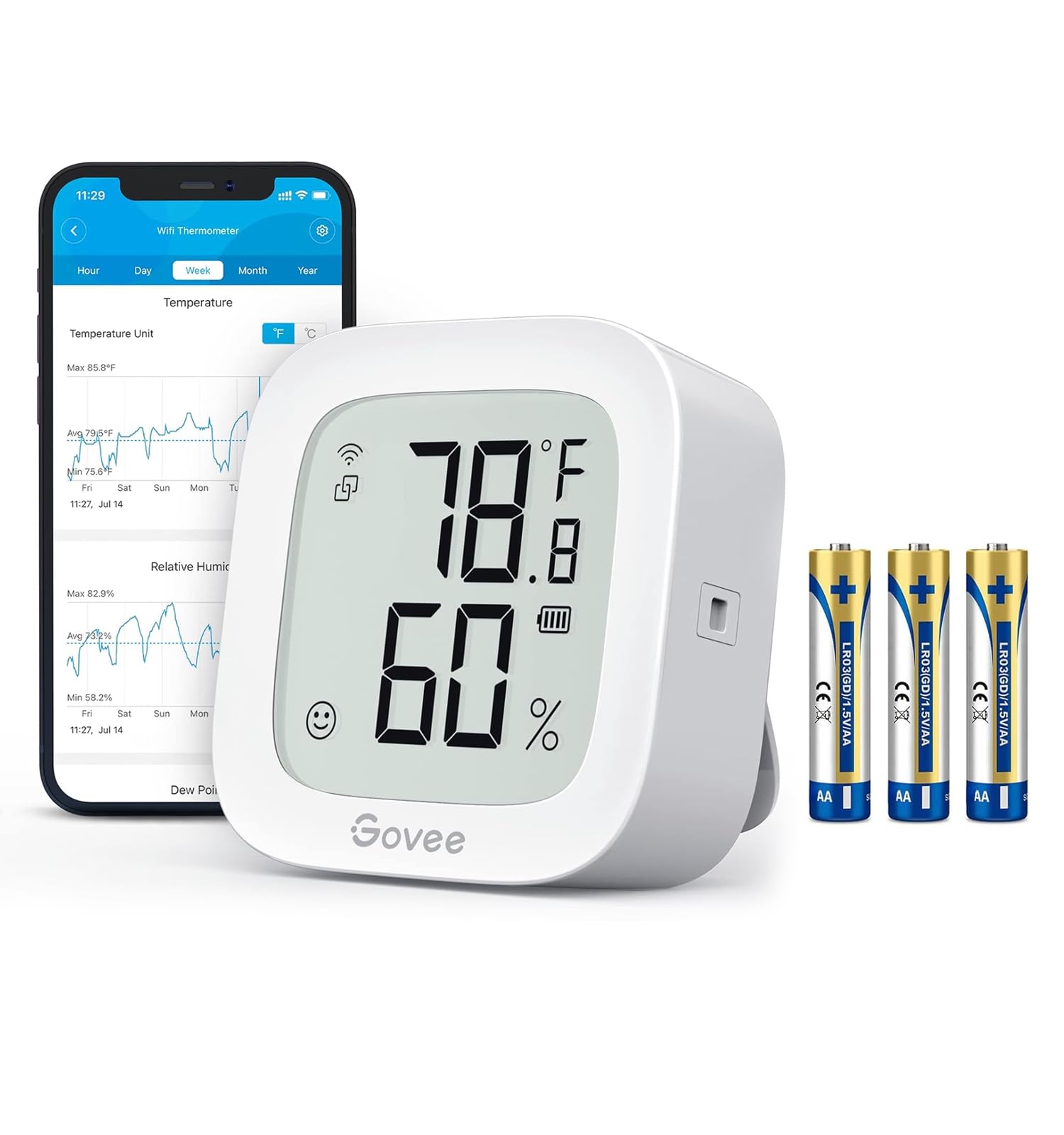
Type: WiFi and Bluetooth hygrometer thermometer
Connectivity: 2.4G WiFi plus Bluetooth
Display: Electronic ink screen
Data Storage: 2 years, exportable
Alerts: Push alerts to a phone
Placement: Bedroom, wine cellar or basement use
The H5103 adds WiFi, and that single change is what makes it the strongest general pick for a loft conversion. Once the unit is on the home network it reports whether or not anyone is nearby, so an alert can reach a phone at work or on holiday. The electronic ink display keeps the current reading visible at a glance and is easy to read in a bright, sunlit loft.
Buyers who want genuine peace of mind should start here. The caution is network dependence: a dropped WiFi connection or a router reboot stops remote alerts until the unit reconnects, and the setup only supports the 2.4G band.
3. Digital Thermometer with Min/Max Temperature Recording and High/Low Alarm

Type: Digital thermometer
Recording: Min/max temperature memory
Alarm: High and low temperature alarm
Connectivity: None, standalone unit
Power Source: Battery-powered standalone design
Best For: Shelf or wall placement
This is the no-frills option: a standalone digital thermometer that remembers the highest and lowest readings since the last reset and beeps when the temperature crosses a set limit. There is no app, no account and no network to configure, which makes it the easiest unit here to set up and the least likely to fail silently. The min/max memory is genuinely useful in a loft, because it shows whether a room hit freezing overnight even when nobody was up there.
It suits a tight budget or a second monitoring point in a stairwell or landing. The trade-off is local-only alerting: the alarm sounds in the loft, so it only helps if someone is close enough to hear it.
4. Supco TA2 Fahrenheit Temperature Alarm
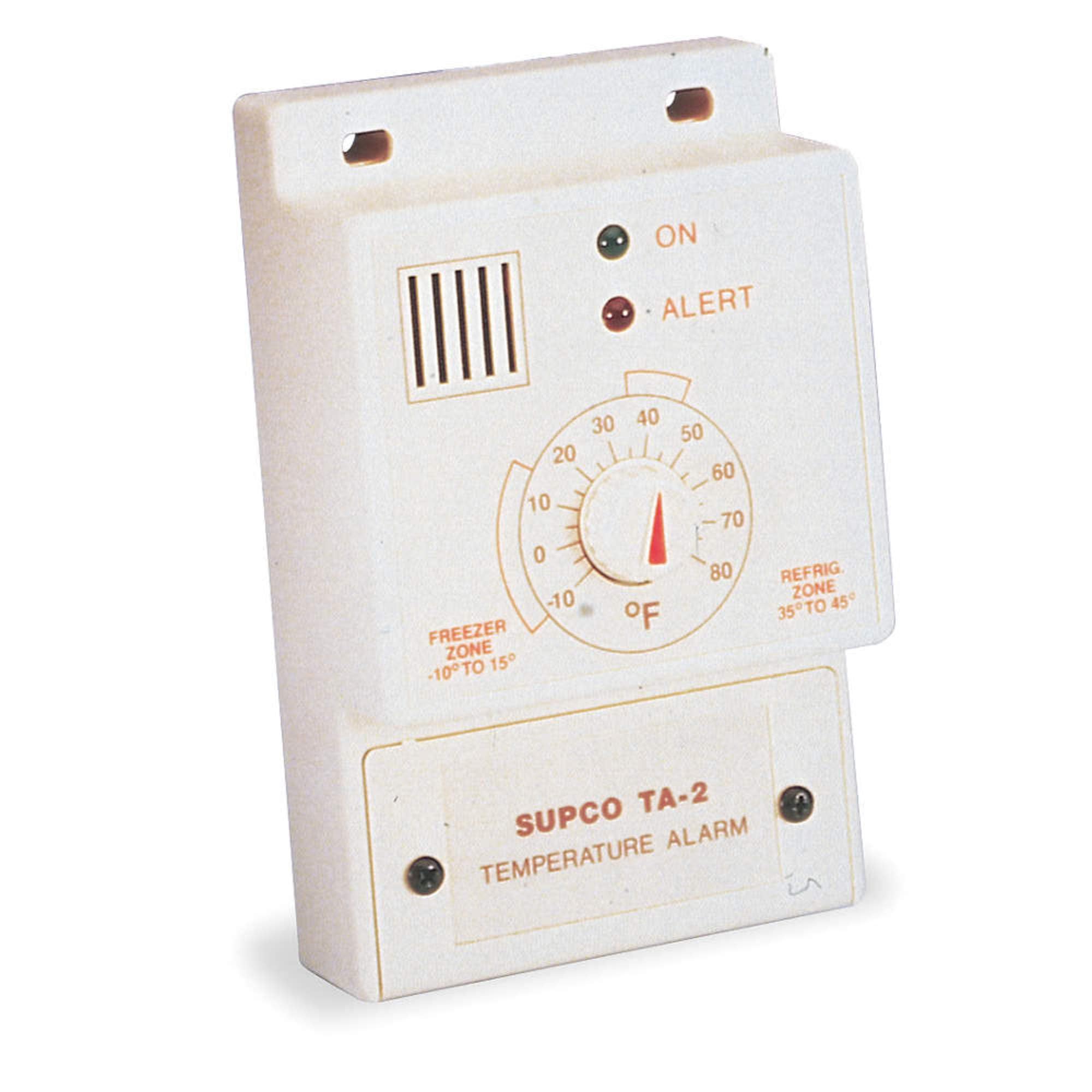
Type: Fahrenheit temperature alarm
Scale: Fahrenheit readout
Alarm: Audible temperature alarm
Build: Rugged equipment-grade housing
Connectivity: None, standalone unit
Best For: Plant rooms and utility spaces
The TA2 is a different class of device. It is built as equipment-grade hardware for utility spaces, with a Fahrenheit alarm designed to sit in a plant room, boiler cupboard or service void and shout when conditions go wrong. For a loft that houses a boiler, hot water cylinder or ventilation kit, that is a more appropriate job than a bedroom hygrometer.
This pick earns its place for buyers protecting machinery rather than comfort. The trade-off is the price: it costs many times a basic thermometer and offers no app, no history and no humidity reading, so it is hard to justify for a plain habitable loft.
5. AcuRite 00515M Wireless Fridge and Freezer Thermometer

Type: Wireless thermometer with alarm
Use: Fridge, freezer, home and restaurant duty
Display: Digital base unit
Recording: Max/min temperature
Alarm: Audible high/low alarm
Footprint: 4.25" x 3.75"
The AcuRite is sold for cold storage, but the wireless sensor-and-display format translates well to a loft conversion. The remote sensor can sit in the loft while the display stays downstairs, giving a constant readout without a phone, and the max/min memory and alarm work the same way in a cold bedroom as in a fridge. It is the most practical choice for an unheated loft used for storage, where the risk is frost and damp rather than overheating.
Buyers who want a visible display in the kitchen or hallway will find it useful. The trade-off is that the alarm is local to the base unit and the system is designed around cold-range monitoring, so it is a workaround rather than a purpose-built room alarm.
Before You Buy
- Connectivity: Decide first whether alerts must reach a phone away from home. WiFi models do that; Bluetooth and standalone units do not.
- Range: Check the distance from the loft to the router or the phone, and remember walls and floors cut effective range.
- Alarm type: A local siren only helps when someone is in earshot; push notifications suit an empty or rarely visited loft.
- Readings: A combined temperature and humidity unit catches damp risk, while a temperature-only alarm is simpler and cheaper.
- Power: Battery units keep working in a power cut but need checking; mains or WiFi units depend on the network.
- Placement: Keep the sensor out of direct sun and away from vents, radiators and the boiler itself, or readings will mislead.
- Data logging: Exportable history is worth paying for when the goal is spotting a slow seasonal problem rather than a single spike.
Frequently Asked Questions
-
What temperature should trigger an alarm in a loft conversion?
It depends on use. A habitable loft usually needs alerts for summer overheating and winter cold, while a storage loft mainly needs a frost warning. Set limits a few degrees inside the comfortable range so there is time to react. -
Is WiFi or Bluetooth better for a loft temperature alarm?
WiFi is better when alerts must arrive while nobody is home, because it reports independently of a phone. Bluetooth is cheaper and fine for a loft that someone passes through daily with a phone in range. -
Can one alarm cover both temperature and humidity?
Yes. Combined hygrometer thermometers track both, which is useful in a loft where condensation and damp are as likely as heat. Temperature-only alarms are simpler but miss the humidity side. -
Do these alarms work without a subscription?
The units here rely on their own app or local alarm and do not require a paid plan. Buyers should still check the app’s current features before relying on long-term cloud history. -
Where should the sensor be placed in a loft?
Mid-room at sitting height, away from roof windows, insulation gaps and heat sources. A sensor pressed against a hot roof slope or a cold eaves corner will read extremes that do not reflect the living space. -
Will a temperature alarm detect a boiler fault?
Only indirectly. A unit placed near a boiler or cylinder can flag abnormal heat, but a dedicated equipment alarm is the better tool for plant-room protection.
Bottom Line
For most loft conversions the Govee H5103 WiFi Thermometer Hygrometer is the best temperature alarm for the job, because WiFi alerts reach a phone wherever the owner is and the e-ink display keeps the current reading visible. Buyers on a tight budget can drop to the H5075 or the standalone min/max unit, while a boiler or plant room justifies the Supco TA2. Check the current price on Amazon before deciding.
