Why there are Amazon links here: Brave Review is paid a commission for qualifying Amazon purchases made through the links below. Your price does not change, and using our links is entirely optional. How this works
AFERIY Portable Power Station 1024Wh: 3600W Peak Power for Home Backup and Camping
The AFERIY portable power station 1024Wh is a compact lithium iron phosphate battery box built to run appliances, tools and electronics when the wall outlet is not available or not working. It suits homeowners who want a backup for short outages and campers who need more than a small battery can give. This review covers the specifications that matter, what each one means in practice, and where the unit falls short. Buyers ready to compare can jump straight to the price check below.
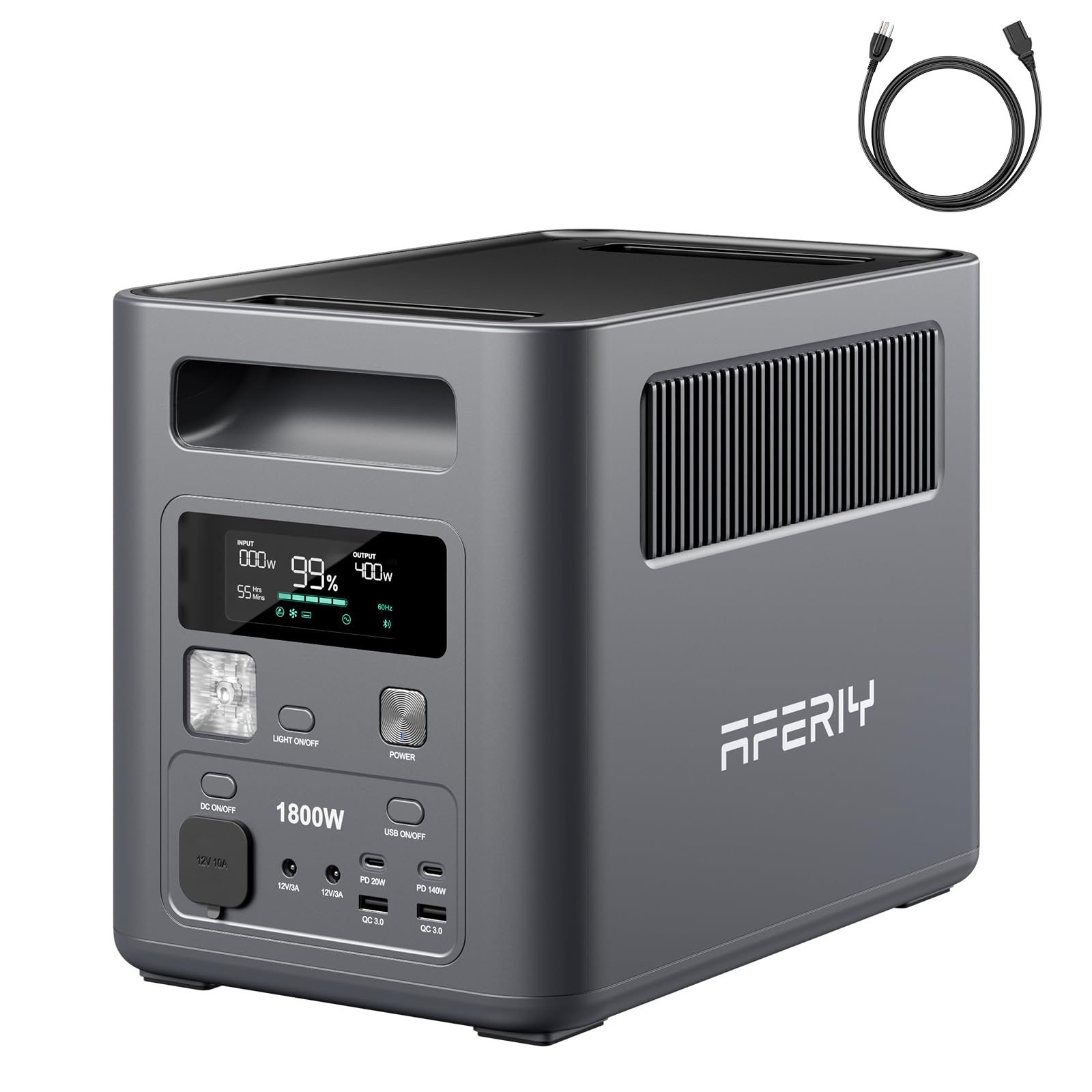
Features and Specifications
Product: AFERIY(Peak 3600W),LiFePO4 AC Output,Compact Lightweight Design,for Home,Camping,Outdoor Emergencies (Solar Panel Optional) Portable Power Station 1024Wh Solar Generator 1800W,Fast Recharge
Battery Capacity: 1024Wh
Battery Chemistry: LiFePO4 (lithium iron phosphate)
Continuous AC Output: 1800W
Peak AC Output: 3600W
Recharge: Fast recharge supported
Solar Input: Solar panel optional, sold separately
Design: Compact and lightweight
Intended Use: Home backup, camping, outdoor emergencies
These are the headline figures AFERIY publishes for this unit, and they set the boundaries of what the box can and cannot do. The gap between the 1800W continuous rating and the 3600W peak rating is the single most important thing to understand before buying. The peak figure covers motor startups and surge loads for seconds at a time; the continuous figure is what the station can hold for the duration of a job.
Build and Battery Chemistry
The LiFePO4 chemistry is the reason this unit makes sense at its price tier. Lithium iron phosphate cells tolerate deep discharges and high heat better than the older lithium-ion blends found in budget power stations, and they are the chemistry most often chosen for units that sit idle for months between outages. A battery that is only called on twice a year needs to survive long storage without damage, and LiFePO4 is the safer bet for that pattern.
The compact, lightweight design matters more than it sounds. A 1024Wh station is heavy by nature, but AFERIY has built this one to be carried by one person rather than rolled on a cart. That makes it practical for car camping, tailgating and moving between rooms during an outage. The trade-off of the lighter build is that the casing and handle are likely to be less armored than the heavy-duty wheeled units aimed at job sites.
Capacity and Runtime
1024Wh is roughly one kilowatt-hour of stored energy, and that number is best understood as a budget rather than a promise. A phone or a laptop draws only a few watts and will run for days on this capacity. A full-size refrigerator cycling on and off, a space heater, or a microwave will drain the same battery in a much shorter window. Buyers should add up the wattage of what they want to run and estimate the hours before assuming the station covers a long outage.
The realistic use case is a short outage or a weekend trip, not a multi-day off-grid cabin. Running a fridge, a few lights, a router and phone chargers is well within reach. Running a heater overnight is not. Buyers who need to power a whole home for days should look at a larger capacity class or a gas generator instead.
Power Output and Surge
The 1800W continuous output covers most household electronics and small appliances: a coffee maker, a microwave, a TV, fans, lights and power tools. The 3600W peak rating is what allows the station to start devices with motors, such as a fridge compressor or a circular saw, which briefly pull far more than their running wattage. Without that surge headroom, those devices would trip the station’s protection the moment they kicked on.
Buyers should still check the startup wattage of anything with a motor before plugging it in. A peak rating covers a brief spike, not a sustained overload. Anything that draws more than 1800W continuously will shut the unit down, and that is the correct behavior rather than a fault.
Recharging and Solar
Fast recharge is one of the selling points here, and it matters most during an outage when the grid comes back or when a solar panel is the only input. A station that takes a full day to recharge is far less useful in an emergency than one that tops up in a few hours. The exact recharge time depends on the input source, which AFERIY states in its own documentation.
Solar charging is supported but the panel is optional and sold separately. Buyers planning to rely on solar should budget for a panel alongside the station and check that its output is compatible. Without a panel, the unit recharges from a wall outlet or a car port, which limits how long it can stay useful in a prolonged grid-down scenario.
Trade-off: The compact, lightweight build that makes this station easy to carry also means a smaller battery and lighter casing than heavy wheeled units, so it covers short outages and weekend trips rather than multi-day whole-home backup.
Check the current price and availability on Amazon
Who This Power Station Suits
This unit fits three buyer profiles well. The first is the homeowner who wants a single box that keeps the fridge, router, lights and phones alive through a few hours of outage without hauling out a gas generator. The second is the car camper or tailgater who needs to run a small appliance, charge devices and keep a fan going overnight. The third is the outdoor worker who needs a quiet, fume-free power source for tools away from an outlet.
It fits less well for buyers who need to run high-draw appliances for hours, who plan to live off-grid for days at a time, or who want a permanently installed home backup system. Those buyers need more capacity, more continuous output, or both. Buyers who want solar independence also need to add a panel to the purchase, which changes the total cost.
FAQ
-
How long will the AFERIY 1024Wh power station run a refrigerator?
A typical fridge cycles its compressor on and off rather than running continuously, so the station can keep one running for a stretch of hours, but the exact figure depends on the fridge’s efficiency and how often the door opens. Buyers should check their fridge’s running wattage before relying on this for an outage. -
Can the AFERIY 1024Wh run a space heater?
Most space heaters draw more than 1800W continuously, which exceeds the station’s continuous output. A lower-wattage heater on a low setting may work, but buyers should check the heater’s rated wattage first. -
What does the 3600W peak rating mean?
The peak rating is the surge the station can supply for a brief moment when a motor-driven device starts up. It is not a sustained output. Continuous loads must stay at or below 1800W. -
Is a solar panel included?
No. The solar panel is optional and sold separately, so buyers who want solar charging need to budget for a compatible panel alongside the station. -
What is LiFePO4 and why does it matter?
LiFePO4 is lithium iron phosphate, a battery chemistry known for stability, heat tolerance and long storage life. It is the preferred chemistry for power stations that sit idle between uses. -
Can this power station run a CPAP machine overnight?
A CPAP machine draws relatively little power, so a 1024Wh station can typically cover a night’s use, though buyers should check their machine’s wattage and whether it uses a heated humidifier, which raises the draw. -
How fast does the AFERIY 1024Wh recharge?
AFERIY advertises fast recharge, and the actual time depends on the input source used. Wall outlet charging is the fastest option; car charging is slower. -
Is this station safe to use indoors?
Battery power stations produce no exhaust fumes, unlike gas generators, so they are suitable for indoor use during an outage. Buyers should still follow the manufacturer’s ventilation and storage guidance. -
Can it power a microwave?
Many countertop microwaves draw close to or above 1800W, so buyers should check the microwave’s rated input wattage. Smaller or lower-power models are more likely to run within the continuous limit. -
Who should not buy this unit?
Buyers who need to run high-draw appliances for extended periods, power a whole home for days, or who want a solar setup without buying a separate panel should look at a larger capacity class or a different power solution.
Bottom Line
The AFERIY portable power station 1024Wh is a well-judged pick for buyers who want a compact, LiFePO4-based backup for short outages and weekend trips, with enough continuous output for everyday appliances and enough surge headroom to start motor-driven devices. Its limits are clear: the capacity covers hours rather than days, the panel is an extra purchase, and the lightweight build trades armor for portability. Buyers who match those limits to their needs will find it a practical, quiet alternative to a gas generator; buyers who need more should size up.
