Why there are Amazon links here: Brave Review is paid a commission for qualifying Amazon purchases made through the links below. Your price does not change, and using our links is entirely optional. How this works
Best Mesh System for a House with Foil Insulation: 5 Picks That Beat Signal Blocking
Foil-faced insulation and radiant barriers are excellent at reflecting heat, and just as good at reflecting WiFi. That single fact reshapes the shopping list: a house wrapped in reflective foil needs mesh nodes placed where the signal can actually reach, plus a system with enough radios and backhaul headroom to keep speeds usable from room to room. This short roundup covers five systems for three buyer types — the large-home owner who needs maximum coverage, the mid-size household that wants WiFi 7 without flagship pricing, and the budget-focused buyer weighing a mesh upgrade against extra foil insulation. The overview table below gets a reader to a shortlist in under a minute.
The Picks at a Glance
| Product | Key Spec | Best Use | Price Tier |
|---|---|---|---|
| TP-Link Deco 7 Pro BE63 (3-Pack) | Tri-band WiFi 7 BE10000, 6-stream, 10 Gbps, 4 x 2.5G ports | Largest homes, wired backhaul between foil-separated zones | Premium |
| NETGEAR Orbi 370 Series (3-Pack) | WiFi 7, up to 6,000 sq ft, 2.5 Gig port, router + 2 satellites | Mid-size homes wanting WiFi 7 at a lower entry point | Mid-range |
| Houseables Reflective Foil Radiant Barrier | 250′ x 4′, 1000 sq ft, perforated double foil | Fixing the barrier side of the problem alongside a mesh upgrade | Mid-range |
| Margar Radiant Barrier Insulation Roll | 4ft x 250ft, 1000 sq ft, perforated breathable double foil | Attic and wrap projects where breathability matters | Budget |
| Radiant Barrier Insulation Roll (250′ x 4′) | 1000 sq ft, perforated breathable double foil | Price-matching a second roll for larger foil jobs | Budget |
The table splits into two product families, and that is deliberate. Three entries are mesh routers — the actual answer to the keyword. Two are radiant barrier rolls, included because many households searching this topic are mid-renovation and need to understand how foil placement interacts with node placement. Buyers who only want the network gear can read the two WiFi 7 systems and stop.
TP-Link Deco 7 Pro BE63 3-Pack
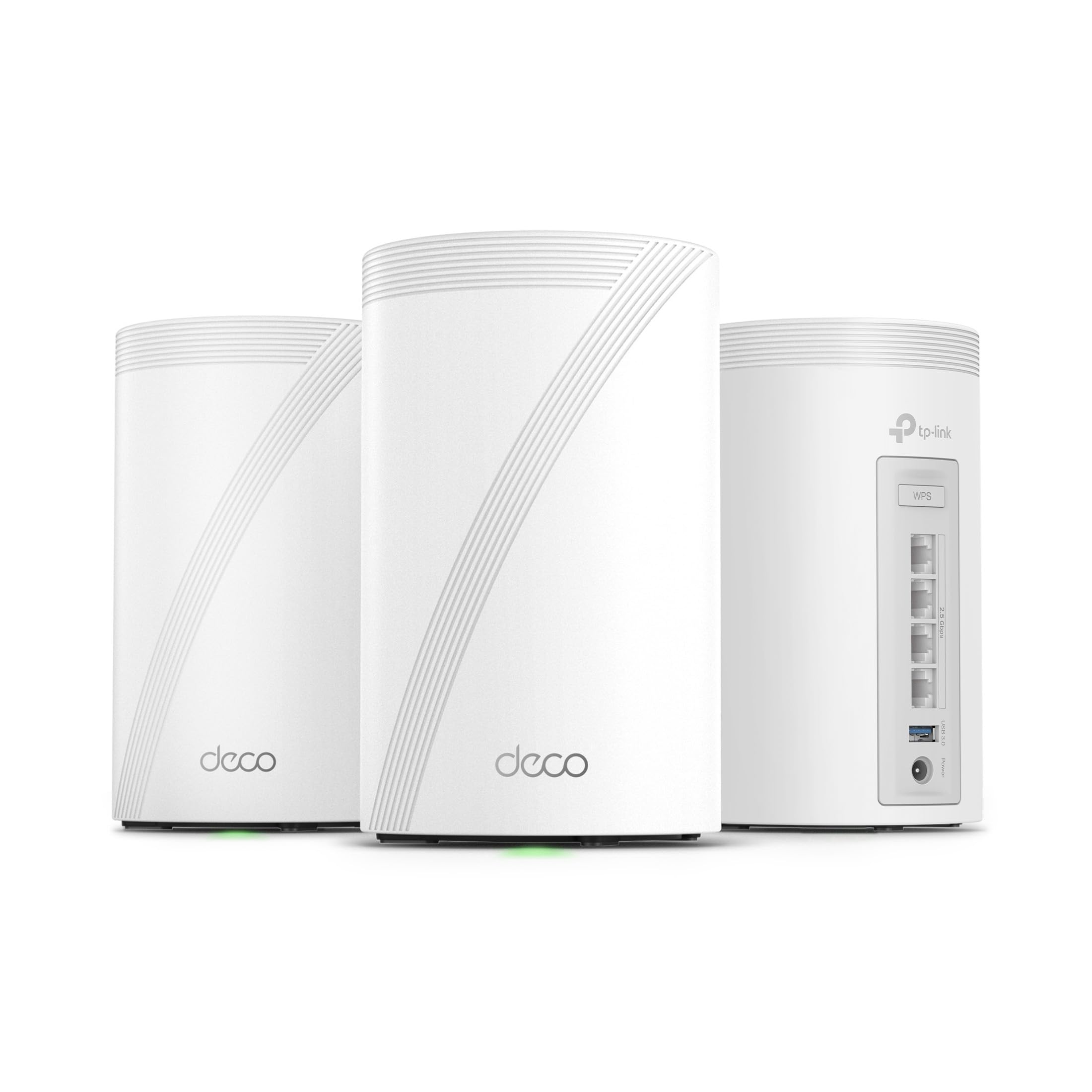
Type: Tri-band whole-home mesh system
Standard: WiFi 7 (BE10000)
Streams: 6-stream
Coverage: Up to 7,600 sq ft
Ports: 4 x 2.5G ports, wired backhaul supported
Antennas: 4 x smart internal antennas
Security: HomeShield, VPN support
This is the flagship pick, and the spec sheet explains why it earns that slot in a foil-insulated house. Tri-band operation with a dedicated high-capacity band means the backhaul between nodes does not have to share airtime with client devices, which matters when a foil layer forces nodes into separate rooms. The four 2.5G ports per unit allow wired backhaul — the single most effective fix for reflective barriers — and the 6-stream design keeps throughput high across many devices at once.
The 7,600 sq ft rating assumes open conditions, so a foil-wrapped home should treat it as a ceiling rather than a promise. HomeShield and VPN support round out the package for households that care about network-level security. Buyers with a large footprint and the budget for a premium tier get the most headroom here.
Best for: Large homes, multi-floor layouts, and anyone willing to run Ethernet between nodes.
Trade-off: The premium price tier is hard to justify for a small apartment or a single-floor home where two nodes would do.
Check the current price on Amazon
NETGEAR Orbi 370 Series 3-Pack

Type: Router plus two satellite extenders
Standard: WiFi 7
Speed: Up to 5 Gbps
Coverage: Up to 6,000 sq ft
Devices: 70
Ports: 2.5 Gig port
Setup: Easy set up, security features included
The Orbi 370 sits one rung below the Deco on price while still delivering WiFi 7, which makes it the sensible middle path for a foil-insulated house that is not enormous. The 2.5 Gig port supports fast wired backhaul if the household can pull a cable between the router and satellites, and the 70-device rating covers a busy family with phones, TVs, laptops, and smart home gear.
The three-piece kit — one router, two satellites — gives buyers a natural placement strategy: router at the entry point, one satellite on each side of the foil barrier. Coverage tops out at 6,000 sq ft, enough for a typical two-story home. Setup is positioned as straightforward, and security features are bundled rather than sold separately.
Best for: Mid-size homes that want WiFi 7 without paying flagship prices, and households with 50-70 connected devices.
Trade-off: The dual-band design and lower throughput ceiling mean it will not match the Deco under heavy simultaneous load in a very large home.
Check the current price on Amazon
Houseables Reflective Foil Radiant Barrier

Type: Radiant barrier insulation roll
Material: Double reflective foil, perforated aluminum
Dimensions: 250′ x 4′
Coverage: 1000 sq ft
Intended use: Attic foil, house wrap, thermal radiant barrier
This roll is the practical companion purchase for a household already fighting heat gain. The perforated aluminum face allows moisture to pass rather than trapping it, which is the right call for attic and wrap applications where condensation is a real risk. At 1000 sq ft per roll, it covers a meaningful section of attic decking or wall sheathing.
For the WiFi question specifically, the takeaway is placement. Foil installed across a ceiling or between floors is what turns a whole home into a series of signal islands, so buyers planning a mesh install should map node locations before closing up walls. The roll itself is straightforward to cut and staple, and the double-foil construction reflects radiant heat from both faces.
Best for: Attics and wrap projects where breathability matters, and renovators planning mesh node placement around new foil.
Trade-off: Perforated foil is not a vapor barrier, so it is the wrong product for applications that require a sealed membrane.
Check the current price on Amazon
Margar Radiant Barrier Insulation Roll
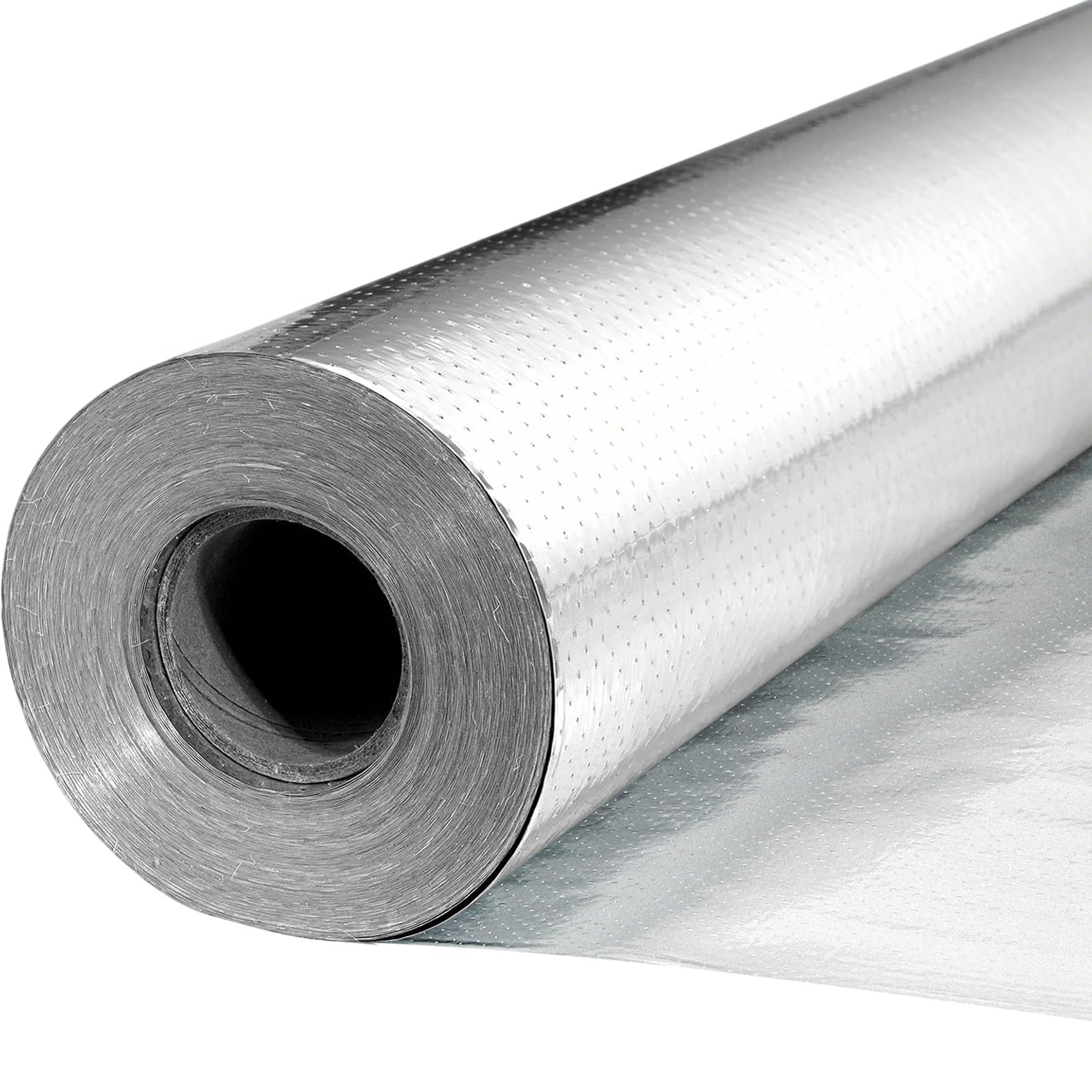
Type: Radiant barrier insulation roll
Material: Perforated breathable double foil
Dimensions: 4ft x 250ft
Coverage: 1000 sq ft
Intended use: Attic foil, house wrap, thermal reflective shield
The Margar roll matches the Houseables on coverage and dimensions but undercuts it on price, which makes it the budget entry in this roundup. The 4ft width is the same working size, the double foil is perforated and breathable, and the description positions it as heavy duty for attic and wrap use. For a household already spending on mesh hardware, saving here frees budget for a third node or a spool of Ethernet cable.
The same placement logic applies: this is the material that creates the reflective envelope a mesh system has to work around. Buyers should plan where the foil goes and where the nodes go in the same conversation, not sequentially. The breathable construction suits attics where trapped moisture is a concern.
Best for: Budget-conscious renovators covering attic decking or house wrap who still want perforated, breathable foil.
Trade-off: The lower price tier usually shows up in roll handling and edge durability, so buyers should expect to work a little more carefully at cuts and seams.
Check the current price on Amazon
Radiant Barrier Insulation Roll (250′ x 4′)
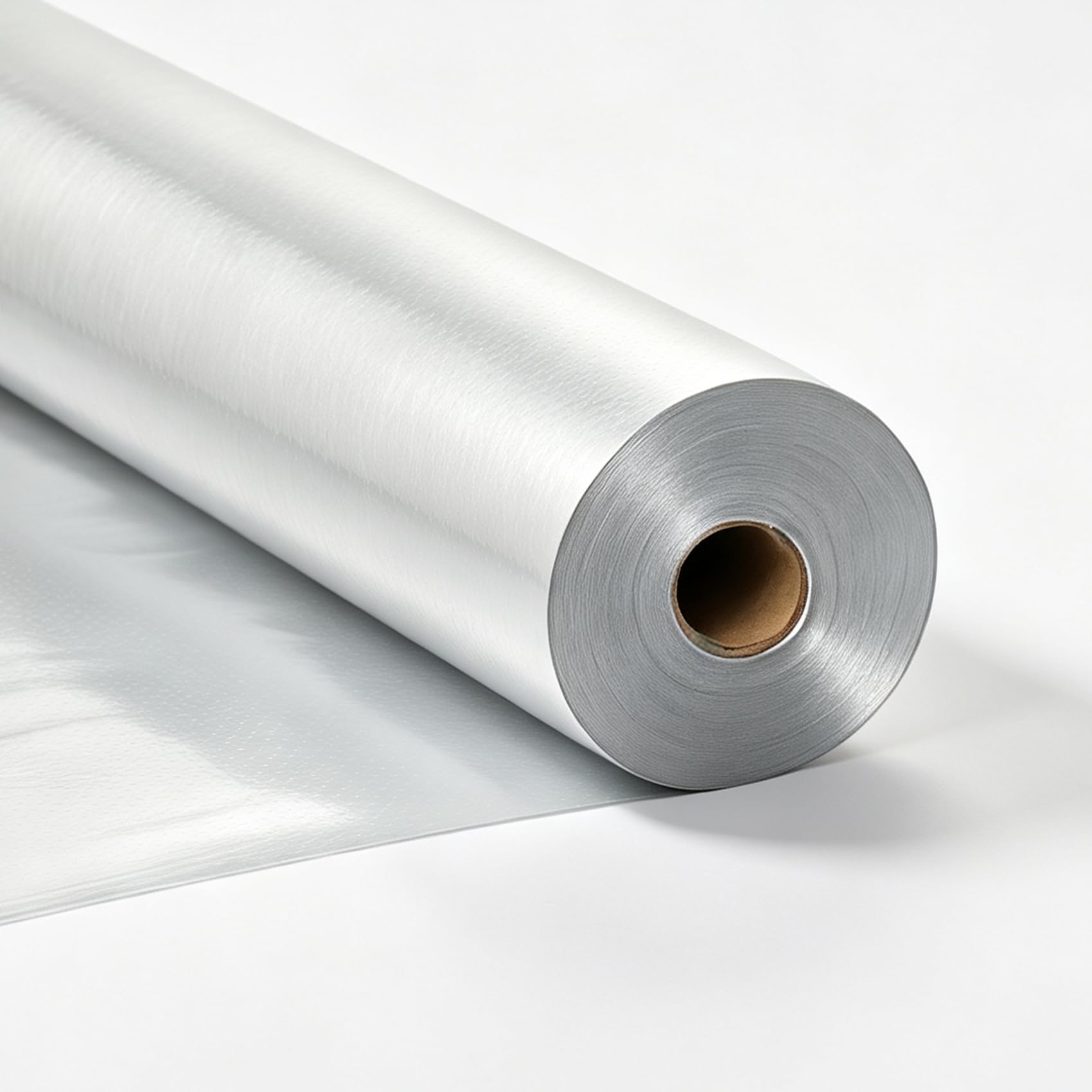
Type: Radiant barrier insulation roll
Material: Perforated breathable double foil
Dimensions: 250′ x 4′
Coverage: 1000 sq ft
Intended use: Attic foil, house wrap, thermal reflective shield
This is the second budget roll, and it lands at the same price point as the Margar with an identical coverage and material profile. The practical value is availability: when one roll runs short mid-project, having a second source at the same spec means the job does not stall. The perforated double foil handles the same attic and wrap duties.
For readers weighing mesh placement, this roll represents the variable that decides how many nodes are needed. A single continuous foil layer between floors can turn a two-node job into a three-node job. Buyers should measure the foil footprint before ordering network gear, not after.
Best for: Matching a first roll for larger foil jobs, or as a like-for-like backup at the same budget tier.
Trade-off: With no distinguishing feature beyond price and dimensions, it is a commodity pick — buyers should compare shipping and roll condition rather than expect a premium finish.
Check the current price on Amazon
Before You Buy
- Coverage math: Treat every square-footage rating as an open-air figure. In a foil-insulated house, plan for one more node than the rating suggests, or budget for wired backhaul.
- Backhaul: Ethernet between nodes is the single biggest win against reflective barriers. Prioritize systems with 2.5G ports, like the Deco 7 Pro and Orbi 370.
- Band design: Tri-band systems keep backhaul traffic off the client bands, which matters more when nodes are forced into separate rooms by foil.
- Foil placement: Map node locations before installing radiant barrier rolls across ceilings or between floors.
- Breathability: Choose perforated foil for attic and wrap work; sealed foil traps moisture.
- Device count: Match the system’s device rating to the household’s actual load, not the marketing ceiling.
Frequently Asked Questions
-
Does foil insulation really block WiFi? Yes. Metalized foil reflects radio waves the same way it reflects radiant heat, so a foil layer between rooms acts as a partial shield and weakens signal passing through it.
-
Will a mesh system fix a foil-insulated house on its own? Often, but placement matters more than the model. Nodes need to sit on the same side of the foil barrier as the devices they serve, or be connected by Ethernet.
-
Is WiFi 7 worth it in a foil-insulated home? The standard matters less than the backhaul and band design. A tri-band WiFi 7 system with 2.5G ports gives the most headroom, but a well-placed older system can still work.
-
How many nodes does a foil-insulated house need? Plan for at least one node per foil-separated zone, plus one more than the coverage rating implies. A three-pack is the safer starting point for a two-story home.
-
Can radiant barrier rolls and mesh hardware be installed together? Yes, and they should be planned together. Deciding node locations before the foil goes up avoids retrofitting cable runs later.
-
Do the foil rolls in this roundup include installation accessories? The product data covers the roll itself. Buyers should check the listing for staples, tape, or cutting tools before starting a project.
Bottom Line
For a foil-insulated house, the TP-Link Deco 7 Pro BE63 3-Pack is the strongest pick: tri-band WiFi 7, four 2.5G ports per unit for wired backhaul, and enough coverage headroom to absorb the signal loss a reflective barrier creates. Households that want WiFi 7 at a lower entry point should look at the NETGEAR Orbi 370 Series, and renovators mid-project can pair either system with a perforated radiant barrier roll to keep the envelope breathable. Check the Deco 7 Pro price on Amazon to confirm current availability.
