Why there are Amazon links here: Brave Review is paid a commission for qualifying Amazon purchases made through the links below. Your price does not change, and using our links is entirely optional. How this works
BN-LINK Wireless Remote Control Outlet: Long-Range Control for Lamps, Fans, and Holiday Lights
The BN-LINK Wireless Remote Control Outlet is a plug-in switch kit that puts a lamp, fan, or string of Christmas lights on a handheld remote instead of a wall switch. It suits renters, older buyers who have trouble reaching awkward outlets, and anyone who wants holiday lighting to come on without crawling behind the tree. This review covers what the kit includes, how the learning-code pairing works, where the 100-foot range actually matters, and which households should look elsewhere.
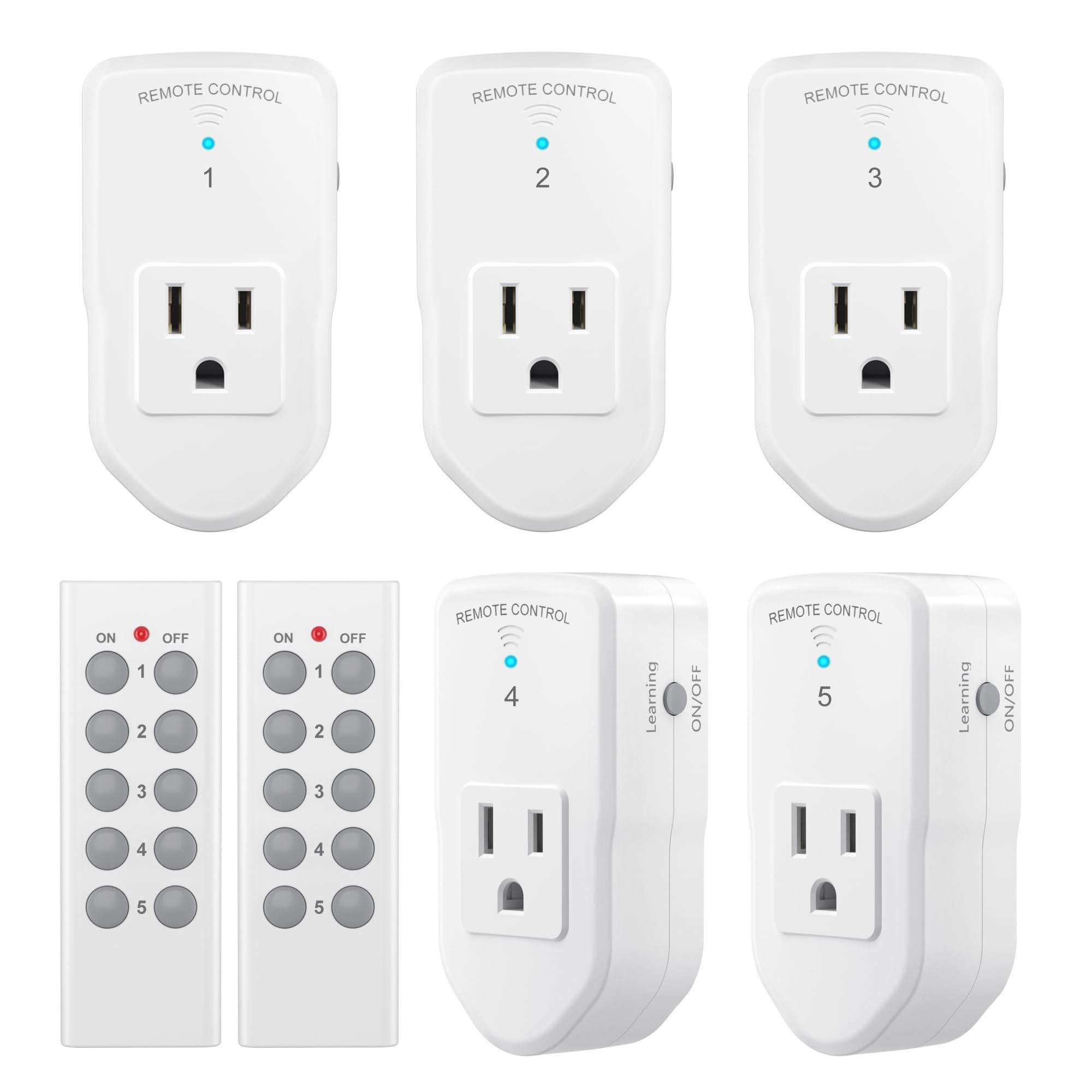
Features and Specifications
Type: Plug-in wireless remote control outlet kit
Kit Contents: Five receivers and two transmitters (5Rx-2Tx)
Pairing: Learning code
Range: 100 ft
Power Rating: 1200W / 10A
Certification: ETL and FCC certified
Color: White
The kit pairs five receiver modules with two handheld transmitters, which is the detail that separates it from the single-outlet remotes sold at hardware store checkout counters. Each receiver plugs into a standard wall outlet and the appliance plugs into the receiver, so no wiring and no electrician are involved. The white housing is sized to sit flush enough that a sofa or cabinet can usually push back into place.
The 1200W/10A rating is the number that decides what can be plugged in. Lamps, fans, holiday light strings, coffee grinders, and small appliances sit comfortably inside that ceiling. Space heaters, window air conditioners, and anything with a heavy motor draw far more and do not belong on a switch of this class. The ETL and FCC marks mean the unit has been through the safety and interference testing the category requires, which matters more than usual for a device that stays plugged in around the clock.
How the Learning-Code Pairing Works
Learning code means the receivers are not locked to a factory-set frequency at the factory. A transmitter can be taught to talk to a receiver, and additional transmitters can be added later to the same receiver without buying a new kit. In a five-receiver kit with two remotes, that flexibility is the point: one remote can live by the front door and the second can stay on a nightstand, both operating the same set of outlets.
The practical benefit shows up in multi-room setups. A buyer can put receivers on the living room lamp, the bedroom lamp, and the porch lights, then carry one transmitter between rooms and leave the second in a fixed spot. Because the pairing is done by the user rather than fixed at purchase, replacing a lost remote is a matter of buying a compatible transmitter rather than a whole new kit.
The caution here is that learning-code systems are not smart-home devices. There is no app, no voice assistant integration, and no scheduling unless the appliances themselves have timers. A buyer who wants to control a lamp from a phone while away from home is shopping in the wrong category.
Range, Walls, and Realistic Expectations
The 100-foot figure is the headline spec, and it is genuinely long for this product class. Most competing plug-in remotes advertise somewhere between 30 and 80 feet, so the extra distance is what makes this kit work from an upstairs bedroom to a downstairs living room, or from inside the house to a garage outlet.
Radio range is never a straight-line promise, though. Walls, metal appliances, and the density of a floor assembly all eat into the number, and the rated figure assumes open air. In a typical wood-frame house the signal usually carries through a wall or two without complaint; in a masonry or steel-studded building the usable distance shrinks noticeably. Buyers in older brick homes should expect to test the range early and keep the receipt.
Battery life in the transmitters is the other long-term consideration. Handheld remotes of this type run on small coin or button cells, and a remote that lives on a nightstand and gets pressed twice a day will outlast one that rides in a pocket. Keeping a spare battery on hand is cheaper than discovering the problem on the first cold night of the holiday season.
Build, Installation, and Everyday Use
Installation is a plug-in affair with no tools. The receiver goes into the outlet, the appliance goes into the receiver, and the transmitter is ready once paired. There is no hub, no bridge, and no account to create, which is exactly the appeal for buyers who want a switch and nothing more.
The white plastic housing is functional rather than premium. It is the same molded look as most outlet accessories at this price, and it will not win design awards, but it is unobtrusive against a white wall or a baseboard. The receivers are chunky enough that a receiver plus a lamp plug can block the second socket of a duplex outlet — a common limitation of the whole plug-in switch category, not a flaw unique to this kit.
Everyday use is a single button press. There is no dimming, no scene setting, and no per-outlet control from the transmitter beyond whatever grouping the user sets up during pairing. That simplicity is the product’s strongest feature for its target buyer and its biggest limitation for anyone who wants granular control.
Trade-off: Five receivers and two remotes at a budget price means plastic housings and no smart features — this kit buys range and quantity, not polish or app control.
Who This Kit Suits and Who Should Skip It
This kit fits three buyer types well. The first is the holiday decorator who wants the tree and window candles to come on with one press instead of a crawl behind furniture. The second is the buyer with limited mobility or reach who wants a lamp by the door to switch on without bending. The third is the renter who cannot add a wall switch and does not want to pay an electrician.
Buyers who should skip it fall into two groups. Anyone wanting scheduling, phone control, or voice commands needs a smart plug, not a radio-frequency remote. Anyone planning to switch a heater, air conditioner, or large motor appliance needs a switch rated well above this one, and using this kit for those loads is a genuine safety concern rather than a matter of preference.
FAQ
-
What does 5Rx-2Tx mean on the BN-LINK remote outlet?
It means five receivers and two transmitters. Five appliances can be plugged into receivers, and two handheld remotes can operate them, which allows one remote to stay in a fixed spot while the other moves around the house. -
How far does the BN-LINK remote control outlet actually reach?
The rated range is 100 feet. That is measured in open air, so walls and appliances will reduce the usable distance in a real home, but it remains one of the longer ranges in the plug-in remote category. -
Can the BN-LINK outlet remote control a space heater?
No. The rating is 1200W/10A, and space heaters, air conditioners, and other high-draw appliances exceed that. The kit is intended for lights, fans, holiday lighting, and small appliances. -
Does this remote outlet need Wi-Fi or an app?
Neither. It is a radio-frequency remote system with no hub, no app, and no internet connection. Pairing happens directly between the transmitter and the receiver using the learning-code process. -
Can one remote control more than one receiver at the same time?
Yes. Because the receivers use learning-code pairing, a single transmitter can be taught to operate several receivers, so one button press can switch on a group of lamps together. -
What happens if a transmitter is lost or broken?
A replacement transmitter can be paired to the existing receivers, since the pairing is user-taught rather than fixed at the factory. The whole kit does not need to be replaced. -
Is the BN-LINK remote outlet safe to leave plugged in?
The unit carries ETL and FCC certification, which covers electrical safety and radio interference testing. As with any plug-in switch, it should be used within its 1200W/10A rating and kept away from moisture. -
Will the receiver block the second outlet on a wall socket?
It can. The receiver body is wide enough that a plugged-in appliance may cover the neighboring socket on a standard duplex outlet, which is typical for this type of plug-in switch. -
Does the remote outlet work with LED bulbs and string lights?
Yes. LED lamps and holiday light strings draw far less than the 1200W ceiling, which makes them the ideal load for this kit. -
Can this be used outdoors?
The receivers are indoor-style white plastic units. They are suited to garage and porch outlets under cover rather than exposed weather, and buyers needing true outdoor control should look for a weather-resistant model.
Bottom Line: The BN-LINK Wireless Remote Control Outlet is the practical pick for buyers who want five switchable outlets, two remotes, and a genuinely long 100-foot range without adding a hub or an app to the house. It is not a smart plug and it will not run a heater, but for lamps, fans, and holiday lighting it covers the job at a budget price.
