Why there are Amazon links here: Brave Review is paid a commission for qualifying Amazon purchases made through the links below. Your price does not change, and using our links is entirely optional. How this works
Kidde Smoke Detector vs First Alert SMCO210: Which Alarm Fits the Room
This comparison settles one decision: whether a room needs a dedicated smoke alarm or one unit that watches for smoke and carbon monoxide at once. The Kidde 20SD10 is the simple, lower-cost smoke-only pick, and the First Alert SMCO210 is the combined smoke-and-CO alarm for buyers who want two protections in a single mount. The short answer sits in the overview table, and the detailed breakdown follows.
The Picks at a Glance
| Product | Key Spec | Best Use | Price Tier |
|---|---|---|---|
| Kidde Smoke Detector, 20SD10 | 10-year sealed battery, smoke only, 85 dB alarm | Bedrooms, hallways, and any room where smoke detection is the whole job | Budget |
| First Alert SMCO210 | Sealed 10-year battery, smoke and carbon monoxide combined, slim profile | Kitchens-adjacent halls, furnace rooms, and homes that want CO coverage without a second device | Mid-range |
Kidde Smoke Detector, 20SD10
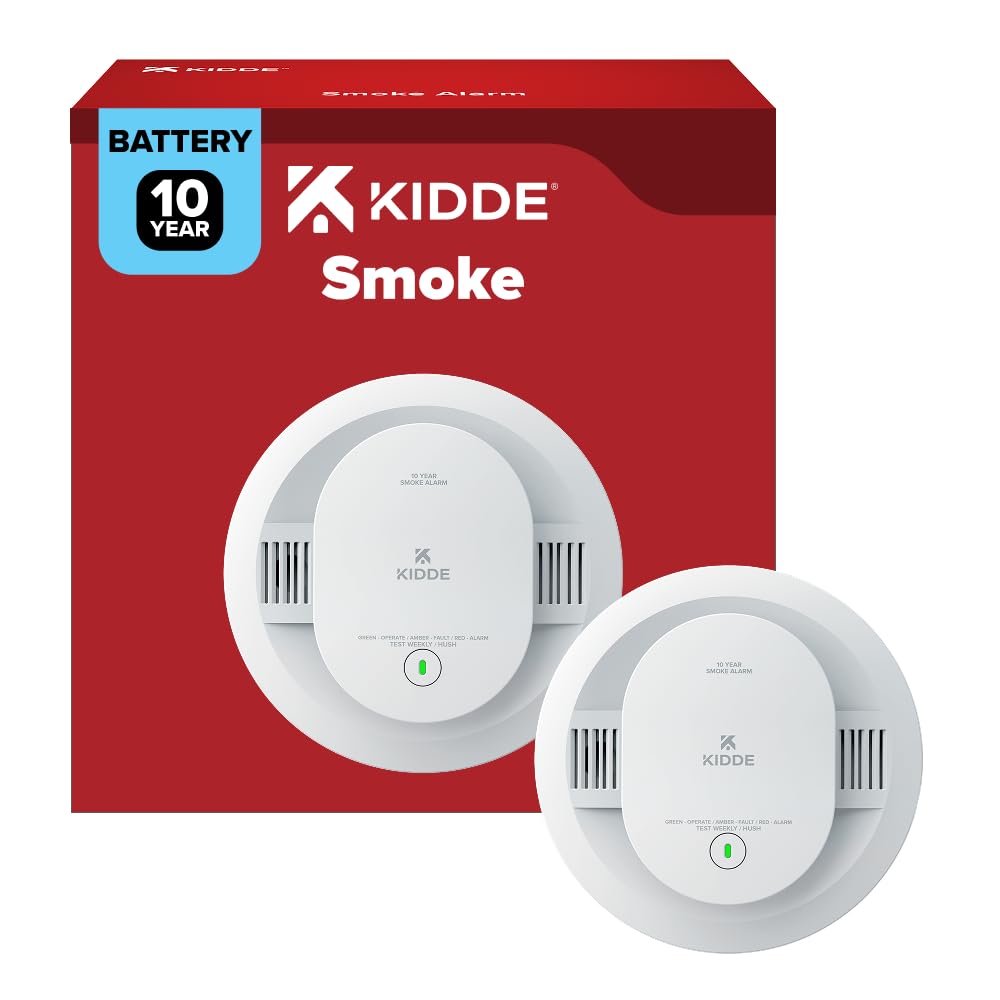
Type: Battery-powered smoke alarm
Power Source: 10-year battery
Alarm: 85 dB
Status Indicator: LED status lights
Model: 20SD10
Pack Size: 1 pack
The Kidde 20SD10 is a single-purpose smoke alarm built around a sealed 10-year battery, which means no hardwiring and no annual battery swap. The 85 dB horn is loud enough to wake a sleeping household, and the LED status lights give a quick visual read on whether the unit is powered and working. Installation is a screw-and-mount job that most buyers can finish without an electrician.
This is the alarm for coverage on a budget. A buyer protecting a three-bedroom home can put one in each bedroom and the hallway for less than the cost of a single combined unit, and the 10-year battery removes the chore that causes most smoke alarms to fail silently. The trade-off is scope: it detects smoke and nothing else.
Trade-off: The 20SD10 offers no carbon monoxide detection, so a home relying on it alone still needs separate CO alarms near sleeping areas and fuel-burning appliances.
Check the current price on Amazon
First Alert SMCO210

Type: Combination smoke and carbon monoxide alarm
Power Source: Sealed 10-year battery
Design: Slim profile
Model: SMCO210
Pack Size: Single unit
The First Alert SMCO210 does two jobs in one housing: it watches for smoke and for carbon monoxide, and it runs on a sealed 10-year battery like the Kidde. The slim profile matters more than it sounds — a flatter unit sits closer to the ceiling and draws less attention in a hallway or above a door frame. One mount, one battery, two protections.
That combination is the reason to pay more. Carbon monoxide is invisible and odorless, and the rooms most likely to need a CO alarm — near a furnace, water heater, or attached garage — are also rooms where smoke detection belongs. Buyers who would otherwise buy two separate devices can cover both risks with one unit and one installation.
Trade-off: The combined sensor package and slimmer housing push the price above a smoke-only alarm, so covering a whole house with SMCO210 units gets expensive fast.
Check the current price on Amazon
Side-by-Side Specifications
| Specification | Kidde 20SD10 | First Alert SMCO210 |
|---|---|---|
| Detection Type | Smoke only | Smoke and carbon monoxide |
| Power Source | 10-year battery | Sealed 10-year battery |
| Battery Replacement | Not needed for the life of the unit | Not needed for the life of the unit |
| Alarm Sound | 85 dB | Standard audible alarm |
| Status Indicator | LED status lights | Status indicator on unit |
| Housing | Standard profile | Slim profile |
| Wiring | Battery only, no hardwire | Battery only, no hardwire |
| Model | 20SD10 | SMCO210 |
| Pack Size | 1 pack | Single unit |
Reading the Differences
The first dimension is detection scope, and it is the one that decides most purchases. The Kidde detects smoke. The First Alert detects smoke and carbon monoxide. Nothing else in this comparison changes the outcome as much, because a smoke-only alarm cannot substitute for a CO alarm no matter how many are installed.
The second dimension is battery strategy, and here the two products agree. Both use a sealed 10-year battery, so neither requires an annual battery change and neither needs a hardwired connection. That puts both in reach of renters and of older homes without interconnected wiring. The Kidde states its 85 dB alarm rating in the product name; the First Alert does not publish a figure there, so buyers comparing on volume alone have one clear number and one unknown.
The third dimension is form factor. The SMCO210’s slim profile is a genuine advantage in tight spots — above a door, in a narrow hallway, on a ceiling where a bulkier unit would look out of place. The Kidde uses a standard housing that suits a bedroom ceiling without complaint.
The fourth dimension is cost per protected location. The Kidde sits in the budget tier and the First Alert in the mid-range tier, and that gap multiplies across a whole house. A buyer fitting six locations with the Kidde spends meaningfully less than the same buyer fitting six locations with the SMCO210.
Which Should You Buy?
Choose the Kidde 20SD10 if the goal is broad smoke coverage at the lowest cost per alarm. It suits bedrooms, hallways, and rental units where a landlord or tenant wants a sealed-battery alarm that needs no wiring and no battery routine. It also fits a home that already has separate carbon monoxide alarms in place and just needs smoke detection filled in.
Choose the First Alert SMCO210 if the room carries a CO risk as well as a fire risk. Furnace rooms, halls outside an attached garage, and any space near fuel-burning appliances are the natural homes for it. It also suits buyers who would rather install one device than two and who are protecting a small number of high-priority locations rather than a whole floor.
Buyers who need both protections across an entire house should consider mixing: SMCO210 units in the CO-risk rooms, Kidde units everywhere else. That combination keeps the budget in check while closing the gap a smoke-only alarm leaves open.
FAQ
-
Does the Kidde 20SD10 detect carbon monoxide?
No. The 20SD10 is a smoke detector only. Homes using it still need separate carbon monoxide alarms, particularly near sleeping areas and fuel-burning appliances. -
Do both alarms need their batteries changed every year?
No. Both use a sealed 10-year battery, so neither requires an annual battery swap. The battery is designed to last the service life of the unit, after which the whole alarm is replaced. -
Can either alarm be hardwired?
Neither. Both are battery-powered units that mount without household wiring, which makes them suitable for rentals and for homes without interconnected alarm circuits. -
Which one is louder?
The Kidde lists an 85 dB alarm in its product name. The First Alert does not publish a comparable figure there, so buyers who need a specific decibel rating have a clear answer only for the Kidde. -
Is the First Alert SMCO210 worth the higher price?
For a room with a carbon monoxide risk, yes — one device covers two hazards and one installation. For a bedroom with no fuel-burning appliance nearby, the Kidde covers the relevant risk for less. -
Which is better for a rental property?
Both work well because neither needs wiring. The Kidde keeps costs down across multiple units, while the SMCO210 suits a rental where a single combined alarm covers a high-risk room. -
How many alarms does a typical home need?
Coverage typically includes each bedroom, the hallway outside sleeping areas, and at least one level per floor. Carbon monoxide protection belongs near sleeping areas and any room with a fuel-burning appliance.
Bottom Line
The Kidde Smoke Detector 20SD10 wins on coverage per dollar: a sealed 10-year battery, a loud 85 dB alarm, and a price that makes whole-house protection affordable. Buy it for bedrooms and hallways where smoke is the only concern. Step up to the First Alert SMCO210 only for the rooms where carbon monoxide is a real risk — there, the combined sensors justify the extra cost.
