Why there are Amazon links here: Brave Review is paid a commission for qualifying Amazon purchases made through the links below. Your price does not change, and using our links is entirely optional. How this works
Best Power Station for a Boiler and Fridge During a Power Cut
A power cut turns a fridge into a race against spoilage and a boiler into a cold house. This roundup covers five power stations that can carry both loads through an outage, from slim always-on UPS units to expandable home-backup systems. It suits homeowners protecting a kitchen, renters who want a plug-in safety net, and anyone with a gas or oil boiler that needs a steady supply to keep running. The overview below puts every pick side by side so a choice can be made quickly.
Overview of the Picks
| Product | Key Spec | Best Use | Price Tier |
|---|---|---|---|
| BLUETTI FridgePower | 2016Wh, 1800W, 10ms UPS, 75mm slim | Tight spaces, always-on fridge backup | Mid |
| Jackery HomePower 3600 Plus | 3584Wh, 3600W, expandable to 21kWh | Whole-home backup with room to grow | Premium |
| Jackery HomePower 3000 | 3072Wh, 3600W, 7200W surge | Boiler and fridge plus larger appliances | Premium |
| DABBSSON 2000L | 2048Wh, 2200W, 3300W boost | Fast-charging all-round backup | Mid |
| 640Wh Portable Power Station | 640Wh, 1200W surge, 10ms UPS | Small flats, short outages, portability | Budget |
BLUETTI FridgePower Portable Power Station
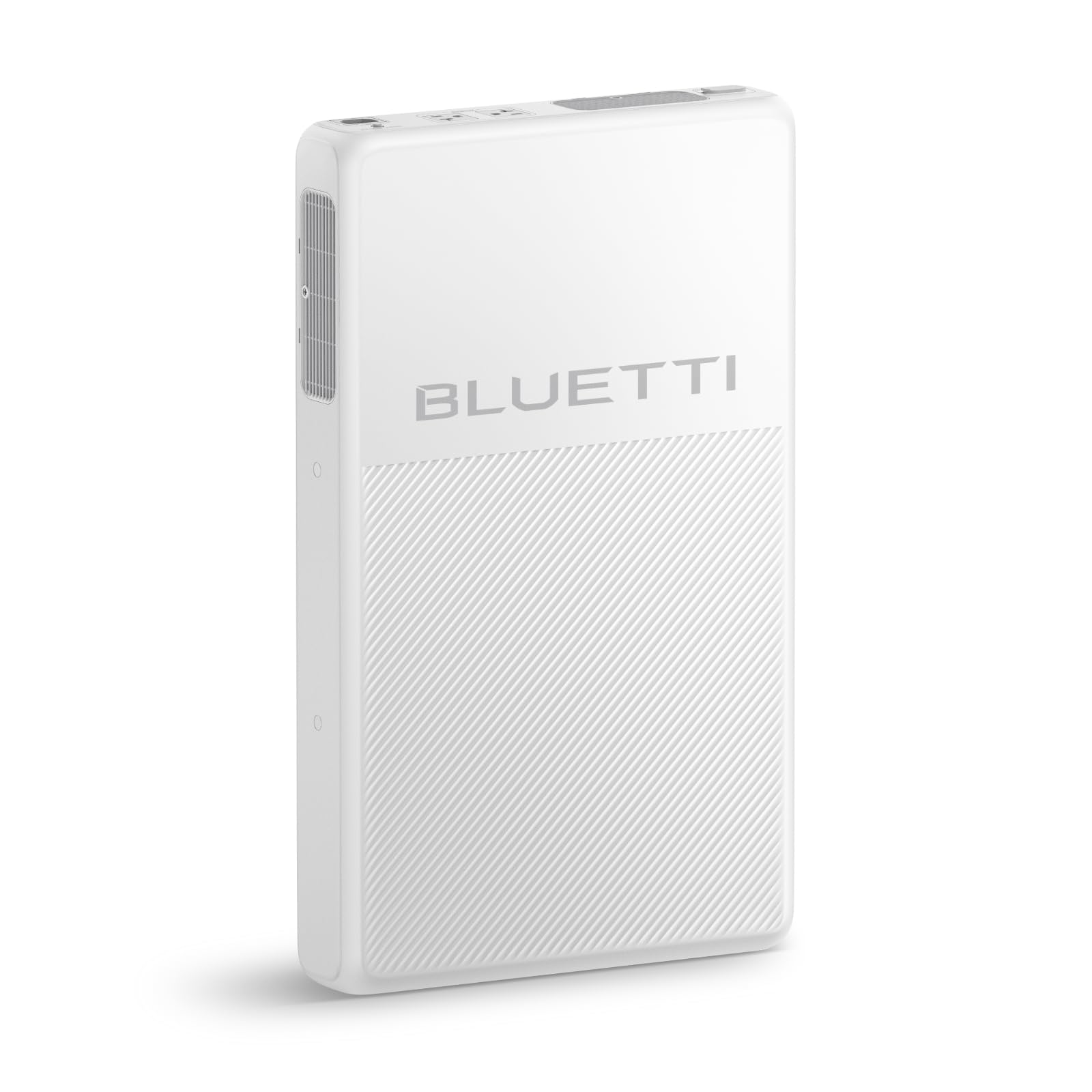
Battery: 2016Wh LFP
AC Output: 1800W continuous, 3600W surge
UPS Switchover: 10ms
Profile: Ultra-slim, 75mm
Self-Consumption: 4W
Intended Use: Fridge, sump pump, home backup, emergency
BLUETTI FridgePower Portable Power Station, 2016Wh 1800W LFP Battery Backup
Check the current price on Amazon
The FridgePower is built around a low, slim chassis that slides behind or beside a fridge, and its LFP battery chemistry is the long-life type now standard in serious home backup. The 10ms UPS switchover means a fridge keeps running without noticing the grid has dropped, and the low 4W self-consumption matters because the unit may sit plugged in for months. Its 1800W continuous output comfortably covers a fridge compressor cycling on and off, with enough left over for a modern boiler’s pump and controls. The 3600W surge headroom is there for the compressor’s startup draw. This is the pick for a buyer whose main worry is the kitchen and who wants the unit out of sight rather than on a shelf.
It suits homeowners with a narrow gap beside the fridge and a boiler that only needs a modest, steady supply. Its place in the roundup comes from that slim form factor combined with a genuine UPS mode, a pairing that is rare at this capacity.
Trade-off: The 1800W ceiling limits it to a fridge, boiler and a few small loads at once, so a buyer planning to run a kettle or microwave during an outage will need to shut other things off first.
Jackery HomePower 3600 Plus Power Station

Battery: 3584Wh LFP
AC Output: 3600W
Expandability: Up to 21kWh
Power Source: Solar generator, solar panel optional
Intended Use: Essential home backup, emergencies, RV
Jackery HomePower 3600 Plus Power Station, 3584Wh, 3600W AC Output
Check the current price on Amazon
The HomePower 3600 Plus is the biggest system here and the only one designed to grow. Its LFP battery and 3600W AC output can carry a fridge, a boiler and a run of household essentials at the same time, and the expandable architecture pushes total capacity up to 21kWh by adding batteries. That expansion is what separates a one-night backup from something that can ride out a multi-day outage. Solar input is optional, which keeps the entry cost down for a buyer who only wants grid charging at first. The build is aimed at a permanent spot in a utility room or garage rather than being carried around.
This is the pick for a household that wants one system to cover the whole essential circuit and expects to add capacity later. It earns its place on headroom and growth, not on portability.
Trade-off: The premium tier price and large footprint make it a poor fit for a renter or anyone who needs to move the unit between properties.
Jackery HomePower 3000 Portable Power Station
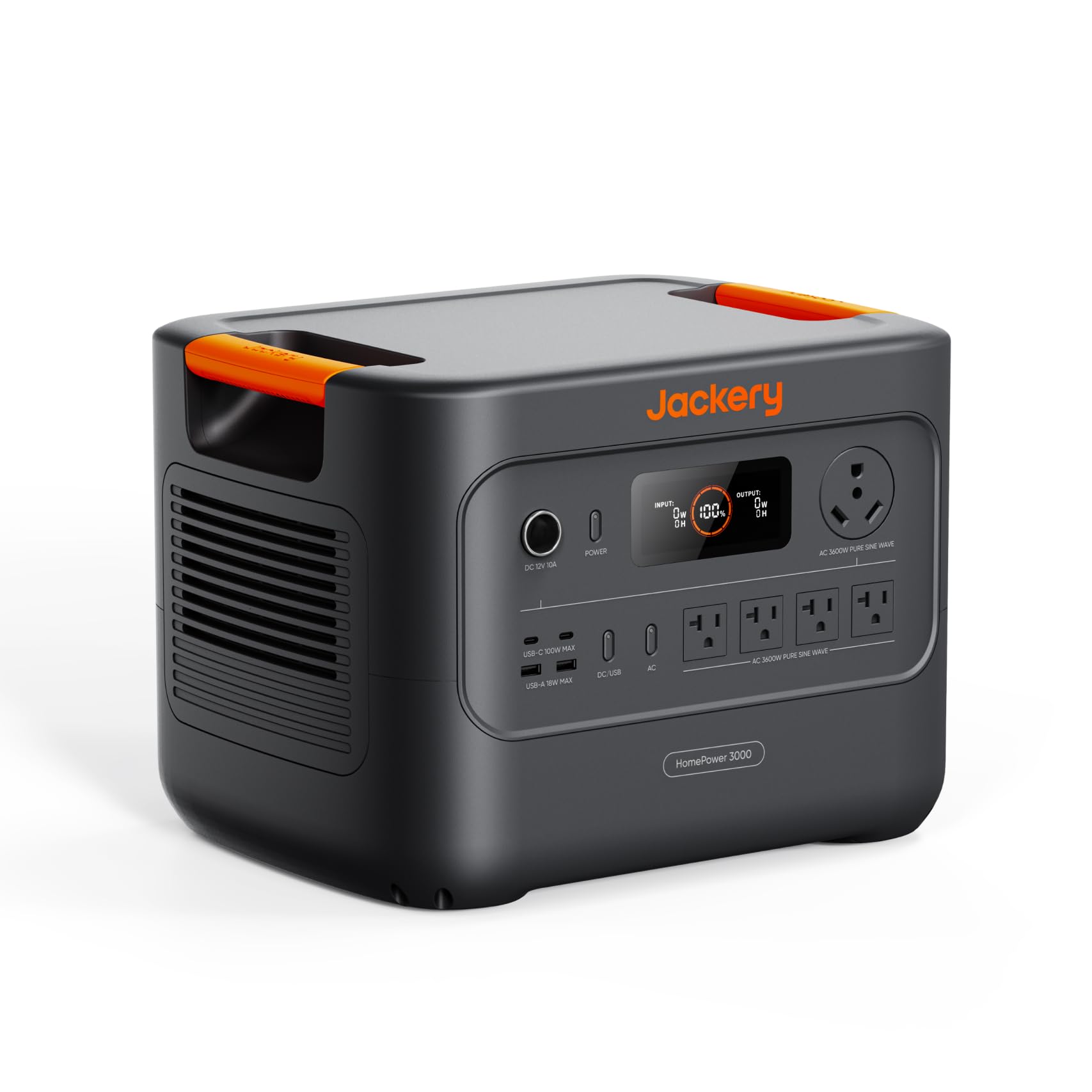
Battery: 3072Wh LFP
AC Output: 3600W
Surge: 7200W
Power Source: Solar generator, solar panel optional
Intended Use: Essential home backup, power outage
Jackery HomePower 3000 Portable Power Station, 3072Wh, 3600W AC Output
Check the current price on Amazon
The HomePower 3000 sits just below the Plus model in capacity but matches it on output, and its 7200W surge rating is the standout figure in this roundup. That surge headroom is what a buyer wants when a fridge compressor and a boiler pump kick in together after the power returns. The 3072Wh LFP battery is enough for a fridge, a boiler and lighting through a typical overnight outage, and solar charging is optional for longer stretches. It is a fixed-position unit in practice, sized for a garage or utility corner. For a home that needs strong startup current more than maximum stored energy, this is the more sensible of the two Jackery units.
It suits a household with a larger fridge, a boiler with a circulation pump, and no plan to expand capacity. It earns its place on surge capability at a step below the top tier.
Trade-off: The unit is heavy and built to stay put, so it offers little value to a buyer who wants something to carry to a campsite or a second property.
DABBSSON Portable Power Station 2000L
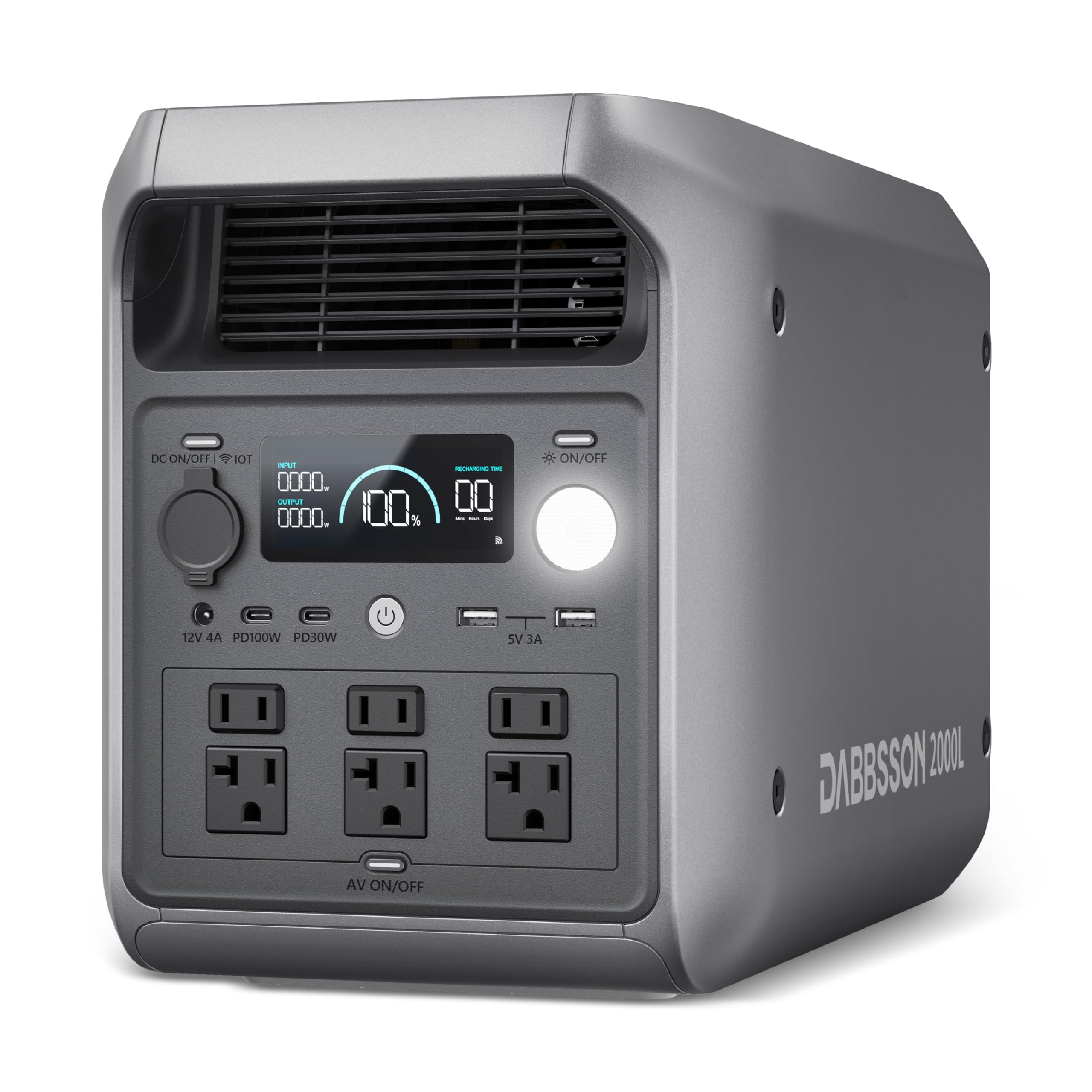
Battery: 2048Wh semi-solid LiFePO4
AC Output: 2200W, 3300W power boost
Charge Time: 1 hour fast charge
Power Source: Solar generator, solar panel optional
Intended Use: Home backup, camping, RVs
DABBSSON Portable Power Station 2000L, 2048Wh Semi-Solid LiFePO4 Battery, 2200W AC Output
Check the current price on Amazon
The DABBSSON pairs a 2048Wh semi-solid LiFePO4 battery with 2200W of AC output and a 3300W boost mode for short bursts above the continuous rating. The one-hour fast charge is the headline feature: a unit that refills from empty in an hour is far easier to keep ready for the next outage, and it makes a generator or a wall socket a realistic top-up between events. The 2200W continuous output covers a fridge and a boiler together with margin to spare for small appliances. Its semi-solid cell construction is a newer approach aimed at durability. It is a generalist, equally at home in a garage or in an RV.
This is the pick for a buyer who wants strong all-round capability and quick recharge rather than maximum capacity. It earns its place on charge speed and a balanced spec sheet.
Trade-off: The boost rating is a short-term mode, so a buyer running a fridge and boiler continuously should plan around the 2200W continuous figure rather than the higher peak.
640Wh Portable Power Station with 10ms UPS
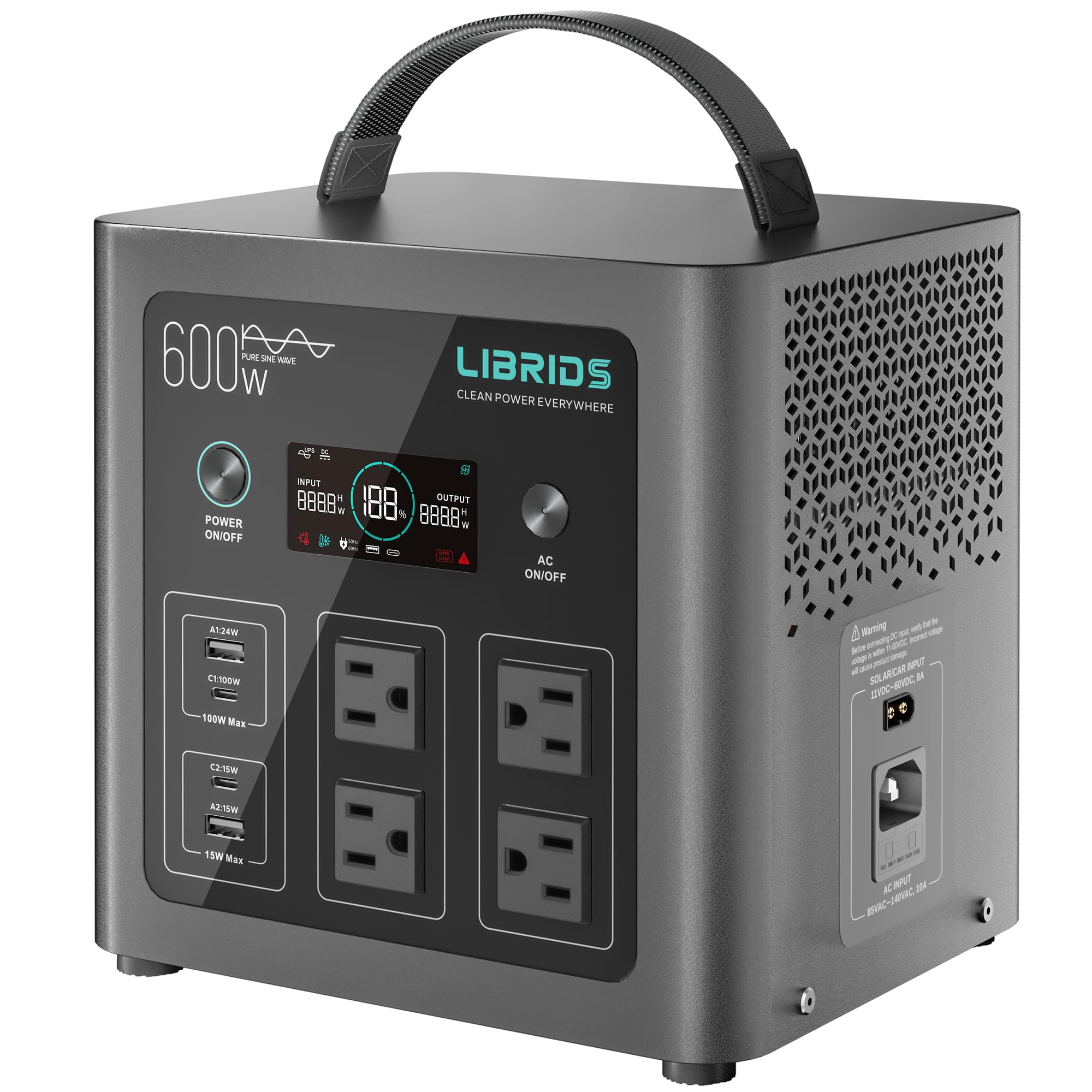
Battery: 640Wh LiFePO4
AC Output: 1200W surge, 4 AC ports
UPS Switchover: 10ms
Charge Time: 1.5 hours
Ports: 8 total
Build: Pure sine wave, metal design
Intended Use: RV camping, home backup, emergency
Backup LiFePO4 Battery Portable Power Station 640Wh, 1200W Surge, Solar Generator 4 AC
Check the current price on Amazon
This compact unit is the budget entry in the roundup, and its metal housing and pure sine wave output are the details that matter for sensitive boiler controls. The 10ms UPS switchover lets it stand in for a wall socket on a fridge or a boiler’s electronics, and the 1.5-hour charge time keeps it ready without much planning. Eight ports across four AC outlets and the usual USB set make it a flexible small backup. The 640Wh battery is modest by the standards of the larger picks, so it is best treated as a short-outage buffer. Its light weight is the reason it is here: it can be moved to whichever socket needs protecting.
It suits renters, small flats and anyone who wants a portable unit that doubles as a UPS for a single fridge or boiler circuit. It earns its place on price, portability and a proper UPS mode.
Trade-off: The 640Wh capacity will not carry a fridge and a boiler for long, so it is a bridge through short cuts rather than a multi-day solution.
Before You Buy
- Capacity: Match watt-hours to the loads and the outage length; a fridge and boiler together drain a small unit fast.
- Surge vs continuous: Compressors and pumps draw far more at startup than they do running, so check the surge figure, not just the continuous one.
- UPS switchover: A 10ms changeover keeps electronics and compressors running; units without it need manual switching.
- Boiler compatibility: Check what the boiler’s pump and controls actually draw, and confirm the unit’s output is pure sine wave.
- Placement: Slim units fit beside appliances, while large expandable systems need a permanent spot with ventilation.
- Recharge: Fast charging and optional solar input decide how quickly the unit is ready for the next outage.
- Ports: Count the AC outlets needed for the fridge, boiler and any extras before choosing a model.
Frequently Asked Questions
-
Can a power station run a boiler and a fridge at the same time?
Yes, provided the continuous output covers both running loads plus the fridge compressor’s startup surge. The larger picks here handle that pairing comfortably, while the compact unit is better suited to one at a time. -
How long will a power station keep a fridge cold during an outage?
It depends on the battery capacity, the fridge’s efficiency and how often the door is opened. A fridge cycles rather than running constantly, so a mid-size unit can carry it through a night, while a compact unit is a short bridge. -
What does 10ms UPS switchover mean for a boiler?
It means the unit takes over from the wall supply almost instantly, so the boiler’s pump and controls keep running without a reset. That matters for modern boilers that need to be restarted manually after a hard cut. -
Is a pure sine wave output necessary for a boiler and fridge?
It is the safer choice. Pure sine wave output matches mains power closely, which suits the electronics in a modern boiler and the motor in a fridge compressor. -
Can these units be charged with solar panels?
Several of the picks list solar as an optional input, which is useful during a long outage when the grid is down. Panels are sold separately on those models, so the cost needs factoring in. -
Does a bigger battery always mean a better choice?
No. A large expandable system only pays off if the home needs multi-day coverage; for short cuts, a smaller unit with a proper UPS mode is often the more practical buy.
Bottom Line
For most homes protecting a boiler and a fridge, the BLUETTI FridgePower is the pick that balances a genuine 10ms UPS mode with a slim shape that fits where the appliances already are. Buyers who need to ride out multi-day outages should step up to the expandable Jackery HomePower 3600 Plus instead.
