Why there are Amazon links here: Brave Review is paid a commission for qualifying Amazon purchases made through the links below. Your price does not change, and using our links is entirely optional. How this works
VONKO Robot Vacuum and Mop: Self-Emptying LiDAR Cleaning for Pet Hair
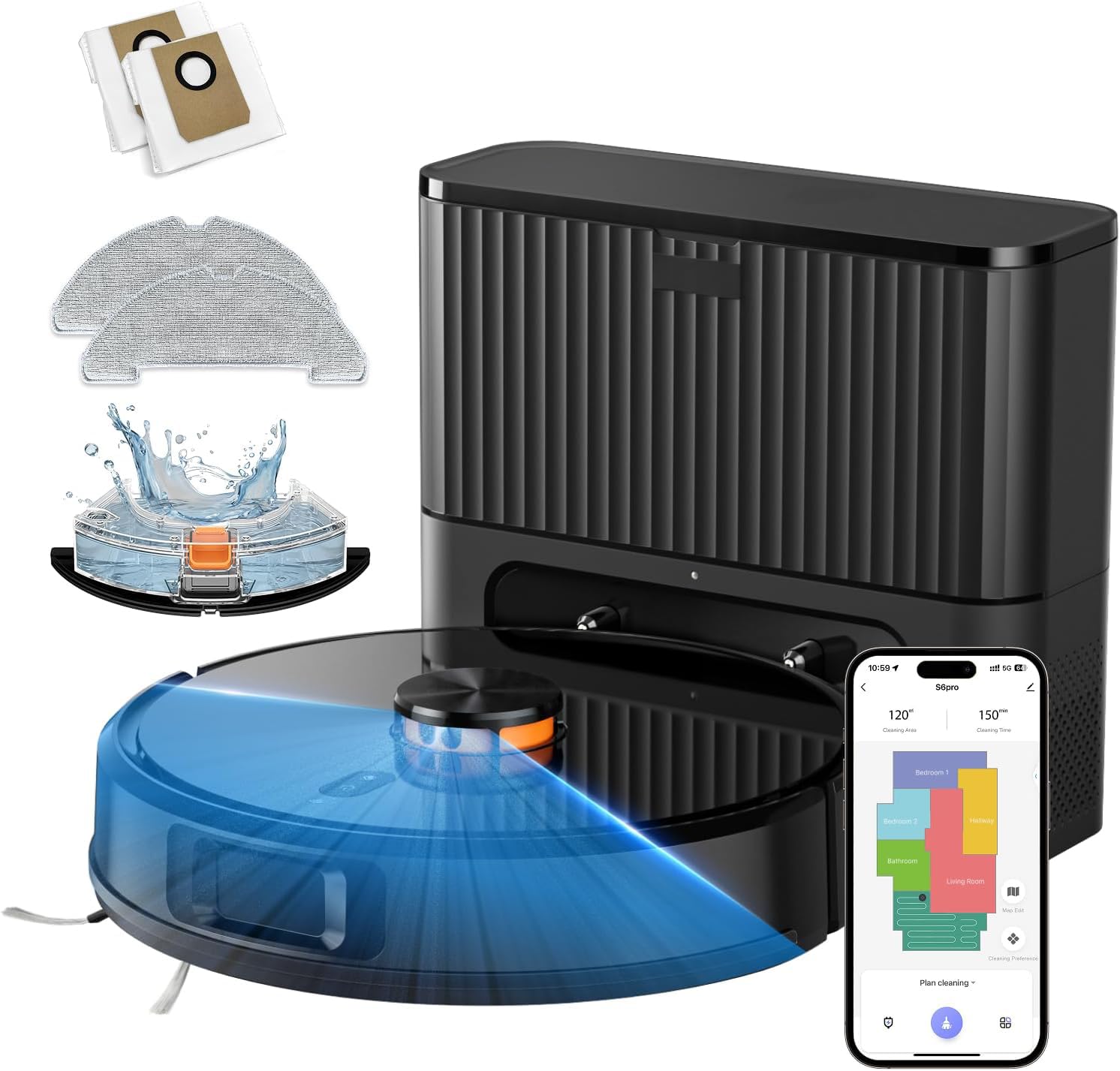
The VONKO robot vacuum and mop is a hands-free cleaner built for homes that want vacuuming and mopping handled without daily attention. Its 8000Pa suction, LiDAR navigation and self-emptying base put it in the feature-rich tier of robot cleaners, and the multi-level mapping makes it a reasonable fit for two-story houses. This review covers what the machine does, how its parts work together, and where the trade-offs sit so a buyer can decide quickly.
Check the current price on Amazon
Features and Specifications
Type: Robot vacuum and mop combo
Suction Power: 8000Pa
Navigation: LiDAR with smart mapping
Emptying: Self-emptying base, up to 60 days hands-free
Maps: Multi-level floor maps
Control: App and Alexa voice control
Best For: Pet hair, carpet and hard floors
Color: Black
The headline number is the 8000Pa suction rating, which sits near the top of what cordless robot cleaners advertise and points to a machine meant to pull debris out of carpet pile rather than just skim hard floors. LiDAR navigation is the second pillar: instead of bouncing randomly around a room, the unit scans its surroundings to build a map it can follow systematically. Together those two features explain most of the price positioning.
The self-emptying base is what turns this into a genuinely hands-free appliance. Rather than emptying a small onboard bin after every run, the robot docks and transfers its load into a larger container, and the up-to-60-days claim refers to how long that base bin can go between empties under typical use. Buyers with shedding pets will notice this most, since pet hair fills bins fast.
Build and Design
The black chassis is a conventional round robot form factor with a raised LiDAR turret on top, the housing that lets the navigation sensor spin and scan a full circle. That turret adds a little height, which matters for clearance under low furniture such as sofas and bed frames. The docking base is the bulkiest part of the system and needs a wall outlet plus a clear approach path.
Because the base holds a larger dust container, it takes up meaningful floor space and is best placed against a wall where it will not be walked into. The trade-off of the self-emptying design is exactly this: a bigger footprint in exchange for far less frequent emptying. Buyers in small apartments should measure the spot before committing.
The mop function typically pairs a water reservoir with a mopping pad that trails the vacuum, so the machine can sweep and wipe in one pass. That is convenient for everyday dust and light spills on hard floors, but it is a maintenance item — pads need rinsing and reservoirs need refilling — so the "hands-free" promise covers vacuuming more completely than mopping.
Capacity and Multi-Level Mapping
The multi-level mapping feature is the strongest argument for this machine in a multi-story home. The robot can store separate maps for different floors, so when it is carried upstairs it recognizes where it is rather than starting from scratch. That saves re-scanning time and lets the app keep room boundaries and no-go zones consistent per level.
Room-by-room mapping also feeds into scheduled cleaning and targeted runs. A buyer can send the robot to a single room or set zones it should avoid, which is useful around pet bowls, cables and area rugs that should not be wet-mopped. This is where LiDAR earns its keep over camera-based navigation, since it works in low light and does not depend on visible landmarks.
The capacity story is split between two bins: the onboard bin that the robot carries and the larger base bin it empties into. The onboard bin is small by design because it is meant to be emptied often — automatically — while the base bin does the long-haul storage. Buyers who generate a lot of large debris, such as cereal spills or craft mess, may still need to check the base more often than the maximum interval suggests.
Power and Cleaning Performance
8000Pa is a strong suction figure for a robot cleaner and is aimed squarely at carpet and pet hair. On low-pile carpet and rugs, that level of pull is what lifts embedded hair and grit rather than leaving it matted on the surface. On hard floors it is more than enough, and the practical limit there becomes the brush and edge reach rather than raw power.
Higher suction usually comes with louder running noise and faster battery drain, which is the trade-off of the top end of this class. Buyers who run the robot while working from home should expect to notice it, and larger homes may see the machine return to dock mid-run on a single charge. Scheduling overnight or while out of the house sidesteps both issues.
The Alexa integration and app control add convenience rather than cleaning power: voice commands to start or stop a run, and app controls for schedules, maps and modes. These features are only as good as the home Wi-Fi, so a stable network is a practical prerequisite.
Maintenance and Running Costs
Consumables drive the long-term cost of any robot vacuum. Filters, brushes, mop pads and eventually the battery are the parts that wear, and the self-emptying base adds a bag or container to manage depending on its design. Budgeting for replacements is part of owning this class of machine, not an optional extra.
Routine care is modest: clearing hair from the brush roll, rinsing mop pads, and emptying or checking the base bin. Pet owners will do the brush-roll check more often, since long hair wraps around rollers quickly. Skipping it costs suction and strains the motor.
Trade-off: The self-emptying base and LiDAR turret add bulk and a larger footprint, and the mopping side still needs manual pad care, so the hands-free claim is strongest for vacuuming in homes with a clear spot for the dock.
Who It Suits and Who It Does Not
This VONKO model suits pet owners, carpeted homes and multi-story houses where the combination of strong suction, LiDAR mapping and per-floor maps pays off. It also fits buyers who want to set a schedule and forget about vacuuming for weeks at a time, and who are comfortable managing an app.
It is not the right pick for very small apartments where the dock would dominate the floor plan, or for buyers who want a fully automatic mop that scrubs and self-cleans. Anyone on a tight budget should weigh whether the self-emptying convenience justifies the higher tier, since simpler robots clean floors for less.
FAQ
-
What does 8000Pa suction mean for pet hair?
It is a high suction rating for a robot vacuum, aimed at lifting embedded hair and grit from carpet rather than just surface debris. Pet owners on carpet will see the benefit most. -
How does the self-emptying base work?
The robot docks and transfers the contents of its onboard bin into a larger container in the base, so the bin does not need manual emptying after every run. The up-to-60-days figure is a maximum under typical use. -
Can it clean more than one floor?
Yes. The multi-level mapping feature stores separate maps for different floors, so the robot recognizes where it is after being carried upstairs. -
Does it work with Alexa?
Yes. The machine supports Alexa voice control alongside app control for starting runs, scheduling and managing maps. -
Is it good for carpet and hard floors?
The product is designed for both, with 8000Pa suction for carpet and a mop function for hard floors. The mop handles light dust and spills rather than heavy scrubbing. -
How often does the base bin need emptying?
The claim is up to 60 days hands-free, but homes with heavy debris or multiple shedding pets will likely need to check it sooner. The interval depends on use. -
Does the mop dry itself?
The mop function uses a pad that trails the vacuum, and pads need rinsing after use. Buyers wanting automatic pad washing should look at a different class of machine. -
Will it fit under low furniture?
The LiDAR turret on top adds height, so clearance under very low sofas and beds is limited. Measuring the lowest gap before buying is sensible. -
Does it need Wi-Fi?
App and Alexa control rely on a home Wi-Fi network, so a stable connection is needed to use scheduling and mapping features fully. -
What maintenance does it need?
Clearing the brush roll, rinsing mop pads, checking the base bin and replacing filters and brushes over time. Pet owners should check the brush roll more often.
Bottom Line
The VONKO robot vacuum and mop is a strong fit for pet owners and multi-story homes that want strong suction, LiDAR mapping and a self-emptying base in one package, and it earns its place for anyone tired of emptying a bin after every run. The trade-offs are real — a bulky dock, a mop that still needs manual pad care, and higher running noise at full power — but for the right household the convenience is worth it. Buyers ready to stop thinking about vacuuming can check the current price and availability on Amazon.
