Why there are Amazon links here: Brave Review is paid a commission for qualifying Amazon purchases made through the links below. Your price does not change, and using our links is entirely optional. How this works
Best Wi Fi Extender for a House with a Conservatory
A conservatory sits at the far edge of the home, usually behind a thick exterior wall and a set of glass doors, which is exactly where a main router’s signal gives up. This roundup covers five extenders that can bridge that gap, from a budget dual-band workhorse to long-range models built for big footprints. It suits three kinds of buyer: the household that just wants the garden room online, the one running a large open-plan home with a conservatory attached, and the one on a tight budget who needs a simple fix. The overview table below sorts all five by key spec and best use, so a pick can be made in under a minute.
Overview of the Picks
| Product | Key Spec | Best Use | Price Tier |
|---|---|---|---|
| TP-Link AC1200 WiFi Extender (RE315) | Dual band, up to 1600 sq.ft, 32 devices | Small-to-mid homes, Mesh-ready | Budget |
| 2026 WiFi Extender, 15888 sq.ft | Long range, 55+ devices, 1-tap setup | Large homes, many devices | Mid |
| 2026 Upgraded WiFi Extender for Home | Up to 18000 sq.ft, Ethernet port | Whole-house coverage | Mid |
| 2026 WiFi Extender Signal Booster | Up to 15,588 sq.ft, Ethernet port | Big footprints on a budget | Budget |
| Dual Band WiFi Booster, 3000 sq.ft | 1200Mbps, 4 antennas, 2 Ethernet ports | Wired devices in the conservatory | Mid |
TP-Link AC1200 WiFi Extender (RE315)

Type: Dual band wall-plug extender
Coverage: Up to 1600 sq.ft
Devices: Up to 32
Bands: 5GHz / 2.4GHz
Speed class: AC1200, 1.2Gbps
Ports: One Ethernet port
Mesh: EasyMesh compatible
The RE315 is a name-brand dual-band extender with a compact wall-plug body and a single Ethernet port on the underside. It pushes both a 5GHz and a 2.4GHz band, so phones and laptops can stay on the faster band while older smart devices use the slower one. EasyMesh compatibility means it can join a mesh network rather than sit as a lone repeater, which keeps handoffs cleaner as a person walks from the kitchen into the conservatory.
This is the pick for a modest home where the conservatory is one or two rooms beyond the router. It earned its place on price and reliability rather than raw reach, and it suits buyers who want a known brand and a simple setup.
Trade-off: Coverage tops out at 1600 sq.ft, so a large home with a long garden room will likely need a second unit or a step up to a long-range model.
2026 WiFi Extender, 15888 sq.ft Internet Extender
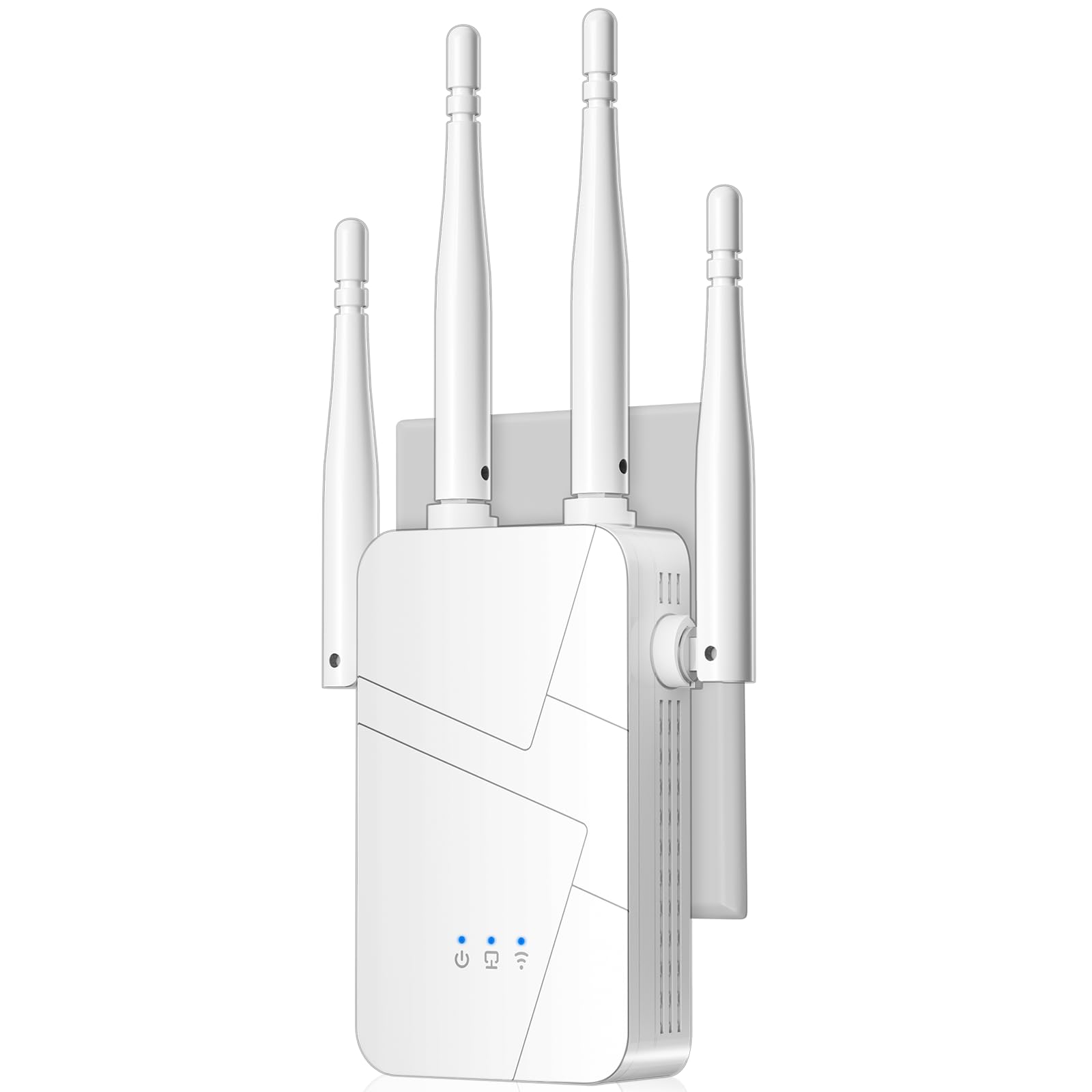
Type: Long-range wireless repeater
Coverage: Up to 15888 sq.ft
Devices: 55+
Setup: 1-tap
Compatibility: Mesh Wi-Fi
Speed claim: 99% faster
This model is built for reach, with a stated footprint that dwarfs the budget pick and a device count that covers a busy household. The one-tap setup is aimed at buyers who do not want to log into a router admin page, and the mesh support helps it work alongside an existing mesh system rather than fight it. It is the middle of the range on price and the broadest on paper.
It suits a large home where the conservatory is genuinely far from the router, or a household with dozens of connected gadgets. The trade-off is that a single repeater covering that much space will not deliver top speed at the far edge.
Trade-off: Extremely wide coverage claims usually mean slower throughput at the extremes, so a conservatory at the very edge may see modest speeds rather than full-band performance.
2026 Upgraded WiFi Extender for Home

Type: Long-range wireless repeater
Coverage: Up to 18000 sq.ft
Ports: Ethernet port
Speed claim: 15X faster signal
Compatibility: Works with 99% of routers
Setup: Standard pairing
This is the biggest coverage figure in the group, paired with an Ethernet port for a wired device in the conservatory — a smart TV or a games console, for example. It is designed to work with almost any router rather than locking the buyer into one brand, and the Ethernet port doubles as a way to give one device a stable wired link instead of relying on Wi-Fi at the far end of the house.
It suits a large property where the conservatory is a real distance from the router and at least one device there benefits from a cable. It is a newer listing, so buyers should expect to do a little more of their own setup reading.
Trade-off: The headline coverage number is the most aggressive of the five, and real-world results in a walled conservatory will fall well short of it.
2026 WiFi Extender Signal Booster
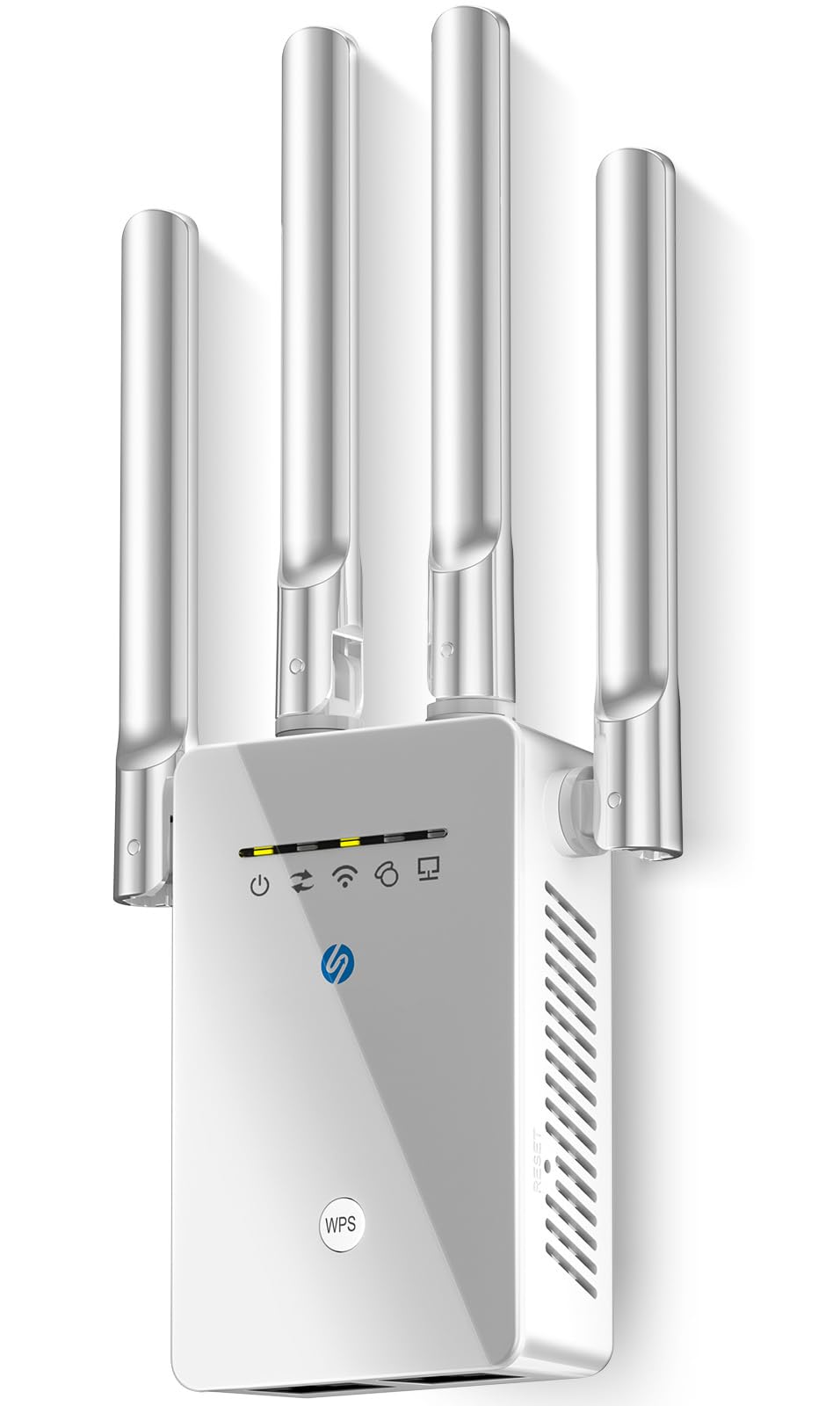
Type: Wireless repeater with Ethernet port
Coverage: Up to 15,588 sq.ft
Speed claim: 6X faster
Setup: 1-tap
Compatibility: Wireless routers
Ports: Ethernet port
This unit sits between the budget TP-Link and the two long-range models, offering a large stated footprint and a one-tap setup at a lower price point. The Ethernet port is the useful detail, letting one wired device in the conservatory run off the extender instead of the router. It is aimed at buyers who want big coverage without paying the middle-tier premium.
It suits a generous home on a tighter budget, particularly where the conservatory holds a single wired device. The lower price tier makes it the value alternative to the two models above.
Trade-off: At the budget end of the long-range class, build quality and sustained speed are the likely compromises, so heavy streaming at the far edge may stutter.
Dual Band WiFi Booster, 3000 sq.ft
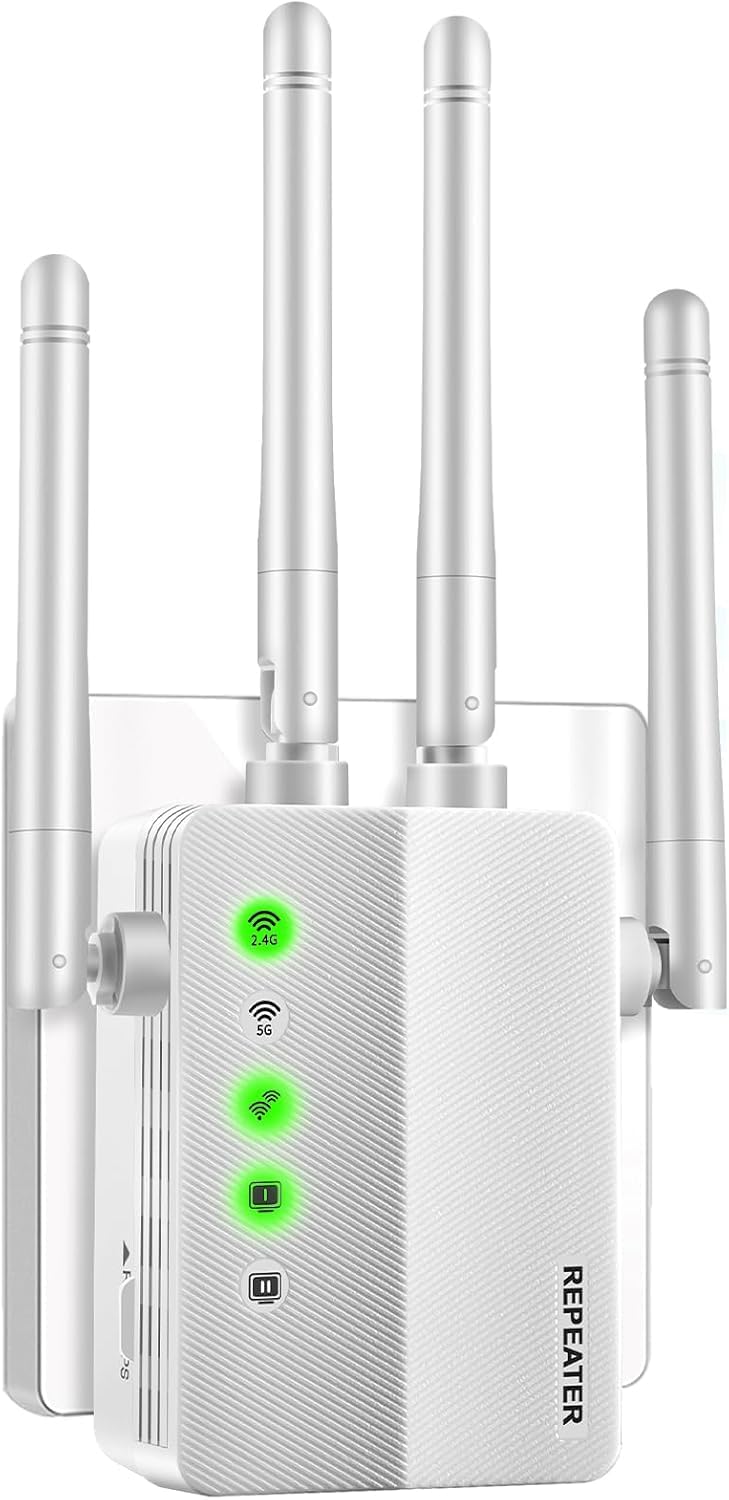
Type: Dual band booster with 4 antennas
Coverage: Up to 3000 sq.ft
Devices: Up to 20
Speed class: 1200Mbps
Bands: 5GHz / 2.4GHz
Ports: 2 Ethernet ports
This booster takes a different approach: four external antennas and two Ethernet ports, aimed at buyers who want to hard-wire more than one device in the conservatory. The 1200Mbps dual-band class matches the TP-Link on speed, and the two ports make it the most flexible pick for a garden room with a TV and a console, or a TV and a desktop.
It suits a home where the conservatory is wired for a couple of devices and the buyer wants a stable cable rather than Wi-Fi for both. The four antennas help shape the signal toward the far room.
Trade-off: A 3000 sq.ft ceiling and a 20-device limit make it the least expansive option here, so it is a poor fit for a very large home with many connected gadgets.
Before You Buy
- Coverage: Match the stated footprint to the real distance from router to conservatory, and expect a walled glass room to cut that figure.
- Placement: The extender needs to sit roughly halfway between router and conservatory, not inside the conservatory itself.
- Compatibility: Check the extender works with the existing router, and prefer EasyMesh or mesh-ready models for cleaner handoffs.
- Ports: An Ethernet port is worth having if the conservatory holds a TV, console or desktop that benefits from a cable.
- Device count: Count phones, tablets, smart speakers and TVs before choosing, since device limits vary widely across these five.
- Bands: Dual-band models keep fast devices on 5GHz while older smart gear uses 2.4GHz.
- Setup: One-tap pairing suits buyers who want a quick fix; standard pairing offers more control but takes longer.
Frequently Asked Questions
-
Will an extender work through conservatory glass and brick?
Yes, but signal loss through exterior walls and glazing is significant, so the extender should sit in the room before the conservatory rather than inside it. -
How many extenders does a house with a conservatory need?
A small home usually needs one; a large property with a distant conservatory often needs two, or one long-range model placed carefully. -
Is a mesh system better than a single extender?
A mesh-ready extender such as the TP-Link RE315 gives cleaner handoffs, while a standalone long-range model is simpler and cheaper for one far room. -
Does an Ethernet port matter in a conservatory?
It does if a TV, console or desktop sits there, since a cable gives a stable connection that Wi-Fi at the far edge struggles to match. -
Where should the extender be plugged in?
Roughly halfway between the router and the conservatory, in an open spot, and away from metal and thick walls that block signal. -
Can an extender slow the connection down?
A repeater halves throughput on the repeated band in many setups, so a wired or mesh-friendly option is better for heavy use.
Bottom Line
For most homes with a conservatory, the TP-Link AC1200 WiFi Extender (RE315) is the safest pick: known-brand build, dual-band speed and EasyMesh support at the budget end. Buyers with a very large property and a distant garden room should step up to the long-range 15888 sq.ft model, while anyone wiring two devices in the conservatory should choose the four-antenna dual-band booster.
