Why there are Amazon links here: Brave Review is paid a commission for qualifying Amazon purchases made through the links below. Your price does not change, and using our links is entirely optional. How this works
Best WiFi Extender for a Conservatory with a Glass Roof
A conservatory with a glass roof is one of the hardest rooms in a house to cover: the glass blocks little, but the metal frames, the distance from the router and the garden-side walls all eat into the signal. The five extenders below cover the full range of fixes, from a cheap plug-in that sits on a windowsill to a weatherproof outdoor unit that can be mounted outside and aimed back in. The picks suit three kinds of buyer: the budget-conscious household that just wants a usable signal at the far end of the conservatory, the mesh household that already owns a Deco system, and the large-garden household that needs coverage across the conservatory and the patio beyond it. The overview table below puts all five side by side so a decision can be made in under a minute.
Overview of the Picks
| Product | Key Spec | Best Use | Price Tier |
|---|---|---|---|
| TP-Link AC1200 WiFi Extender (RE315) | Dual band 5GHz/2.4GHz, 1.2Gbps, EasyMesh compatible | Budget plug-in for a small conservatory | Budget |
| 2026 New WiFi Extender Signal Booster | 1200Mbps dual band, 12880 Sq.Ft claimed range | Cheap long-range coverage for home and outdoor | Budget |
| WAVLINK AX3000 Outdoor WiFi 6 Extender | AX3000, IP67, PoE, 6x7dBi antennas | Harsh-weather outdoor mounting, large gardens | Premium |
| Deco 7 Outdoor BE5000 Mesh Add-On Extender | Wi-Fi 7, dual 2.5G PoE+ ports, IP65 | Expanding an existing Deco mesh system outdoors | Mid-range |
| 2026 20X WiFi Booster | 1200Mbps dual band 5.8GHz/2.4GHz, Ethernet port | Simple plug-in with a wired option | Budget |
TP-Link AC1200 WiFi Extender (RE315)

Type: Dual-band wall-plug extender
Speed class: AC1200, up to 1.2Gbps
Bands: 5GHz and 2.4GHz
Coverage claim: Up to 1600 Sq.ft
Device capacity: Up to 32 devices
Ports: One Ethernet port
Mesh support: EasyMesh compatible
Check the current price on Amazon
The RE315 is the classic wall-plug shape: a compact body that goes straight into a socket, with a single Ethernet port on the underside for a wired device such as a smart TV or a games console. It repeats both bands, so a conservatory that sits a room or two from the router gets a usable 5GHz signal rather than being pushed onto the slower 2.4GHz band. EasyMesh compatibility means it can also join a mesh network rather than running as a standalone repeater, which matters for households already building one out.
It earns its place as the budget pick because it is the cheapest way to get a second radio into the conservatory without drilling anything or running cable. The 1600 Sq.ft figure is a best-case number measured in open space, so a glass-roofed room with metal frames will see less than that — but for a single conservatory it is usually enough. It is not the right choice for a household with dozens of connected devices, and the single Ethernet port limits how much wired gear can hang off it.
Trade-off: The compact plug-in body and low price mean a modest device limit and one Ethernet port, so busy households will outgrow it.
2026 New WiFi Extender Signal Booster

Type: Dual-band extender for home and outdoor use
Speed class: 1200Mbps
Bands: 5GHz and 2.4GHz
Coverage claim: 12880 Sq.Ft
Device capacity: 105 devices
Installation: Simple setup
Check the current price on Amazon
This one is pitched at the long-range end of the budget market, with a headline coverage figure that is far beyond any single conservatory and a device capacity that suits a busy family home. The dual-band 1200Mbps radio is the same class as the TP-Link above, so the real difference is the antenna arrangement and the housing, which is built to be used outdoors as well as in. That makes it a candidate for mounting on the conservatory’s exterior wall and aiming back through the glass.
It suits a buyer who wants the cheapest possible way to push signal across a large footprint and is willing to experiment with placement to find the sweet spot. The catch is that very large coverage claims in this price bracket are measured in ideal conditions, and a conservatory with a metal-framed glass roof is not ideal conditions. Buyers who need guaranteed performance in a difficult room should look at the weatherproof units further down the list.
Trade-off: The ambitious range claim and low price point suggest the build is basic, so expect to spend time finding a mounting spot that actually works.
WAVLINK AX3000 Outdoor WiFi 6 Extender
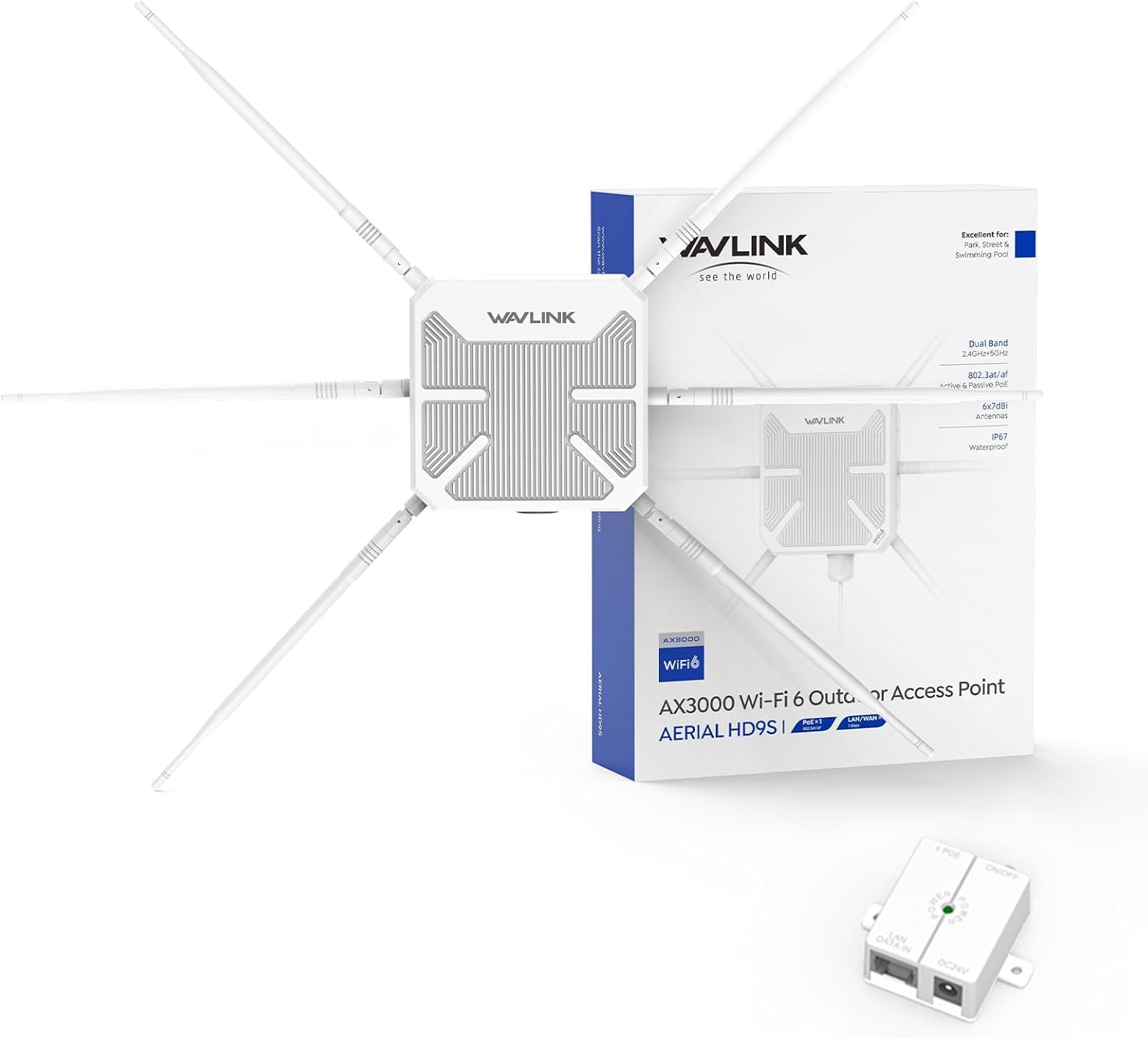
Type: Outdoor WiFi 6 extender/repeater
Speed class: AX3000
Bands: Dual band
Weatherproofing: IP67
Power: PoE (Power over Ethernet)
Antennas: 6x7dBi
Device capacity: 256 devices
Check the current price on Amazon
The WAVLINK is the serious outdoor option: an IP67-rated housing that can take direct rain, six high-gain antennas, and Power over Ethernet so a single cable carries both data and power to the mounting point. AX3000 puts it a generation ahead of the budget picks on throughput, and the 256-device capacity is aimed at large properties or small commercial installs. It is also listed as compatible with Starlink setups, which matters for rural households using satellite internet.
It earns its place as the premium pick because it solves the conservatory problem from the outside: mount it on the garden wall, point the antennas at the glass roof, and the room gets a strong signal without any indoor clutter. The PoE requirement is the catch — it needs a PoE injector or switch, which adds cost and a cable run. Buyers without a route for Ethernet cable should look elsewhere.
Trade-off: PoE power and an IP67 outdoor housing push the price up and demand a cabled install, so it is overkill for a simple indoor job.
Deco 7 Outdoor BE5000 Mesh Add-On Extender
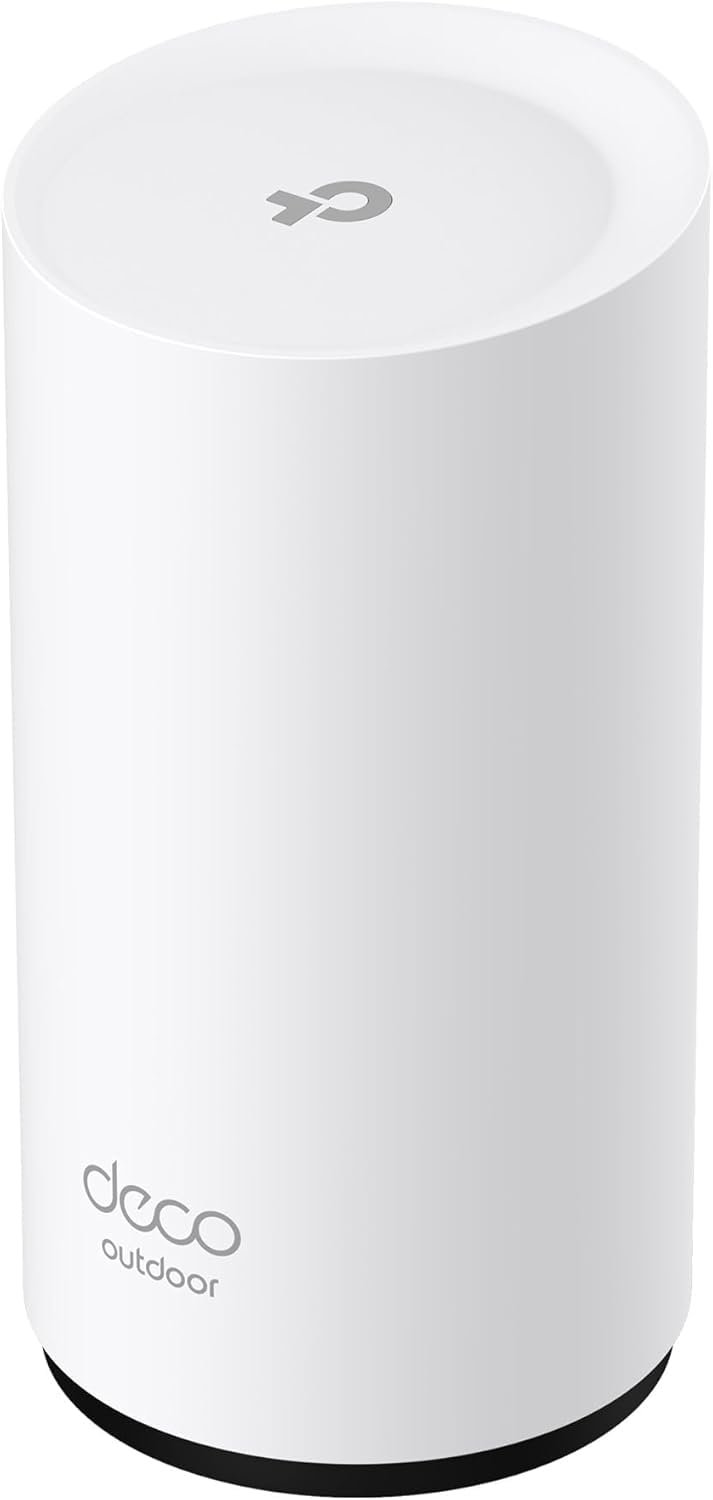
Type: Mesh add-on extender (Deco system)
Standard: Wi-Fi 7, BE5000
Coverage claim: Up to 2,800 sq. ft.
Ports: Dual 2.5G PoE+ ports
Weatherproofing: IP65
Features: MLO, flexible mounting, secure by design
Check the current price on Amazon
The Deco 7 Outdoor is not a standalone extender — it is an add-on node for an existing Deco mesh system, and that is the whole point. Wi-Fi 7 with MLO (multi-link operation) lets compatible clients use more than one band at once, and the dual 2.5G PoE+ ports mean a single cable can power the unit and feed a wired device at multi-gigabit speed. IP65 weatherproofing and flexible mounting make it suitable for an exterior wall beside the conservatory.
It is the right pick for households already running Deco: adding an outdoor node extends the mesh through the conservatory and into the garden without a second app or a second network name. The 2,800 sq. ft. figure is a mesh coverage claim, not a single-unit range, so it should be read as part of a system. Buyers without a Deco base unit should skip it entirely — it will not work on its own.
Trade-off: It only functions as part of a Deco mesh, so the total cost includes a base system most buyers do not yet own.
2026 20X WiFi Booster
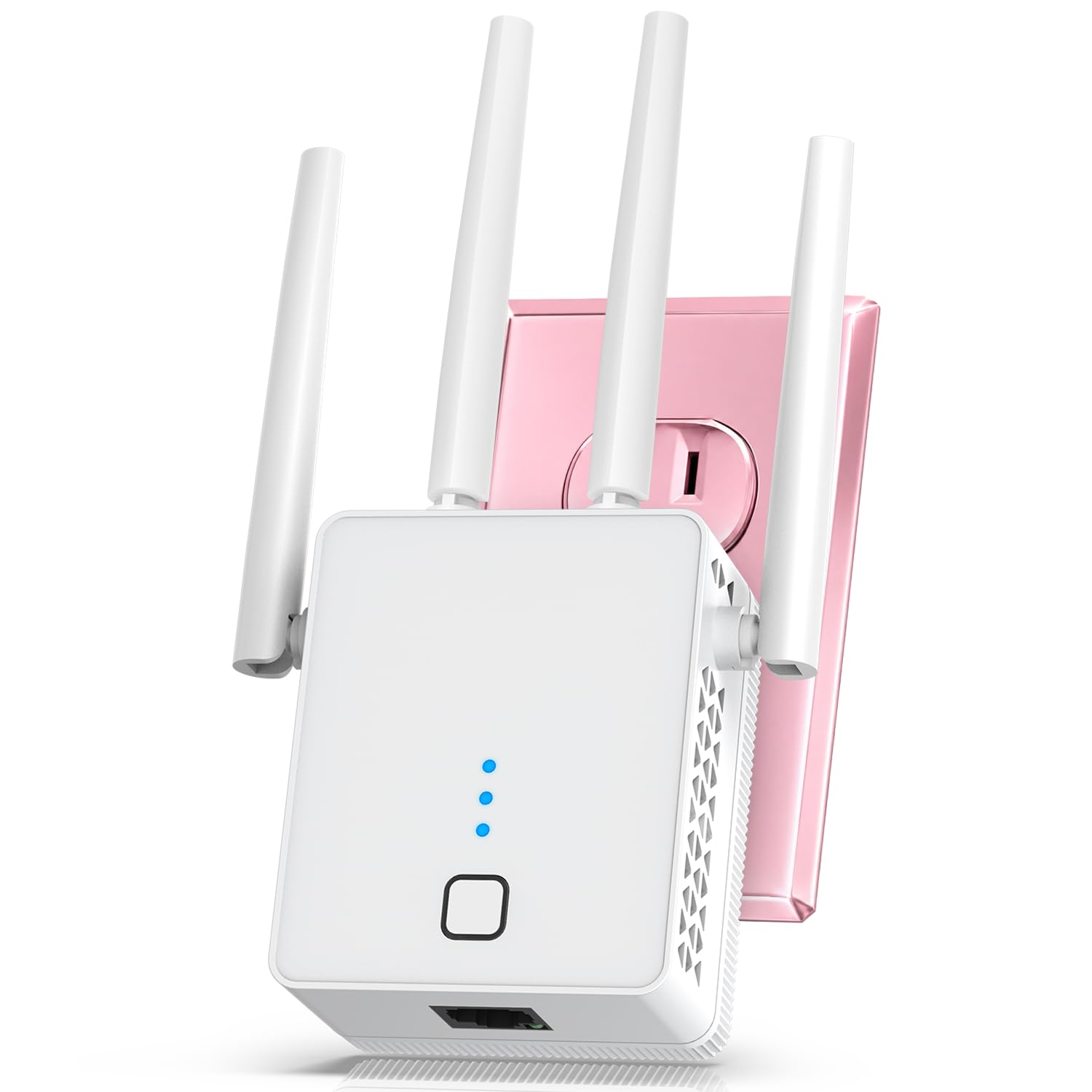
Type: Dual-band wall-plug extender
Speed class: 1200Mbps
Bands: 5.8GHz and 2.4GHz
Coverage claim: Up to 19999 sq.ft
Device capacity: 125+ devices
Ports: Ethernet port
Color: Pure white
Check the current price on Amazon
This is the other budget plug-in on the list, and it differentiates itself with a pure white housing that blends into a conservatory’s pale walls and frames, plus an Ethernet port for a wired device. The 1200Mbps dual-band radio is the same class as the other budget picks, and the 125+ device capacity is generous for the price. The 5.8GHz band is a slightly unusual choice on the upper radio, and it is worth checking that client devices support it before relying on it for the fastest connections.
It suits a buyer who wants a simple plug-in with a wired option and prefers a white unit that does not stand out in a glass-walled room. The very large coverage claim should be treated with scepticism in a conservatory, where metal frames and distance from the router will cut the real-world range considerably. It is a reasonable second budget option rather than a clear upgrade over the TP-Link.
Trade-off: The 5.8GHz upper band and an inflated coverage claim mean real-world performance will fall well short of the headline numbers.
Before You Buy
- Placement: An extender needs a spot with a decent signal from the router already; putting it in the weakest corner of the conservatory just repeats a weak signal.
- Glass and frames: A glass roof passes signal well, but metal frames, foil-backed insulation and garden walls block it — an outdoor unit aimed through the glass often beats an indoor plug-in.
- Compatibility: Mesh add-ons such as the Deco 7 Outdoor only work with their own system; standalone extenders work with any router.
- Power: PoE outdoor units need an injector or PoE switch plus a cable run, which adds cost and installation time.
- Bands: Check that the extender’s fastest band matches what the devices in the conservatory actually support.
- Device count: A conservatory full of smart speakers, tablets and a TV can hit a budget extender’s device limit quickly.
- Weather rating: For outdoor mounting, IP65 or IP67 matters; an indoor unit on an exterior wall will not last.
Frequently Asked Questions
-
Will a WiFi extender work through a glass roof?
Glass passes WiFi signal reasonably well, so an outdoor unit aimed through the roof can work. Metal frames and coatings are the bigger obstacle, so placement matters more than the glass itself. -
Is an outdoor extender better than an indoor one for a conservatory?
Often yes, because it avoids the walls and frames between the router and the room. The trade-off is that outdoor units need weatherproofing and usually PoE power. -
Can any extender join an existing mesh system?
No. Mesh add-ons such as the Deco 7 Outdoor only work with their own brand’s base unit, while standalone extenders work with any router. -
How many devices can a budget extender handle?
The budget picks here claim between 32 and 125+ devices. Real capacity is lower once distance and interference are factored in, so a busy conservatory should aim higher. -
Does an extender slow down the connection?
A repeater halves throughput on the repeated band because it has to receive and retransmit. A wired or mesh backhaul avoids that penalty. -
What is PoE and why does it matter?
Power over Ethernet carries both data and power down one cable, so an outdoor unit can be mounted far from a socket. It requires a PoE injector or switch.
Bottom Line
For most conservatories, the TP-Link AC1200 (RE315) is the sensible first buy: it is cheap, it plugs in, it repeats both bands and it can join an EasyMesh network later. Households with a large garden or a difficult metal-framed roof should step up to the WAVLINK AX3000 outdoor unit, while existing Deco owners should add the Deco 7 Outdoor node. Check the current price on the TP-Link AC1200 (RE315) on Amazon and start there.
