Why there are Amazon links here: Brave Review is paid a commission for qualifying Amazon purchases made through the links below. Your price does not change, and using our links is entirely optional. How this works
Best Backup Power for a Pellet Stove During a Storm
A pellet stove needs a steady flow of electricity to run its auger, blower, and control board, and a storm outage can shut it down in the middle of a cold night. The five picks below cover the realistic options: a plug-in UPS for short outages, mid-size power stations for a day of runtime, and large expandable units for multi-day storms. Buyers who want the simplest plug-and-play fix should look at the UPS picks, while buyers planning for long outages should look at the larger solar generators. The overview table below lines up every option by spec and price tier.
Overview of the Best Backup Power Options
| Product | Key Spec | Best Use | Price Tier |
|---|---|---|---|
| CyberPower CP1500PFCLCD | 1500VA/1000W, 12 outlets, AVR | Short outages, plug-in simplicity | Budget |
| Jackery HomePower 3600 Plus | 3584Wh, 3600W, expandable to 21kWh | Multi-day home backup | Premium |
| EF ECOFLOW Delta 3 Classic | 1024Wh, 1800W, 10ms UPS | Balanced price and runtime | Mid-range |
| Anker SOLIX S2000 | 2010Wh, 1500W, LiFePO4 | Long overnight runtime | Mid-range |
| Portable Power Station 640Wh | 640Wh, 1200W surge, 10ms UPS | Small stoves, tight budgets | Budget |
CyberPower CP1500PFCLCD PFC Sinewave UPS

Capacity: 1500VA / 1000W
Outlets: 12
Power Quality: PFC sinewave with AVR
Form Factor: Mini tower
Certification: UL Certified
This is a line-interactive UPS rather than a battery generator, and that distinction matters for a pellet stove. It sits between the wall outlet and the appliance, passing power through and switching to battery within a fraction of a second when the grid drops, so the stove’s control board never reboots. The pure sinewave output suits the stove’s blower motor and auger motor better than a modified sinewave unit would, and automatic voltage regulation smooths out the brownouts and surges that storms often bring before the power fails completely. The twelve outlets let the stove share the unit with a phone charger or a small lamp, and the mini tower footprint fits beside a hearth without much fuss.
Who It Suits: This is the pick for buyers whose main concern is short outages — the two-to-four-hour dips that follow a downed line — and who want something they can plug in and forget. It earned its place because it needs no solar panels, no charging routine, and no planning.
Trade-off: Runtime is measured in minutes rather than hours, so a stove that draws heavily will drain it quickly and a multi-day storm will outlast it.
Jackery HomePower 3600 Plus Power Station

Battery Capacity: 3584Wh
Battery Type: LFP (lithium iron phosphate)
AC Output: 3600W
Expandable Capacity: Up to 21kWh
Intended Use: Home backup, emergencies, RV
Solar Input: Solar panel optional
This is the heaviest hitter in the group and the one aimed at buyers who treat a storm as a multi-day event. The LFP battery chemistry is the durable, long-cycle type that holds up to repeated charge and discharge, and the 3584Wh base capacity is generous enough that a pellet stove becomes a small fraction of the load rather than the whole budget. The expandable design is the real story: capacity can grow to 21kWh with additional battery modules, which turns the unit from a stove backup into a whole-home emergency system that also runs a fridge, a furnace fan, and lights. The 3600W AC output covers the stove’s startup surge without strain.
Who It Suits: This suits homeowners in rural or storm-prone areas who want one system that covers the stove and the rest of the house, and who are willing to pay for that headroom. It earned its place as the premium pick for buyers planning beyond a single appliance.
Trade-off: The price and the physical size put it well beyond what a stove-only backup actually requires, and the expandable battery modules add cost on top of the base unit.
EF ECOFLOW Delta 3 Classic Portable Power Station
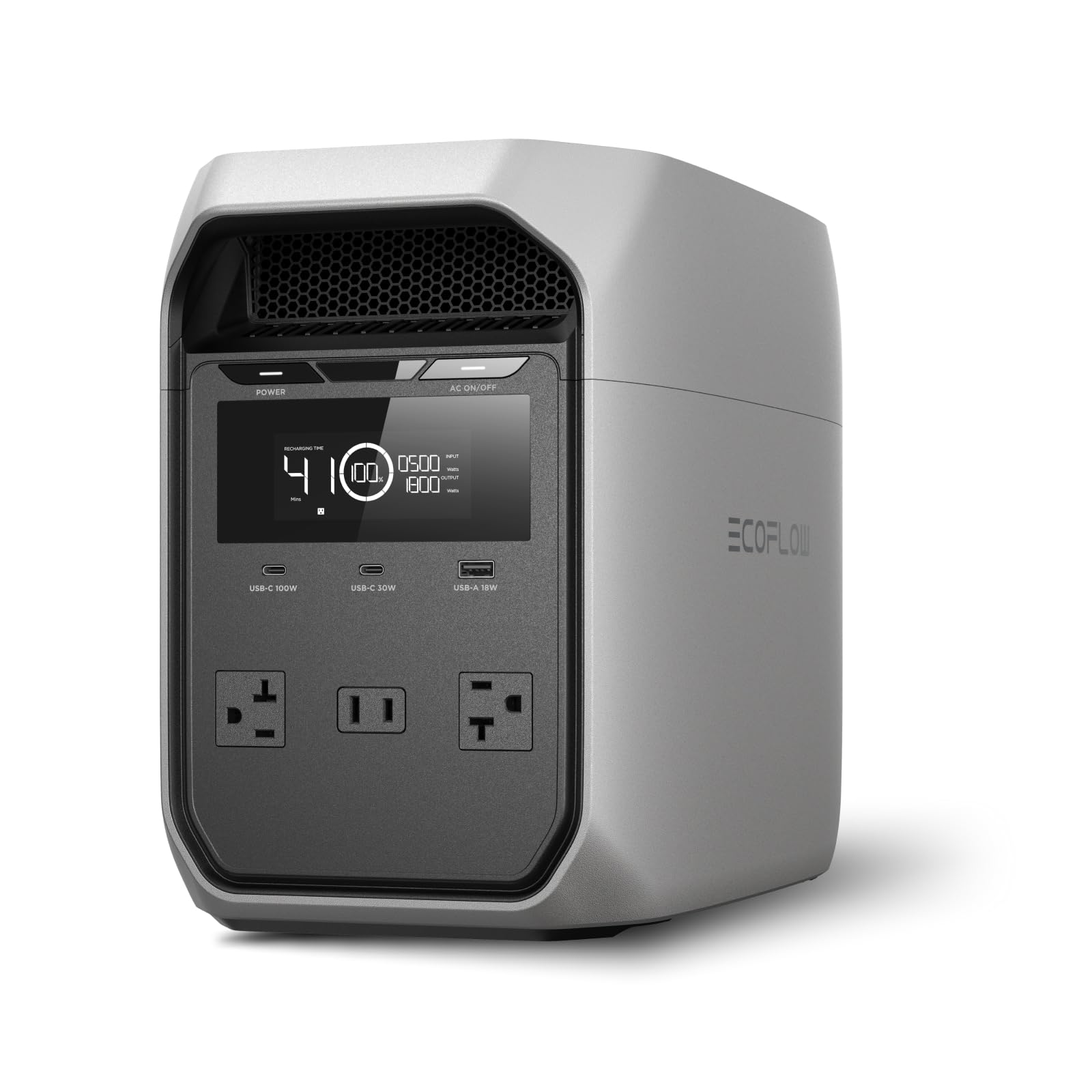
Battery Capacity: 1024Wh
AC Output: 1800W
Surge Output: 3600W
Battery Type: LiFePO4
UPS Switchover: 10ms
Recharge Time: 1 hour
USB-C Output: 100W
The Delta 3 Classic sits in the sweet spot for most pellet stove owners. The 1024Wh capacity paired with an 1800W continuous output is enough to run a stove through an evening and overnight, and the 3600W surge rating absorbs the brief spike when the auger and blower kick on together. The 10ms UPS switchover means the unit can stay plugged in and take over automatically, so the stove keeps running without a manual restart — a meaningful convenience when the outage happens at 2 a.m. The one-hour fast charge is the standout feature: after a storm passes, the unit refills from a wall outlet in about the time it takes to make dinner.
Who It Suits: This fits buyers who want automatic UPS behavior but need hours of runtime rather than minutes, and who want a unit that doubles as a camping or RV power source in the off-season. It earned its place as the best all-round value in the group.
Trade-off: The 1024Wh capacity covers a night or so of stove operation but will not stretch across a multi-day outage without recharging or solar input.
Anker SOLIX S2000 Portable Power Station
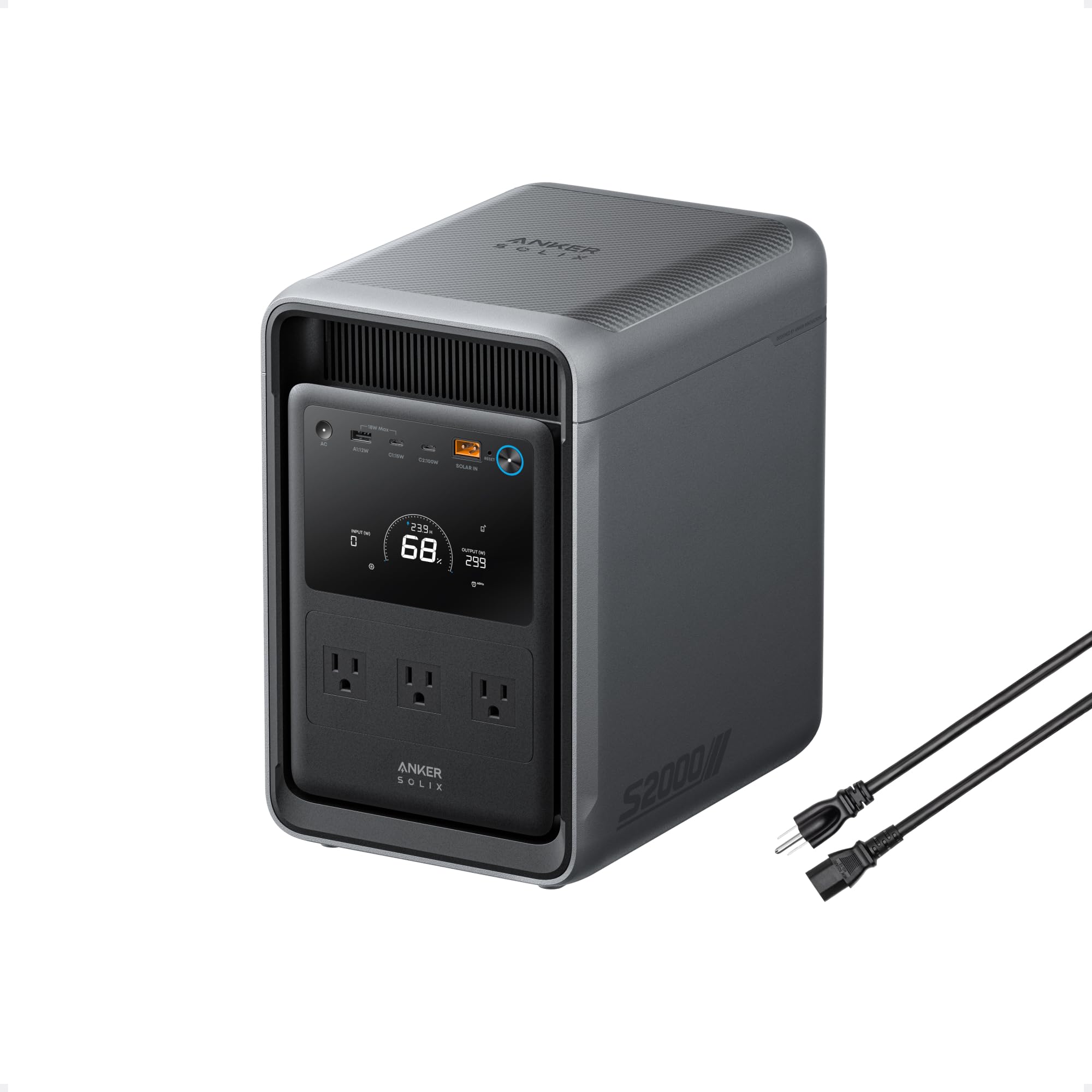
Battery Capacity: 2010Wh
Battery Type: LiFePO4
AC Output: 1500W
Intended Use: Home backup, outdoor, emergency
The S2000 doubles the capacity of the Delta 3 Classic while keeping the output at a level that comfortably runs a pellet stove. The 2010Wh LFP battery is the reason it earns a spot: that capacity translates into a full overnight run plus a morning restart, and possibly a second night if the stove is cycled rather than run continuously. LFP chemistry is also the safer, longer-lived choice for a unit that will sit idle for months between storms, since it tolerates being stored at partial charge without the degradation that older lithium chemistries suffer. The 1500W output is ample for a stove and leaves room for a few small loads on the same circuit.
Who It Suits: This suits buyers who want overnight-plus runtime without jumping to the premium tier, and who value battery longevity in a unit that spends most of the year in storage. It earned its place as the capacity-per-dollar leader here.
Trade-off: At 1500W continuous, the output ceiling is lower than the other mid-size pick, so running the stove alongside a space heater or a fridge on the same unit is not realistic.
Portable Power Station 640Wh, 1200W Surge
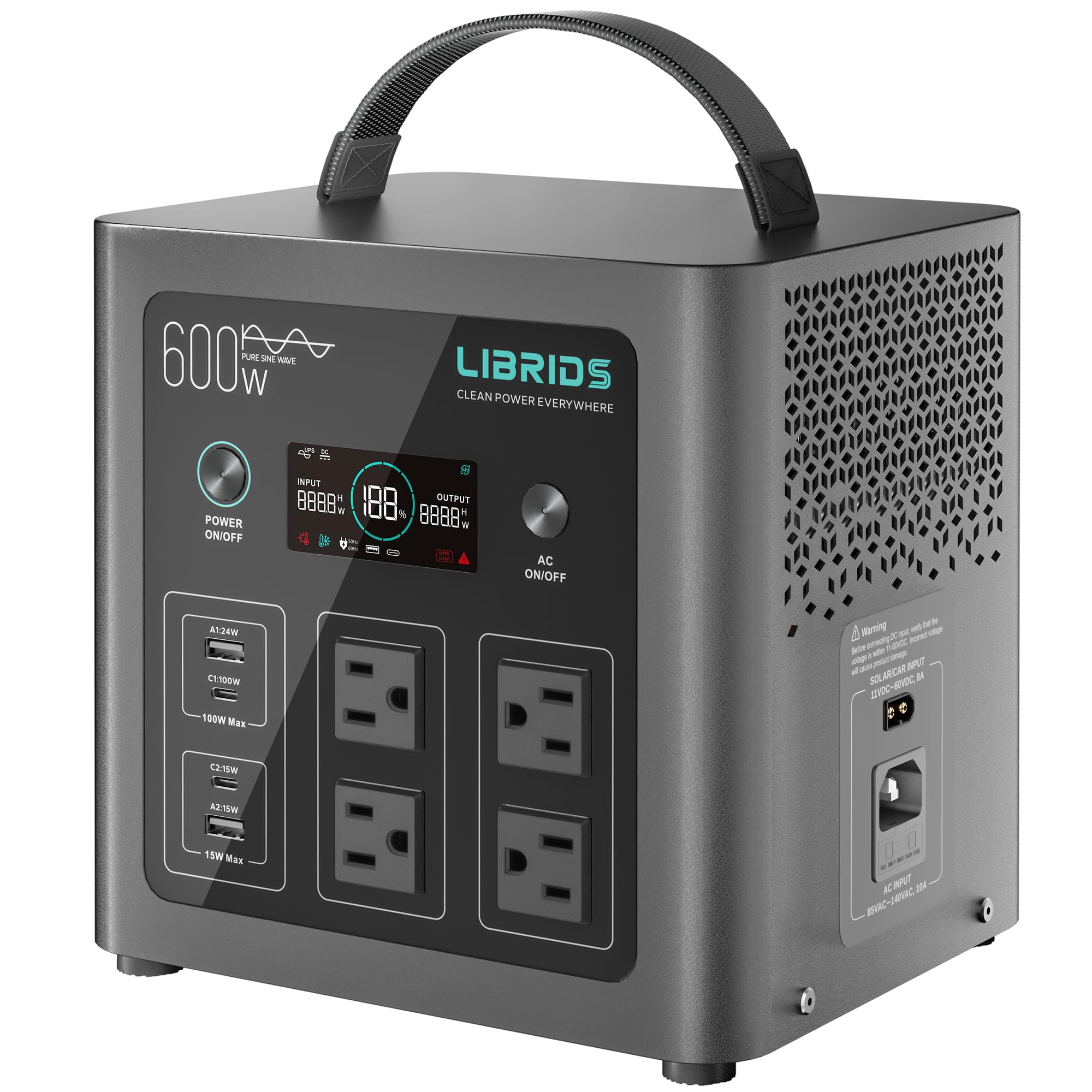
Battery Capacity: 640Wh
Battery Type: LiFePO4
Surge Output: 1200W
AC Outlets: 4
Total Ports: 8
UPS Switchover: 10ms
Recharge Time: 1.5 hours
Build: Pure sine wave, metal design
This is the compact, budget-friendly entry point, and it covers more ground than the capacity figure suggests. The 640Wh LFP battery is modest, but a modern pellet stove that runs efficiently can get several hours from it, and the 10ms UPS switchover means it behaves like a proper backup rather than a manual swap. The pure sinewave output and metal housing are reassuring details at this price tier, since both point to a unit built for continuous duty rather than occasional camping use. The eight ports and four AC outlets let the stove share the unit with a router, a phone, and a lamp without a power strip.
Who It Suits: This fits buyers with a small or efficient stove, a tight budget, or a secondary backup for a single room. It earned its place as the lowest-cost way to get automatic UPS behavior and LFP chemistry together.
Trade-off: The 640Wh capacity is the smallest here and will not carry a stove through a full night of continuous running, so it works best as a bridge to a generator or as a short-outage solution.
Before You Buy
- Startup surge: A pellet stove’s auger and blower motors draw a brief spike on startup that can exceed the running wattage, so check the surge rating, not just the continuous output.
- Switchover time: A unit rated at 10ms or similar behaves like a UPS and keeps the stove’s control board alive; a unit without UPS mode requires a manual restart after the outage begins.
- Runtime math: Estimate the stove’s running wattage and divide the battery capacity by it to get a realistic hour count, then halve it for cold-weather losses.
- Battery chemistry: LFP batteries tolerate storage and repeated cycling better than older lithium types, which matters for a unit that sits idle between storms.
- Recharge options: A fast wall recharge matters after the storm; solar input matters during a long one. Decide which scenario is more likely.
- Ventilation and placement: Battery units and UPS boxes should sit away from the stove’s heat and flue, on a dry surface with clearance for airflow.
- Outlets and ports: Count what needs to run alongside the stove — a phone, a lamp, a router — and confirm the unit has enough outlets without a power strip.
Frequently Asked Questions
-
Can a UPS run a pellet stove?
Yes, a pure sinewave UPS with enough capacity can run a stove for a short outage and will switch over automatically. Runtime is limited by battery size, so a UPS suits hours-long outages rather than multi-day ones. -
How many watts does a pellet stove need?
Most pellet stoves draw a few hundred watts while running, with a higher surge at startup when the auger and blower engage. Check the stove’s label for its running and startup figures before sizing a backup. -
Will a modified sinewave inverter damage a pellet stove?
It can cause the blower motor to run hot or the control board to misbehave. A pure sinewave output, which every pick here provides, is the safer match for a stove’s motors and electronics. -
How long will a 1000Wh power station run a pellet stove?
Divide the capacity by the stove’s running wattage, then discount for cold-weather efficiency. A typical efficient stove will get several hours from a unit in that range, which covers an evening and part of a night. -
Can a power station run a pellet stove and a fridge at the same time?
Only if the unit’s continuous output covers both loads plus surge. A 1500W or higher unit can usually manage a stove and a modern fridge, but a smaller unit should be reserved for the stove alone. -
Do these units need to stay plugged in?
UPS-capable models should stay plugged into a wall outlet so they are charged and ready to switch over. Larger solar generators can be kept charged and connected, or stored at partial charge and brought out when a storm is forecast.
Bottom Line
For most pellet stove owners, the EF ECOFLOW Delta 3 Classic is the best backup power for a pellet stove during a storm: it pairs a night’s worth of runtime with automatic 10ms UPS switchover and a one-hour recharge, at a mid-range price that undercuts the premium options. Buyers facing multi-day outages should step up to the Jackery HomePower 3600 Plus, while buyers who only need to ride out short dips can save with the CyberPower UPS.
