Why there are Amazon links here: Brave Review is paid a commission for qualifying Amazon purchases made through the links below. Your price does not change, and using our links is entirely optional. How this works
Best Cold Alarm for a Static Caravan in Winter
A static caravan left unattended through winter has two enemies: pipe-freezing cold and a silent power cut that takes the heating down with it. The best cold alarm for a static caravan in winter is the one that phones or shouts before the damage sets in — and the right choice depends on how far away the owner lives and how often the van is checked. This short roundup covers five alarms at different price points, from a simple flashing warning light to a dial-out system that calls three numbers. The overview table below puts them side by side so a decision can be made in under a minute.
The Picks at a Glance
| Product | Key Spec | Best Use | Price Tier |
|---|---|---|---|
| Intermediate FreezeAlarm FA-I-CCA | Voice message to up to 3 phone numbers | Remote owners who want a phone call | Premium |
| Freezing Temp Alert Freeze Warn Light | Flashes below 42°F, batteries included | Cheap visual warning inside the van | Budget |
| Temperature Warning Light | Temperature-triggered warning light | Basic local cold alert | Budget |
| 120V Temperature Alarm Controller | 105dB sound and light alert | Greenhouses, farms and equipment rooms | Mid-range |
| Freezer Door Alarm | 60-second delay, 80 to 110 dB chime | Door-left-open and power-loss watching | Budget |
1. Intermediate FreezeAlarm Custom Temperature and Power Outage Alarm FA-I-CCA
Type: Dial-out temperature and power alarm
Alert method: Voice message to up to 3 phone numbers
Extra feature: Quick Status Check
Power monitoring: Yes — power outage alarm built in
Best for: Owners who live hours from the van

Intermediate FreezeAlarm Custom Temperature and Power Outage Alarm FA-I-CCA
This is the only pick in the roundup that reaches out rather than waiting to be noticed. It watches both temperature and mains power, and when either crosses the line it places a call and plays a voice message to as many as three stored numbers. The Quick Status Check lets an owner ring in and hear the current state of the van without driving over. For a caravan that sits empty for weeks, that combination — cold alert plus power-cut alert — covers the two failures that actually burst pipes.
It suits owners who live a long drive from their pitch, and anyone who wants the van’s condition confirmed by phone rather than by a neighbour’s visit. The trade-off is complexity: a dial-out unit needs a phone line or landline-style connection at the van and careful setup of the contact numbers, which is more installation work than any light-based alarm here.
2. Freezing Temp Alert, Freeze Warn Light (Red)
Type: Temperature warning light
Trigger: Flashes below 42°F
Colours: Red or blue
Batteries: Included
Best for: A visible early warning at low cost
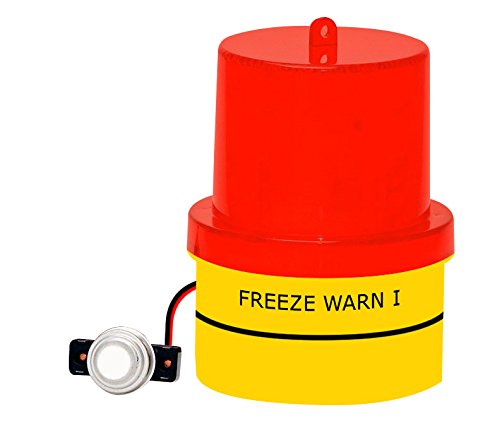
A small battery-powered light that starts flashing once the air around it drops below 42°F, giving a margin of warning before anything freezes. Batteries come in the box, so it can be hung in a caravan and left to work straight away. The red version is the sensible choice for a cold warning, since red reads as alarm at a glance through a window.
It earned its place as the budget pick for owners who visit the van weekly and just want a visible flag that the heating has failed. It is not for anyone expecting a remote alert — nobody gets a notification, and a flashing light in an empty caravan only helps the next person who opens the door. It also has no power-cut sensing, so a dead heater and a dead supply look identical until the light is checked.
3. Temperature Warning Light
Type: Temperature warning light
Alert: Light-based cold indication
Mounting: Free-standing or wall placement
Best for: Simple local cold monitoring

A straightforward warning light that reacts to low temperature with a visible signal, built for placing where someone will see it. There is no dial-out, no chime and no app — the whole job is a light that tells a person standing in the room that the air has turned cold. That simplicity is the point: nothing to pair, nothing to subscribe to, nothing to configure.
It suits the owner who uses the caravan through the colder months and wants a cheap backup indicator near the water heater or under the sink. The trade-off is that it is a local device with a narrow job — it will not warn anyone who is not in the van, and it does nothing about power failure. Buyers wanting remote notification should look at the FreezeAlarm instead.
4. 120V Temperature Alarm Controller with 105dB Alert
Type: Plug-in temperature alarm controller
Alert: 105dB sound and light
Mute: One-key mute
Intended use: Greenhouses, farms, warehouses and equipment rooms
Best for: Loud on-site warning where mains power is reliable
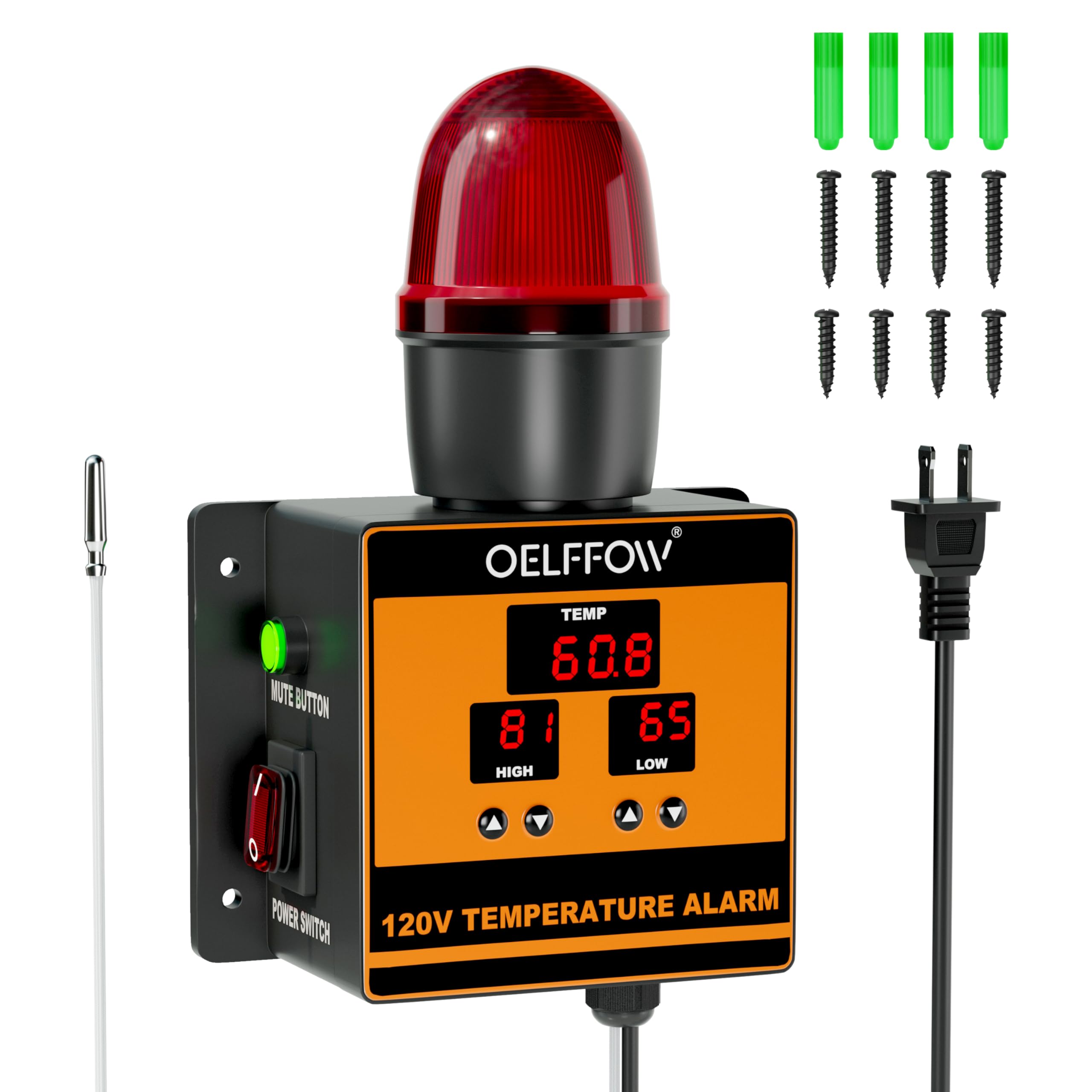
This is the loudest pick here: a 120V mains-powered controller that fires a 105dB sound and light alert when temperature goes out of range. The one-key mute is a practical touch for silencing it while the heating is sorted out. It is aimed at greenhouses, farms, warehouses and equipment rooms, which tells buyers what to expect — a robust plug-in box rather than a decorative home gadget.
It fits a caravan on a serviced pitch with permanent mains, or a van parked close enough to a neighbour that a 105dB alarm will actually be heard. The trade-off is dependence on mains power: if the supply trips, the alarm goes quiet along with the heating, which is exactly the scenario a winter owner worries about. It also needs someone within earshot, so it is a poor fit for a remote, empty van.
5. Freezer Door Alarm with 60 Second Delay
Type: Door and temperature alarm
Delay: 60 seconds, with 2, 3 and 4 minute reminders
Volume: Low/loud, 80 to 110 dB
Size: Compact
Best for: Catching an open door or a warm-up event

Despite the name, this compact unit is a flexible door and chime alarm that can be set to low or loud volume between 80 and 110 dB. The 60-second delay with 2, 3 and 4 minute reminders is designed to stop nuisance beeps while still catching a door left open. In a caravan it has a second life as a general warm-up and door-open watcher for cupboards, fridges and access panels.
It suits the owner who wants a cheap audible check on the van’s appliances rather than a full cold-alarm system. The trade-off is that it is a proximity device: it needs someone on site to hear it, and it is not a temperature-dial alarm in its own right. Anyone relying on it as the only winter protection is overestimating what a door chime can do.
Before You Buy
- Alert method: Decide up front whether the alarm must reach a phone. Only a dial-out unit like the FreezeAlarm helps an owner who is not at the van.
- Power source: Mains-powered alarms go silent in a power cut. Battery units keep working but need fresh cells before the season starts.
- Power-outage sensing: A cold alarm without power monitoring misses the most common cause of a frozen caravan — a tripped supply.
- Audibility: A 105dB siren is useful only if a neighbour or park warden is close enough to hear it.
- Placement: Site the sensor near the water heater and pipework, not high on a wall where warm air collects.
- False alarms: A short delay setting prevents nuisance triggers when doors are opened briefly.
- Seasonal check: Test every alarm and replace batteries before the first frost, not after.
Frequently Asked Questions
-
What temperature should a caravan cold alarm trigger at?
A trigger around 42°F gives useful warning before pipework is at risk, which is the threshold the Freeze Warn Light uses. Setting it higher causes nuisance alerts; setting it lower leaves little time to act. -
Will a cold alarm work if the caravan’s power is cut?
Only if the alarm has its own batteries or a power-outage alert. A mains-only controller stops working when the supply trips, so battery backup or power monitoring matters for winter. -
Can a cold alarm call a phone?
Yes — the FreezeAlarm FA-I-CCA dials up to three stored numbers with a voice message. The other picks in this roundup are local sound or light alarms. -
Is one alarm enough for a static caravan?
For a van visited weekly, a flashing light plus a door chime covers most risks. For a van left empty for long stretches, a dial-out unit with power monitoring is the safer single choice. -
Where should the alarm be placed in a caravan?
Low and near the pipework, water heater or under-sink area, where cold air settles first. Avoid high shelves and spots next to heaters. -
Do these alarms need maintenance?
Battery models need fresh cells each autumn and a test before frost. Mains units need a quick function check and a clear sensor.
Bottom Line
For a static caravan that stands empty through winter, the Intermediate FreezeAlarm FA-I-CCA is the pick that matters — it watches temperature and power, then calls up to three numbers with a voice message, so the owner hears about a problem before the pipes do. Owners who check the van weekly can save money with the flashing Freeze Warn Light, but remote protection starts with a dial-out alarm.
