Why there are Amazon links here: Brave Review is paid a commission for qualifying Amazon purchases made through the links below. Your price does not change, and using our links is entirely optional. How this works
TP-Link Archer AX21 vs NETGEAR R6700AX: Which Budget WiFi 6 Router Fits the Home
The TP-Link Archer AX21 and the NETGEAR R6700AX are two entry-level WiFi 6 routers aimed at the same shopper: someone upgrading an aging router without spending flagship money. Both are dual-band AX1800 units, so the raw speed class is identical and the decision comes down to coverage claims, port count, mesh support and how much hand-holding the setup needs. The short version sits in the table below; the full comparison follows.
TP-Link Archer AX21 vs NETGEAR R6700AX at a Glance
| Product | Key Spec | Best Use | Price Tier |
|---|---|---|---|
| TP-Link Archer AX21 | AX1800 dual band, Gigabit, Easy Mesh | Apartments and small homes that may add mesh nodes later | Budget |
| NETGEAR R6700AX | AX1800 dual band, 4× Gigabit, up to 1,500 sq ft | Single-floor homes with several wired devices | Budget |
The Archer AX21 is the cheaper of the two and the one that leans into mesh expansion. The R6700AX costs more but states a coverage figure and carries an extra Gigabit port. Neither is a premium router, and neither is being sold as one.
TP-Link Archer AX21 V5
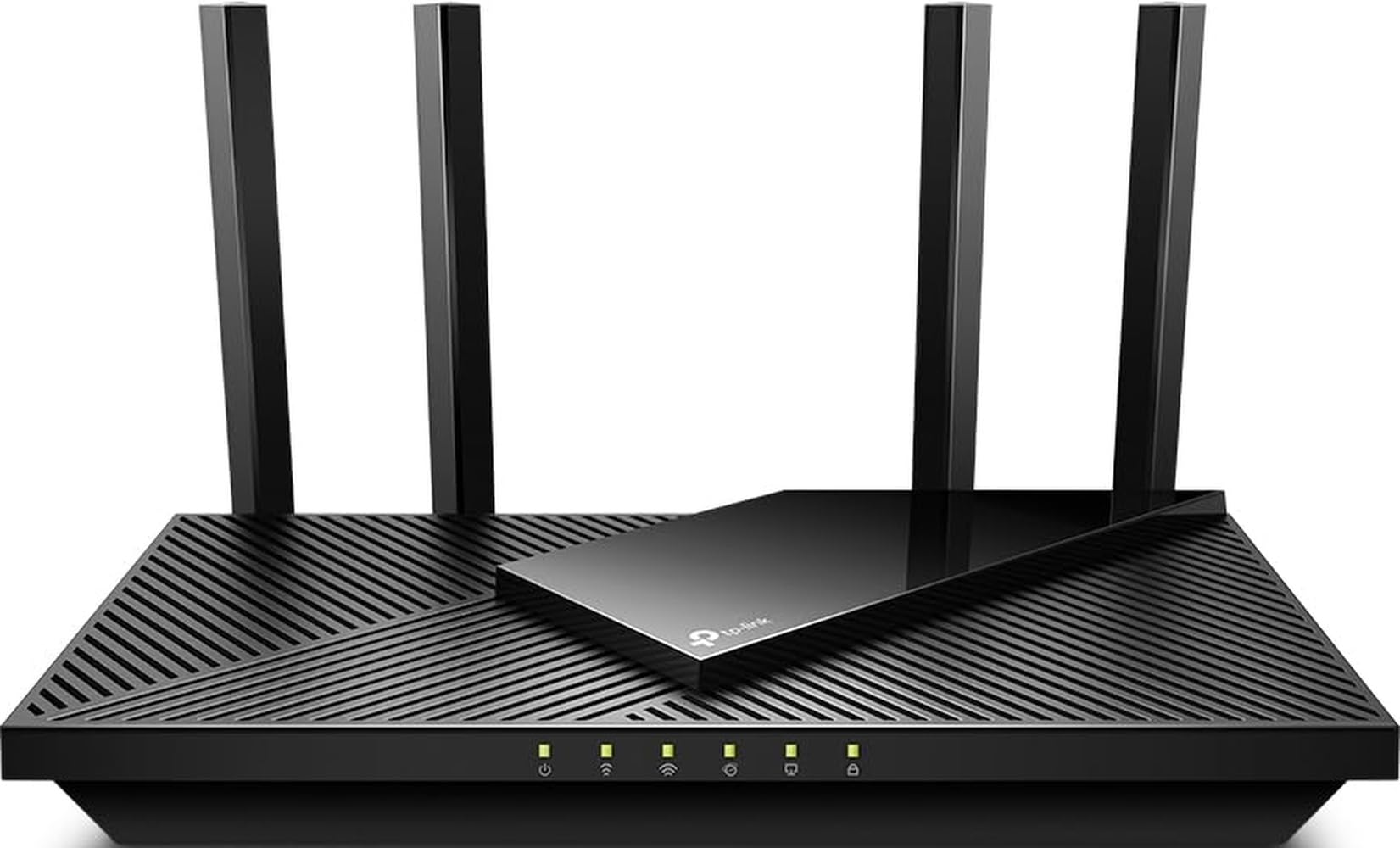
Product Type: Dual-band WiFi 6 router
Speed Class: AX1800
Wired Ports: Gigabit Ethernet
Mesh Support: Easy Mesh compatible
Voice Control: Works with Alexa
Setup: Certified for Humans
The Archer AX21 is built for the buyer who wants WiFi 6 without paying for it twice. It is a dual-band AX1800 unit, which means the total throughput is split between a 2.4 GHz and a 5 GHz band rather than spread across a third radio. The Gigabit Ethernet ports keep wired connections at full home-network speed, and the Easy Mesh support means a second compatible node can be added later to extend coverage instead of replacing the whole router.
TP-Link’s "Certified for Humans" label is the other half of the pitch. It signals a setup process designed to be finished from a phone without reading a manual, and Alexa support lets basic network controls run through voice. For a household that just wants the WiFi to work and does not want to learn a router’s admin panel, that combination is the point.
Trade-off: Easy Mesh only pays off if the buyer adds another compatible node, so anyone who never expands is paying for a feature that sits unused.
Check the current price on Amazon
NETGEAR R6700AX
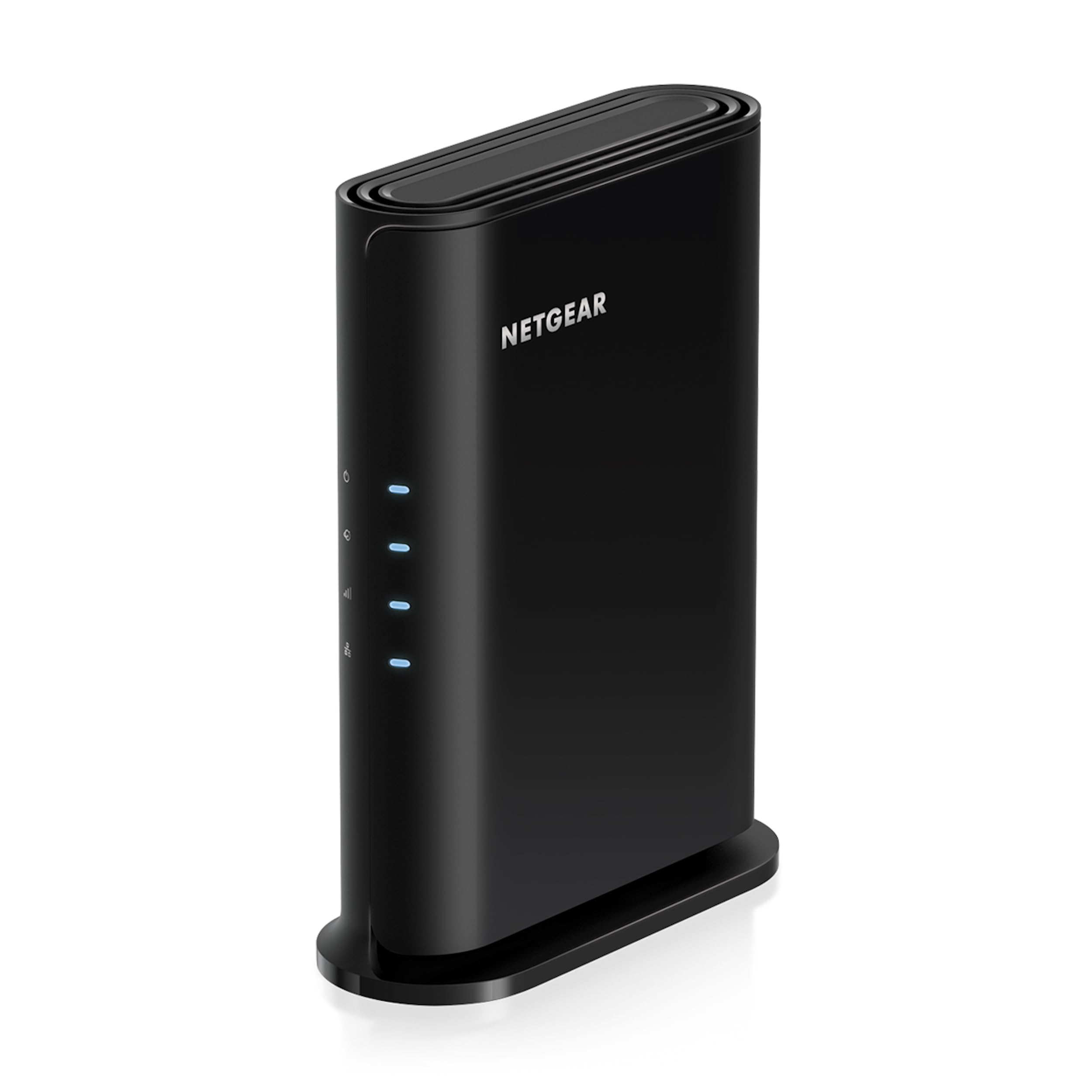
Product Type: Dual-band WiFi 6 router
Speed Class: AX1800
Stated Coverage: Up to 1,500 sq ft
Wired Ports: 4× Gigabit Ethernet
Device Load: 20 devices
Setup: Easy set up
The R6700AX is the Nighthawk-badged option, and it is the more explicit of the two about what it covers. NETGEAR states coverage up to 1,500 sq ft and a comfortable load of 20 devices, which gives a buyer a concrete number to measure a home against instead of guesswork. The four Gigabit ports are the practical difference for anyone wiring a desktop, a console, a TV and a NAS into the same router.
The 1.8 Gbps figure refers to the router’s combined dual-band throughput, in line with the AX1800 class. Setup is pitched as straightforward, and the Nighthawk line is positioned for households that want a recognizable name and a stated coverage promise rather than tinkering.
Trade-off: The higher price buys a coverage claim and an extra port, not more speed, so a buyer in a small flat is paying for headroom that will never be used.
Check the current price on Amazon
Side-by-Side Specifications
| Specification | TP-Link Archer AX21 V5 | NETGEAR R6700AX |
|---|---|---|
| WiFi Standard | WiFi 6 | WiFi 6 |
| Speed Class | AX1800 | AX1800 |
| Bands | Dual band | Dual band |
| Stated Coverage | Not stated by brand | Up to 1,500 sq ft |
| Stated Device Load | Not stated by brand | 20 devices |
| Wired Ports | Gigabit Ethernet | 4× Gigabit Ethernet |
| Mesh Support | Easy Mesh | Not stated by brand |
| Voice Assistant | Works with Alexa | Not stated by brand |
| Setup Promise | Certified for Humans | Easy set up |
| Price Tier | Budget | Budget |
Where the Two Routers Actually Differ
The speed class is a wash, so the comparison has to be read on everything else. Both units are AX1800 dual band, and neither can be sold as faster than the other on paper. Buyers comparing these two are choosing a feature set, not a performance tier.
Coverage is the clearest split. NETGEAR puts a number on the R6700AX — up to 1,500 sq ft — which makes it the easier pick for a single-family home where the router sits at one end of the floor plan. TP-Link makes no equivalent claim for the Archer AX21, so the buyer is left estimating. In practice that means the R6700AX is the safer bet for a house and the Archer AX21 is the safer bet for an apartment where coverage was never the problem.
Wired capacity favors NETGEAR. Four Gigabit ports against TP-Link’s Gigabit Ethernet means the R6700AX can feed more fixed devices at once, which matters in a household with a desktop, a console and a TV all wanting cable. A buyer with one or two wired devices will not notice the difference.
Mesh is where TP-Link pulls ahead. Easy Mesh support on the Archer AX21 means coverage can be extended later with a compatible node rather than a full replacement, and that upgrade path is worth more than an extra port to anyone whose home might grow or whose dead spots might get worse. The R6700AX’s name does not make that promise.
Setup and voice control round out the TP-Link case. Certified for Humans and Alexa support are aimed at buyers who want the router configured from a phone and left alone. NETGEAR’s easy set up is a similar promise without the third-party certification behind it.
The verdict per dimension: coverage and ports go to NETGEAR, mesh and setup simplicity go to TP-Link, and speed goes to neither.
Which Should You Buy?
Choose the TP-Link Archer AX21 if the home is small enough that coverage is not in question, the budget is the tightest part of the decision, and there is a real chance a mesh node gets added later. It is also the better fit for a buyer who wants the router configured from a phone with voice controls available and no interest in the admin panel.
Choose the NETGEAR R6700AX if the router has to cover a whole floor, several devices will be wired in permanently, and a stated coverage figure is worth paying for. The 1,500 sq ft claim and the four Gigabit ports are the concrete advantages, and a buyer who needs both should not trade them away for a mesh feature that may never be used.
Neither router is the right call for a large multi-story home with heavy simultaneous streaming and gaming; that buyer needs a mesh system or a higher tier of router, not an entry-level AX1800 unit.
FAQ
-
Is the TP-Link Archer AX21 or the NETGEAR R6700AX faster?
Neither. Both are AX1800 dual-band WiFi 6 routers, so they sit in the same speed class. The differences are in coverage claims, port count, mesh support and setup. -
Does the TP-Link Archer AX21 support mesh?
Yes. It is Easy Mesh compatible, which means a compatible node can be added later to extend coverage without replacing the router. -
How much area does the NETGEAR R6700AX cover?
NETGEAR states coverage up to 1,500 sq ft. That figure is the brand’s own claim for the router and is the most concrete coverage number in this comparison. -
How many wired devices can each router handle?
The R6700AX has four Gigabit Ethernet ports. The Archer AX21 offers Gigabit Ethernet without a stated port count in its product name, so buyers who need several wired connections should confirm the port layout before ordering. -
Which router is better for a house with a lot of smart home devices?
The R6700AX states a load of 20 devices, which gives a smart-home-heavy household a number to check against. The Archer AX21 does not publish an equivalent figure. -
Do either of these routers work with Alexa?
The Archer AX21 is listed as working with Alexa. The R6700AX’s product name does not make that claim. -
Are these good routers for gaming?
They are entry-level WiFi 6 routers, so they suit casual gaming and streaming. A household running multiple competitive games at once should look at a higher tier or a mesh system. -
Which one is cheaper?
The Archer AX21 sits in the lower price tier of the two. Both are budget routers, and current pricing should be checked before ordering since it moves.
Bottom Line
The NETGEAR R6700AX is the better pick for a home that needs stated coverage and multiple wired ports, while the TP-Link Archer AX21 wins on price, mesh expansion and setup simplicity. Buyers who know their square footage and need four Gigabit ports should take the NETGEAR R6700AX; everyone else gets more upgrade room for less money with the TP-Link Archer AX21.