Why there are Amazon links here: Brave Review is paid a commission for qualifying Amazon purchases made through the links below. Your price does not change, and using our links is entirely optional. How this works
Best Energy Monitor for a House: 5 Smart Picks for Real-Time Power Tracking
The best energy monitor for a house turns a vague monthly bill into circuit-by-circuit data, so homeowners can see what actually drives consumption. This roundup covers five smart monitors that clamp onto a home’s electrical panel and stream real-time usage to a phone or home automation hub. It suits three buyer types: solar owners tracking net metering, landlords monitoring shared or rental units, and Home Assistant tinkerers who want local control. The overview table below lines up every pick by key spec, best use, and price tier so a decision can happen fast.
Overview of the Picks
| Product | Key Spec | Best Use | Price Tier |
|---|---|---|---|
| Emporia Vue 3 Home Energy Monitor | Solar and net metering, UL certified | Whole-home solar tracking | Mid |
| Smart Home Energy Monitor with 16 50A Sensors | 16 sensors at 50A | Rental homes and shared apartments | Budget |
| Refoss EM16P Smart Home Energy Monitor | 16 sensors at 60A, ETL certified, no cloud | Privacy-first local setups | Mid |
| Meross Smart Home Energy Monitor | 18 circuit monitoring, smart alerts | Largest circuit count | Mid |
| Refoss Smart Home Energy Monitor with Open API | 16 sensors at 60A, native open API | Home Assistant power users | Mid |
Emporia Vue 3 Home Energy Monitor
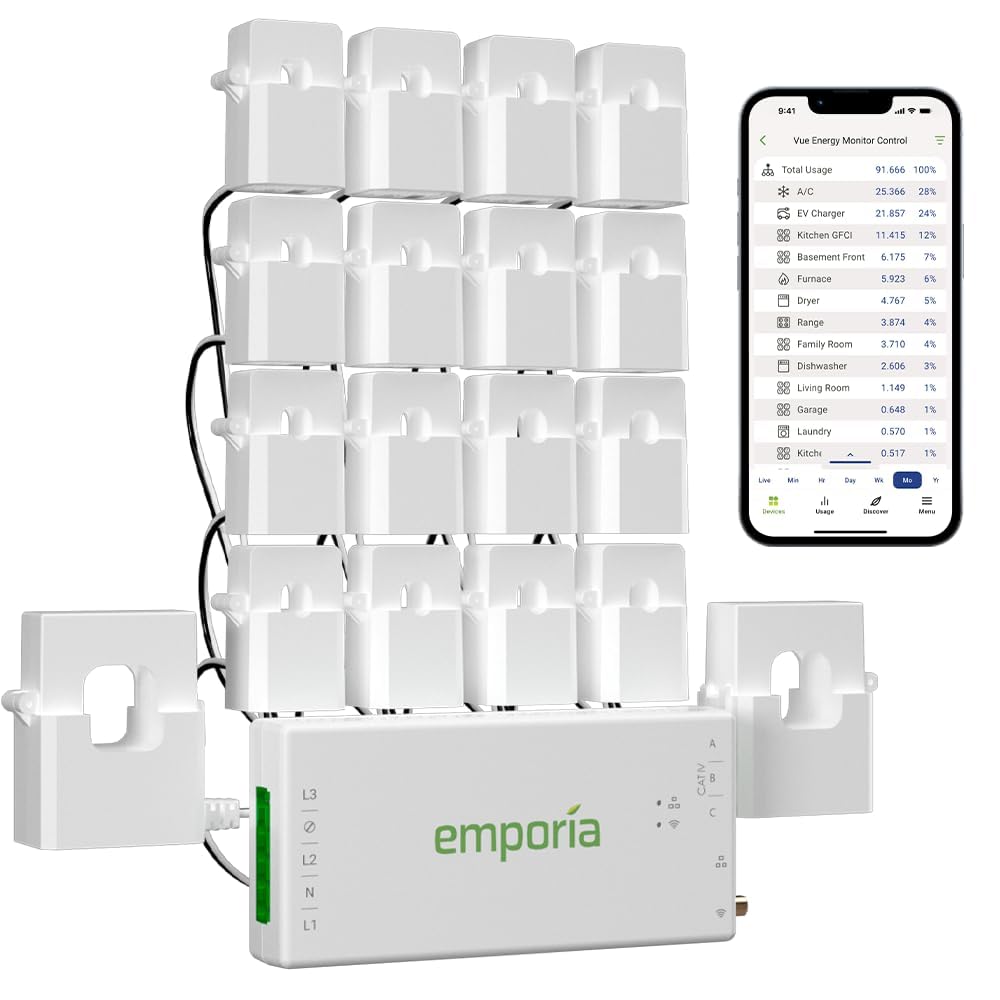
Type: Panel-mounted smart module
Certification: UL certified
Key capability: Solar and net metering
Function: Real-time electricity usage and power consumption metering
Price Tier: Mid
This is the pick for a house with rooftop solar. The Emporia Vue 3 is built as a smart home automation module that clamps into the electrical panel and reports real-time consumption while also handling solar and net metering, so production and draw land in the same view. UL certification is the headline safety credential here, and it matters for a device that lives inside a breaker box.
It suits solar owners and anyone who wants a polished app experience over deep customization. The main caution is that solar and net metering features only pay off with a compatible inverter and panel setup, so a buyer without solar is paying for capability that never gets used.
Smart Home Energy Monitor with 16 50A Circuit Level Sensors

Type: Circuit-level monitor
Sensors: 16 at 50A
Key capability: Real-time power usage and electricity cost tracking
Feature: App history
Compatibility: Home Assistant
Price Tier: Budget
This is the value pick, and it is aimed squarely at rental homes and shared apartments. Sixteen 50A sensors cover the branch circuits that matter in a smaller panel, and the app keeps a history of usage and cost so a landlord or roommate can point to actual numbers. Home Assistant compatibility keeps it useful for anyone building a dashboard.
The 50A sensor rating is the limit to weigh. Homes with heavy electric loads — a big heat pump, an EV charger, a workshop — may push past what these clamps are meant to handle, and that buyer should step up to a 60A unit instead.
Refoss EM16P Smart Home Energy Monitor
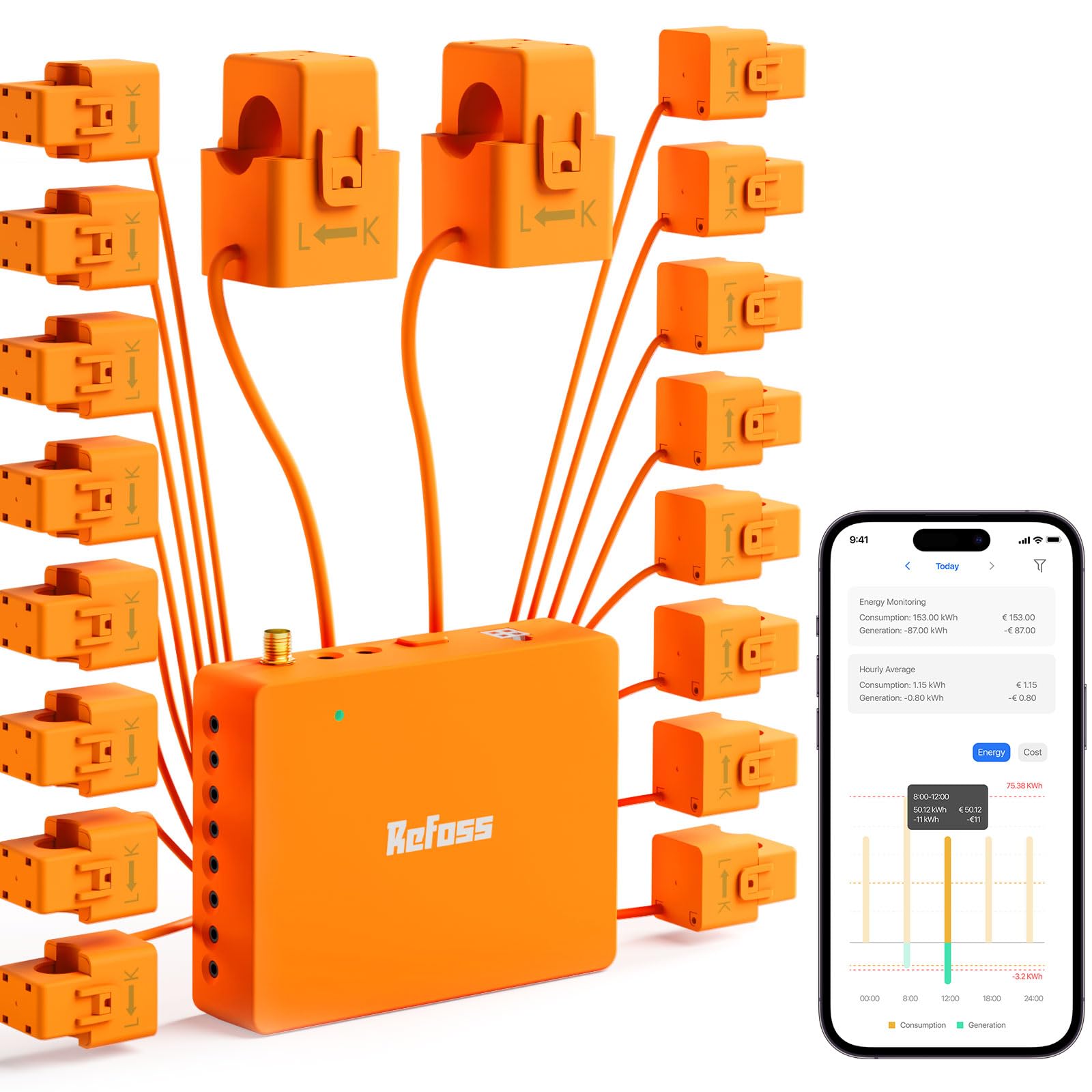
Type: Circuit-level monitor
Sensors: 16 at 60A
Certification: ETL certified
Key capability: Real-time usage and solar metering
Compatibility: Open API and Home Assistant
Data handling: No cloud
Price Tier: Mid
The EM16P is the privacy-first choice. Data stays local with no cloud dependency, and the open API plus Home Assistant support means the monitor feeds a home server rather than a vendor account. Sixteen 60A sensors handle heavier circuits than the budget pick, and ETL certification covers the safety side.
This one suits the tinkerer who already runs a local hub and does not mind configuring integrations. The caution is real: a no-cloud design puts setup and troubleshooting on the buyer, and a household that wants a plug-and-play app experience will find this model more work than it is worth.
Meross Smart Home Energy Monitor
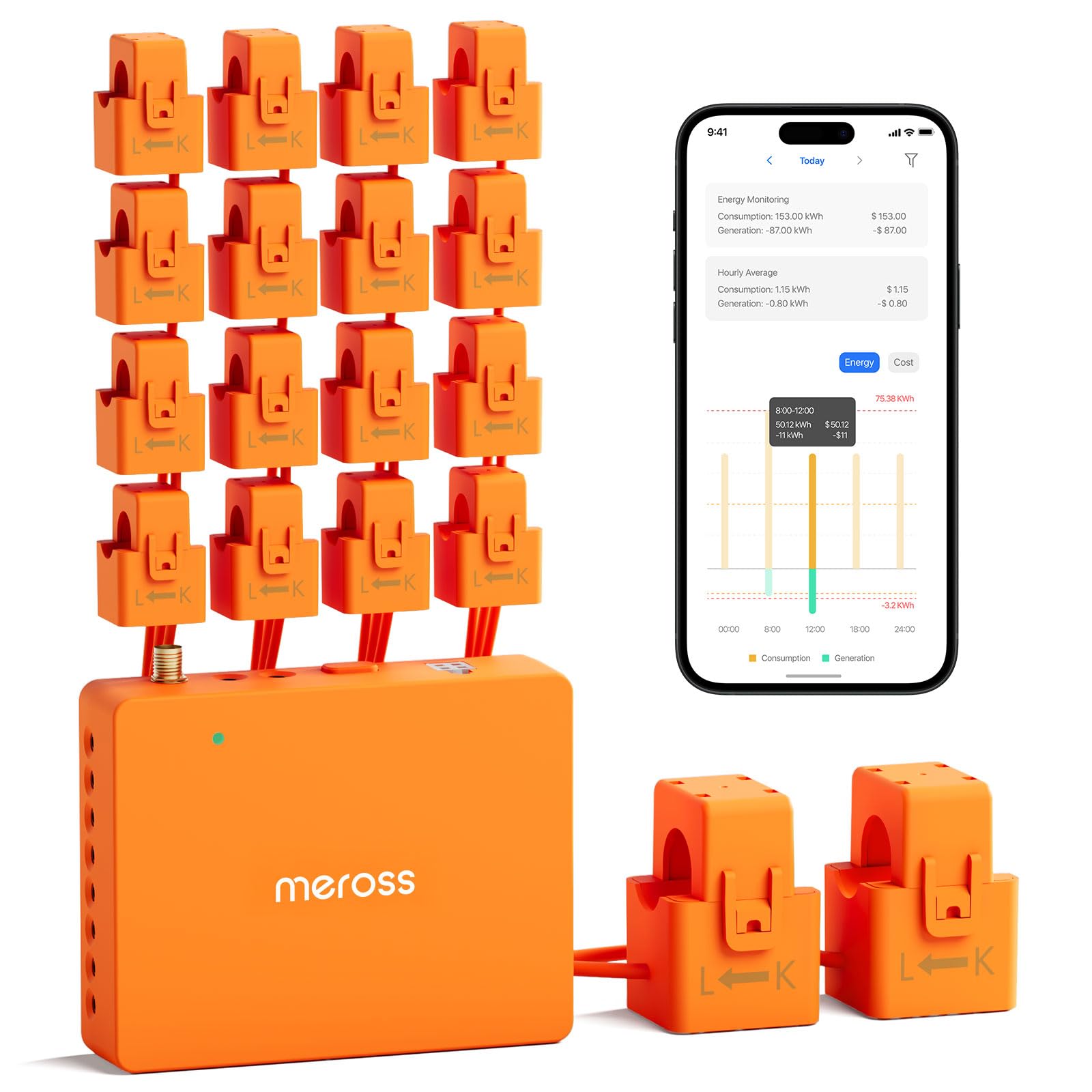
Type: Circuit-level monitor
Circuits: 18 monitored
Key capability: Real-time usage and solar surplus detection
Feature: Smart alerts
Subscriptions: None
Warranty: 2-year
Compatibility: Home Assistant
Price Tier: Mid
The Meross covers the most circuits of the group at 18, which helps in a large panel with many branch circuits to name. Solar surplus detection is a useful extra for a house with panels, and smart alerts push notifications when usage crosses a threshold. The two-year warranty and no-subscription model are the kind of terms a long-term buyer wants.
It earns its place for bigger panels and alert-driven households. The trade-off is that 18 channels only help if the panel actually has that many circuits worth naming — in a small apartment, the extra sensors sit idle and the higher circuit count adds cost without adding insight.
Refoss Smart Home Energy Monitor with Open API
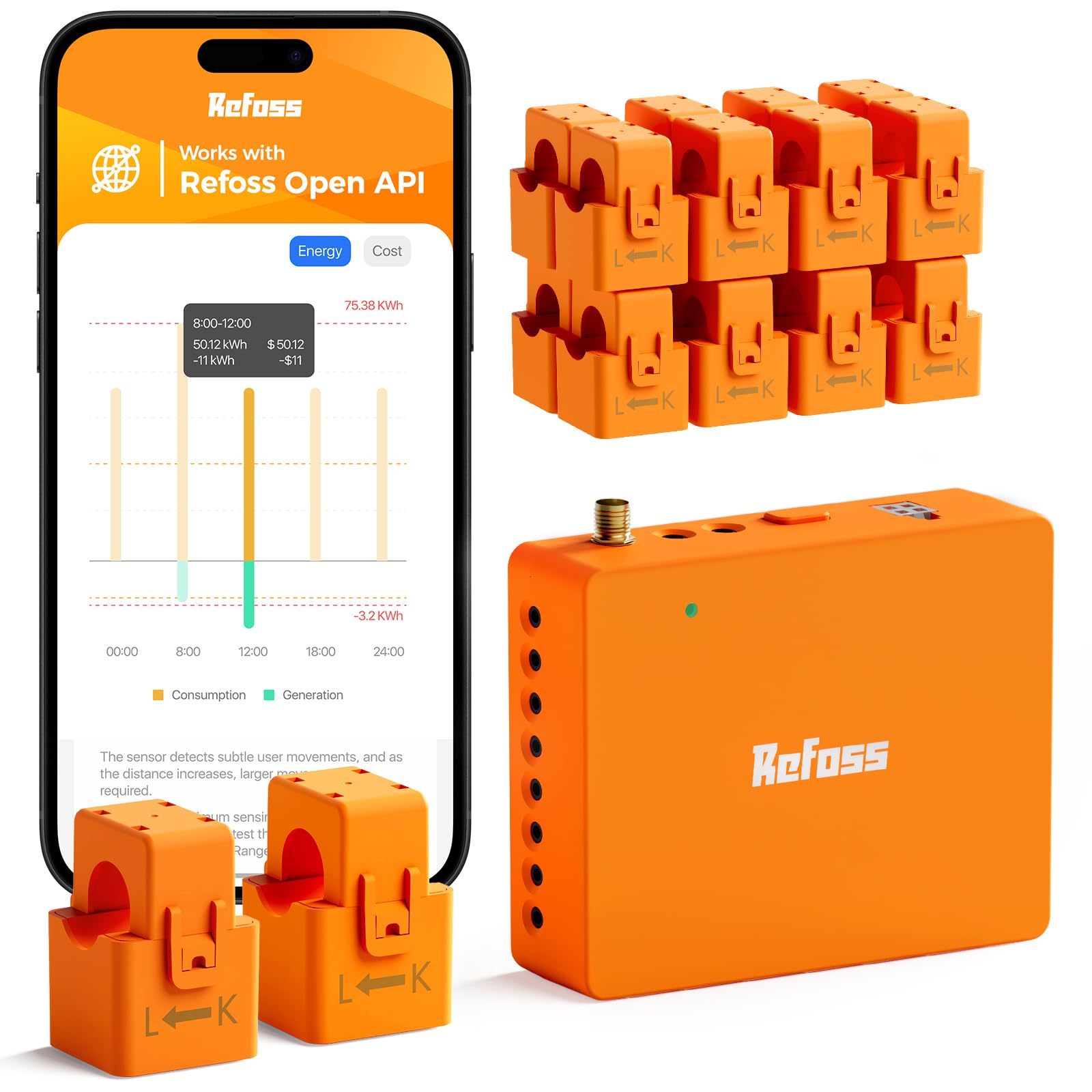
Type: Circuit-level monitor
Sensors: 16 at 60A
Certification: ETL certified
Key capability: Real-time usage, cost tracking, solar metering
Compatibility: Native open API and Home Assistant
Control: Local
Price Tier: Mid
This Refoss is the Home Assistant power user’s pick, built around a native open API and local control. Sixteen 60A sensors cover the main branch circuits, cost tracking turns watts into dollars, and solar metering handles a production setup. ETL certification keeps the safety story straightforward.
It suits a buyer who wants to script automations off live consumption data and keep everything on a local network. The drawback is the same one that comes with any open-API device: the feature set lives partly in the integrations, so a buyer who never touches Home Assistant is paying for flexibility that goes unused.
Before You Buy
- Panel compatibility: Confirm the panel has room for the clamps and that the main breaker rating matches what the monitor supports.
- Sensor amperage: 50A sensors suit lighter branch circuits; 60A sensors are the safer call for heat pumps, EV chargers, and heavy appliances.
- Circuit count: Match the number of monitored circuits to the panel. Extra channels only pay off if there are circuits worth naming.
- Solar support: A house with panels needs net metering or solar surplus detection; a house without solar does not.
- Local vs. cloud: No-cloud and open-API models keep data on-site but demand more setup; app-first models trade privacy for simplicity.
- Certification: UL or ETL listing is the baseline for anything installed inside a breaker box.
- Installation: These clamp inside a live electrical panel, so a licensed electrician is the right call for most households.
Frequently Asked Questions
- What does an energy monitor for a house actually measure? It clamps around circuit conductors and reports real-time power draw, then converts that into usage history and cost estimates in an app or hub.
- Is a 50A or 60A sensor the better choice? A 60A sensor is the safer pick for heavy loads like EV chargers and heat pumps; 50A sensors work fine for lighter branch circuits.
- Can these monitors work with solar panels? Several picks here support solar metering or net metering, but the feature only helps with a compatible inverter and panel setup.
- Do any of these require a subscription? The Meross model is explicitly subscription-free, and the Refoss units emphasize local, no-cloud operation.
- Can a homeowner install one without an electrician? The clamps go inside a live panel, so professional installation is the prudent route for most households.
- Which monitor works best with Home Assistant? The Refoss EM16P, the Refoss open-API model, and the Meross all list Home Assistant support, with the Refoss units leaning hardest into local control.
Bottom Line
For most houses, the Emporia Vue 3 Home Energy Monitor is the best energy monitor for a house that also has solar, pairing UL certification with net metering in one module. Buyers on a budget or in a rental should look at the 16-sensor 50A model, while Home Assistant users get the most from the Refoss open-API pick.